

Firearm background checks hit record high in Colorado

Colorado has surpassed its previous annual record for firearm background checks, with two months still to go before the year’s end.
In October, the Colorado Bureau of Investigation processed 40,200 background checks for firearm transactions, bringing the year-to-date total to 413,236. The previous record of nearly 397,000 occurred in 2013.
The pace of sales is not unique to Colorado. The National Shooting Sports Foundation has determined 2020 will set a national record as well, with 17.2 million background checks completed through October compared to 15.7 million in 2016, the next-highest year.
“Never before have so many Americans chosen to exercise their right to firearm ownership, including the estimated 6.9 million who purchased a firearm for the first time this year,” wrote Mark Oliva, the director of public affairs for the foundation.
Background checks are only a proxy for firearm purchases, as there is no national gun registry. A single background check may result in the purchase of multiple firearms in a transaction, and some checks might not end with a sale.
Experts have pointed to multiple unique factors that made 2020 such a banner year for gun sales, namely the uncertainty of the COVID-19 pandemic, the widespread racial justice protests following the murder of George Floyd, and the property destruction and vandalism that occurred in some instances.
“Fear. It’s all about fear,” Dave Heath, an instructor at Colorado Gun Classes, told Colorado Politics in October. “Are the [Black Lives Matter protesters] going to come marching through my neighborhood? That’s their biggest fear right there.”
Forbes reported that gun purchases could spike again given the results of the election, in which President-elect Joe Biden’s platform included a reenactment of the assault weapons ban, a cap on monthly gun purchases and a buy-back program. Researchers Michael A. Jones and George W. Stone noted in a 2015 paper that the threat of gun safety policies is a key factor in sales.
“One can conclude that the U.S. firearm/ammunition consumer market is quite sensitive to threats of Government action to limit perceived Second Amendment rights, particularly from a Democratic Administration,” they wrote.


Wyoming judge blocks law that bans all but earliest abortions | OUT WEST ROUNDUP
The Associated Press
the-associated-press@coloradopolitics.com
Updated 5 days ago
WYOMING Judge blocks broad abortion ban A Wyoming judge has blocked a new state law that bans abortions beyond the earliest stages of pregnancy while a lawsuit challenging the provision moves ahead. It’s the first court ruling affecting the legal...
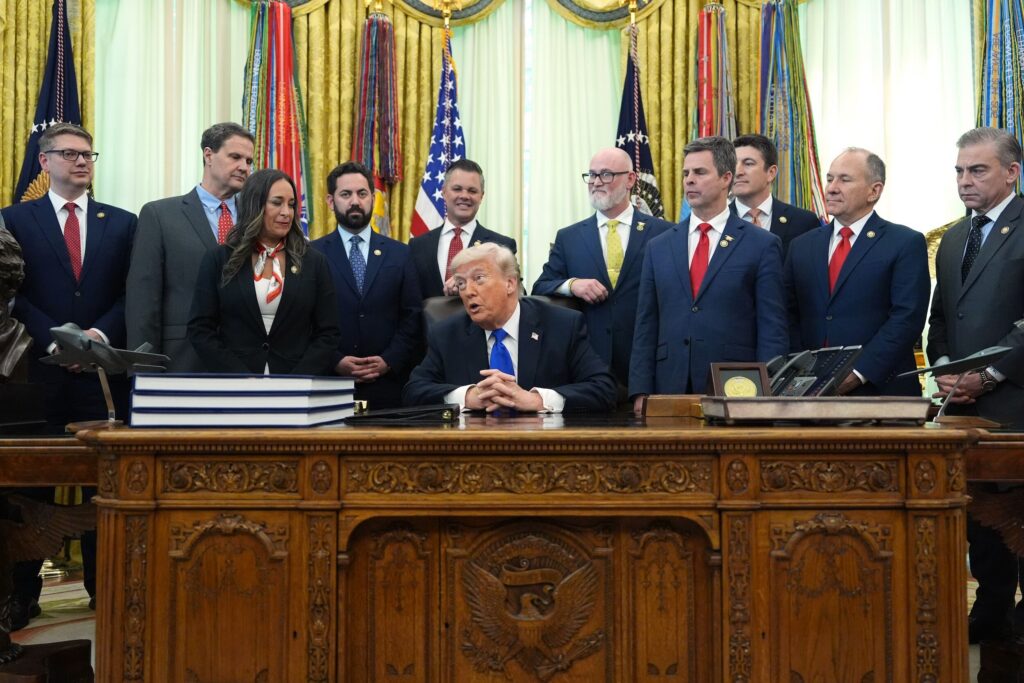
Trump order aims to help more people get retirement savings plans in time for new federal match
Collin Binkley
collin.binkley@associatedpress.com
Updated 1 day ago
WASHINGTON • President Donald Trump signed an executive order on Thursday calling for a new government website where people in the United States can find and compare private-sector retirement savings accounts, aiming to help millions of workers whose employers do not offer such...

Colorado Politics Calendar May 4-10
Rachael Wright, Special to Colorado Politics
rachael.wright@coloradopolitics.com
Updated 5 days ago
CoPo’s weekly political calendar will help you find political and public-policy events throughout Colorado. It includes candidate and issue campaign events, public policy meetings, court hearings, state and local party conventions, assemblies, debates, rallies, parades, speaking engagements, traveling dignitary appearances,...
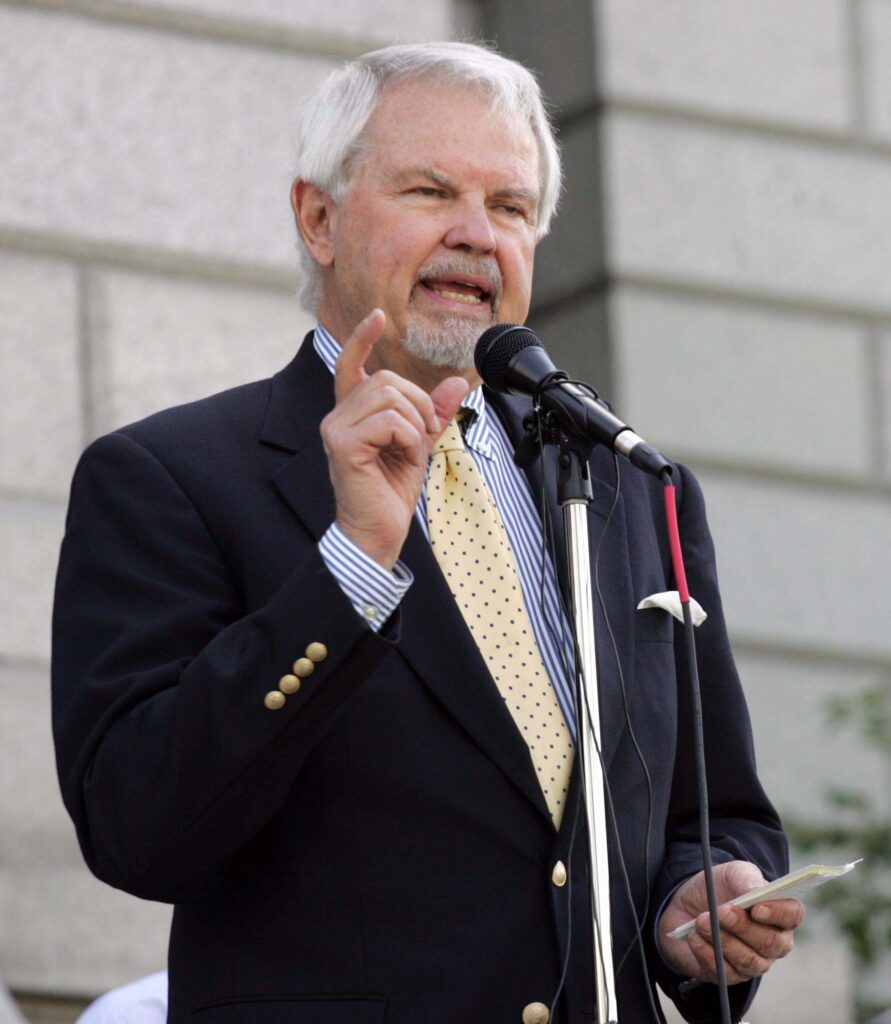
Gov. Lamm scolds own party over losing modernization battle against GOP | A LOOK BACK
Rachael Wright, Special to Colorado Politics
rachael.wright@coloradopolitics.com
Updated 5 days ago
Forty-Five Years Ago This Week: “The Democratic Party lost the battles of ideas and political technology last November,” Gov. Dick Lamm told the Boulder County Democratic Party at the annual Harry S. Truman Memorial Dinner. Lamm argued that the Democratic...

The need for a governor to say “no” to his friends | SONDERMANN
By Eric Sondermann
by-eric-sondermann@coloradopolitics.com
Updated 4 days ago
A wise man once remarked that the real test of a governor is his willingness to turn down and reject the pleadings of political friends and allies. That gentleman knew something of what he spoke. He occupied the corner-office executive...

Dismissal sought in Michael Clark’s second trial
Jenny Deam
jenny-deam@coloradopolitics.com
Updated 18 hours ago
The murder conviction of Michael Clark should be dismissed due to a 32-year delay that led to crucial evidence being lost or destroyed, a bungled police investigation and “outrageous conduct” at the state crime lab, according to defense motion filed...

Colorado to get $75 million from opioid settlement with Purdue Pharma
Marissa Ventrelli
marissa.ventrelli@coloradopolitics.com
Updated 1 day ago
A $7.4 billion settlement reached with the pharmaceutical company Purdue Pharma and the Sackler family — its owners — is now legally effective a decade after attorneys general from multiple states launched an investigation and seven years after Colorado filed...

Committee approves reworked version of previously vetoed rideshare bill
Marissa Ventrelli
marissa.ventrelli@coloradopolitics.com
Updated 3 days ago
Members of the Colorado House Business Affairs and Labor Committee voted across party lines to pass a modified version of a bill establishing regulations on rideshare companies. Last year, Reps. Jenny Willford, D-Northglenn, and Meg Froelich, D-Englewood, introduced House Bill...
Fight over credit card ‘swipe fees’ attracts nearly 200 lobbyists in Colorado
Marianne Goodland
marianne.goodland@coloradopolitics.com
Updated 14 hours ago
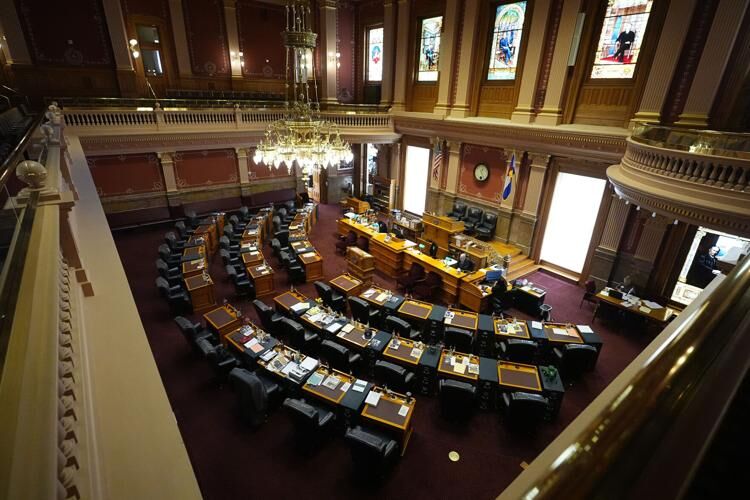
One of the most expensive fights of the 2026 session got a little closer to being over on Friday, when the Colorado Senate took a second final vote on the proposal to eliminate “swipe fees” on sales taxes. It’s not...

Veto likely as union-backed bill heads to Colorado governor’s desk — again
Marissa Ventrelli
marissa.ventrelli@coloradopolitics.com
Updated 2 days ago
For the second year in a row, a bill that would make it easier for labor organizations to impose fees on all workers, regardless of union membership, is headed for Gov. Jared Polis’ desk. The governor, who vetoed the legislation...
PREV
PREVIOUS

Residency dispute, personality conflict fuel recall of new Woodland Park council member
A recall effort has begun against a Woodland Park city council member – who in the past decade was the chief of staff to Colorado’s House Republicans, a legislative candidate in Indiana and a former congressional staffer in Washington, D.C. – over allegations that he did not meet the residency requirements upon his election in […]

First gentleman Marlon Reis taken to hospital as COVID-19 symptoms worsen
Gov. Jared Polis drove the first gentleman, Marlon Reis, to a hospital Sunday night when Reis’ COVID-19 symptoms worsened, the governor’s office said. The governor and first gentleman announced their diagnosis a week ago. Polis has continued to work from home. “As a precaution, the First Gentleman has been transported to the hospital for review […]