

Denver dispensary asks U.S. Supreme Court to rule on legality of marijuana
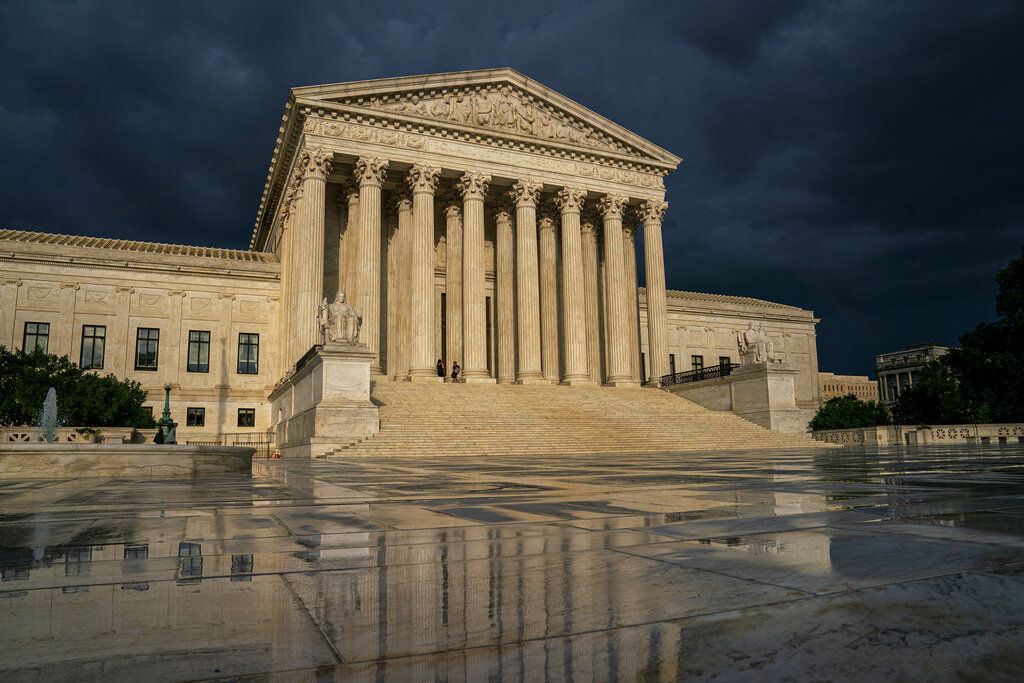
A Denver medical marijuana dispensary has asked the U.S. Supreme Court to decide whether federal law explicitly overrides Colorado’s system of legalized marijuana, and also whether the Fourth Amendment shields cannabis companies’ financial information from tax investigators.
“Thirty-seven states and the District of Colombia [sic] have legalized cannabis and the federal government is refusing to stand down. There is not enough support in Congress to address the conflicting laws,” wrote James D. Thorburn, attorney for Standing Akimbo, in a petition submitted to the Supreme Court. “Federal agencies are overstepping their constitutional bounds in the wake of the lack of legislative resolution.”
Thorburn has litigated a series of cases before federal courts in Colorado challenging the authority of the Internal Revenue Service to obtain financial information of cannabis businesses from the state of Colorado. When IRS investigators began reviewing the tax compliance of Standing Akimbo and other retailers, the companies did not substantiate their filings to the IRS’s satisfaction.
The owners of Standing Akimbo believed the IRS was surreptitiously searching for evidence for federal prosecutors to use against them for drug trafficking crimes. The IRS instead requested product tracking details from Colorado’s Marijuana Enforcement Division and the Marijuana Enforcement Tracking Reporting and Compliance system.
The U.S. Court of Appeals for the 10th Circuit determined that the Fourth Amendment, which protects against unreasonable searches and seizures, did not shield the privacy of Standing Akimbo’s business data.
“Taxpayers chose to operate a marijuana business under Colorado law and, thus, agreed to provide certain information to the Enforcement Division,” wrote Judge Gregory A. Phillips in an opinion from April of this year. The plaintiffs “have no ownership, possession, or propriety [sic] interest in them.”
In the petition for Supreme Court review, Thorburn disagreed, arguing the IRS needed to obtain a search warrant and show probable cause. He contended that the “sole question” was whether the Controlled Substances Act, which still outlaws marijuana at the federal level, preempts Colorado’s regime of legalized cannabis.
“Absent the explicit direction by Congress prohibiting that which is expressly legal under Colorado law, Congress did not override Colorado [state] cannabis distribution laws in favor of the CSA,” reads the petition to the Supreme Court. While acknowledging Congress has the power to restrict marijuana sales, Thorburn did not believe Congress explicitly intended to prevail over state law.
Following Colorado voters’ legalization of retail marijuana in 2012, Robert A. Mikos, a professor of law at Vanderbilt University, published an essay suggesting state laws that regulate marijuana are consistent with Congress’ intent in passing the Controlled Substances Act because they similarly restrict the use, distribution and possession of the drug.
However, “[n]either the United States Supreme Court, nor any federal appellate court, nor the United States Department of Justice (DOJ) has yet opined on Congress’s intent to preempt state marijuana reforms,” Mikos observed.
The conflict between state and federal law, if it exists, seemingly grew after Election Day, as four states legalized retail marijuana and Mississippi voters greenlit medical marijuana.
On the other contested issue in the Standing Akimbo case, the 10th Circuit as recently as October stood by its analysis in other cases brought by Thorburn on behalf of Colorado cannabis retailers. The litigation similarly involved the use of section 280E of the Internal Revenue Code, which prevents businesses from making deductions if they are “trafficking in controlled substances.”
Standing Akimbo has asked the Supreme Court to declare the law unconstitutional because it taxes “artificial income,” meaning business expenses paid on top of income.
The National Cannabis Industry Association agreed that the tax provision majorly affects businesses’ taxable income, estimating a marijuana company with $1 million in gross income would have a 70% effective tax rate, compared to 30% for a comparable business in another industry.
“Cannabis entrepreneurs want to pay federal and state taxes,” the group explained in a fact sheet. “But the current taxation climate has convinced some cannabis entrepreneurs to either ignore 280E on their tax filings, or forego paying taxes altogether. These businesses would rather gamble on the IRS overlooking their filing than see their revenues evaporate due to 280E.”
Jennifer Benda, a tax and cannabis attorney with Hall Estill in Denver, observed that the Supreme Court has declined to take up similar cases challenging section 280E.
“While a more conservative court may be more sympathetic to business-friendly tax arguments,” she said, “it remains to be seen whether a conservative court would extend this generosity to marijuana businesses while they are still illegal under federal law.”
The federal judges in Colorado who have considered the claims of Standing Akimbo and others in the cannabis industry have upheld the broad investigative authority of the IRS. Although the agency declined to give the business owners immunity from prosecution, the courts have found no evidence the agency was acting in bad faith or intended to use its findings for criminal prosecutions.
“If you think that this is ‘just tax, what’s the big deal,'” Thorburn said after the 10th Circuit ruled against his clients in October, “please keep in mind that the American Revolution was born out of the abusive tax collection practices of the British revenue agents.”
Standing Akimbo cert petition to SCOTUS


Federal judge rejects constitutional claims, ‘expressions of hatred’ by Club Q defendant
Michael Karlik
michael.karlik@coloradopolitics.com
Updated 1 minute ago
A federal judge rejected a defendant’s claims that he received constitutionally ineffective assistance of counsel while facing federal hate crime and firearms charges for murdering five people at a Colorado Springs LGBTQ nightclub in 2022. Anderson Lee Aldrich is serving...

Space Force should measure workforce needs, as it prepares to double in size, GAO report says
Mary Shinn
mary-shinn@coloradopolitics.com
Updated 48 minutes ago
The Space Force needs more people. It’s just not precisely sure how many more. A Government Accountability Office report released earlier this month found that the youngest and smallest military branch does not have a process to consistently or accurately...

Colorado schools receive $24 million to fully implement Healthy School Meals for All
Marissa Ventrelli
marissa.ventrelli@coloradopolitics.com
Updated 1 hour ago
The Colorado Department of Education is providing Colorado schools with nearly $24 million in grant funding to fully implement the Healthy School Meals for All program. Approved by voters in 2022, the Healthy School Meals for All provides free breakfast...

Secret Service agent placed on administrative leave after arrest for near-deadly hazing ritual
Claire Carter
claire.carter@washingtonexaminer.com
Updated 2 hours ago
A Miami Secret Service agent in Florida was placed on administrative leave following his arrest on Sunday in connection with a near-deadly hazing incident at a University of Miami fraternity. Marquez Christopher Pinder, 29, was arrested alongside two other individuals...
Forest fire west of Sedalia prompts evacuations in Douglas County
Nicholas Fogleman
nicholas.fogleman@denvergazette.com
Updated 4 hours ago
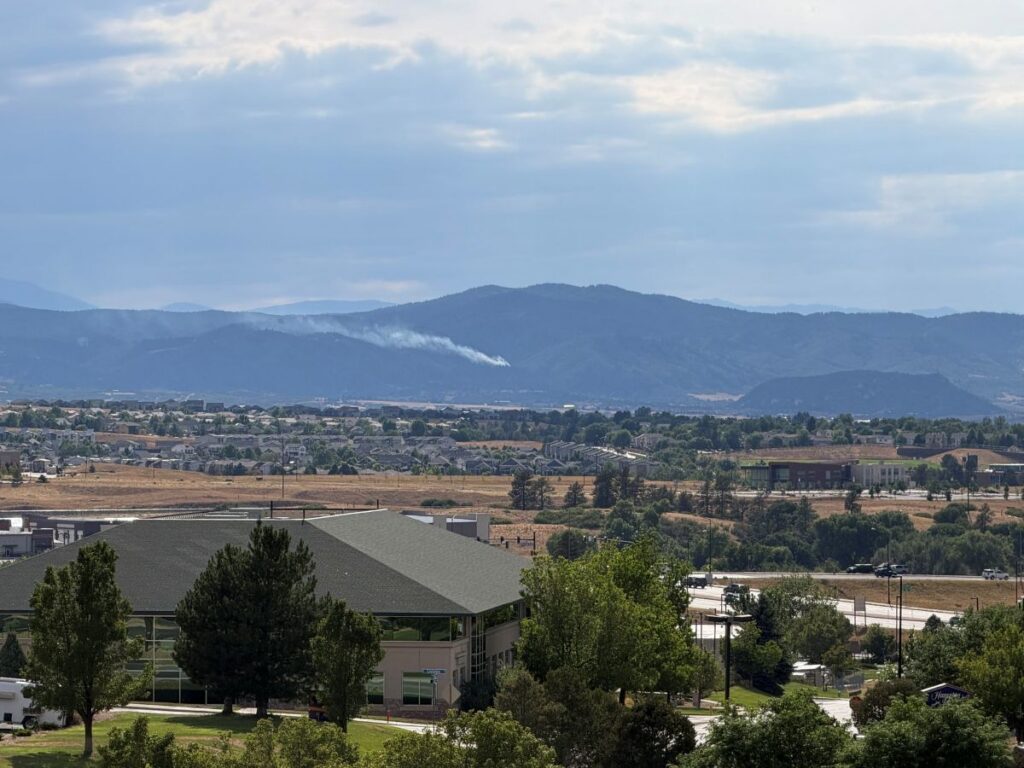
Emergency crews are responding to a forest fire burning west of Sedalia, prompting evacuation orders for nearby residents Sunday afternoon. At about 5 p.m. Sunday, the Douglas County Sheriff’s Office issued an evacuation order for residents within a 2-mile radius...

Airstrikes have paused and talks are pressing forward. But can the US and Iran take the off-ramp?
The Associated Press
the-associated-press@coloradopolitics.com
Updated 4 hours ago
WASHINGTON (AP) — The U.S. military has paused its airstrikes on Iran after nearly two weeks of intensifying bombing, while diplomatic efforts have pushed forward to try to avert a return to all-out war. But it remains to be seen...
Penrose fortune paved the way for Colorado Springs to be a military, space and sports town
Mary Shinn
mary-shinn@coloradopolitics.com
Updated 4 hours ago
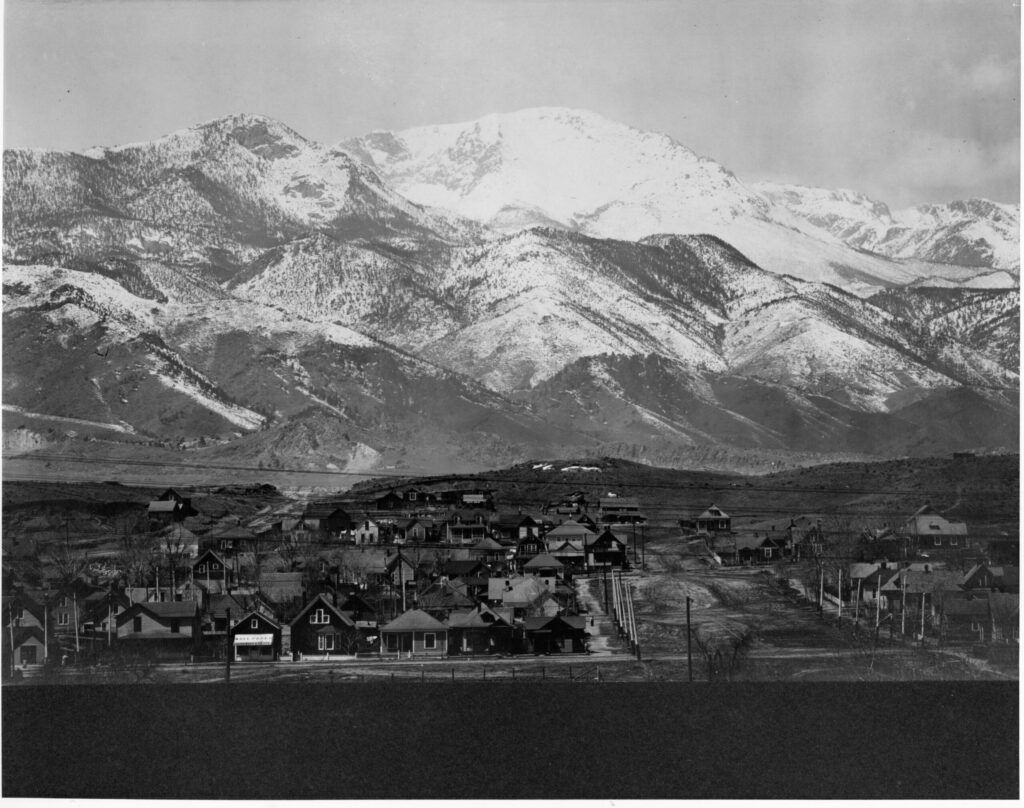
Colorado Springs is always working to catch the next big economic wave. “We’re always trying to figure out what the next thing is going to be,” explained Matt Mayberry, director of the Colorado Springs Pioneers Museum. In the early days,...

Colorado Politics Calendar July 27-Aug. 2
Rachael Wright, Special to Colorado Politics
rachael.wright@coloradopolitics.com
Updated 5 days ago
CoPo’s weekly political calendar will help you find political and public-policy events throughout Colorado. It includes candidate and issue campaign events, public policy meetings, court hearings, state and local party conventions, assemblies, debates, rallies, parades, speaking engagements, traveling dignitary appearances,...

The through line from Donald Trump to Victor Marx | SONDERMANN
By Eric Sondermann
by-eric-sondermann@coloradopolitics.com
Updated 5 days ago
Over 10 years ago, before Donald Trump could ever defeat Hillary Rodham Clinton, he had to first engineer a hostile takeover of the Republican Party. Prior to his descent of that golden escalator, the previous seven Republican presidential nominees had...

Colorado districts prepare for school year amid mental health cuts. But will less cellphone distractions help?
Marissa Ventrelli
marissa.ventrelli@coloradopolitics.com
Updated 3 days ago
The signs of a new school year are everywhere — buses in the shop, teachers unpacking boxes, families ticking through supply lists — but behind the familiar rituals, Colorado districts are preparing for a year defined less by routine than...
PREV
PREVIOUS
CSU project helps ski industry adapt to climate change
The Colorado Climate Center at Colorado State University, through in-depth interviews with ski area managers, found that ski resorts have difficulty integrating climate change data into their operations and planning. “Many ski areas we talked to recognized that they were doing the bare minimum and there was so much more to be learned,” assistant professor […]

House GOP elects Rep. Hugh McKean of Loveland as minority leader
The 24 members of the Republican House caucus Monday elected its leadership team Monday, choosing third-term Rep. Hugh McKean of Loveland Minority Leader, and a new direction for the caucus that lost seats two years ago and treaded water in the 2020 election. Hugh McKean McKean was elected on the second ballot in a three-way […]