

Trump administration strips federal protections for gray wolves ahead of Colorado vote
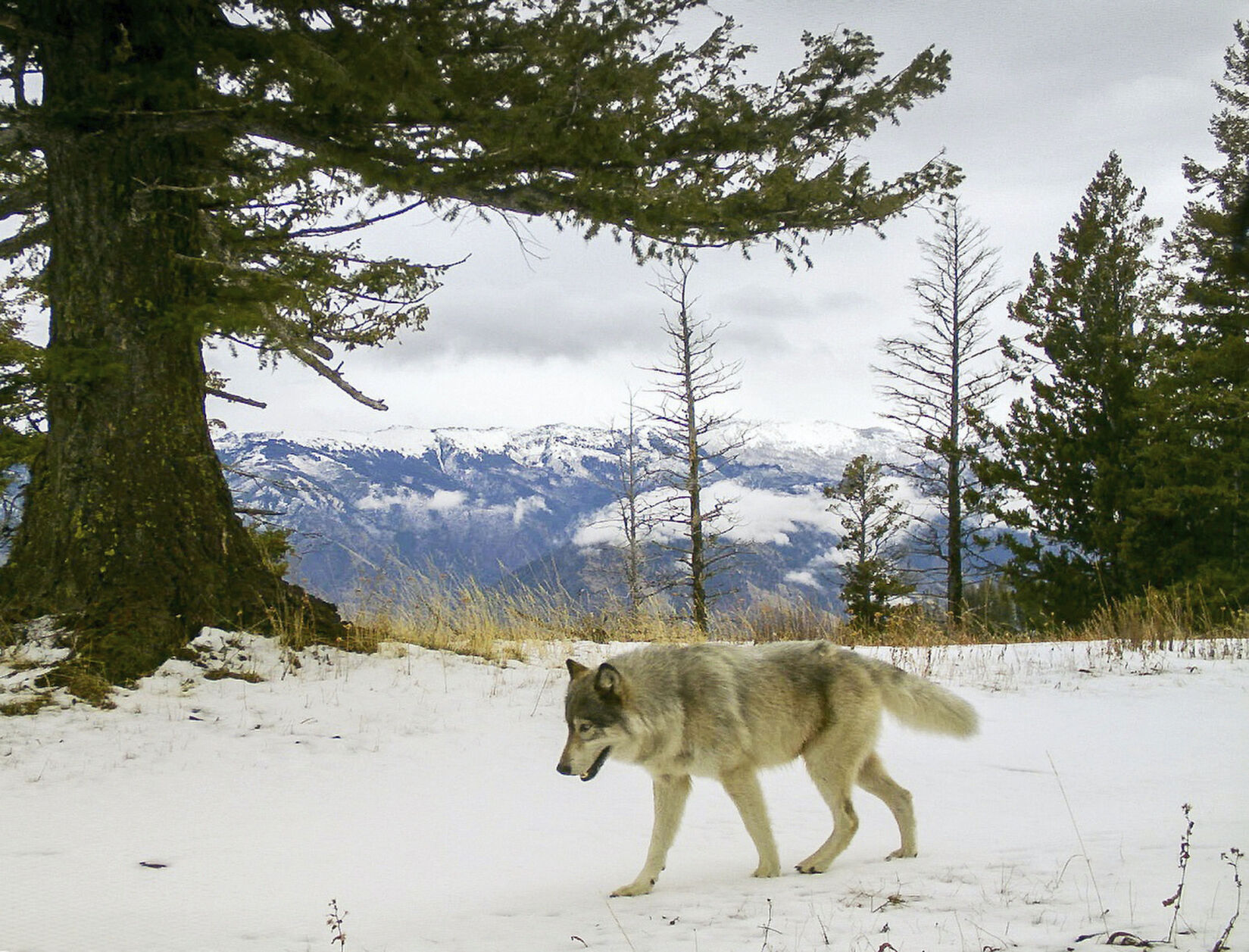
The Trump administration announced Thursday it will strip endangered species protections for gray wolves, though it’s coincidental to Colorado’s current vote on reintroduction to the state, a federal official said in a briefing with reporters.
“That’s a state initiative and it didn’t factor in our delisting action,” said Gary Frazer, the assistant director for endangered species for the U.S. Fish and Wildlife Service, “so we did not consider how it might be affected by our action.”
It does and it doesn’t.
Proposition 114 would reintroduce gray wolves to the Western Slope, make it illegal to kill them unless they’re threatening a human and compensate farmers and ranchers who lose livestock to the apex predators.
INSIGHTS | Proponents say wolves are lambs in wolves’ clothing
Wolves have been on the federal Endangered Species List for 45 years.
Frasier said he expects legal challenges to the broad 48-state rule. He noted that delistings usually occur in certain areas.
Environmental groups quickly responded Thursday that the delisting was premature and misrepresents wildlife science, positioning it as a political decision by the Trump administration — especially given the announcement’s proximity to next Tuesday’s election.
VOTER GUIDE 2020 | Colorado Ballot: Proposition 114 asks for voters' stances with wolves
Frazer pushed back.
“The Fish and Wildlife Service prides itself on making its determinations based purely on the best scientific and commercial data available,” he said. “I would note we’ve proposed delisting gray wolves due to recovery under different administrations, Democrat and Republican.”
As Frazer listed locations were wolves exist outside the Northern Great Lakes region, he included northwest Colorado, where a small pack was confirmed in January.
If the Department of Interior doesn’t protect and manage wolves, however, it would fall to the state to do so, and the Colorado Wildlife Commission has previously sided against reintroducing wolves. That changes the vote, since the power of the voter might force Colorado Parks and Wildlife to take on the responsibility.
The commission adopted a wolf management plan in 2004 on the premise that wolves might return to the state naturally, but more recently noted that the federal government, not the state, is responsible for protecting endangered species.
“One common misconception is that if a ballot initiative passes to reintroduce wolves, CPW will assume immediate management control of the species,” the state agency said in a statement about Proposition 114 before Thursday’s announcement. “As long as the gray wolf remains a species listed under the Endangered Species Act in Colorado, CPW has no management authority, which is not always clear in the current conversations around this topic.”
Colorado Parks and Wildlife is funded with fees paid by fees paid for hunting, fishing and other outdoor recreation on public lands.
“In Colorado, the wolf has been functionally extinct for nearly 80 years and remains so today,” said Rob Edward of the Rocky Mountain Wolf Action Fund, the group driving Prop 114. “More than ever, we need wolves to restore the balance in our mountain ecosystems. We need to reintroduce wolves to improve the health of our elk and deer herds, which are suffering from a high prevalence of the always-fatal chronic wasting disease.”
He said removing federal protections only highlights the importance of Colorado’s vote to direct the state to provide and enforce a science-based plan with public input to reintroduce about 40 wolves to a region with 17 million acres of public land.
The Colorado Cattlemen’s Association said the federal decision provides the science that wolves can make it on their own, so the state shouldn’t interfere by reintroducing wolves via the ballot.
“Proposition 114 is a reckless and expensive assault on Colorado’s economy, wildlife and livestock production, and not to mention an already growing wolf population,” Janie VanWinkle, the association’s president, said in a statement Thursday. “Colorado Parks and Wildlife has an efficient, U.S. Fish and Wildlife Service-recognized management plan in place, which is actively protecting wolves within the state. For the sake of Colorado’s treasured wildlife, and fragile economy, Coloradans need to vote no on Proposition 114.”
U.S. Rep. Ken Buck of Windsor, who doubles as the state Republican Party chair, applauded the Trump administration’s announcement. He singled out Interior Secretary David Bernhardt, who grew up in Rifle and attended the University of Northern Colorado in Greeley.
“State and local officials are better equipped to make important decisions about how best to manage wildlife populations while protecting farmers, ranchers, and businesses,” he said Thursday. “I applaud the secretary for this thoughtful decision.”
Bernhardt issued a statement Thursday, as well.
“Today’s action reflects the Trump administration’s continued commitment to species conservation based on the parameters of the law and the best scientific and commercial data available,” he stated. “After more than 45 years as a listed species, the gray wolf has exceeded all conservation goals for recovery.
“Today’s announcement simply reflects the determination that this species is neither a threatened nor endangered species based on the specific factors Congress has laid out in the law.”
Colorado Politics Must-Reads:


Trump lowers flags to half-staff for Dolly Parton: ‘The World loves you’
Naomi Lim
naomi-lim@coloradopolitics.com
Updated 15 hours ago
President Donald Trump is honoring the life of country music legend and philanthropist Dolly Parton by ordering federal buildings across the country to lower flags to half-staff for a week. “Very sad to report that Dolly Parton, one of the...
Ted Cruz suggests GOP realignment coming after Trump leaves office
Emily Hallas
emily-hallas@coloradopolitics.com
Updated 15 hours ago
Sen. Ted Cruz (R-TX) on Monday suggested the Republican Party could embrace a directional shift after President Donald Trump leaves office, a transition that promises to leave a gaping hole in the GOP. Cruz is known as a critical ally...
2 Colorado State troopers shot near Woodland Park; suspect killed
DEBBIE KELLEY
debbie-kelley@coloradopolitics.com
Updated 14 hours ago
Two Colorado State Patrol troopers were hospitalized, and a suspect is dead after a shooting during a traffic stop Tuesday. The initial incident happened at about 7:15 a.m., when a resident reported suspicious activity in the area near milepost 286...

Aurora moves forward with data center regulations
Kyla Pearce
kyla.pearce@gazette.com
Updated 14 hours ago
The Aurora City Council approved moving forward with two new regulations on data centers and directed staff to come back at the next study session with others. At a council meeting in early August, council members directed city management to...

Aurora City Council considers stricter food truck regulations
Kyla Pearce
kyla.pearce@gazette.com
Updated 14 hours ago
The Aurora City Council is considering passing laws to limit the number of food trucks on properties in the city and how and when they operate. Councilmember Angela Lawson, who sponsored the ordinance, said she understands the importance of food...

Denver murder conviction reversed for incomplete self-defense instruction
Michael Karlik
michael.karlik@coloradopolitics.com
Updated 12 hours ago
Colorado’s second-highest court reversed a defendant’s murder conviction last week because a Denver judge gave an incomplete instruction to the jury about the man’s right to self-defense. Donald R. Gonzales and Gary McLaughlin met up in a Capitol Hill parking...
Colorado lawmaker, House leaders named in workplace-retaliation lawsuit
Marianne Goodland
marianne.goodland@coloradopolitics.com
Updated 15 hours ago
A former legislative aide has filed a lawsuit alleging she was mistreated, illegally directed to perform campaign work and harmed by a House leadership structure she charged was fragmented, politicized and ineffective at protecting employees. The lawsuit, filed by Jennifer...

Secret Service confirms awareness of Iranian state media video threatening Barron Trump’s life
The Associated Press
the-associated-press@coloradopolitics.com
Updated 20 hours ago
WASHINGTON (AP) — The U.S. Secret Service has confirmed it is aware that Iranian state media has aired a video that appears to threaten the life of Barron Trump, President Donald Trump’s youngest son. “The U.S. Secret Service is aware...

Federal judge hears arguments about Colorado’s 3-day gun purchase waiting period
Michael Karlik
michael.karlik@coloradopolitics.com
Updated 20 hours ago
A federal judge heard arguments on Monday about the constitutionality of a 2023 Colorado law that generally imposes a three-day waiting period on firearm purchases after the initiation of a background check. The test that the U.S. Supreme Court created...

Denver auditor finds oversight failures in $175.6M 16th Street project
Nico Brambila
nico.brambila@denvergazette.com
Updated 14 hours ago
Surprise historic sewer discovery delayed completion a year, cost $18M The Denver Auditor recently found significant oversight and contracting problems with the $175.6 million 16th Street Improvement Project, including an $18 million contract increase and a nearly one-year extension that...
PREV
PREVIOUS

"You Have the Right" website debuts to aid sex assault survivors, loved ones
The Colorado Coalition Against Sexual Assault has debuted a new website called “You Have the Right,” which provides survivors and others with resources to identify, understand and seek care for sexual assault. “CCASA and our partners have worked for more than a decade to create laws in Colorado that give survivors options for seeking medical […]

Aurora City Council to vote on raising minimum wage to $17 on Monday
In what is expected to be a close vote on Monday night, the Aurora City Council is scheduled to consider raising the minimum wage from $12 to $17 by 2025. The council held a study session on Sept. 21 about the possibility of raising the minimum wage to $20, but they opted to not move […]