

Vail communications to pass holders not ‘abusive,’ indicates judge in COVID-19 lawsuit

A federal judge has rejected an attempt to require Vail Resorts to submit for court review the company’s future communications to season pass holders affected by the COVID-19 pandemic.
“[T]he Court does not find the communication to be abusive or contrary to any authority,” wrote U.S. District Judge R. Brooke Jackson on Thursday, referring to an offer the ski conglomerate advertised in the wake of its COVID-19-induced closure in March.
“As a reminder, we are providing credits to 2019/20 Season Pass Holders, valued up to 20%-80% of the 2019/20 season pass, to apply toward the purchase of a 2020/21 season pass of equal or greater value,” wrote the company in an Aug. 28 email included in court documents. “Your 2019/20 season credit (if applicable) will be applied to your final payment.”
On March 14, Gov. Jared Polis ordered the closure of ski resorts due to the spread of the novel coronavirus, and Vail announced a few days later that all of its facilities in North America would shutter for the remainder of the ski season.
Beginning on April 21, pass holders began filing class action lawsuits in federal court in Colorado against Vail, seeking refunds. Shortly afterward, on April 27, Vail did first announce the offer to credit the unexpired portion of 2019-20 season passes toward the purchase of a 2020-21 season pass.
Although the company recognized that some people had not yet used their passes and were waiting until the spring, Vail set the maximum credit at 80%, worth $575.20 for an adult pass. To receive the credit, customers could not participate in the class action lawsuit.
The plaintiffs, in turn, argued the company’s move was “misleading, deceptive, coercive, and interfere[s] with Plaintiffs’ rights in this lawsuit.” They objected to Vail allegedly hiding the condition in “fine print” that in order to receive the credit, an individual would forfeit their ability to benefit from the litigation.
Similar wording appeared in the approximately-600 word Aug. 28 email from Vail, advising customers: “Please understand that your acceptance of this Credit includes a release of legal claims, including any claims for a refund or compensation related to the 2019/2020 resort closures due to COVID-19.”
Plaintiffs requested the federal court issue a protective order because the communications were misleading about the litigation or served to dissuade members of the season pass class from waiting to receive payment from the lawsuit. They argued Vail omitted key information about the litigation, and requested the court require the company to submit any future communications with the class to the plaintiffs’ lawyers and the court for approval.
“Vail Resorts has voluntarily done for its customers what this lawsuit cannot — offer a meaningful resolution to the closure of its ski areas due to COVID-19,” the company responded. “Plaintiffs, whose lawsuit demands refunds for non-refundable ski passes, now move to undercut Vail Resorts’ efforts and request that the Court impose a ‘corrective’ action order to dictate Vail Resorts’ customer communications.”
Jackson sided with Vail, explaining that he expected a company to impose such a condition in order to resolve customers’ grievances out of court.
“In a seasonal business where repeat customers are potentially critical, it is hardly surprising that Vail Resorts would attempt to preserve its customers’ good will,” Jackson wrote. “Specifically, it is difficult for the Court to understand how it is an abusive tactic for the company, in the unique circumstances created by the pandemic and the shutdown order, to reach out to its season pass base and try to entice pass holders to return by offering a credit against a future pass, just because a few customers were able to get lawsuits seeking refunds on file before Vail was able to put together a plan to offer a range of credits against the purchase of a future pass.”
Also on Oct. 15, Jackson signed an order designating the Chicago law firm of Cafferty Clobes Meriwether & Sprengel as interim lead counsel in the 10-case consolidated lawsuit and Denver’s Sherman & Howard as liaison counsel.


Tiered or capped? Battle over Colorado’s income taxes might come down to one number
Marianne Goodland
marianne.goodland@coloradopolitics.com
Updated 11 hours ago
The battle between two competing ballot measures — one seeking to cap Colorado’s income tax rate, the other pushing for a tiered system depending on income levels — might come down to whichever ballot proposal gets one more vote. The...
10th Circuit says landowner cannot sue ex-Routt County judge for statements in decision
Michael Karlik
michael.karlik@coloradopolitics.com
Updated 13 hours ago
A Routt County landowner cannot sue a former judge for his allegedly inaccurate statements in a case where the landowner was not a party, the Denver-based federal appeals court decided on Wednesday. Anne Fitzsimmons, who lives in Germany, owns a...
Rubio crushes Vance in Western Conservative Summit 2028 straw poll
Kiara Moore
kiara.moore@washingtonexaminer.com
Updated 17 hours ago
Secretary of State Marco Rubio came out on top in this past weekend’s nonpartisan straw poll at the Western Conservative Summit, outpacing a packed field of would-be 2028 presidential hopefuls. Hosted by the Centennial Institute, Colorado Christian University’s public policy...

Supreme Court to open next term with major climate change case
Jack Birle
jack-birle@coloradopolitics.com
Updated 16 hours ago
The Supreme Court’s next term will begin in October with major cases about costly climate change lawsuits and immigration. The high court announced the cases it will hear in the first month of its upcoming term, as the justices remain...

New Colorado laws going into effect cover AI disclosures, medical marijuana access and gambling limits
Marissa Ventrelli
marissa.ventrelli@coloradopolitics.com
Updated 17 hours ago
More than 100 new Colorado laws take effect Aug. 12, bringing changes to chatbot safety rules, psychedelic research, campus wellness checks and sports betting restrictions. Here is a look at some of those laws set to take effect. The law:...

National House Democrats add Colorado seats held by Lauren Boebert, Jeff Hurd to target list
Ernest Luning
ernest.luning@coloradopolitics.com
Updated 15 hours ago
The national House Democrats’ campaign arm on Wednesday added the Colorado congressional district held by Republican U.S. Reps. Jeff Hurd and Lauren Boebert to the list of targeted seats the party believes are vulnerable in this year’s midterms. The Democratic...

Bennet settles campaign finance complaints, admits violating state law
Marianne Goodland
marianne.goodland@coloradopolitics.com
Updated 13 hours ago
U.S. Sen. Michael Bennet’s gubernatorial campaign has agreed to pay a $7,433 fine for using his Senate campaign account to pay for gubernatorial campaign travel expenses. The July 31 settlement includes an admission by Bennet and his campaign that they...

Colorado to implement new laws on jail standards, safe haven rules, and agricultural labeling
Marissa Ventrelli
marissa.ventrelli@coloradopolitics.com
Updated 19 hours ago
In mid-August every year, a slew of recently passed laws in Colorado go into effect 90 days after the end of the legislative session. This year, all bills without a specified effective date or safety clause — a provision stating...
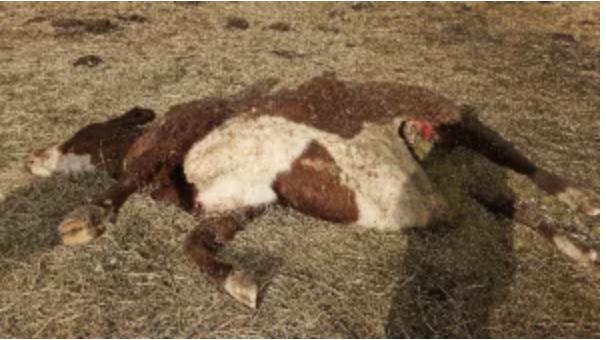
Colorado records 17th wolf death, a yearling tied to livestock losses
Marianne Goodland
marianne.goodland@coloradopolitics.com
Updated 14 hours ago
A yearling male wolf in Grand County has become the 17th wolf to die in Colorado in the past two years. Colorado Parks and Wildlife announced that its staff killed the wolf on Aug. 4 because it was believed to...
Parole, appeals deadlines and restitution: Colorado justices accept cases
Michael Karlik
michael.karlik@coloradopolitics.com
Updated 1 day ago
The Colorado Supreme Court announced on Monday that it will determine how a defendant’s parole-eligibility date should be calculated in instances where a new trial results in a sentence being imposed retroactively to the date of the original, since-overturned sentence....
PREV
PREVIOUS

Report: Colorado vehicle registrations down 16% in 2020
The market for new vehicles in Colorado shrunk by more than 16% in the first nine months of 2020 compared to the same period last year. “While Colorado’s new vehicle registrations through September are in downhill territory, the percentage of decline has leveled off from a month ago, and Colorado’s numbers are better than the […]

Report: State retained $2.6 billion in last fiscal year from Referendum C
For the fiscal year that just ended, Colorado retained $2.6 billion through the 2005 Referendum C measure, and the fiscal year beginning in 2021 will see an estimated $617.7 million retained, according to a report from Legislative Council Staff. Voters approved Referendum C more than a decade ago, which allowed Colorado to retain and spend revenue […]