

NOONAN | Electoral College is an anachronism
Paula Noonan

As of Oct. 1, 4,158,895 Coloradans are registered voters and 3,647,180 are active voters. Over 49,300 young people have pre-registered, eagerly awaiting their first shot at the ballot. Will these voters’ ballots count?
In the original constitution signed Sept. 17, 1787, the number of members of the House of Representatives was apportioned “among the several States which may be included within this Union, according to their respective Numbers, which shall be determined by adding to the whole Number of free Persons, including those bound to Service for a Term of Years, and excluding Indians not taxed, three fifths of all other Persons.” But not all “Persons” could vote.
The first census totaled 3,893,635 in the United States, just above Colorado’s active voter registrations. Of those, 807,094 were free white males 16 or older, 1,541, 263 free white females, 59,150 other free persons, and 694,280 enslaved persons. The states had the right to set up their elections. In most instances, free white male property owners were the voters. The 1790 Naturalization Law stated that only “free white immigrants” could become naturalized citizens which further refined who could vote for members of the U.S. Congress.
New Hampshire took away the property requirement for voting in 1792. New Jersey, which originally allowed free white women to vote, revoked that right in 1807. In 1868, with the 14th Amendment, citizenship was granted to former slaves, but only former male slaves could vote.
With the House of Representatives the only federal governing body elected by voters, however circumscribed, the U.S. Senate and the president and vice president were selected through the vetting process of state legislatures. Not until the 1914 general election were senators chosen by direct popular vote.
So up to 1914, a little more than 100 years ago, selecting elected officials was an elite process. Since 1914, our elections have become more democratic, especially with women’s suffrage and the Voting Rights Act of 1965.
There are only two elected positions left where the people don’t have the right to directly select an official, and that’s the president and vice president of the United States. The 4,158,895 registered voters in Colorado will vote for whom they choose for president, but only nine electors, seven for the number of US House members and two for the number of U.S. senators, will elect the president. Does this archaic 18th century leftover make any sense at all in the year of 2020?
Colorado is disadvantaged with this anachronism as a state with growing population. It’s likely that Colorado will receive one more U.S. House seat upon completion of the 2020 census. That means that states that have lost population, including California, Michigan, Pennsylvania, New York, and Illinois among others, will lose at least one Representative. Two of these states, Michigan and Pennsylvania, are considered swing states for the 2020 presidential race.
The Electoral College is embedded in the original constitution. It can lead to many complicated scenarios, especially with close elections, none of which honor each vote and voter’s preference. The best way, the most clearcut and constitutional manner of rectifying the anachronism, would be a constitutional amendment stating that each registered voter’s ballot counts as one vote toward a majority that would select the president and vice president of the United States.
But state populations and self-interest make such an amendment unlikely in the near future. Smaller states cling to the Electoral College as a way for their “voices to be heard.” That’s because a state with population supporting only one U.S. representative and two senators supposedly has more vote per elector than a state like California or Texas. Small states believe they’ll lose their impact with a “one person, one vote” election.
But in the current system, it’s not small states that dominate. It’s “close states,” states where the parties are evenly divided and where contentiousness is greatest. These five or six states get the attention and everyone else in the nation is on the sidelines. That now includes Coloradans.
The country’s history is toward expanded vote and direct elections. Colorado’s Proposition 113 supports that hard-fought tradition. A YES vote on 113 gets us to a direct vote result. It’s time to get with the times. Make your vote, all of it, count. Vote YES on 113.


Blue states should avoid disasters | Hal Bidlack
Hal Bidlack
hal-bidlack@coloradopolitics.com
Updated 12 hours ago
Back when I was teaching political science at the U.S. Air Force Academy (and amazingly to me, a week from this column’s publication will mark 20 years since my retirement from active duty. Where the heck did that time go?)...

Right-to-hunt ballot measure’s a cruel, anti-wildlife solution to a nonexistent problem | GUEST COLUMN
Colorado Politics
colorado-politics@coloradopolitics.com
Updated 22 hours ago
By Eric Washburn I love to hunt. Every year I try to hunt big game in Colorado and waterfowl in Louisiana. This year, I applied for five Colorado big game licenses — elk, deer, pronghorn, moose and bighorn sheep. I...

Jena Griswold’s record: corruption, incompetence | Dick Wadhams
Dick Wadhams
dick-wadhams@coloradopolitics.com
Updated 4 days ago
There is no statewide elected official going back decades who is as breathtakingly corrupt and incompetent as Secretary of State Jena Griswold, who is now running for attorney general of all things. And compliant ruling Democrats know it. Their silence...

Kiros exudes why Colorado’s political times are a-changin’ at annual Denver Dems gala | Miller Hudson
Miller Hudson
miller-hudson@coloradopolitics.com
Updated 4 days ago
Among Colorado’s few remaining bipartisan rituals are county and state party dinners. I was particularly intrigued by last week’s Denver Democratic Party’s 2026 Annual Gala, a “New Deal for a New Era.” Their glossy program featured an artist’s Technicolor rendering...

Livestock grazing regulations need flexible updates | Rachel Gabel
Rachel Gabel
rachel-gabel@coloradopolitics.com
Updated 4 days ago
The Bureau of Land Management last updated their livestock grazing regulations the year I graduated from high school. I am 49. Assessing rangeland health can’t be done once and not revisited. This year is a prime example that managers must...

Taxpayers donate to tax increase campaign | Jon Caldara
Jon Caldara
jon-caldara@coloradopolitics.com
Updated 5 days ago
Give the man his due. President Donald Trump has undeniable talents. Colorado politicians are learning. Chief among The Don’s skills is taking the self-serving, ethically dubious behavior of previous politicians and putting it on steroids. Or, to borrow from the...
A summertime all-you-can-eat political buffet | SONDERMANN
Eric Sondermann
eric-sondermann@coloradopolitics.com
Updated 6 days ago
We find ourselves in the doldrums of August with a complete dearth of political news. Yeah, right. These days, that train never stops moving. It is a 24/7/365 express amplified by 24/7/365 media. Let me respond with one of my...
State money diversion scheme the unsurprising downfall of ERBOCES scam | Paula Noonan
Paula Noonan
paula-noonan@coloradopolitics.com
Updated 5 days ago
Falcon School District 49, aka El Paso County School District 49, has finally cut bait, thrown the fishing pole into the lake and sunk the canoe. The longtime enabler of the Education Reenvisioned BOCES’ (ERBOCES) schemes to fund private Christian...
Steve Schuck on the ‘magic’ of school choice | The OpEdge Podcast
Tony Olivero
tony.olivero@gazette.com
Updated 6 days ago
Parents Challenge co-founder and longtime school choice advocate Steve Schuck joins The OpEdge to discuss expanding educational opportunities and ensuring parents are in charge of their kids’ education. Schuck tells investigative columnist and host Jimmy Sengenberger why he believes Colorado...
Do lobbyists add value to policymaking? | PODIUM
Colorado Politics
colorado-politics@coloradopolitics.com
Updated 6 days ago
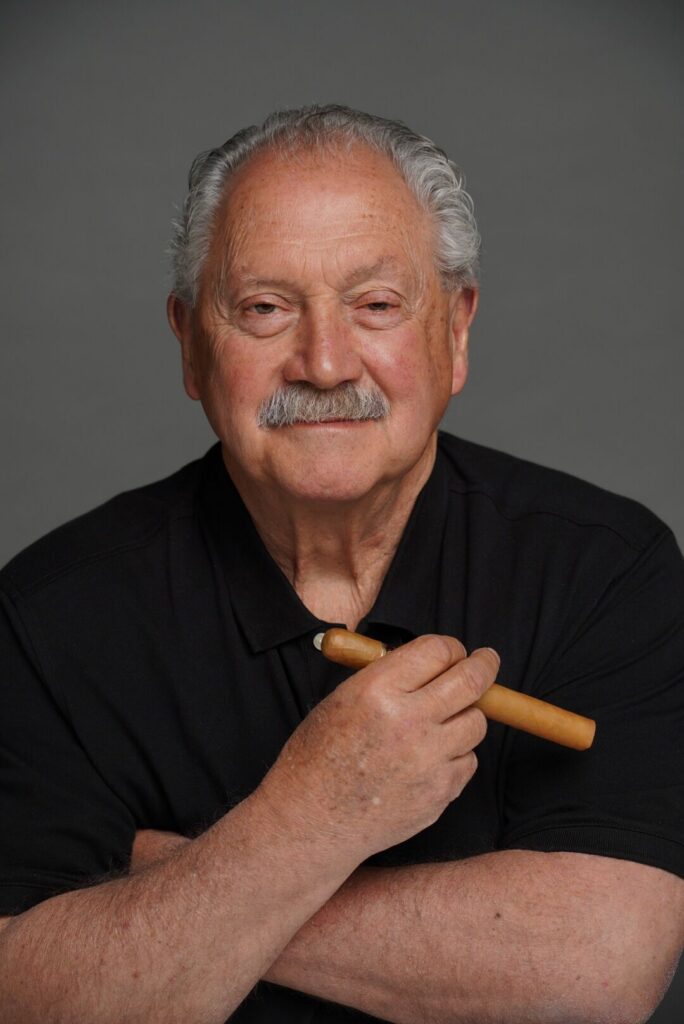
By Corky Kyle I was recently asked a straightforward question: are lobbyists a valuable component in the development of public policy? After more than four decades working with the Colorado General Assembly, state agencies, local governments, associations and businesses, my...
PREV
PREVIOUS

SLOAN | NPV undermines constitutional republic
Kelly Sloan There is an old aphorism, popular in politics, that says if you are not at the table you are on the menu. One of the more important ballot measures Coloradans are being asked to consider this year is asking approval to surrender our place at the national table. Proposition 113 asks for voter […]

BIDLACK | Legislation beats ballot frustration
Hal Bidlack Just in case you haven’t noticed, there appears to be an election campaign going on right now. And putting on my well-worn retired political science professor hat, let me assure you, this one is important. But did you see what I did there? Every election is important, albeit for different reasons every time. When I […]