

Franchise of Domino’s Pizza settles case over alleged labor law violations

A federal judge in Denver on Monday approved a $545,000 settlement between a Denver franchise of Domino’s Pizza and workers who claimed the company violated federal and state labor laws.
The workers said laws were broken regarding rest and meal breaks for hourly employees and improper reimbursement to delivery drivers for mileage.
The settlement in Murray v. Tips Inc. includes two classes of plaintiffs.
The “FLSA Settlement Class Members,” referring to the Fair Labor Standards Act, include Colorado delivery drivers who worked for Tips Inc. between April 21, 2015, and July 1, 2019, and opted in as members of the class. The “Meal and Rest Break Settlement Class” includes includes Colorado employees of Tips, Inc. who as of July 1, 2019 worked 32 or more hours per week for at least half the weeks they were employed by Tips, Inc. and did not opt out of the settlement.
According to a motion filed in March by the parties for approval of the settlement, Tips Inc. agreed to pay $545,000, including attorney fees and costs, which the parties agreed wouldn’t amount to more than one-third plus $15,000 of the total settlement.
In Monday’s order, U.S. District Judge Raymond Moore approved $179,850 in attorney fees and $14,424.65 in costs. He also approved a $5,000 participation award for plaintiff Sheretta Murray, who acted on behalf of the case’s class members.
Attorneys for the plaintiffs and Tips Inc. were not immediately available for comment.
According to the motion, the case was originally filed in April 2018 by Jeremy Fletcher on behalf of class members. However, he eventually withdrew from the case and Murray volunteered to take his place as the representative plaintiff.
The motion states Tips Inc. has not admitted wrongdoing and does not believe class status is appropriate for the case except for purposes of the settlement, while Murray believes she would win on the claims from both classes. But both parties recognized the uncertainty of an outcome at trial and the time and expenses required by continuing litigation.
The parties also recognized several questions of law and fact remain in dispute, creating risk related to the uncertainty of possible damages. Lingering disputes include whether the case could go to trial as a class action and applicability of possible penalties.
According to the settlement, members of the FLSA settlement class who claimed Tips Inc. improperly reimbursed them for mileage opted into the plaintiff class and have released any claims related to mileage reimbursement or missed rest and meal breaks, either under the FLSA or Colorado law. Members of the meal and rest break settlement class, who were not required to opt in, have only released claims under Colorado’s law related to missed breaks but not claims under the FLSA.
The motion for approval of the settlement states payment to each member depends on factors. These include the number of miles driven, reimbursements they received from Tips, Inc., the number of weeks worked by members of the meal and rest break class, and a minimum payment for those who are non-participating members of the meal and rest break class unless they opt out of the settlement.


‘Right to natural gas’ proposal in Colorado qualifies for ballot
Marissa Ventrelli
marissa.ventrelli@coloradopolitics.com
Updated 43 minutes ago
A ballot initiative that would enshrine the right to natural gas has qualified for the November ballot, the Colorado Secretary of State’s Office confirmed on Thursday. Petitions containing signatures for Initiative No. 177 were turned in to the Secretary of State’s Office...
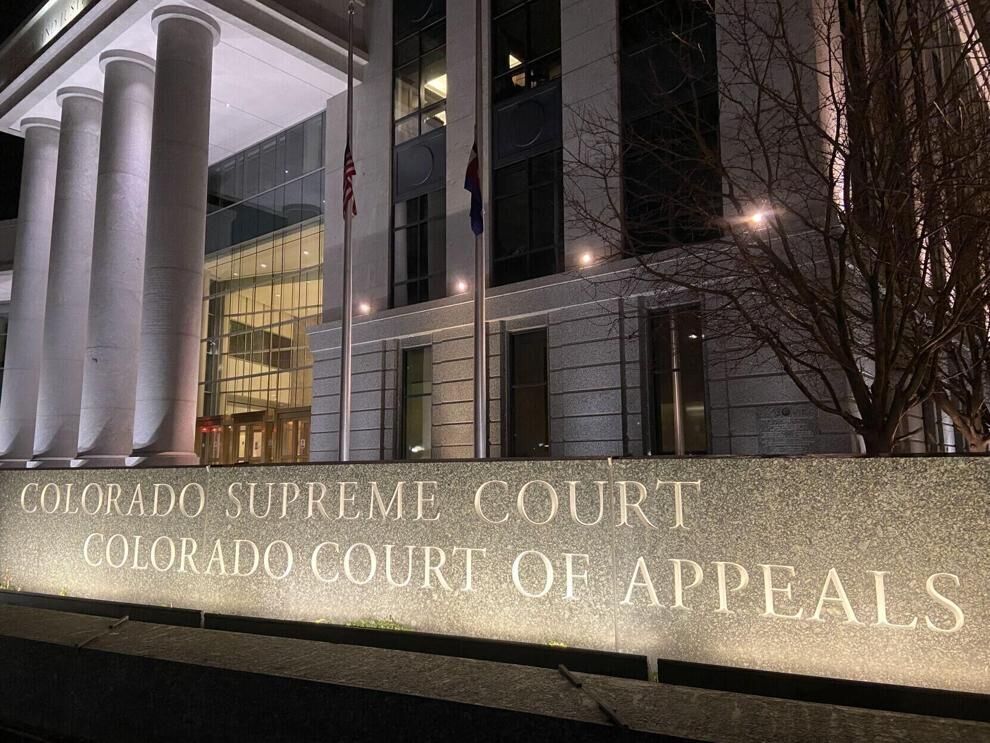
Labels, duration not definitive proof of ‘intimate relationship,’ Colorado court rules in domestic violence case
Michael Karlik
michael.karlik@coloradopolitics.com
Updated 1 hour ago
Colorado’s second-highest court clarified on Thursday that the length of a couple’s relationship and the labels they attach to it are not conclusive evidence of whether it is an “intimate relationship” that can give rise to a domestic violence prosecution....

Colorado Springs mother Deborah Nicholls’ murder conviction overturned, case vacated
Nick Smith
nick-smith@coloradopolitics.com
Updated 2 hours ago
A Colorado Springs mother convicted of murdering her three children in a house fire in 2008 had her verdict overturned and her case vacated. According to a judge’s order, 59-year-old Deborah Nicholls’ conviction was overturned Saturday, Aug. 1 by District...

Former VP Mike Pence joining Colorado Christian University faculty
Marissa Ventrelli
marissa.ventrelli@coloradopolitics.com
Updated 3 hours ago
Former Vice President Mike Pence has been hired as a visiting faculty member at Colorado Christian University, the Lakewood-based private evangelical university announced Tuesday. Pence will be on campus about once a month during the 2026-2027 school year to give...

White House launches Fraud.gov to track fraud cases
Adisa Hargett-Robinson
adisa.hargett-robinson@washingtonexaminer.com
Updated 3 hours ago
The White House launched Fraud.gov on Thursday, a website tracking the administration’s crackdown on fraud across federal agencies. According to the White House, the website serves as a public dashboard that highlights investigations, criminal charges, funding suspensions, recoveries, and enforcement...

Democrats from opposite sides of the party all rally behind a ‘big tent’
Rena Rowe
rena.rowe@washingtonexaminer.com
Updated 3 hours ago
Since their losses in the 2024 election, Democrats have struggled to settle on a clear message ahead of the 2026 midterm elections. As the party fights to reclaim control of Congress, primaries in New York, Michigan, and Colorado have exposed...

Emerald ash borer confirmed in Colorado Springs, ‘pest is here to stay’
Brennen Kauffman
brennen-kauffman@coloradopolitics.com
Updated 4 hours ago
Colorado Springs is asking residents to be on the lookout for an invasive beetle species that has jumped down the Front Range and into local ash trees. City officials said Wednesday that a confirmed emerald ash borer infestation had been...

Colorado AG urges Supreme Court to let Boulder climate lawsuit proceed
Marissa Ventrelli
marissa.ventrelli@coloradopolitics.com
Updated 5 hours ago
Colorado Attorney General Phil Weiser has filed a court brief with the U.S. Supreme Court in a lawsuit brought by Boulder city officials seeking to hold oil companies liable for their environmental impact. The case began in 2018, when the...

Former Parker police sergeant pleads guilty to unlawful sexual conduct, misconduct charge
Nicholas Fogleman
nicholas.fogleman@denvergazette.com
Updated 5 hours ago
Former Parker Police Department Sgt. Troy Brienzo pleaded guilty Monday to a felony charge of unlawful sexual conduct by a police officer and first-degree official misconduct in Douglas County District Court. Brienzo entered the guilty pleas before Judge Ryan Stuart,...

Annual survey documents emerging threat to Pikes Peak’s bighorn sheep
Savannah Eller
savannah-eller@coloradopolitics.com
Updated 48 minutes ago
After a brief pre-dawn gathering, over 40 volunteers and Colorado Parks and Wildlife staff split into teams Wednesday morning and headed off into the high alpine. They were on an annual mission to count and catalog the bighorn sheep population...
PREV
PREVIOUS
CU reports taking in $1.4 billion in research funding during last fiscal year
The University of Colorado awarded approximately $1.4 billion in federal, state, international and foundational research funding to its campuses during the 2019-2020 fiscal years, the fourth consecutive year in which grants exceeded $1 billion. “The research funding our prolific faculty bring in has a tremendous economic ripple effect on our state, but more important, it […]

Colorado Department of Education proposes $29 million cut to 2021-22 budget
The State Board of Education Thursday approved their 2021-22 budget proposal to include a cut of $29 million. The cut is in line with a request from the Office of State Planning and Budgeting that most state agencies reduce their budgets by 10%. It’s a move to respond to the state’s economic downturn that has […]