

Ports to Plains lauded by Gardner, but CDOT is lukewarm
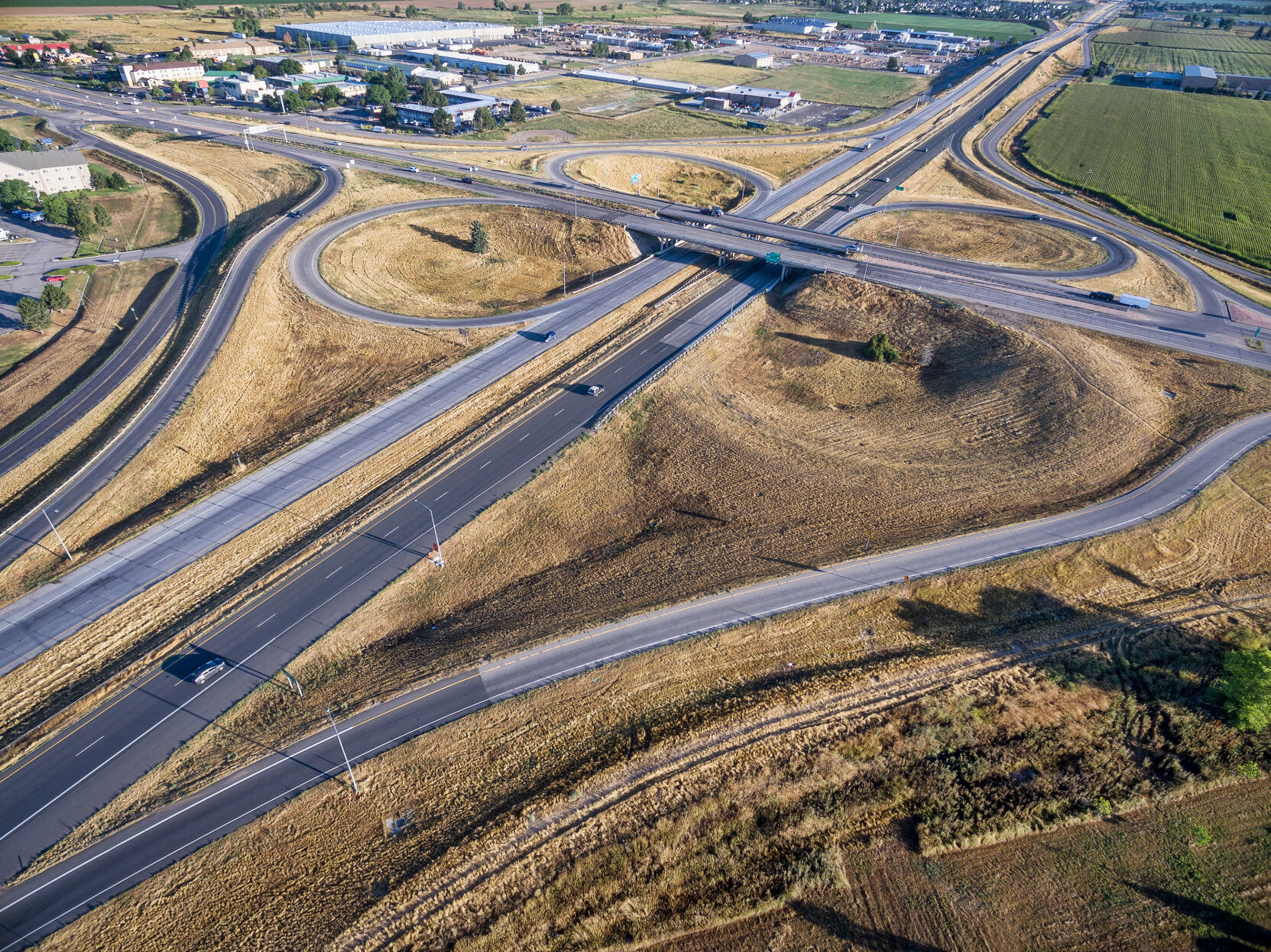
A new interstate through Eastern Colorado that could reduce truck traffic on I-25 received support Monday from Sens. Cory Gardner of Colorado and John Cornyn of Texas. And while the Polis administration, in a letter to Congress, stated it didn’t oppose the project, the state doesn’t have anywhere near the $3 billion it would cost to upgrade the targeted roads to interstate standards.
But the Ports to Plains corridor is also part of conflicting messages from the Colorado Department of Transportation. One message to the feds says Colorado doesn’t want the federal money if the project isn’t part of CDOT’s master plan (and it’s not), while another from last May touted how much traffic congestion would be reduced along I-25 if one of the two highways already proposed were converted to an interstate.
S. 4701 was introduced last Friday by Gardner, although a text of the bill is not yet available. A similar bill in the House, HR 7151, would modify the Intermodal Surface Transportation Efficiency Act of 1991, known as ISTEA, to convert US Highway 287 from Texas and Oklahoma to Limon, and then north along Colorado 71, to an interstate. Neither measure has any support from Colorado’s congressional delegation, save for Gardner’s support of the proposed Senate measure.
The Ports to Plains corridor has two proposed paths. The first would go along US 87/287/385 from Amarillo, Texas, north through the Oklahoma panhandle and into Colorado south of Campos in Baca County. It would then go north along US 287 to Limon, where it connects with I-70. From there, the interstate would go north on Colorado 71 to the Colorado-Nebraska state line south of Scottsbluff, as well as connecting with I-76. A feasibility study by CDOT released in May said that the Colorado 71 extension, known as the Heartland Expressway, would reduce traffic on I-25 by 1,100 trucks per day.
The second proposed route would avoid Eastern Colorado altogether. The route veers off US 287 at Dumas, Texas, and heads west along US 87 to Clayton, New Mexico, on to Raton and then on to I-25, and without any reduction in truck traffic on I-25.
The idea of the Ports-to-Plains interstate is not a new one. It was designated by Congress in 1998 as a “high priority corridor” on the national highway system, and with the recent extension of NAFTA it became an even greater priority.
Colorado’s biggest contribution began that same year by widening US 287 from Limon to the Oklahoma state line, included in the same funding as the Denver TREX project and with funding through Senate Bill 97-1. That project turned US 287 from a two-lane highway to a “super two”: all concrete and wide lanes with shoulders of eight to 12 feet (although not wide enough to meet interstate standards).
Joe Kiely, formerly Limon’s town manager and now the vice president of operations for the Ports to Plains Alliance, said Monday that in the last two years, traffic has increased along US 287 to the point that 60% of it is trucks.
Kiely explained that the national highway system is about 5% of the national miles of roadway, which includes U.S. highways as well as interstates. Interstates carry 55% of the traffic, largely through rural parts of the country, connecting goods and people between urban areas.
Rural connectors, such as interstates, are very important to the economy, and an interstate would dramatically benefit Colorado’s Eastern Plains, he said.
The next step is feasibility studies. Texas has just finished its study that would look at costs and benefits, pick a route and figure out where “relief routes” need to go. Those could be critical in southeastern Colorado, given that US 287 runs right through the middle of a half-dozen towns, including Springfield, Lamar, Eads and Hugo.
Kiely said that the Texas study showed that the interstate would pay for itself, with $4.1 billion in travel savings — avoiding I-25, for example — and $55.6 billion in increased economic output.
He isn’t sure that CDOT will do the feasibility study for the US 287 portion. He said he gave a presentation to CDOT’s Freight Advisory Council a month ago, hoping to find support for the future interstate.
So who pays for it? The Colorado Department of Transportation took the lead on the project in 2004, with a “corridor development and management plan.” At that time, the project’s cost was estimated at $1.9 billion, with Colorado responsible for $474.7 million. Colorado’s share is now estimated at $3 billion. That most likely means the federal government will have to pick up the tab.
But Colorado’s recent support for the project is on the soft side. When Democratic Rep. Peter DeFazio of Oregon, chair of the House Transportation and Infrastructure Committee, asked the states in the Ports to Plain project to submit letters of support, which he wanted to include in the bill, Texas and New Mexico didn’t hesitate, Kiely said. Colorado doesn’t oppose the project, but it doesn’t support it, either.
CDOT’s June 24 letter to DeFazio said that “communities along the proposed route across rural eastern Colorado have strongly supported this designation.” However, CDOT Executive Director Shoshana Lew said, “CDOT does not have the roughly $3 billion it would cost to bring the facilities up to interstate standards, and does not project to have the resources to accomplish the task in the next twenty years. CDOT’s current development plan of projects is a statewide $4.8 billion plan that will take optimistically ten years or more to build, and does not make significant steps toward bringing these highways to interstate standards.”
Those standards, according to the Federal Aid Highway Act of 1956, include “design speeds of 50 to 70 miles per hour (depending on type of terrain), a minimum of two travel lanes in each direction, 12-foot lane widths, 10-foot right paved shoulder, and 4-foot left paved shoulder.”
The kinds of improvements needed to bring US 287 and Colorado 71 to interstate standards are not in CDOT’s current development plan, known as the State Transportation Improvement Program (STIP).
Lew’s June 24 letter also indicated the state might oppose federal funding for the Ports to Plains interstate if it was an “earmark” that didn’t fit within the STIP. While projects for passing lanes on US 287 and Colorado 71 are part of the current STIP, upgrades to interstate standards are not. “Importantly, CDOT would oppose earmarks if proposed as part of the next [federal] surface authorization bill and believes it is important to prioritize funds for projects that have been fully studied from both an economic and environmental standpoint,” Lew wrote.
Kiely said that because Texas and New Mexico were ready to get on board, it meant their portion of the project was approved for future designation. That designation, however, was for the second route, the one that excludes the Eastern Plains and wouldn’t help with congestion on I-25 through Colorado, since it would connect to I-25 at Clayton, New Mexico.
Gardner, in his statement Monday, said Ports to Plains “is key to Colorado’s connectivity and the movement of goods, and it’s important we understand and consider our long-term infrastructure needs in the future. I appreciate the work of local stakeholders to support the corridor, and I will continue my efforts to support Colorado’s infrastructure needs at the federal level.”
Cathy Shull of Pro 15, a member of the Alliance board of directors, said the Ports-to-Plains Corridor would “bring a significant economic impact to the region as well as safety improvements for travelers on I-25. Once completed, the infrastructure will alleviate heavy congestion by redirecting freight traffic east, paving the way for future economic development in eastern Colorado and increasing the productivity of drivers transporting Colorado exported goods to Mexico and Canada.”
This is just one step in a very long process, Shull told Colorado Politics Monday. It could be five years or it could be 30, she said.

Federal judge dismisses ex-Colorado judicial discipline director’s conspiracy lawsuit
Michael Karlik
michael.karlik@coloradopolitics.com
Updated 13 hours ago
A federal judge dismissed a lawsuit from Colorado’s former judicial discipline director on Tuesday, finding that he failed to adequately state claims for conspiracy or constitutional violations. Christopher S.P. Gregory, who served as the executive director of the Colorado Commission on Judicial...
Federal judge allows retaliation claims to proceed against prison officials
Michael Karlik
michael.karlik@coloradopolitics.com
Updated 11 hours ago
A federal judge agreed last week that a man incarcerated at Sterling Correctional Facility had credibly alleged that employees retaliated against him for filing grievances, including by taking away his disability accommodations and turning off his electricity. Louis Peoples Jr.,...

Treasury releases five-step guidance for employers to make contributions to Trump Accounts
Christian Datoc
christian-datoc@coloradopolitics.com
Updated 18 hours ago
Treasury Secretary Scott Bessent published new guidance Tuesday outlining the specific steps employers must take to contribute to employee Trump Accounts. The accounts, one of the most popular provisions included in President Donald Trump’s One Big Beautiful Bill Act, are...

Denver schools to refinance bonds to create capacity for future borrowing
Nico Brambila
nico.brambila@denvergazette.com
Updated 14 hours ago
Less than two years after voters approved a record $975 million school bond, Denver Public Schools is refinancing older debt — a move district officials say will save taxpayers money while creating capacity for another bond election. The district has...

Russia frees imprisoned US Marine over health concerns
Brady Knox
brady-knox@coloradopolitics.com
Updated 18 hours ago
Russia freed former U.S. Marine Robert Gilman upon the urging of U.S. officials so he could receive medical care in the United States. Gilman, 32, was released after 1,666 days in prison, having been arrested on Jan. 17, 2022. Eric...

Colorado students push AI task force as schools navigate new tech era
Marissa Ventrelli
marissa.ventrelli@coloradopolitics.com
Updated 11 hours ago
A group of students is urging lawmakers to establish a task force on artificial intelligence in education to advise districts on how to ensure that pupils and educators use the technology effectively without becoming overly reliant on it. The students...
Parker data center could get $19M tax rebate from Douglas County
Nicholas Fogleman
nicholas.fogleman@denvergazette.com
Updated 20 hours ago
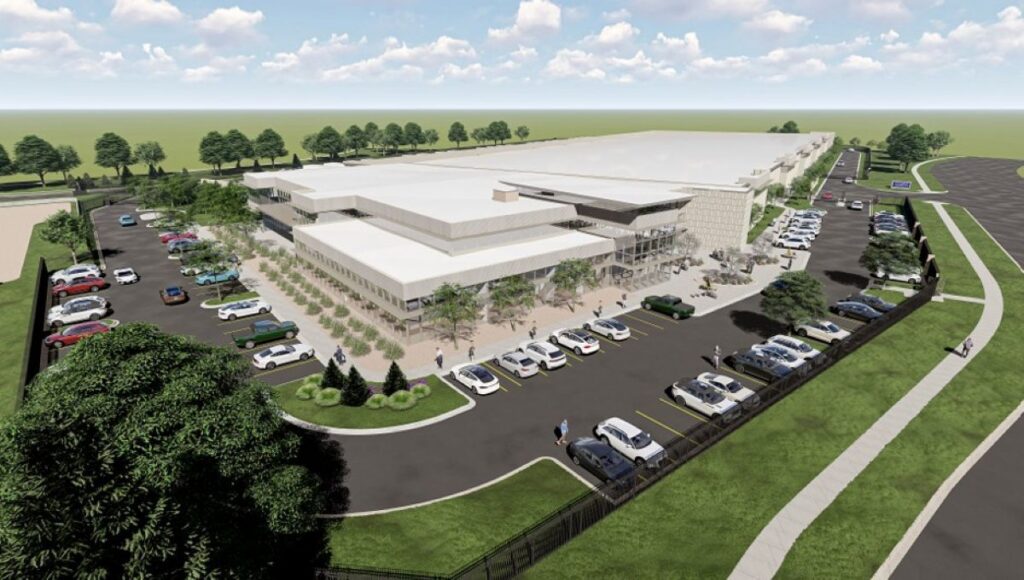
At a time when Denver and Front Range governments are restricting or banning data center development, Douglas County commissioners are poised to approve a $19.3 million tax rebate agreement Tuesday for a new data center under construction in Parker. The...

Denver City Council rejects contract that would have given video maker 8-year deal
Deborah Grigsby
deborah.smith@denvergazette.com
Updated 23 hours ago
Denver’s Office of Human Resources will have to get creative to attract new city employees and place them in “hard-to-fill” jobs after a proposed five-year contract extension, valued at $600,000, failed to gain favor with the Denver City Council. The...

Denver Mayor Mike Johnston files to run for reelection in 2027
Michael Braithwaite
michael.braithwaite@gazette.com
Updated 23 hours ago
Denver Mayor Mike Johnston officially filed his paperwork Monday to run again for Denver’s mayoral office next year. The filing comes weeks after Johnston confirmed to The Denver Gazette that he would seek reelection as he focuses the final year...

U.S. Rep. Lauren Boebert’s son arrested, faces charges of sexual exploitation of minor
Matt Kyle
matt.kyle@denvergazette.com
Updated 2 days ago
U.S. Rep. Lauren Boebert’s son Tyler Jay Boebert has been arrested and accused of recording and sharing a video depicting himself having intercourse with a minor, according to court records. The case originated in Garfield County in Western Colorado and...
PREV
PREVIOUS

State, local entities to contribute $137,000 to Front Range rail plan
State and local entities will contribute $137,000 to match a $548,000 federal grant that Colorado recently received to develop a plan for a Front Range passenger rail corridor. The Southwest Chief and Front Range Passenger Rail Commission, Pueblo County, city of Trinidad and the Colorado Chapter of the Rail Passengers Association will provide the matching […]

Crow, Tipton sponsor bill on work-study aid for educator residency programs
U.S. Reps. Jason Crow and Scott Tipton have introduced a bill that would include teacher and principal residency programs in the Federal Work-Study program. “The overwhelming success rate of these programs has already helped place quality educators in schools and will continue to be a critical component of bettering the educational opportunities for current and […]