

Adams Couty murder conviction tossed because judge left out ‘significant’ part of jury instruction

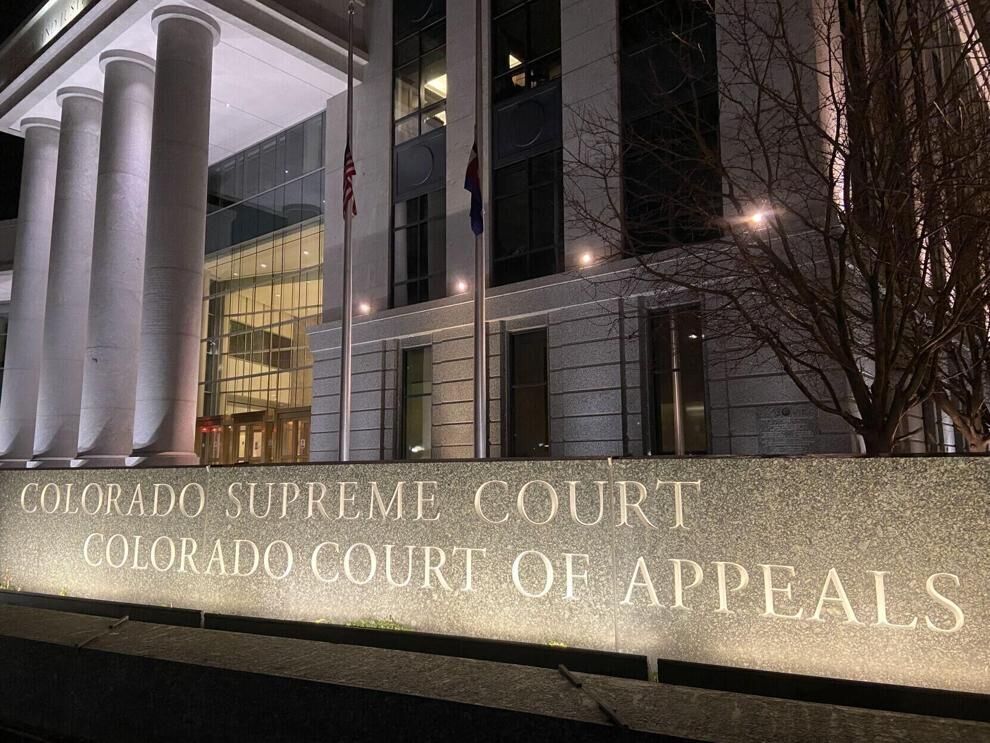
An Adams County judge failed to read the entirety of the relevant Colorado law to jurors in a homicide trial, which caused the Court of Appeals on Thursday to throw out the defendant’s second degree murder conviction.
“Because the definition provided to the jury failed to track the language of the statutory deadly weapon definition — indeed, it omitted a significant and material portion of the statutory definition — it was erroneous,” wrote Judge Michael H. Berger for the three-member panel.
According to court documents, Cesar Reyes-Marquez was working at an auto body shop in July 2010 when he and a coworker learned about a fight involving employees of a neighboring business. Angered, the coworker went to that business and began throwing bottles at the shop and the vehicle of one of the employees.
Gabriel Campos, Servando Morelos-Avila and Hugo Perada-Lopez heard the commotion and confronted the man. There was an altercation, which resulted in Reyes-Marquez shooting and killing Morelos-Avila. The other two men survived their gunshots.
A jury convicted Reyes-Marquez of second degree murder, attempted second-degree murder and first-degree assault, despite his claim that he was acting in self-defense of himself and his coworker.
Adams County District Judge Thomas R. Ensor gave the jury an instruction on self-defense, explaining that Reyes-Marquez was authorized to use physical force without retreating if he did so to defend himself or another person “from what he reasonably believed to be the use or imminent use of unlawful physical force by that other person.” Further, the defendant could use deadly force if he anticipated first- or second-degree assault, which could involve a deadly weapon.
Under Colorado law, a deadly weapon is a “firearm, whether loaded or unloaded; or … a knife, bludgeon, or any other weapon, device, instrument, material, or substance, whether animate or inanimate, that, in the manner it is used or intended to be used, is capable of producing death or serious bodily injury.”
In his instruction to the jury, however, Ensor omitted the non-firearm objects from the definition.
“The effect of the instruction is they only list one weapon,” said Marquez-Reyes’s attorney, Lynn Noesner, during the appeal. “Probably the layperson considers a knife a deadly weapon. But a broomstick is not obviously a deadly weapon. When you have an instruction that says, ‘Here’s the definition of a deadly weapon: firearm,’ I don’t think a layperson would realize that under the law, a fist, a foot, any kind of screwdriver, any kind of tool … can be deadly weapons as a legal matter.”
Berger, in the appellate court’s unpublished opinion, explained that the defendant’s self-defense claim depended upon a correct understanding of first- or second-degree assault. Reyes-Marquez said at trial that his assailants attacked him with non-firearm weapons. Ensor’s definition for the jury effectively lowered the prosecution’s burden of proof because “under the deadly weapon instruction, the tools carried by Campos, Morelos-Avila, and Perada-Lopez were not deadly weapons,” Berger wrote.
The panel rejected the contentions of the attorney general’s office, which argued the appeal, that jurors were free to interpret that deadly weapons included items other than firearms, and that jurors determined there to be no imminent assault on Reyes-Marquez.
Judge Matthew D. Grove, writing separately, did not think the deadly weapon instruction itself undermined Reyes-Marquez’s defense. However, because the trial judge’s instruction on self-defense was also “inconsistent with the governing statute” and “likely confusing to the jury,” he agreed with the outcome. Specifically, he took issue with Ensor telling the jury that the defendant had to be facing unlawful force or robbery or assault to use deadly force.
“This was error because it would have required the jury to find that, even if Reyes-Marquez reasonably perceived that he was about to be robbed or assaulted, he could not defend himself with deadly physical force unless he also had reasonable grounds to believe that he was in imminent danger of being killed or receiving great bodily injury,” Grove elaborated.
The court upheld Reyes-Marquez’s attempted murder and assault convictions because those did not hinge on an imminent first- or second-degree assault. The panel ordered a new trial for the second-degree murder charge.
According to Westword, the 2017 trial that resulted in the appeal was Marquez-Reyes’s second trial, which the Court of Appeals ordered after finding the district judge delivered yet another faulty jury instruction.
The case is People v. Reyes-Marquez.


Healthcare Freefall: Finger‑pointing intensifies as Colorado’s healthcare system strains under rising costs, shrinking coverage
Thelma Grimes
thelma.grimes@coloradopolitics.com
Updated 16 hours ago
Editor’s Note: Colorado’s healthcare system is entering a period of accelerating instability — a “tsunami,” as multiple leaders describe it — driven by collapsing hospital finances, shrinking Medicaid reimbursements, disappearing services and a political fight over who is responsible for...
Colorado appeals judge’s delays in releasing opinions noted by performance commission
Michael Karlik
michael.karlik@coloradopolitics.com
Updated 12 hours ago
The citizen-led performance commission that provides guidance to voters about whether to retain members of Colorado’s second-highest court raised concerns by judges and attorneys that Judge Elizabeth L. Harris sometimes struggles with releasing opinions promptly. Harris, who joined the Court...

Jeff Crank, Jessica Killin set to face off in 2 debates in Colorado’s 5th Congressional District
Ernest Luning
ernest.luning@coloradopolitics.com
Updated 11 hours ago
Republican U.S. Rep. Jeff Crank and Jessica Killin, his Democratic challenger, have agreed to debate twice in the weeks leading up to the general election in Colorado’s 5th Congressional District, their campaigns have said. Crank is seeking a second term...

Colorado judge explores sanctions against DOJ, ICE for rearresting man 4 days after release on bond
Michael Karlik
michael.karlik@coloradopolitics.com
Updated 12 hours ago
A federal judge in Colorado is considering sanctions against the government after immigration agents rearrested a man four days after an immigration judge found him suitable for release on bond. On July 28, U.S. Magistrate Judge N. Reid Neureiter ordered...

White House deploys private companies to help crack down on cybersecurity breaches
David Zimmermann
david-zimmermann@coloradopolitics.com
Updated 19 hours ago
The White House intends to use private companies in the United States to help crack down on cybersecurity breaches perpetrated by transnational criminal organizations. President Donald Trump signed a memorandum on Wednesday, directing his administration to employ the private sector...

Voters prefer socialist over MAGA candidate in 2028 matchup: Poll
Mabinty Quarshie
mabinty-quarshie@coloradopolitics.com
Updated 17 hours ago
New polling released this week suggests that a socialist candidate would defeat a Make America Great Again candidate in a hypothetical 2028 presidential matchup, a move that implies the reach of progressive leftists isn’t abating despite recent setbacks in Wisconsin....

Fort Carson garrison commander says staff cuts created ‘uncertainty and fear’
Mary Shinn
mary-shinn@coloradopolitics.com
Updated 14 hours ago
The Fort Carson garrison commander departed Wednesday after what he described as a difficult 18 months for installation and garrison staff. “I know the last 18 months has been marked by profound uncertainty and fear, but you weathered the storm...

Divided disciplinary panel censures Montezuma County judge after agreement reached
Michael Karlik
michael.karlik@coloradopolitics.com
Updated 19 hours ago
A disciplinary panel formally imposed a public censure, suspension, and further training on Montezuma County Court Judge Ian J. MacLaren on Tuesday by a 2-1 vote. Under constitutional Amendment H, which voters adopted in November 2024, MacLaren was set to...

Aurora police officer resigns after taking narcotics found during traffic stop
Kyla Pearce
kyla.pearce@gazette.com
Updated 14 hours ago
An Aurora Police Department officer resigned after investigators found that he took narcotics that were collected as evidence during a traffic stop. Michael Gallagher violated several agency policies, including substance abuse, tampering with evidence and lying in a criminal investigation,...

Douglas County measure to expand county commission advances to November ballot
Nicholas Fogleman
nicholas.fogleman@denvergazette.com
Updated 14 hours ago
Douglas County voters will decide in November whether to expand the county’s Board of County Commissioners from three members to five after election officials certified a citizen-led petition effort Wednesday. The Douglas County Clerk and Recorder verified 20,434 petition signatures,...
PREV
PREVIOUS

Pine Gulch fire becomes largest in state history, surpassing 2002 Hayman fire | Colorado Wildfires
Here’s a look at wildfires burning in Colorado: Pine Gulch fire Acres/Location: 139,006 acres/18 miles north of Grand Junction Containment: 77% Started: July 31, lightning Firefighters: 926 Pine Gulch fire progression map The lightning-caused fire burning north of Grand Junction since July 31 became the largest in Colorado history Thursday, surpassing the 2002, 138,114-acre Hayman […]

New trial ordered for accused sex abuser after judge seated juror who said he could not be fair
The Colorado Court of Appeals reversed the convictions of a man accused of child sex abuse, citing an El Paso County judge’s decision not to dismiss a juror who admitted he could not be fair. “We are left with Juror B’s unequivocal message that, if seated on the jury, he could not decide the case […]