

New trial ordered for accused sex abuser after judge seated juror who said he could not be fair

The Colorado Court of Appeals reversed the convictions of a man accused of child sex abuse, citing an El Paso County judge’s decision not to dismiss a juror who admitted he could not be fair.
“We are left with Juror B’s unequivocal message that, if seated on the jury, he could not decide the case against Allen fairly,” wrote Judge Lino S. Lipinsky de Orlov for the three-member panel on Thursday. “The record thus establishes that the jury that convicted Allen included a juror who was incapable of rendering a verdict based on the law and evidence.”
Robert Allen received multiple charges of sexual abuse on a child by someone in a position of trust after the child’s mother told her that Allen had touched her genitals on multiple occasions. The charges reflected a total of four alleged assaults.
A jury convicted Allen for two of the assaults, finding them to be a pattern of abuse. They also agreed to a sentence enhancer for Allen because he unlawfully sexually penetrated the victim when she was under the age of 12.
Allen appealed on the grounds that the trial court should have allowed his dismissal of a juror for cause, namely that he could not render an impartial verdict.
During jury selection, Allen’s attorney asked if anyone “doesn’t feel like they would be a fair juror on [a] case like this?” Multiple people raised their hands, including a man identified as Juror B. Other prospective jurors received follow-up questions about their ability to be fair, but not Juror B.
The defense moved to dismiss Juror B because he had raised his hand. However, El Paso County District Court Judge Robert L. Lowrey responded, “He didn’t — his answer didn’t lead me [to believe] that he would be unfair. I will deny that challenge.”
Due process under the U.S. and Colorado constitutions guarantees the right to a fair trial with an impartial jury. Trial court judges are obligated to sustain challenges of jurors if they exhibit a bias against either of the parties, unless subsequent examination determines that the juror can be impartial.
“After reviewing the record of the entire voir dire, we conclude that none of Juror B’s previous statements during voir dire, either explicit or implicit, suggested that he could have ‘render[ed] an impartial verdict’,” wrote Lipinsky.
Elizabeth A. McClintock, Allen’s attorney, told the appeals panel that of the prospective jurors who raised their hands, “four of them were excused for cause by the court. One was not excused for cause…but she did not get to the point where she was even in the panel.”
The defense used their last challenge to excuse another person, Juror M, who “very clearly made statements he could not be fair in this case.” As such, Juror B stayed on the panel.
Both parties indicated that there was some responsibility to “rehabilitate” the juror by asking questions to re-establish whether he had an ability to be fair. However, the appellate judges found no justification for why Lowrey asked follow-up questions to three jurors about their impartiality, but not to Juror B or four others.
The prosecution countered that Juror B stated nothing in his background had prejudiced him against either side and that he could evaluate the credibility of witnesses.
“People change their minds as they hear more information and as they hear exchanges between judges and prospective jurors,” said Judge Rebecca R. Freyre at the appellate hearing. “Why didn’t that last indication of an inability to be fair, why doesn’t that trump everything else that juror has previously said?”
McClintock added that a societal bias against child abusers could prejudice a juror, regardless of his past life experiences. Lipinsky agreed with that interpretation in the court’s opinion.
“At best,” he wrote, “Juror B said that nothing in his background would cause him to be biased against Allen. But not all prejudices arise from a person’s ‘background.’”
The court ordered a new trial. The case is People v. Allen.

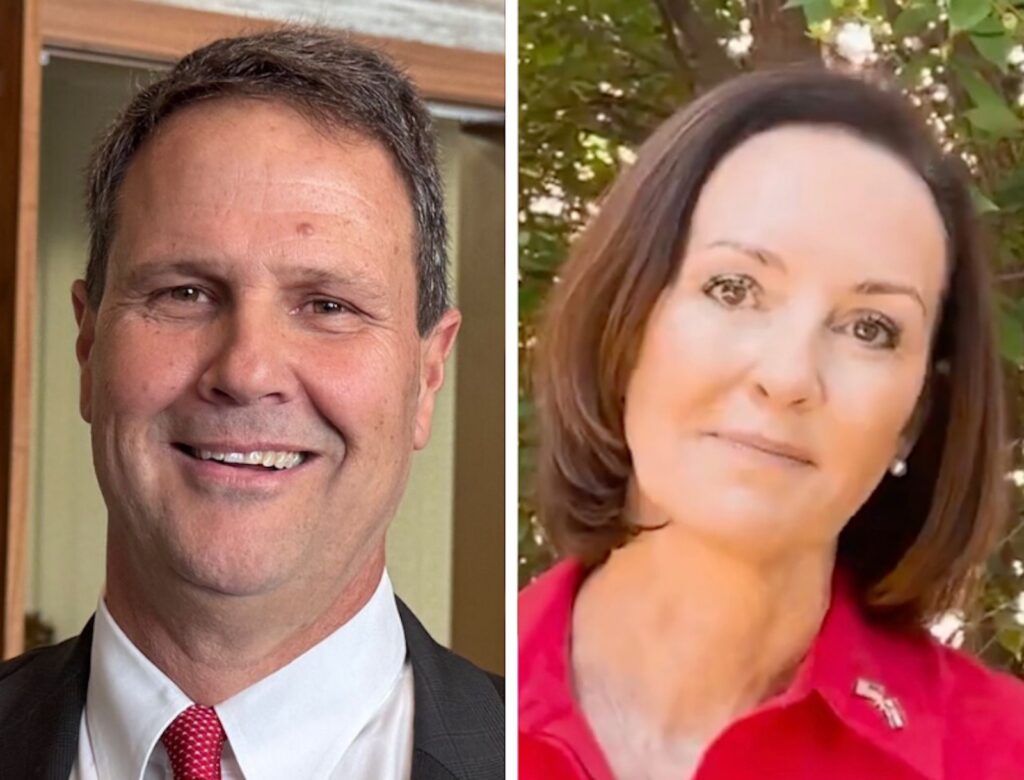
Jeff Crank, Jessica Killin set to face off in 2 debates in Colorado’s 5th Congressional District
Ernest Luning
ernest.luning@coloradopolitics.com
Updated 9 hours ago
Republican U.S. Rep. Jeff Crank and Jessica Killin, his Democratic challenger, have agreed to debate twice in the weeks leading up to the general election in Colorado’s 5th Congressional District, their campaigns have said. Crank is seeking a second term...

Colorado judge explores sanctions against DOJ, ICE for rearresting man 4 days after release on bond
Michael Karlik
michael.karlik@coloradopolitics.com
Updated 11 hours ago
A federal judge in Colorado is considering sanctions against the government after immigration agents rearrested a man four days after an immigration judge found him suitable for release on bond. On July 28, U.S. Magistrate Judge N. Reid Neureiter ordered...

White House deploys private companies to help crack down on cybersecurity breaches
David Zimmermann
david-zimmermann@coloradopolitics.com
Updated 17 hours ago
The White House intends to use private companies in the United States to help crack down on cybersecurity breaches perpetrated by transnational criminal organizations. President Donald Trump signed a memorandum on Wednesday, directing his administration to employ the private sector...

Voters prefer socialist over MAGA candidate in 2028 matchup: Poll
Mabinty Quarshie
mabinty-quarshie@coloradopolitics.com
Updated 16 hours ago
New polling released this week suggests that a socialist candidate would defeat a Make America Great Again candidate in a hypothetical 2028 presidential matchup, a move that implies the reach of progressive leftists isn’t abating despite recent setbacks in Wisconsin....

Fort Carson garrison commander says staff cuts created ‘uncertainty and fear’
Mary Shinn
mary-shinn@coloradopolitics.com
Updated 13 hours ago
The Fort Carson garrison commander departed Wednesday after what he described as a difficult 18 months for installation and garrison staff. “I know the last 18 months has been marked by profound uncertainty and fear, but you weathered the storm...

Divided disciplinary panel censures Montezuma County judge after agreement reached
Michael Karlik
michael.karlik@coloradopolitics.com
Updated 18 hours ago
A disciplinary panel formally imposed a public censure, suspension, and further training on Montezuma County Court Judge Ian J. MacLaren on Tuesday by a 2-1 vote. Under constitutional Amendment H, which voters adopted in November 2024, MacLaren was set to...

Aurora police officer resigns after taking narcotics found during traffic stop
Kyla Pearce
kyla.pearce@gazette.com
Updated 13 hours ago
An Aurora Police Department officer resigned after investigators found that he took narcotics that were collected as evidence during a traffic stop. Michael Gallagher violated several agency policies, including substance abuse, tampering with evidence and lying in a criminal investigation,...

Douglas County measure to expand county commission advances to November ballot
Nicholas Fogleman
nicholas.fogleman@denvergazette.com
Updated 13 hours ago
Douglas County voters will decide in November whether to expand the county’s Board of County Commissioners from three members to five after election officials certified a citizen-led petition effort Wednesday. The Douglas County Clerk and Recorder verified 20,434 petition signatures,...
Colorado’s Western Slope magistrate judges describe unique role in federal judiciary
Michael Karlik
michael.karlik@coloradopolitics.com
Updated 1 day ago
Two of Colorado’s federal judges stationed on the Western Slope spoke to lawyers on Wednesday about their unique roles, the ways their workloads differ, and the need for more criminal defense lawyers to take cases outside the Front Range. “Here...
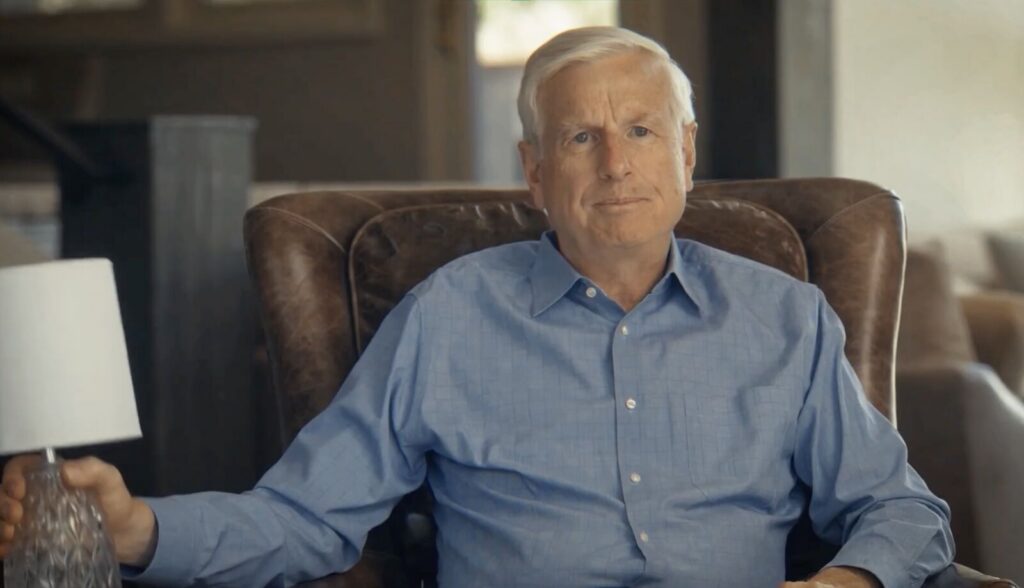
‘Ticked off’: Third-party U.S. Senate candidate in Colorado launches $1.3 million TV ad campaign
Ernest Luning
ernest.luning@coloradopolitics.com
Updated 10 hours ago
Bob Chew, the Forward Party nominee for U.S. Senate in Colorado, sends household objects flying in a TV ad set to run statewide through September, backed by $1.3 million in ad reservations across multiple platforms, his campaign told Colorado Politics....
PREV
PREVIOUS

Adams Couty murder conviction tossed because judge left out 'significant' part of jury instruction
An Adams County judge failed to read the entirety of the relevant Colorado law to jurors in a homicide trial, which caused the Court of Appeals on Thursday to throw out the defendant’s second degree murder conviction. “Because the definition provided to the jury failed to track the language of the statutory deadly weapon definition […]
Aurora to hire police-focused auditor
Aurora intends to hire a new employee to oversee its police department’s policies and procedures, following a series of investigations arising from the August 2019 death of Elijah McClain. “In light of some of the questions that have come up about policing and following policy and so on, it would be a good idea for […]