

NOONAN | Competitive races — a thing of the past?
Paula Noonan

The 2020 election in November is the last under current state House and Senate district boundaries. That’s good because since 2011 with the last redistricting, state House and Senate seats are increasingly uncompetitive.
The redistricting commission is now taking applications. Here’s the current landscape of what the commission will face.
If competitive races demand a Democrat-to-GOP spread of no more than 10% in voter registration, then very few races are now in contention.
Of 65 seats up in the House, 33, a majority, are already secured by Democrats. Republicans have 24 secure districts. So, 57 of 65 seats in the House are already decided by registration. If a contest happened, it occurred within parties in the primaries. As a side note, the party establishments discourage primaries against incumbents.
The state Senate has 18 seats up for grabs, but 12 of 18 are already in the Democrats’ pocket and four of 18 will go to the Republicans. That leaves six that are sort of competitive. Competitive means the registration is under a 10% registration spread.
Our state elections used to be lively. As recently as 2018, Senate districts surrounding the Denver metro area in Jefferson, Arapahoe and Adams counties could go either way by voter registration. The Senate at that time was controlled by Republicans. But Democrats almost universally won the 2018 races.
The last time the House was in Republican control was 2013, when the biggest end-of-session argument was over civil unions for the LGBTQ community. It’s been downhill for the GOP in the House since then.
The state redistricting commission will comprise four Democrats, four Republicans, and four unaffiliated voters. To truly reflect registration — and this is how much voting has changed in Colorado since 2011 — there should be six unaffiliated representatives, three Democrats and three Republicans. If registrations continue as they have in the shift to unaffiliated voters, by 2030 with that decade’s census, unaffiliated voters will certainly represent over 50% of voters.
Colorado’s rules around redistricting will make configuring districts for competition difficult. The state follows common redistricting criteria: contiguity, compactness, and communities of interest. Racial and ethnic composition is another factor.
These standards set a bias against competition as Colorado’s citizens now tend to live in political silos. Denver County and Boulder County voters, by large numbers, are Democrats. El Paso County, Douglas County and Mesa County voters, by large numbers, are Republicans.
When compactness is a criterion, Democrats get packed into Denver and Boulder districts, and Republicans get packed into Douglas, El Paso and Mesa County districts.
When contiguity is a requirement, city and county boundaries affect districts, and these locations are often dominated by one party or the other. Minorities get jammed into just a few districts because of housing patterns.
Spread-out districts can create competition and perhaps more understanding between rural, suburban and urban communities. Take the northern Colorado state boundary as an example. If a Senate district were drawn east to west across the northern-most portion of the state, its residents would be rural, suburban and urban.
Follow the state’s geography just south of this prospective northern district to Boulder and Weld Counties. If Boulder and Weld were cut in half horizontally for House and Senate districts, those seats would be well mixed with Democrats and Republicans on both ends of the political spectrum. It would be a great test of democracy for these opposites to share the same elected officials.
The effect of uncompetitive districts is significant. Republicans are feeling the hurt the most because they lost their majority in both chambers. They can occasionally affect legislation, but only if Gov. Jared Polis gets behind the GOP’s point of view, usually represented by business interests.
The Colorado Constitution doesn’t require the redistricting commission to set goals for competitive districts, say to start, 50% of districts should be within 7% of each other by party registration. It would be wise if the commission took up this goal.
For the sake of both parties, competition will create more dialogue and policy ideas. Elections will be more interesting and increase turnout when districts are actually in contention.


DEA’s Miguel Chino describes Colorado’s place on the ‘fentanyl pill superhighway’ | The OpEdge Podcast
Tony Olivero
tony.olivero@gazette.com
Updated 9 hours ago
Miguel Chino, Acting Special Agent in Charge of the Drug Enforcement Administration’s Rocky Mountain Field Division, joins The OpEdge to paint the picture of Colorado’s place on America’s “fentanyl pill superhighways.” Chino updates Gazette and Colorado Politics Deputy Opinion Editor...
A right to buy a product? | Hal Bidlack
Hal Bidlack
hal-bidlack@coloradopolitics.com
Updated 1 day ago
A recent story in Colorado Politics caught my eye, as I learned of a “citizen initiative” that has qualified for the November ballot. It seems supporters of Initiative 177 have collected enough signatures, 146,165 legitimate ones out of a total...
Fourteen years after Aurora — we can’t afford to go backward | GUEST COLUMN
Colorado Politics
colorado-politics@coloradopolitics.com
Updated 1 day ago
By John Hickenlooper and Gabby Giffords Two Saturdays ago, a gunman shot and killed three people and wounded several others in Twin Falls, Idaho. This latest deadly shooting comes only days after we remembered the lives we lost 14 years...

A daring and fearless rescuer — is afraid of a debate | Dick Wadhams
Dick Wadhams
dick-wadhams@coloradopolitics.com
Updated 3 days ago
Victor Marx, the Republican nominee for governor who says he can exorcize demons and who claimed he has fearlessly rescued 45,000 women and children during 150 “high-risk” missions around the world, appears to be intimidated by the notion of debating...

Colorado’s ballot-initiative process again a battleground for deep pockets, special interests — not the people | Miller Hudson
Miller Hudson
miller-hudson@coloradopolitics.com
Updated 2 days ago
The Oxford English Dictionary defines a constitution as, “The set of fundamental principles according to which a state is constituted and governed, a body of rules prescribing the major elements of the structure and activities of any organization.” Somewhere in...

Proposed EPA changes could save truckers billions | Rachel Gabel
Rachel Gabel
rachel-gabel@coloradopolitics.com
Updated 3 days ago
Agriculture is in distress across nearly every segment across much of the nation, and certainly to a more dire degree in the western United States. If it were not a historic drought, some pressures could be eased. Others can be...

Colorado Democrats, your time is coming | Jon Caldara
Jon Caldara
jon-caldara@coloradopolitics.com
Updated 3 days ago
Hey, Colorado Democrats! All the fun you’ve had watching Republican dysfunction in Colorado for the last 20 years was just a preview of what is about to happen to you. The Colorado Republican Party no longer exists as a competitive...
Perspective: Hunters and anglers are pushing back
Chris Dorsey
chrisd@gmail.com
Updated 1 day ago
For generations, Coloradans hunted elk, caught trout and managed wildlife without consulting a constitutional attorney. That was before wildlife management became a recurring statewide election issue, replete with consultants, national pressure groups and enough political mail to denude an aspen...
The relevance of Watergate more than a half-century later | SONDERMANN
By Eric Sondermann
by-eric-sondermann@coloradopolitics.com
Updated 6 days ago
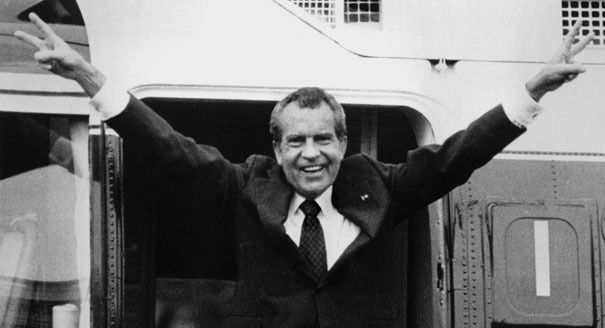
It was the scandal for which all other scandals are now named. In June 1972, a small group of Cuban burglars with high-level connections broke into the headquarters of the Democratic National Committee. Those headquarters were located in the Watergate...
Colorado must continue finding common ground on wildfire policy | GUEST COLUMN
Colorado Politics
colorado-politics@coloradopolitics.com
Updated 5 days ago
By John Herrick Colorado has never lacked for opinions about wildfire policy. We debate forest management, climate change, prescribed burns, land use, air quality and budgets. Those debates are familiar territory, but a new discussion is beginning to happen around...
PREV
PREVIOUS

SLOAN | Would-be VP, could-be prez is no moderate
Kelly Sloan It has been generally accepted that whomever Joe Biden ended up selecting as his running mate would have a better-then-even shot at becoming president sometime within the next four years should the former vice president win in November. That’s so, given his advanced age (he will be 78 if he is inaugurated in […]

BIDLACK | The news biz needs discerning consumers
Hal Bidlack I am honored to have a dear friend of many years who earned his living as a broadcast journalist. I won’t mention his name here, as he is long retired, but we are still close friends. He was an anchorman for major New York City TV stations, as well as working for a […]