

POINT | Reopening schools best serves our kids

We can reopen schools in a way that keeps students, teachers, and the broader community safe from the dangers of COVID-19, while protecting children from another year of lost learning. The decision to return students to the classroom should be based on medical data and the needs of students, not political concerns.
Also read: COUNTERPOINT | Rush to reopen puts us all at risk
COVID-19 is very real, and it has very real risks. However, the risks of keeping our students out of school far outweigh the perceived health risk of their return.
First and foremost, it’s important to note that COVID is significantly less dangerous for children. In fact, the American Academy of Pediatrics recently said that schools “should start with a goal of having students physically present in school.” They are advocating this approach because they say that “the preponderance of evidence indicates that children and adolescents are less likely to be symptomatic and less likely to have severe disease” from COVID and that “children may be less likely to become infected and to spread infection.”
I am not a medical professional, but I am a mother. As most parents do, I have always made decisions for my children’s safety and well-being based on the best information available to me at the time. In this case, the nation’s premier association for child health has made it clear that the science and data favor reopening schools. I have middle school-aged students – they are old enough to safely stay home and learn remotely, but that is not in their best interest and I owe them better than “good enough.” My children and yours should have access to the very best education we can offer them.
If our primary concern truly is stopping the spread in the community more generally, the data says that closing schools is not an effective strategy. Researchers at the Global Policy Lab at the University of California-Berkeleyreviewed the effectiveness of various large-scale anti-contagion efforts across the globe. They concluded that school closures in the United States did not help slow the spread of the virus and may have actually helped accelerate it.
In addition to the public health considerations, the evidence around academic and mental health outcomes for children provides a compelling reason to return to in-person learning this fall. The Common Sense Institute notes that research shows that when elementary students in other countries lost 80-90 days of instruction, students were harmed permanently, including lower educational attainment and lower labor market earnings as adults. We are talking about a permanent negative impact on an entire generation of students.
Furthermore, the most vulnerable students will be hardest hit if schools don’t reopen. Single-family homes with a working parent, or low-income families without access to supplemental learning or access to the internet will fall behind and may never catch up. This does not even take into consideration the enormous number of students who rely on the school to meet their nutritional needs.
Reopening schools will not be a smooth path. There will likely be stops, starts, and setbacks along the way. The reality is individual schools may have to shut down if there is an outbreak, and we need to have plans in place to serve students who choose not to come back to school in-person. No one is under the false impression that the 2020-2021 school year will be “business as usual,” but we owe it to our kids to commit to provide the very best we can under incredibly challenging circumstances.
Monica Colbert is a former Aurora Public Schools Board member, a mother of two middle-school students and an advocate for public education.


Clock is ticking on Colorado’s new AI rules | PODIUM
Colorado Politics
colorado-politics@coloradopolitics.com
Updated 5 hours ago
By Aashis Luitel On Jan. 1, organizations using covered automated systems must begin complying with Senate Bill 26-189, Colorado’s new Automated Decision-Making Technology Act. They can identify those systems and start building the processes the statute clearly requires. What they...
Meghan Shay on recovery, responsibility and second chances | The OpEdge Podcast
Tony Olivero
tony.olivero@gazette.com
Updated 16 hours ago
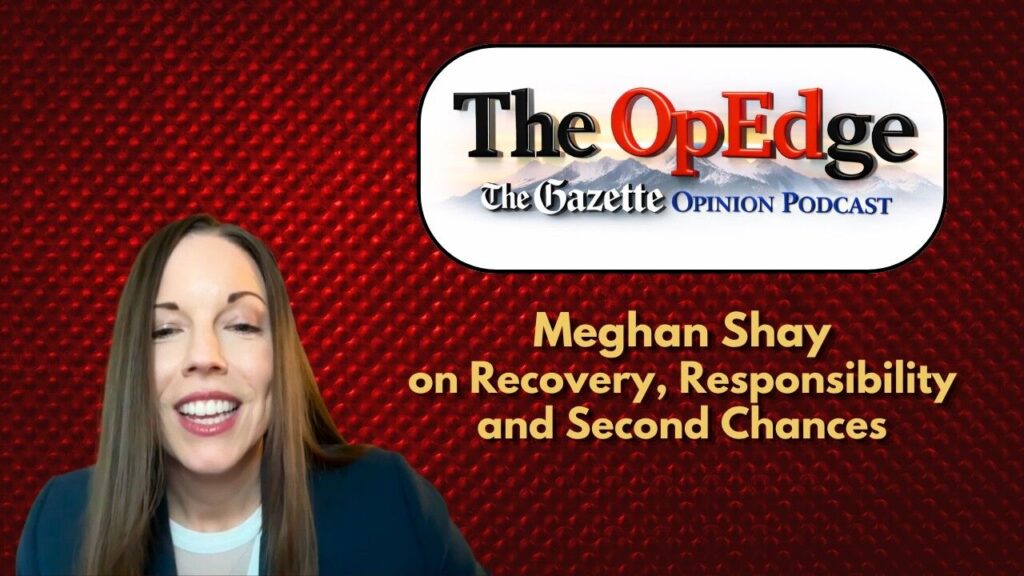
Step Denver and Step Springs CEO Meghan Shay joins The OpEdge to explore addiction recovery, homelessness, and the role of accountability in lasting change. Shay tells host and investigative columnist Jimmy Sengenberger why she believes recovery is built on personal...
The outrages mount | Hal Bidlack
Hal Bidlack
hal-bidlack@coloradopolitics.com
Updated 19 hours ago
My kindly and forgiving editors understand that, from time to time, I can’t help myself from leaping atop my rickety soapbox to vent. And, like many other political commentators have already done, I could easily fill this entire missive with...
Rural Colorado deserves a tax holiday | GUEST COLUMN
Eric Mulder
jstooksberry@gmail.com
Updated 1 day ago
Spend enough time in Colorado’s Eastern Plains, the San Luis Valley, or the Western Slope, and you’ll see boarded-up storefronts, schools consolidating classrooms, and small rural communities stretching every dollar to keep basic services afloat. Once the backbone of Colorado’s...

Weiser’s leadership crucial for rural win-win | Rachel Gabel
Rachel Gabel
rachel-gabel@coloradopolitics.com
Updated 5 days ago
Attorney General Phil Weiser is going to win the gubernatorial election. That said, Colorado agriculture and rural communities have a 30-year track record of finding the win-win be it for species or industries or habitat. Former Governor Roy Romer possessed...
A Colorado history lesson for Victor Marx | Dick Wadhams
Dick Wadhams
dick-wadhams@coloradopolitics.com
Updated 4 days ago
Victor Marx, who narrowly won the Republican nomination for governor by one half 1% after boasting of a massive 44-point lead, is just as misguided on Colorado political history. During the primary, Marx made a clumsy attempt to denigrate his...

‘Be prepared to march in the streets’ | Miller Hudson
Miller Hudson
miller-hudson@coloradopolitics.com
Updated 4 days ago
It was early in 1974 when I first met Tim Wirth as he announced his candidacy for Congress, challenging Republican incumbent Don Brotzman. Although I had only resided in Colorado two years, I was drafted to serve as a Democratic...

‘CoCo’ would take taxpayers for a ride | Jon Caldara
Jon Caldara
jon-caldara@coloradopolitics.com
Updated 2 days ago
Colorado wants taxpayers to spend another $4.73 billion on passenger rail. Don’t worry. They have a plan. Which is a little like your brother-in-law announcing he’s launching another exciting restaurant venture after his last three restaurants ended in bankruptcy. Please....
The through line from Donald Trump to Victor Marx | SONDERMANN
By Eric Sondermann
by-eric-sondermann@coloradopolitics.com
Updated 7 days ago
Over 10 years ago, before Donald Trump could ever defeat Hillary Rodham Clinton, he had to first engineer a hostile takeover of the Republican Party. Prior to his descent of that golden escalator, the previous seven Republican presidential nominees had...
Primary voters rejected big money in politics | Paula Noonan
Paula Noonan
paula-noonan@coloradopolitics.com
Updated 4 days ago
While we’re in an election campaign lull between now and Labor Day, we have time to consider the impact of $102 million in campaign contributions in the primary. In the general election, more money will fill candidate campaign coffers, and...
PREV
PREVIOUS

COUNTERPOINT | Rush to reopen puts us all at risk
Anton Schulzki After completing my 37th year as an educator, there are two universal truths. First, everyone is an educational expert, no matter how experienced, inexperienced, or genuinely knowledgeable of the education system. Second, the words “global pandemic” did not (until this year) appear in any teacher-training manual or classes. Nevertheless, many educational experts call […]

CALDARA | Time for us to rein in the fee monster
Jon Caldara There are reasons why “politician” is considered a dirty word. The word isn’t synonymous with “criminal,” but it does denote someone who is less than completely forthright, someone who isn’t telling you the real story, the whole truth. You just can’t trust a politician. It is why we Coloradans go around politicians and […]