

COUNTERPOINT | Rush to reopen puts us all at risk
After completing my 37th year as an educator, there are two universal truths. First, everyone is an educational expert, no matter how experienced, inexperienced, or genuinely knowledgeable of the education system. Second, the words “global pandemic” did not (until this year) appear in any teacher-training manual or classes. Nevertheless, many educational experts call for schools to “fully open” and be “fully operational” as soon as August. There are thousands of educators in the region who want to be back with their students on a regular basis. After all, what we live for is teaching our students! That said, no educator is interested in running into a classroom or school without some serious considerations given to basic questions of safety for everyone.
One of the changes in education in my career has been the move toward increasing student and staff safety within the schools. The number of tragic assaults in schools has led to serious changes in how schools are now protected. Many schools have armed security guards, cameras; students and staff need to have identifications on them at all times; there are metal detectors and closed campuses. Those are just a few of the safety changes brought about in the last 20 years. Why would we not take seriously the concerns for the safety of our school communities amid COVID-19?
Our students are part of several communities within our region. Those communities begin in the homes, where parents, siblings and extended family members all live together. In addition to schools, many students are members of faith organizations, scouts, athletic teams, bands, dance and drama ensembles, and other private and public groups. It is not just the schools that are affected by decisions to “fully open” – those decisions will reverberate within many different aspects of our region and communities. Are the educational experts willing to place the entire community at risk for spreading the disease just to “fully open” the schools?
Many unknown issues carry potential consequences. What happens if one teacher in a classroom contracts COVID? Is the entire class then quarantined for 14 days to check for transmission? If so, how will those students be taught? What happens if an outbreak occurs in a school cafeteria setting? Is the entire school then closed? How will contact tracing occur? What happens if…the questions go on and on.
I strongly urge that the elected leaders and the educational experts consider the wide-ranging impact on all of our communities in opening the schools. Every care needs to be given to keeping our students, staff and community safe. It may mean that school does not look like it did at the start of the 2019-20 school year – but then again, school looks very different than it did when I started teaching in 1983-84. Everyone in the community needs to be ready to help our students if it means that most everyone should wear a mask, wash and sanitize their hands, and be flexible in scheduling; then so be it. Educators have long adapted to the needs of the community, but that does not mean that we are willing to place ourselves or our students at risk.
We are willing and ready to do our part – but we need the community to do its part and support a safe reopening. That would mean educator voices should be heeded; safety protections need to be provided; equitable access to an educational program for students and families needs to be adopted, and there must be community engagement and transparency regarding COVID-19. The safety of the entire community is at stake.
Anton Schulzki is a longtime social studies educator. The views presented here are his own and do not represent the views of organizations of which he a member.

Clock is ticking on Colorado’s new AI rules | PODIUM
Colorado Politics
colorado-politics@coloradopolitics.com
Updated 11 hours ago
By Aashis Luitel On Jan. 1, organizations using covered automated systems must begin complying with Senate Bill 26-189, Colorado’s new Automated Decision-Making Technology Act. They can identify those systems and start building the processes the statute clearly requires. What they...
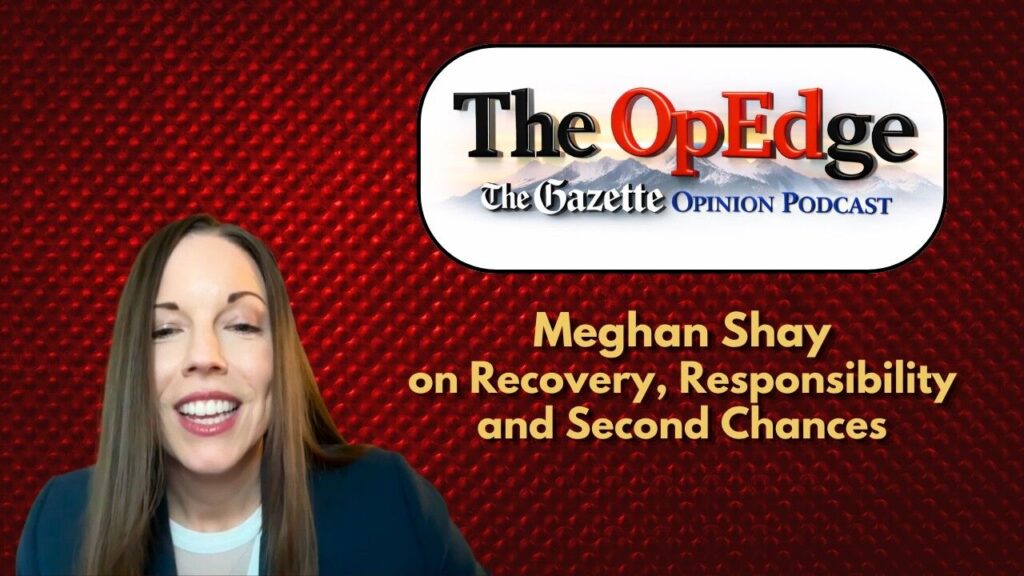
Meghan Shay on recovery, responsibility and second chances | The OpEdge Podcast
Tony Olivero
tony.olivero@gazette.com
Updated 22 hours ago
Step Denver and Step Springs CEO Meghan Shay joins The OpEdge to explore addiction recovery, homelessness, and the role of accountability in lasting change. Shay tells host and investigative columnist Jimmy Sengenberger why she believes recovery is built on personal...
The outrages mount | Hal Bidlack
Hal Bidlack
hal-bidlack@coloradopolitics.com
Updated 1 day ago
My kindly and forgiving editors understand that, from time to time, I can’t help myself from leaping atop my rickety soapbox to vent. And, like many other political commentators have already done, I could easily fill this entire missive with...
Rural Colorado deserves a tax holiday | GUEST COLUMN
Eric Mulder
jstooksberry@gmail.com
Updated 1 day ago
Spend enough time in Colorado’s Eastern Plains, the San Luis Valley, or the Western Slope, and you’ll see boarded-up storefronts, schools consolidating classrooms, and small rural communities stretching every dollar to keep basic services afloat. Once the backbone of Colorado’s...
Weiser’s leadership crucial for rural win-win | Rachel Gabel
Rachel Gabel
rachel-gabel@coloradopolitics.com
Updated 5 days ago
Attorney General Phil Weiser is going to win the gubernatorial election. That said, Colorado agriculture and rural communities have a 30-year track record of finding the win-win be it for species or industries or habitat. Former Governor Roy Romer possessed...
A Colorado history lesson for Victor Marx | Dick Wadhams
Dick Wadhams
dick-wadhams@coloradopolitics.com
Updated 4 days ago
Victor Marx, who narrowly won the Republican nomination for governor by one half 1% after boasting of a massive 44-point lead, is just as misguided on Colorado political history. During the primary, Marx made a clumsy attempt to denigrate his...
‘Be prepared to march in the streets’ | Miller Hudson
Miller Hudson
miller-hudson@coloradopolitics.com
Updated 4 days ago
It was early in 1974 when I first met Tim Wirth as he announced his candidacy for Congress, challenging Republican incumbent Don Brotzman. Although I had only resided in Colorado two years, I was drafted to serve as a Democratic...

‘CoCo’ would take taxpayers for a ride | Jon Caldara
Jon Caldara
jon-caldara@coloradopolitics.com
Updated 2 days ago
Colorado wants taxpayers to spend another $4.73 billion on passenger rail. Don’t worry. They have a plan. Which is a little like your brother-in-law announcing he’s launching another exciting restaurant venture after his last three restaurants ended in bankruptcy. Please....
The through line from Donald Trump to Victor Marx | SONDERMANN
By Eric Sondermann
by-eric-sondermann@coloradopolitics.com
Updated 7 days ago
Over 10 years ago, before Donald Trump could ever defeat Hillary Rodham Clinton, he had to first engineer a hostile takeover of the Republican Party. Prior to his descent of that golden escalator, the previous seven Republican presidential nominees had...
Primary voters rejected big money in politics | Paula Noonan
Paula Noonan
paula-noonan@coloradopolitics.com
Updated 4 days ago
While we’re in an election campaign lull between now and Labor Day, we have time to consider the impact of $102 million in campaign contributions in the primary. In the general election, more money will fill candidate campaign coffers, and...
PREV
PREVIOUS
Turning to the government in COVID's wake
Don Burnes I understand that we have all been bombarded with numbers and statistics about COVID-19. The daily, almost hourly, updates on numbers of cases, numbers in hospitals, and numbers of deaths are almost mind-numbing, and decision-makers at all levels of government order/recommend/suggest various ways of combatting this global pandemic or, in some cases, ignoring […]

POINT | Reopening schools best serves our kids
Monica Colbert We can reopen schools in a way that keeps students, teachers, and the broader community safe from the dangers of COVID-19, while protecting children from another year of lost learning. The decision to return students to the classroom should be based on medical data and the needs of students, not political concerns. Also […]