

Conservative-led webinar decries Gorsuch, implications of LGBTQ decision
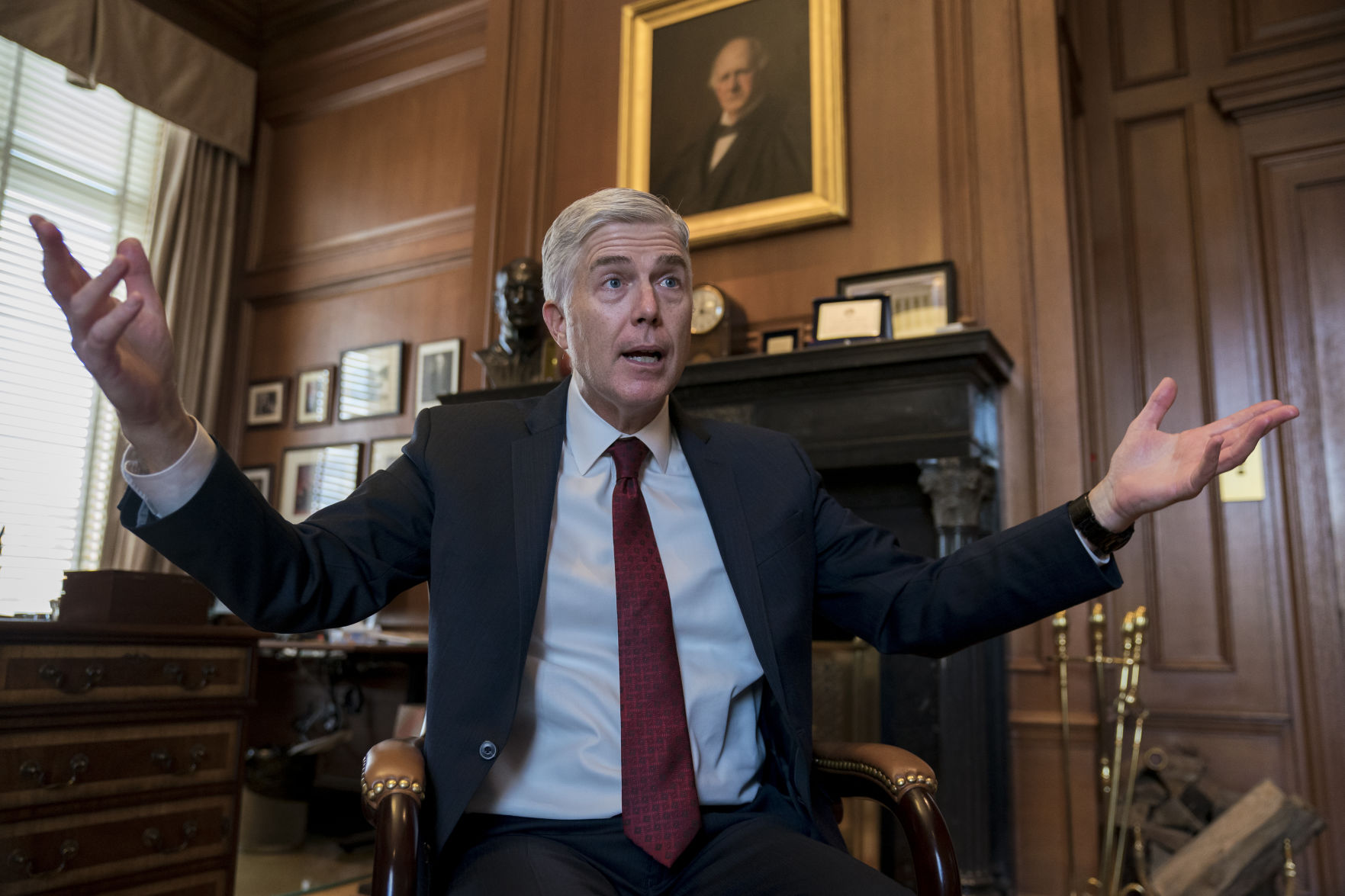
Days after a 6-3 U.S. Supreme Court decision outlawed employment discrimination on the basis of sexual orientation or gender identity, a webinar explored the frustration some Colorado conservatives felt at the consequences, the case’s legal reasoning and the man responsible for it.
“Should we be apologizing for Neil Gorsuch?” asked Jeff Hunt, the head of the conservative Centennial Institute at Colorado Christian University, on Thursday.
“I think the jury is still out,” responded Michael J. Norton, an attorney with Thomas N. Scheffel & Associates, P.C. in Denver. Hunt said his question arose on a conference call with The Federalist Society the day the decision in Bostock v. Clayton County, Georgia and its related cases was handed down.
Donald Trump, during the campaign for president in 2016, released a list of judges approved by the conservative legal group The Federalist Society. Gorsuch, at the time a federal appellate judge in Colorado, was on the list. In his opinion for the majority, Gorsuch wrote that “Congress adopted broad language making it illegal for an employer to rely on an employee’s sex when deciding to fire that employee. We do not hesitate to recognize today a necessary consequence of that legislative choice: An employer who fires an individual merely for being gay or transgender defies the law.”
Norton, who is married to Republican former Lieutenant Governor Jane E. Norton, called the ruling “crazy.”
“We should never give in. We should fight for every square inch of freedom,” he said. “We should stand up for our principles. We should stand up for truth. We should stand up for righteousness. We should stand up for the moral values of the Bible. And we should keep on keeping on. God has asked us, I think commanded us, to stand and stand firm.”
In the cases decided on Monday, the court’s majority had to interpret Title VII of the Civil Rights Act of 1964. The law currently mandates that “[i]t shall be an unlawful employment practice for an employment agency to fail or refuse to refer for employment, or otherwise to discriminate against, any individual because of his race, color, religion, sex, or national origin”.
Gorsuch reasoned that if two employees worked at a company and both were attracted to men, firing the male employee for his orientation but not the female employee because of hers amounted to sex discrimination.
“No one in 1964, ‘74, ‘84 or ‘94 would have had any idea that the word sex meant anything other than male and female,” Norton countered. He speculated that Chief Justice John G. Roberts Jr. also joined the majority with Gorsuch and the four liberal justices for strategic reasons.
“When I think Chief Justice Roberts learned of Gorsuch’s position on this matter, that sexual orientation and gender identity were morphed into or wrapped into the word sex,” Norton said, “he had no choice but to join the [majority] so as to make sure that a five-member majority led by the most senior justice, Ruth Bader Ginsburg, would not be assigning the opinion to somebody like Ruth Bader Ginsburg. It would have been far worse of an opinion had Ruth Bader Ginsburg written it than had Gorsuch written it.”
Noting that Roberts also authored the majority opinion on Thursday upholding the program to protect undocumented residents brought to the U.S. as children, Hunt asked, “Is Roberts a lost cause at this point?”
“I think it’s somewhat of a disappointment in many respects,” Norton replied.
Hunt, attempting to explain Gorsuch’s reasoning, said that the text of the law was really what the majority decided it to be: a blanket prohibition on sex-related discrimination. Norton replied that Congress could have changed the law to broaden the term if that was so. The consequence of this interpretation, he added, could be huge for religious institutions.
“The so-called ministerial exception, where churches may hire employees as ministers who practice and abide by the faith tenets of the religious organization, that, too, I think is going to be challenged,” he said. “There is no reason to believe the expansion of Title VII will not expand to public accommodations such as locker rooms, educational institutions, girls sports, housing, room rentals, almost every other aspect of public life imaginable in our society.”
Norton added that the decision would “further marginalize Christians in the public square” and prompt new litigation from people who have “any kind of real or imagined sexual identity issue.”
In Colorado, such protections already exist, and the Civil Rights Division investigates complaints of discrimination in employment, public accommodations and housing. Colorado also includes ancestry, pregnancy and marriage to a coworker as categories protected from discrimination.
Nevertheless, Norton concluded, “This was a bad decision made by somebody that we expected to make good decisions.”


Federal judge declines to end Denver sheriff employee’s sex discrimination suit
Michael Karlik
michael.karlik@coloradopolitics.com
Updated 9 hours ago
A federal judge tentatively green-lit a former Denver Sheriff Department sergeant’s sex discrimination lawsuit for trial last month, based upon allegations that three female employees were promoted ahead of him despite his qualifications. U.S. District Court Judge Nina Y. Wang...

Selling dogs, cats in pet stores now banned in Colorado
Marissa Ventrelli
marissa.ventrelli@coloradopolitics.com
Updated 10 hours ago
Gov. Jared Polis signed a bill into law on Wednesday prohibiting pet stores from selling dogs and cats, which sponsors have nicknamed the “Pistol the Pomeranian Protection Act.” House Bill 1011, sponsored by House Majority Leader Monica Duran, D-Wheat Ridge,...

Colorado bill allowing THC beverages to be sold at grocery stores, restaurants pulled by sponsor
Marissa Ventrelli
marissa.ventrelli@coloradopolitics.com
Updated 10 hours ago
A Denver Democrat decided on Tuesday to pull a proposal that would have allowed beverages with tetrahydrocannabinol or THC to be sold at locations like grocery stores, restaurants, and entertainment venues. THC is the psychoactive substance in cannabis, the chemical...
Democrats ready to fight after Supreme Court strikes down voting rights case
Lauren Green and Mabinty Quarshie, Washington Examiner
lauren.green.and.mabinty.quarshie.washington.examiner@gazetteedit.wpenginepowered.com
Updated 10 hours ago
The 2026 House map has been flipped upside down by a massive Supreme Court decision Wednesday to overturn the parts of the Voting Rights Act, as Democrats remain ready to fight. The Supreme Court dealt a blow to race-based redistricting,...
Blanche says Trump did not direct DOJ to indict Comey a second time
David Zimmermann Washington Examiner
davidzimmermannwashingtonexaminer@wpstage.coloradopolitics.com
Updated 10 hours ago
Acting Attorney General Todd Blanche on Wednesday denied that President Donald Trump directed the Justice Department to indict former FBI Director James Comey for a second time, saying the investigation has been ongoing for almost a year. The two-count indictment...
Corrections officials may be sued for employee’s alleged abuse of detainee, federal judge rules
Michael Karlik
michael.karlik@coloradopolitics.com
Updated 12 hours ago
High-level corrections officials may be sued for their own alleged failures to prevent or respond to an employee’s sexual misconduct toward a detainee, a federal judge decided last month. Rajae Bouhamidi was incarcerated at the Denver Women’s Correctional Facility. In...

Supreme Court justices to hear arguments on ending legal protections for Haitian, Syrian migrants
Associated Press
associated-press@coloradopolitics.com
Updated 13 hours ago
The Supreme Court will weigh arguments Wednesday over the Trump administration’s push to end legal protections for Haitians and Syrians as migrants fleeing war and natural disaster. Haitians and Syrians were among those from 17 countries with Temporary Protected Status, which allows migrants already...
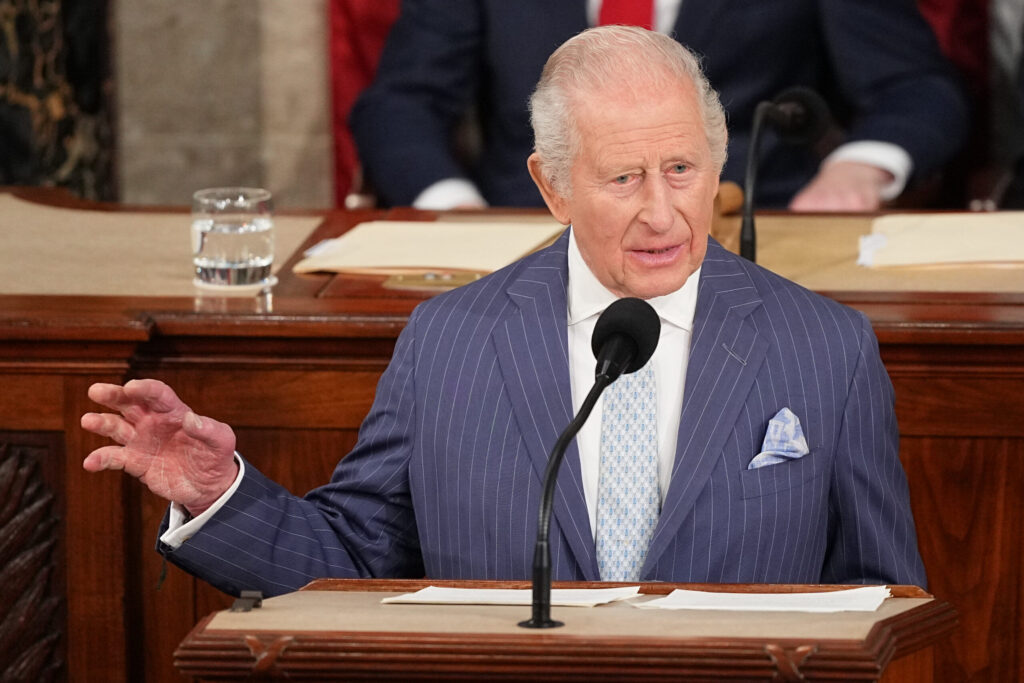
King Charles gifts Trump bell from British submarine namesake during state dinner
David Zimmermann Washington Examiner
davidzimmermannwashingtonexaminer@wpstage.coloradopolitics.com
Updated 10 hours ago
King Charles III bestowed a historical gift upon President Donald Trump during the White House state dinner on Tuesday night. The British royal gifted Trump a bell from a World War II British submarine named the HMS Trump. The vessel...

Proposal exempting some IT equipment from Colorado’s ‘right to repair’ law fails
Marissa Ventrelli
marissa.ventrelli@coloradopolitics.com
Updated 18 hours ago
A bill proposing an exemption to Colorado’s “right to repair” laws for “critical infrastructure” failed to pass its first committee in the House after clearing the Senate. Senate Bill 090 would have exempted information technology equipment considered “critical infrastructure” —...
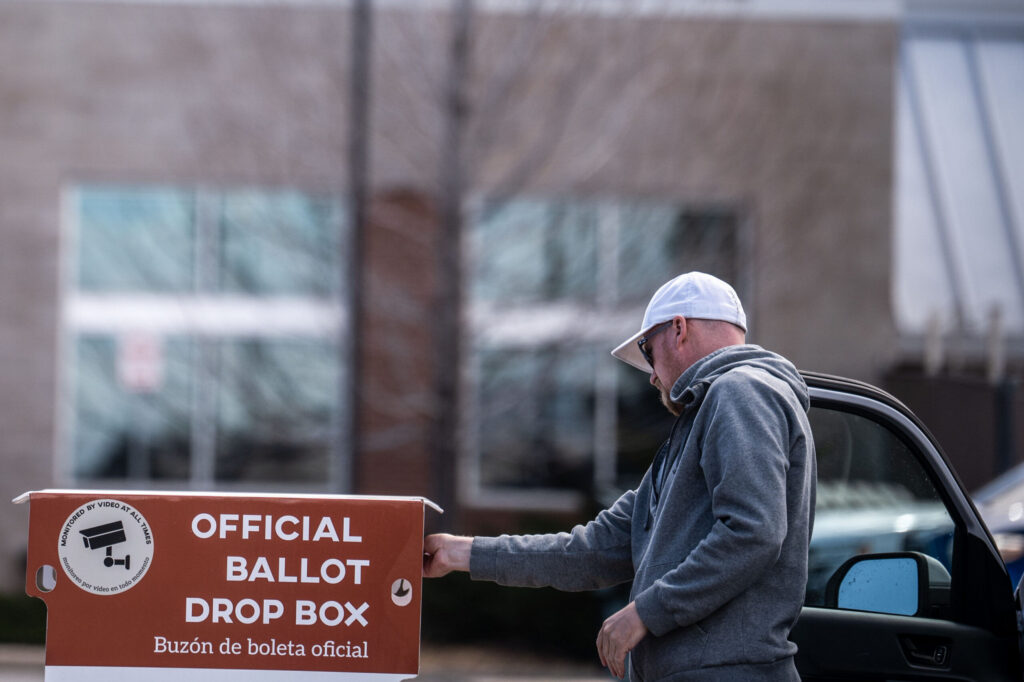
Colorado GOP request to block unaffiliated voters from receiving Republican primary ballots denied by judge
Ernest Luning
ernest.luning@coloradopolitics.com
Updated 1 day ago
A federal judge on Tuesday denied the Colorado Republican Party’s request for an emergency injunction barring unaffiliated voters from participating in the state’s upcoming Republican primary election. U.S. District Court Judge Philip A. Brimmer said that preventing unaffiliated voters from...
PREV
PREVIOUS

Sen. Michael Bennet on DACA: 'No good comes from hoarding citizenship'
Democratic U.S. Sen. Michael Bennet looked forward and back on Friday, the day after the U.S. Supreme Court’s rejected President Trump’s effort to strike down the Deferred Action for Childhood Arrivals program, which allows about 17,000 Coloradans to stay to school and work in Colorado without fear deportation. “No good comes from hoarding citizenship,” Bennet […]

Polis scolds Romanoff for throwing 'mud' in attack ad aimed at Senate primary rival Hickenlooper
Gov. Jared Polis on Friday denounced an attack ad launched hours earlier by fellow Democrat Andrew Romanoff that takes aim at primary rival John Hickenlooper, as Colorado’s Democratic U.S. Senate primary began to resemble a hall of mirrors of negative campaigning. “I’m disappointed that Andrew Romanoff has chosen to throw mud and attack John Hickenlooper […]