

Lawmakers get to work, axing dozens of bills, and begin on budget balancing measures
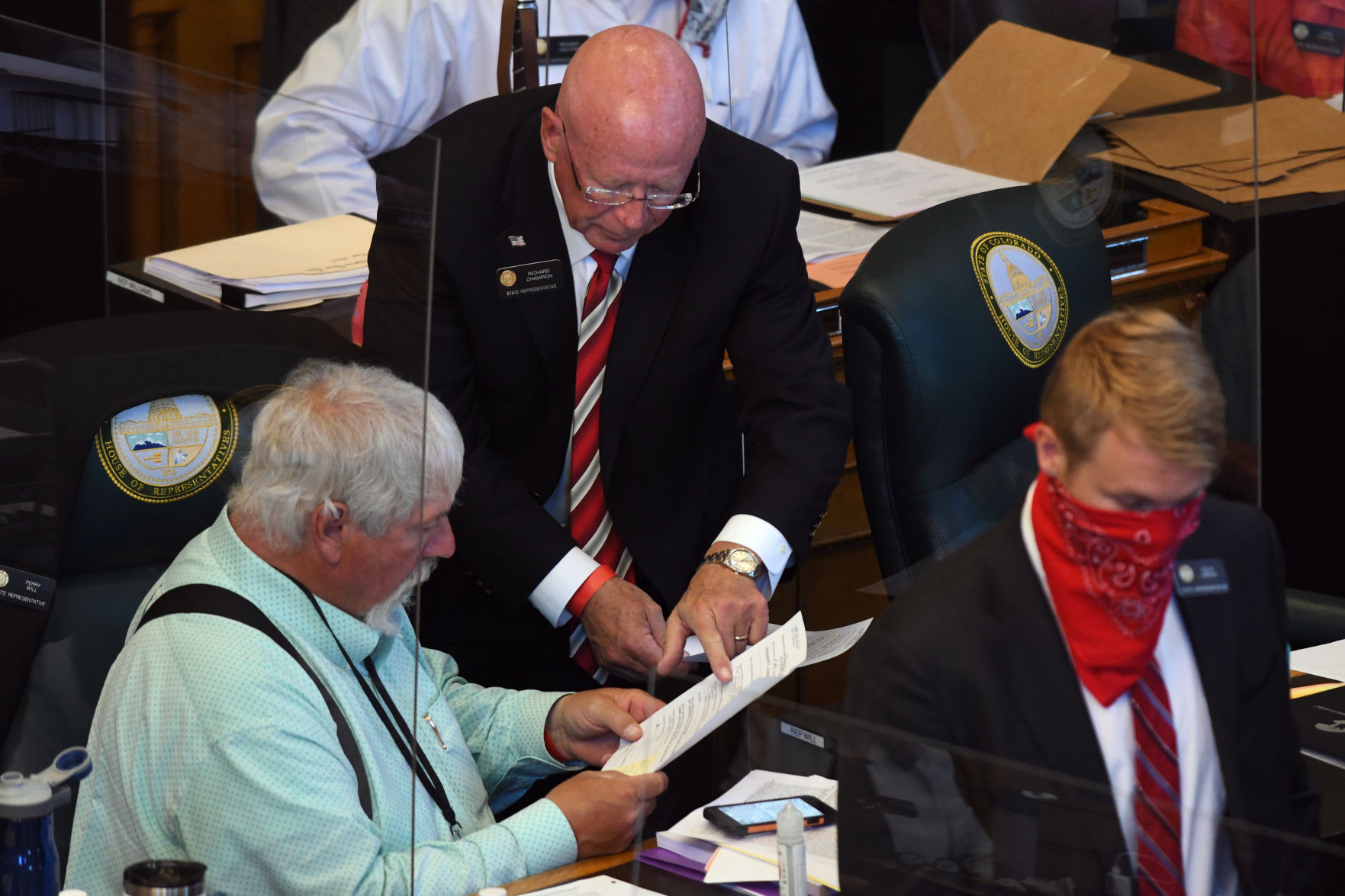
The General Assembly spent part of the first day back after 73 days away getting ready for the budget and for bills dealing with the COVID-19 pandemic.
What that looks like Tuesday: getting rid of most bills that either have a cost attached or that don’t fit the requirement of dealing with the pandemic.
But there’s a lot of wiggle room in that scenario.
A list of 35 bills from before the break, developed by Senate Democrats, highlights the work of the coming week. Some are no-brainers and are must-pass measures. That includes bills known as sunsets that reauthorize statutes or programs that must continue, such as occupational licensing for nurse’s aides, wastewater facility operators, occupational therapists or nurses. Another bill sets the budget for the General Assembly itself.
The 40 bills that don’t fall into the sunset or legislative appropriation category are supposed to have some tie-in to the pandemic, but some are just “one-offs,” according to Senate Majority Leader Steve Fenberg of Boulder, who defended the list Tuesday.
Many of those bills carry small costs, but some have huge price tags.
The largest is Senate Bill 28, which has a $5.6 million general fund cost. The bill, which comes out of the Opioid and Other Substance Use Disorders Study Committee, is sponsored by Sens. Brittany Pettersen, a Lakewood Democrat and Kevin Priola, a Republican from Henderson.
The bill’s biggest cost, at $4 million, is in temporary financial housing assistance for those with substance use issues.
Another bill with a big dollar tag: Senate Bill 7, also from the opioid committee. Petterson and Sen. Faith Winter, a Westminster Democrat, are the bill’s prime sponsors. The bill carries a cost of $2.7 million from a mix of sources, including the marijuana tax cash fund, general fund dollars and federal funds.
Fenberg said some bills will be replaced with strike-belows: complete rewrites, largely to get rid of the cost. Lawmakers have been working to find other ways to reduce the costs, either to a minimal amount or down to nothing, he said.
Fenberg also said the bills on the list should have a tie-in to the pandemic. That includes two bills on mobile home parks. It’s a little harder to tell with bills like Senate Bill 181, which deals with defendants deemed incompetent to proceed to trial, or a bill to strike the high school social studies test (although that one will save the state $667,000).
Senate Minority Leader Chris Holbert of Parker noted that Joint Rule 44, which has governed the actions of the General Assembly during the state declaration of emergency, requires all six of the legislative leaders to decide upon an agenda for the rest of the session. That never happened, he said.
Fenberg countered that the executive committee did have a discussion, on whether there would be a need for new committees and how bills would be handled. “We told them to submit bill ideas for late bill status,” he said.
Committees that met Tuesday axed dozens of bills in quicker-than-usual hearings, given that the public is being discouraged from testifying in person. People are being asked to submit testimony to the committees for consideration.
While they’re cutting potentially $500 million from higher education this session, lawmakers also are looking for a more equitable way to divide up the dollars they do have for colleges and universities.
Among the bills that passed Tuesday: the first bill to come out of the package of bills that accompany the Long Appropriations bill, HB 1360.
The House Education Committee gave unanimous passage to House Bill 1366 Tuesday afternoon. The legislation would divide up the state’s money for higher education based on a handful of goals, rather than doing so on volume, which drives dollars to the state’s research universities, led by the University of Colorado and Colorado State.
“There are different types of schools and different sizes of schools throughout the entire state of Colorado, and to assume one equation works for all of them in the same manner and in the same way I think is long past due,” said Rep. Daneya Esgar of Pueblo, who is sponsoring the will with Rep. Julie McCluskie, a fellow Democrat from Dillon.
The bill wouldn’t change any allocation this year to the Department of Education. It would take effect next year, if it were to make it to the governor’s desk to become law.
“What this bill talks about is how do we move forward from today,” Esgar told the Education Committee, “and it actually talks more about how do we do equitable. ‘
Schools would essentially compete for funding, but the competition would be with themselves to make improvements over time, rather than against other schools in unfair mismatches.
“It was certainly difficult to make the cuts to education in the long bill that we did, but this is a silver lining in the work of the JBC this year,” McCluskie said.
The funding formula is a product of the last recession, when lawmakers recognized the road to prosperity would depend on an educated and skilled workforce, she said. State leaders adopted a higher education master plan in 2012 and passed a funding formula in 2014, which is now being reconsidered.
Rep. Jim Wilson, a Republican from Salida, worked on the plan then, and told other members of the Education Committee Tuesday, that the proposed change won’t be the last.
“This is a process, folks,” said the long-time education advocate, who is a former teacher, coach principal and district superintendent. “You will see this again.”
Another Wilson bill didn’t fare so well, despite his efforts to tie it to the COVID-19 pandemic.
Wilson presented House Bill 1231 to keep a program adopted in 2018 to help address teacher shortages.
The bill gets universities and high schools working together to allow high school students to take teacher-prep courses.
The $1 million allocated in 2018, however, have not been spent. Lawmakers were expected to work on ways schools could access the money this session.
“The dollars were there, but they won’t be now, as we take dollars away, but the conversation will continue,” Wilson said, adding that there is a lot of conversation that still needs to happen.
“It’s COVID-related in many ways,” said committee chair Barbara McLachlan, a Democrat from Durango. “It’s also COVID-related that we had to go through the budget and take out. I lost a lot of programs that I thought were great and wonderful, and they’re all dead now, so I think this is just a sign of the times right now. It’s almost zero-based budgeting where we’re going to have to start all over, perhaps.”
But that wasn’t good enough, and the bill was axed on a 12-1 vote. Wilson was the only person who voted for it.
And then there was a bill on media literacy, House Bill 1357. The sponsor, Rep. Lisa Cutter, a Littleton Democrat, tried to get members of the Denver Press Club to call leadership in support of the measure, but when the bill came up for hearing Tuesday, she threw in the towel and asked that the bill be postponed indefinitely.


Colorado Politics Calendar July 27-Aug. 2
Rachael Wright, Special to Colorado Politics
rachael.wright@coloradopolitics.com
Updated 5 days ago
CoPo’s weekly political calendar will help you find political and public-policy events throughout Colorado. It includes candidate and issue campaign events, public policy meetings, court hearings, state and local party conventions, assemblies, debates, rallies, parades, speaking engagements, traveling dignitary appearances,...

The through line from Donald Trump to Victor Marx | SONDERMANN
By Eric Sondermann
by-eric-sondermann@coloradopolitics.com
Updated 5 days ago
Over 10 years ago, before Donald Trump could ever defeat Hillary Rodham Clinton, he had to first engineer a hostile takeover of the Republican Party. Prior to his descent of that golden escalator, the previous seven Republican presidential nominees had...

Colorado districts prepare for school year amid mental health cuts. But will less cellphone distractions help?
Marissa Ventrelli
marissa.ventrelli@coloradopolitics.com
Updated 3 days ago
The signs of a new school year are everywhere — buses in the shop, teachers unpacking boxes, families ticking through supply lists — but behind the familiar rituals, Colorado districts are preparing for a year defined less by routine than...
Armstrong staffer considers congressional bid, DeGette angers rural communities with wilderness act | A LOOK BACK
Rachael Wright, Special to Colorado Politics
rachael.wright@coloradopolitics.com
Updated 4 days ago
Forty-five years ago this week: If the lines were drawn just right, Republican Sen. Bill Armstrong stood the chance of losing his office manager, Ruth Fountain. Fountain admitted she was seriously thinking about running for Colorado’s new congressional seat in...
10th Circuit dismisses woman’s lawsuit following 10-year attempt to undo restraining order
Michael Karlik
michael.karlik@coloradopolitics.com
Updated 2 days ago
The Denver-based federal appeals court rejected a woman’s challenge on Friday to a restraining order imposed on her more than a decade ago, finding that she cannot credibly claim she will be prosecuted for violating the restraining order through her...
10th Circuit dismisses woman’s lawsuit following 10-year attempt to undo restraining order
Michael Karlik
michael.karlik@coloradopolitics.com
Updated 3 days ago
The Denver-based federal appeals court rejected a woman’s challenge on Friday to a restraining order imposed on her more than a decade ago, finding that she cannot credibly claim she will be prosecuted for violating the restraining order through her...
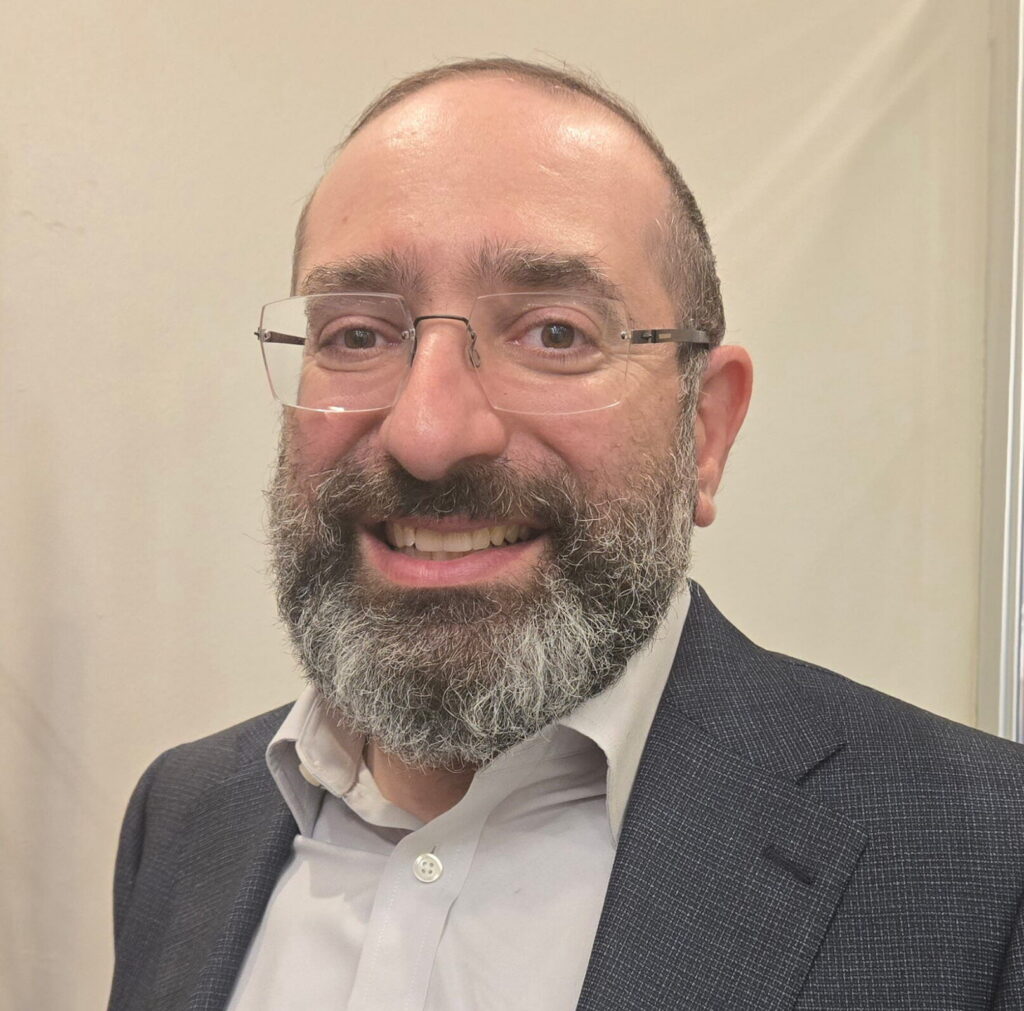
Surprise candidate Shimon Blau cleared to face off against Melat Kiros in November
Ernest Luning
ernest.luning@coloradopolitics.com
Updated 2 days ago
Unaffiliated congressional candidate Shimon Blau, a Denver doctor, has qualified by petition for the general election in Colorado’s 1st District, where Democrat Melat Kiros defeated 15-term U.S. Rep. Diana DeGette in last month’s primary, the Colorado Secretary of State’s Office...

Colorado produce not tied to nationwide cyclospora outbreak, agriculture officials say
Marissa Ventrelli
marissa.ventrelli@coloradopolitics.com
Updated 2 days ago
There is no indication that the recent outbreak of cyclospora, a fecal parasite that has contaminated food and water across nearly every state, can be linked to produce grown in Colorado, according to the state’s Department of Agriculture. “Colorado growers...

UNC opens College of Osteopathic Medicine
Marissa Ventrelli
marissa.ventrelli@coloradopolitics.com
Updated 3 days ago
The University of Northern Colorado held a grand opening for its new College of Osteopathic Medicine on Friday, with Gov. Jared Polis in attendance to celebrate the culmination of a two-year, $127.5 million project. The project was funded through legislation...
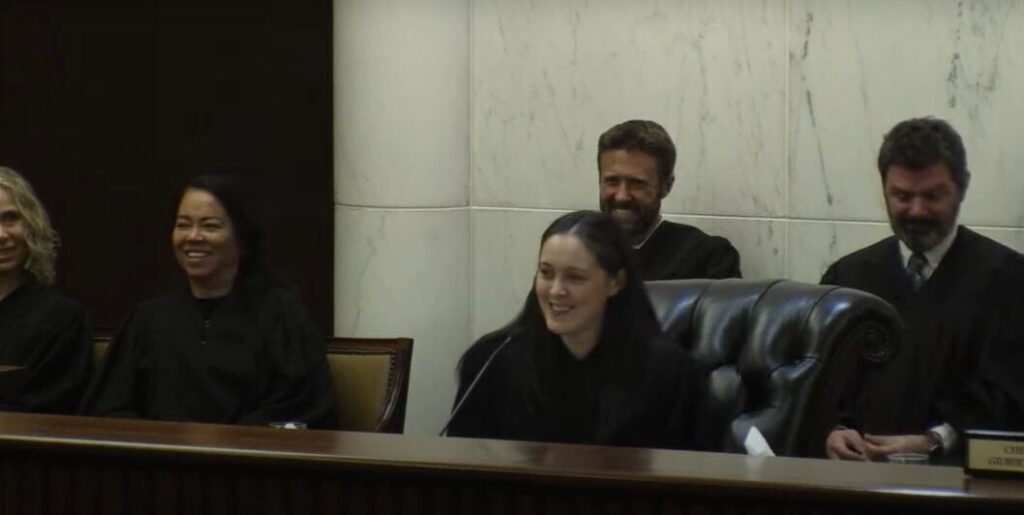
Colorado equal pay law does not require plaintiffs to allege gender-based retaliation, appeals court finds
Michael Karlik
michael.karlik@coloradopolitics.com
Updated 2 days ago
The 2019 Colorado law aimed at rooting out pay discrimination on the basis of sex does not require a plaintiff to allege their employer retaliated against them for sex- or gender-related reasons, the state’s second-highest court decided on Thursday. Lawmakers...
PREV
PREVIOUS
House advances 'landmark' bill to give sex assault victims unlimited time to sue
The Colorado House of Representatives gave initial approval on Tuesday to a bill that would eliminate the civil statute of limitations for sexual misconduct going forward, including for sexual abuse of children. “This is actually a landmark bill that you’re about to vote on,” said Rep. Matt Soper, R-Delta, one of the proposal’s sponsors. “One […]

Colo. Supreme Court to decide limits of excluding evidence in Aurora slaying case
The Colorado Supreme Court will take up a case that questions whether evidence that is blocked at trial for being unlawfully obtained must remain so, even if the defense references it in a way that may mislead a jury. The mother of Danielle Griego found her daughter dead in an Aurora apartment in 2014. Elmo […]