

RTD updates code of conduct, giving more discretion to remove people from property

The Regional Transportation District has bolstered its ability to remove non-riders from its vehicles and facilities in response to disruptive and illegal behavior, particularly at Denver Union Station.
“It has become a bit overwhelming,” chief safety and security officer Mike Meader told the board on April 14. At that committee meeting, interim general manager Paul Ballard listed a range of security problems in recent weeks.
“Easter Sunday itself was really sad. We had a robbery at Union Station,” he said. “We had multiple calls on Easter Sunday for EMS to deal with multiple people with alcohol-induced unconsciousness. We had multiple buses taken out of service on Easter Sunday for urine decontamination, for vomit decontamination.”
Ballard added that another individual who came onto RTD property was wanted for a crime and subsequently arrested. The person had paperwork stating that they had tested positive for COVID-19, which resulted in RTD officers seeking medical attention.
Under the revisions to the code of conduct, the pre-pandemic two-hour occupancy limit for RTD facilities is replaced with a statement that use of RTD property is reserved for travel-related purposes and that the agency may use discretion in removing people after they were asked to leave. There are further restrictions on camping and storing property, sitting on RTD premises, and occupying vehicles while under the influence of drugs or alcohol.
The code also bans sleeping where it creates a hazard or interferes with RTD operations. “It’s just a good rule of thumb to not allow it,” said Robert Grado, the agency’s police chief. He added that some people have died while sleeping on RTD vehicles.
RTD’s code of conduct dates to 2016 and was intended to regulate behavior on agency property. The code permits RTD to bar individuals from riding the system or removing them from RTD property for violations.
At the April 21 board meeting, directors voted 10-5 to adopt the changes. Directors Claudia L. Folska, Shontel M. Lewis, Judy Lubow, Natalie Menten and Ken Mihalik voted against.
Lubow, at the previous meeting, called some of the changes “overreaching.” She singled out the violation generated by remaining at an RTD facility after being asked to leave.
“That to me is so overly broad and filled with too much discretion for abuse that I’m not comfortable with it,” she said. “I would prefer to see something that would give restrictions on that completely unrestricted piece of authority, such as being asked to leave for violations of this code or the criminal code or not being interested in using transit.”
The board amended that provision as Lubow requested. The modification did not go as far as Menten wished, who observed that she “will look forward to being the plaintiff to sue RTD for First Amendment violations.”
The decision also included granting the general manager the ability to change the code of conduct on his own during declared national or state emergencies. The board would have 14 days to ratify the changes. Folska bristled at this feature, saying authority should remain with the board on all changes.
“I would not be comfortable passing the authority of this board to anyone other than the elected people of this board,” she said. “This is our job.”
Meader clarified that even though these changes are occurring during the COVID-19 pandemic, they are a long-term solution to longstanding problems. They will emphasize that RTD’s infrastructure, in particular Union Station, is not designed for people who have intentions other than using public transportation. RTD reported nearly six calls daily to transit police about the bus concourse alone in January.
“We saw the need to make sure that we put some language in there that would again focus on the facility being used for transit services,” he said.
In a related adjustment, the board also deleted the guideline generally proscribing non-disabled passengers from using equipment intended for those with disabilities and replaced it with a prohibition on obstructing disabled riders’ access to such features.


Colorado board permits state to appeal injunction against arthritis drug price cap
Marissa Ventrelli
marissa.ventrelli@coloradopolitics.com
Updated 14 hours ago
A Colorado board voted Friday to allow the Attorney General’s Office to fight an injunction against a price cap on a drug that treats arthritis. A U.S. district court judge had granted the company Amgen a preliminary injunction, temporarily blocking...

Federal judge rejects constitutional claims, ‘expressions of hatred’ by Club Q defendant
Michael Karlik
michael.karlik@coloradopolitics.com
Updated 13 hours ago
A federal judge rejected a defendant’s claims that he received constitutionally ineffective assistance of counsel while facing federal hate crime and firearms charges for murdering five people at a Colorado Springs LGBTQ nightclub in 2022. Anderson Lee Aldrich is serving...

Divided 10th Circuit upholds Colorado congestion fee on car rentals
Michael Karlik
michael.karlik@coloradopolitics.com
Updated 10 hours ago
The Denver-based federal appeals court concluded on Monday that a 2024 “congestion impact fee” that lawmakers imposed on short-term vehicle rentals did not conflict with a federal prohibition on certain airport-related charges. Beginning in the 1970s, Congress began limiting the...

Space Force should measure workforce needs as it prepares to double in size, GAO report says
Mary Shinn
mary-shinn@coloradopolitics.com
Updated 19 hours ago
The Space Force needs more people. It’s just not precisely sure how many more. A Government Accountability Office report released earlier this month found that the youngest and smallest military branch does not have a process to consistently or accurately...

Colorado schools receive $24 million for free meals program
Marissa Ventrelli
marissa.ventrelli@coloradopolitics.com
Updated 13 hours ago
The Colorado Department of Education is providing Colorado schools with nearly $24 million in grant funding to implement a free lunch program. Approved by voters in 2022, the Healthy School Meals for All provides free breakfast and lunch to all...
Secret Service agent placed on administrative leave after arrest for near-deadly hazing ritual
Claire Carter
claire.carter@washingtonexaminer.com
Updated 21 hours ago
A Miami Secret Service agent in Florida was placed on administrative leave following his arrest on Sunday in connection with a near-deadly hazing incident at a University of Miami fraternity. Marquez Christopher Pinder, 29, was arrested alongside two other individuals...
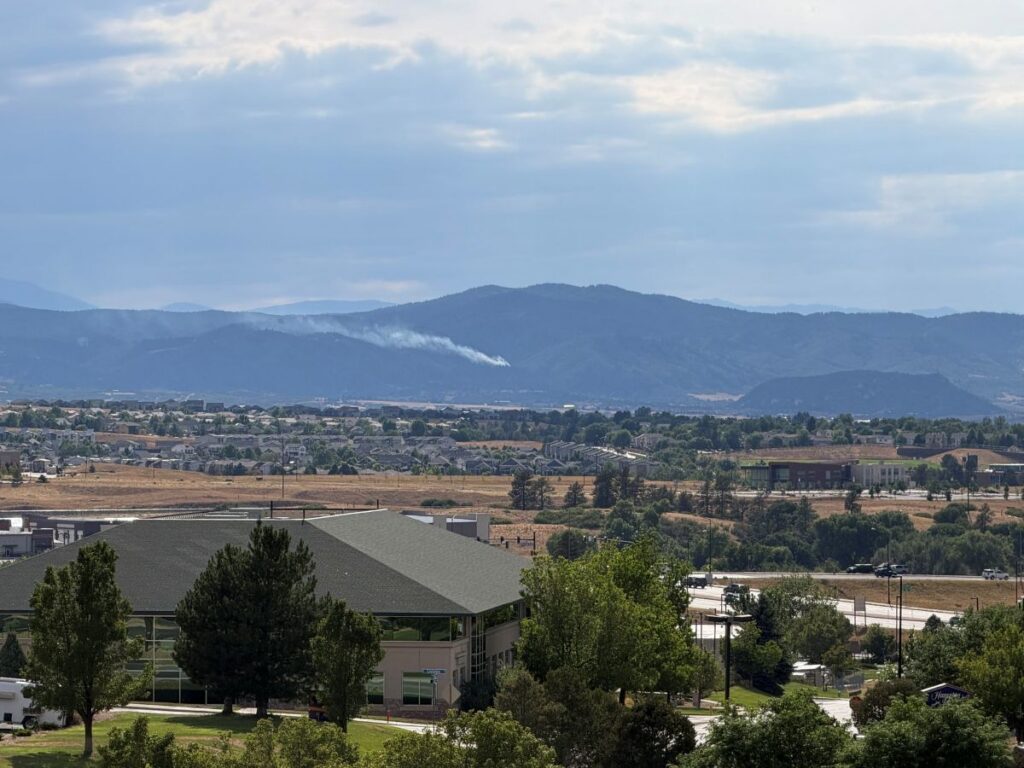
Forest fire west of Sedalia prompts evacuations in Douglas County
Nicholas Fogleman
nicholas.fogleman@denvergazette.com
Updated 23 hours ago
Emergency crews are responding to a forest fire burning west of Sedalia, prompting evacuation orders for nearby residents Sunday afternoon. At about 5 p.m. Sunday, the Douglas County Sheriff’s Office issued an evacuation order for residents within a 2-mile radius...

Airstrikes have paused and talks are pressing forward. But can the US and Iran take the off-ramp?
The Associated Press
the-associated-press@coloradopolitics.com
Updated 23 hours ago
WASHINGTON (AP) — The U.S. military has paused its airstrikes on Iran after nearly two weeks of intensifying bombing, while diplomatic efforts have pushed forward to try to avert a return to all-out war. But it remains to be seen...
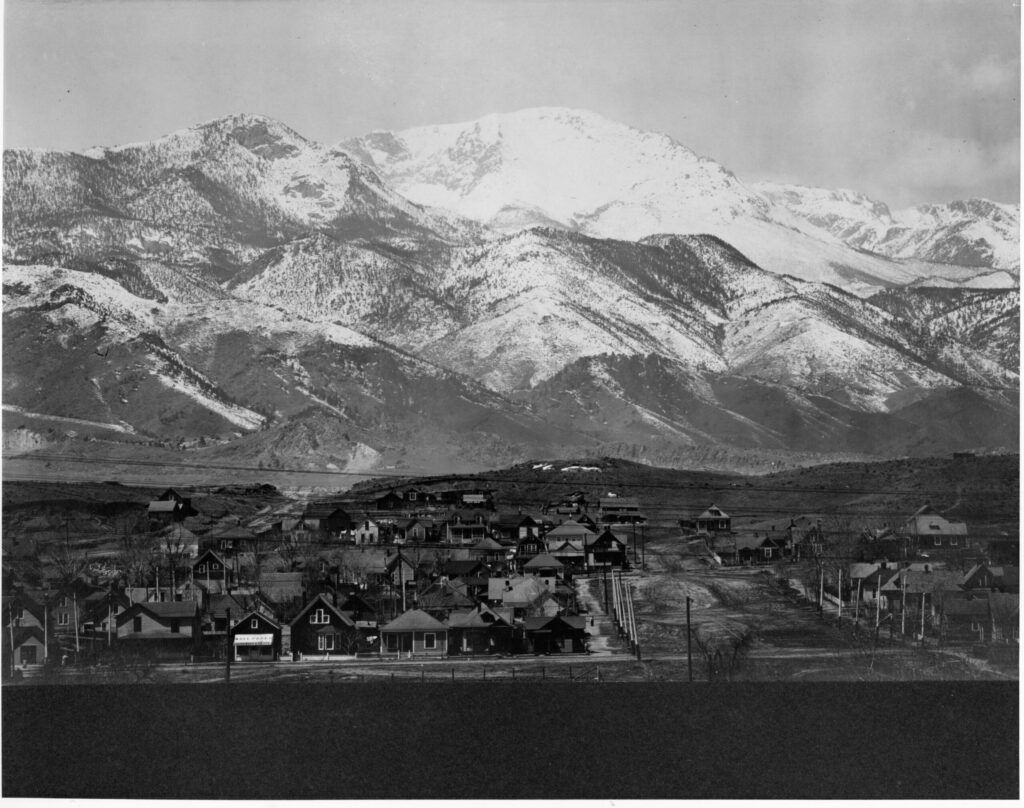
Penrose fortune paved the way for Colorado Springs to be a military, space and sports town
Mary Shinn
mary-shinn@coloradopolitics.com
Updated 23 hours ago
Colorado Springs is always working to catch the next big economic wave. “We’re always trying to figure out what the next thing is going to be,” explained Matt Mayberry, director of the Colorado Springs Pioneers Museum. In the early days,...

Colorado Politics Calendar July 27-Aug. 2
Rachael Wright, Special to Colorado Politics
rachael.wright@coloradopolitics.com
Updated 6 days ago
CoPo’s weekly political calendar will help you find political and public-policy events throughout Colorado. It includes candidate and issue campaign events, public policy meetings, court hearings, state and local party conventions, assemblies, debates, rallies, parades, speaking engagements, traveling dignitary appearances,...
PREV
PREVIOUS

Expanded student loan relief comes to Colorado
As part of a multistate initiative to provide student loan relief during the pandemic, Coloradans with private loans or commercially-held federal loans will have options to reduce payment burdens. “I am pleased that several states and student loan servicers have come together to provide relief to more borrowers,” said Attorney General Phil Weiser. “We all […]
Nearly 75% of Colorado restaurant workers laid off or furloughed since March, surveys show
As new surveys show layoffs and lost sales continue to hammer Colorado’s restaurant industry because of the COVID-19 pandemic, some local restaurant owners say they’re hanging on as they await the expected reopening of their dining rooms in mid-May. Nine of every 10 restaurant operators in the state – 91% – say they’ve laid off […]