

State issues new standards of care to guide ventilator rationing
The state has updated its crisis standards of care for hospitals during the COVID-19 pandemic, which includes guidelines for how to ration resources like ventilators during a surge in capacity.
“The state has been working hard to avoid having to use these standards,” said Eric France, the chief medical officer at the Colorado Department of Public Health and Environment. “We’re working with the hospitals to increase the number of ICU beds and ventilators to try and meet the anticipated demand.”
Colorado’s standards date to 2018 and direct how medical professionals should allocate resources and equipment when hospitals are overcapacity. The new guidelines advise against the provision of triage services based on factors irrelevant to care, such as race, ability to pay, immigration or “VIP” status.
However, when rationing ventilators, doctors should first employ a scoring system based on the severity of the illness and the likelihood of surviving long-term. Then, if additional criteria are needed, hospitals should prioritize children, healthcare workers and first responders. Other factors to consider include pregnant patients, those with high life-years saved, and people who are sole caregivers. If there is still a shortage, a hospital should randomly allocate ventilators.
CDPHE also recommends that people create advanced directives to describe what kinds of care a patient does and does not want to receive in case they are unable to make their own medical decisions.

The coming election and mischief in the making | SONDERMANN
Eric Sondermann
eric-sondermann@coloradopolitics.com
Updated 3 days ago
America’s tribalism is such these days that we struggle to even agree on the basic rules. Elections have always been hotly contested. As the saying goes, “Politics ain’t beanbag.” The process has long involved elements of nastiness and underhanded conduct....

Colorado Politics Calendar Aug. 31-Sept. 6
Rachael Wright, Special to Colorado Politics
rachael.wright@coloradopolitics.com
Updated 3 days ago
CoPo’s weekly political calendar will help you find political and public-policy events throughout Colorado. It includes candidate and issue campaign events, public policy meetings, court hearings, state and local party conventions, assemblies, debates, rallies, parades, speaking engagements, traveling dignitary appearances,...
Tancredo in Running for Dept. of Ed. Position | A LOOK BACK
Rachael Wright, Special to Colorado Politics
rachael.wright@coloradopolitics.com
Updated 3 days ago
Forty-five years ago this week: “I know that my name has been placed before the Secretary of Education, and I know that I’m one of three or four being considered for the Department of Education’s Region 8,” said state Rep....
Colorado measure adding ID checks to mail-in voting qualifies for ballot
Marissa Ventrelli
marissa.ventrelli@coloradopolitics.com
Updated 13 hours ago
A ballot initiative that would require voters to include additional information on mail-in ballots has qualified for the November election, according to the Secretary of State’s Office. Backed by El Paso County Treasurer Chuck Broerman and former Deputy Secretary of...
Colorado election website error exposes personal data of confidential voters
Marissa Ventrelli
marissa.ventrelli@coloradopolitics.com
Updated 14 hours ago
A system update accidentally lifted protections on confidential records in Colorado, exposing dozens of voters’ personal information, according to the Secretary of State’s Office. The limit that normally blocks access to confidential voter profiles was inadvertently disabled during an update...
PUC adds weekly comment after killing private talks
Scott Weiser
scott.weiser@gazette.com
Updated 14 hours ago
The Colorado Public Utilities Commission will take public comment at the start of every commissioner’s weekly meeting beginning Sept. 9 as part of its new transparency mandate, the commission announced, expanding a slot previously limited to the second Wednesday of...
10th Circuit overturns framework for sentencing probation violators by 11-1
Michael Karlik
michael.karlik@coloradopolitics.com
Updated 15 hours ago
In a rare decision by all 12 of its full-time judges, the Denver-based federal appeals court ruled in a lopsided vote on Friday that one of its members created a sentencing process for probation violators that was out of step...

Federal judge dismisses excessive force lawsuit against Colorado Springs, officer
Michael Karlik
michael.karlik@coloradopolitics.com
Updated 14 hours ago
A federal judge concluded last week that a Colorado Springs police officer could not be held liable for shooting a suspect three times after the man menaced two victims with a gun and fled the scene. Al’morion Germany was involved...
DeFlock started from one man’s curiosity — now Flock cameras are a midterm issue
Claire Carter
claire.carter@washingtonexaminer.com
Updated 18 hours ago
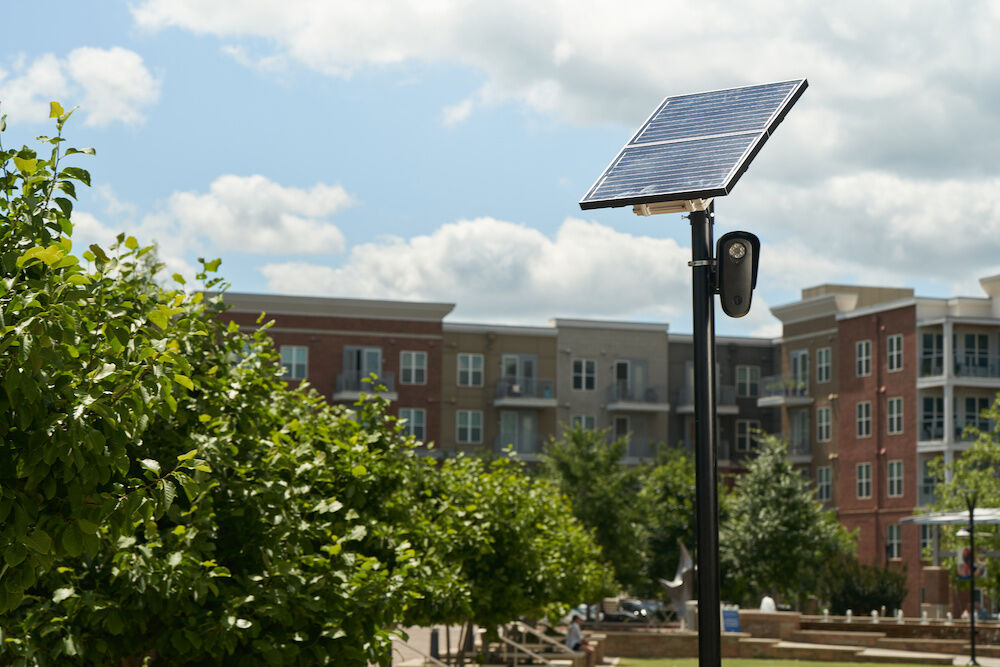
Will Freeman wasn’t looking to start a national movement when he launched DeFlock after noticing Flock Safety’s automatic license plate readers along the side of the road. The software engineer was driving across the country in 2024 when the cameras...

Aurora student journalist cleared of disciplinary charges after ignoring ‘gag order’
Kyla Pearce
kyla.pearce@gazette.com
Updated 15 hours ago
A Community College of Aurora student who accused the college of putting an “unconstitutional gag order” on his student-run publication was cleared of disciplinary charges against him. CCA student Andrew Green tried to register his independent student publication, called “FoxTalk,”...
PREV
PREVIOUS
INSIGHTS | Mental health is the next coronavirus wave
The cost of the pandemic that can’t be calculated is the toll of mental illness. While policymakers and the private sector sort out the debris of the global coronavirus tragedy, the mental health of many will factor heavily into the losses, as certainly as a washed-out bridge in a flood. When this gets sorted out, […]

CU student sues Weld County over 'concussion explosives' in jail
A man has filed a federal lawsuit against Weld County alleging excessive force and a “custom of militarized violence and weaponry” in the sheriff’s office that caused him multiple head injuries. On June 23, 2018, Tage Rustgi returned to his home for the Greeley Stampede. A student at the University of Colorado, he wrote that […]