

State Supreme Court to take up question of unanimous jury verdicts
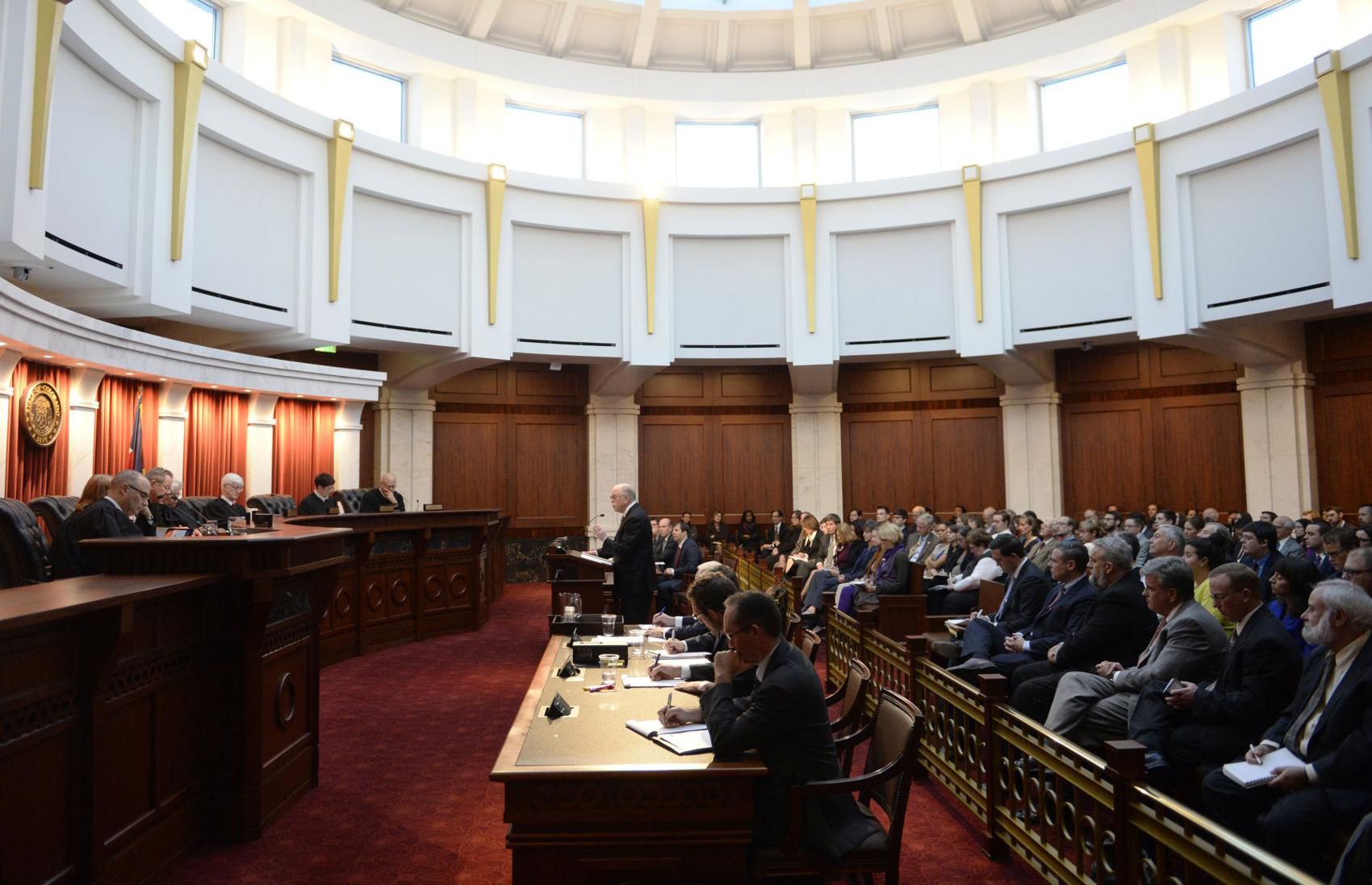
The Colorado Supreme Court announced on Monday that it will hear a case that questions whether a jury, in deciding on self-defense, must conclude unanimously which element of the defense that prosecutors refuted beyond a reasonable doubt.
In February 2015, police escorted Clarence Mosely from the Shotgun Willie’s strip club in Glendale for unruly behavior. Shortly thereafter in the parking lot, a group of men confronted Mosely and, in the ensuing altercation, Mosely stabbed one of them. The trial court instructed the jury that in order to find Mosely guilty of felony menacing beyond a reasonable doubt, they had to reject an exception for self-defense. That exception had four elements, of which the prosecution had to disprove “beyond a reasonable doubt, at least one of the above numbered conditions”.
The court further told members of the jury that they must be unanimous in their verdict, and that “all of you must agree on all parts of it.”
While the jury deliberated, one member sent a question to the judge asking whether the jurors had to agree upon prosecutors’ invalidation of the same self-defense element, or whether they could reach a verdict in which each member merely believed the prosecutors had refuted one of the four elements.
Over the objection of Mosely’s lawyer, the judge responded that “there is no requirement that you unanimously agree on which numbered condition or conditions have been disproven.”
Writing for a three-member panel of the Colorado Court of Appeals, Judge Daniel M. Taubman found that the trial court judge was mistaken, because the four elements were predicated on the plaintiff either being the aggressor or responding to the aggressor, both of which could not be true.
“Because the trial court answered the juror’s question in a manner that conflicted with the unanimity instruction, some jurors might have concluded that the provocation exception applied, while others concluded that the initial aggressor instruction applied,” Taubman wrote. “This was improper.”
He reversed the felony menacing conviction and ordered a new trial, noting that the judge’s instruction affected the outcome.
The case is Clarence Mosely v. The People of the State of Colorado.

Trump’s judicial nominee orders bond in wave of cases after 10th Circuit rejects government’s position
Michael Karlik
michael.karlik@coloradopolitics.com
Updated 2 hours ago
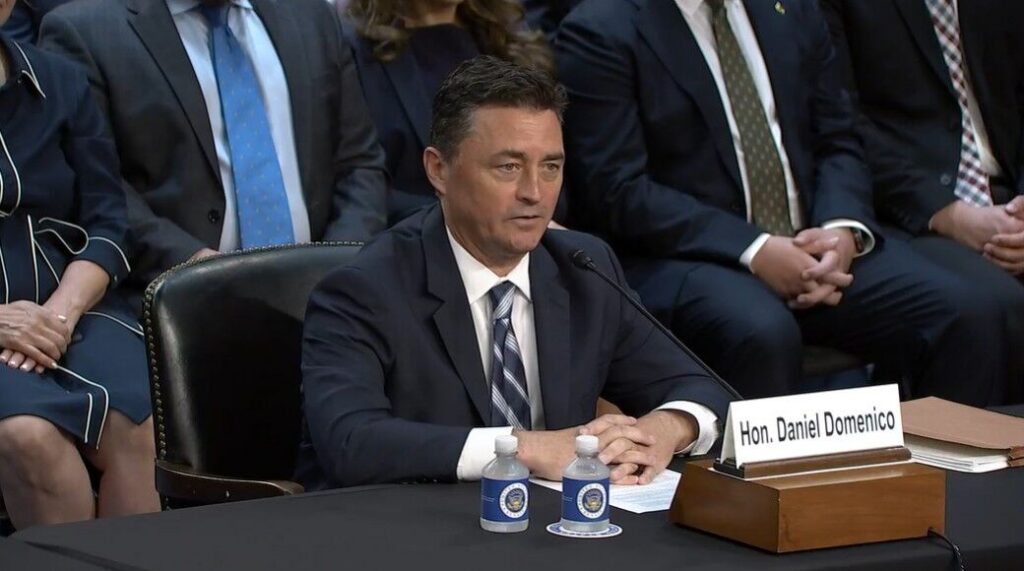
Within 24 hours of the Denver-based federal appeals court rejecting the government’s expansive view of its immigration detention authority, the lone judge in Colorado to embrace that view ordered bond hearings for detainees in at least 20 cases. U.S. District...

Cherry Creek spent $65K on investigation, but invoices remain secret, records show
Nico Brambila
nico.brambila@denvergazette.com
Updated 1 hour ago
After previously refusing to disclose the cost associated with the investigation into the former superintendent and his wife, the former human resources chief, Cherry Creek School District officials partially released records showing the cost to taxpayers: $65,054.85. The Denver Gazette...
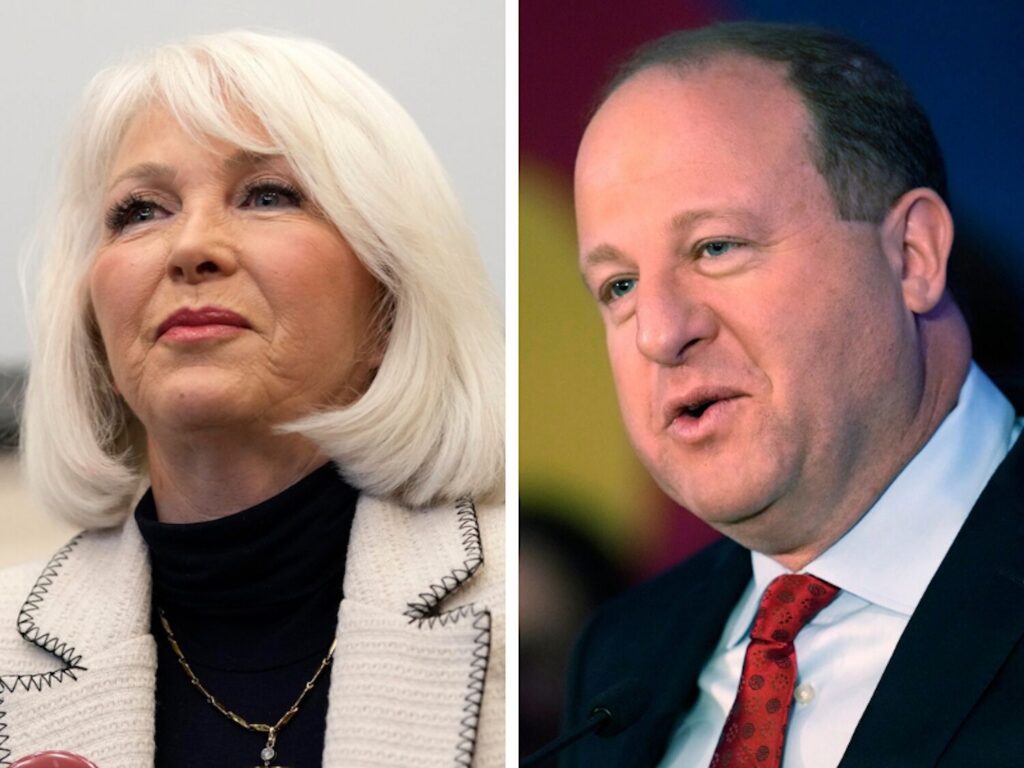
Colorado governor fires clemency board members who opposed Tina Peters commutation
Marissa Ventrelli
marissa.ventrelli@coloradopolitics.com
Updated 3 hours ago
Gov. Jared Polis has fired two members of his clemency board who opposed his commutation of Tina Peters’ sentence, according to Colorado Politics news partner 9News. In firing Azra Taslimi and Hannah Seigel Proff, Gov. Jared Polis said they had...
Democrats supercharge court fight after campaign finance ruling
James A. Downs
james.a..downs@washingtonexaminer.com
Updated 4 hours ago
Democrats are hoping to dampen the GOP’s midterm cash advantage after Republicans scored a major win allowing unlimited coordination between political parties and candidates. Republican campaign arms say they can access discounted TV ad rates after the Supreme Court lifted...
10th Circuit agrees Colorado satisfied jury award after intercepting money for restitution
Michael Karlik
michael.karlik@coloradopolitics.com
Updated 55 minutes ago
The Denver-based federal appeals court agreed last week that Colorado satisfied its obligations by not paying a man directly for violating his rights, but rather crediting the jury’s multimillion-dollar award toward the crime victim restitution he still owed in his...
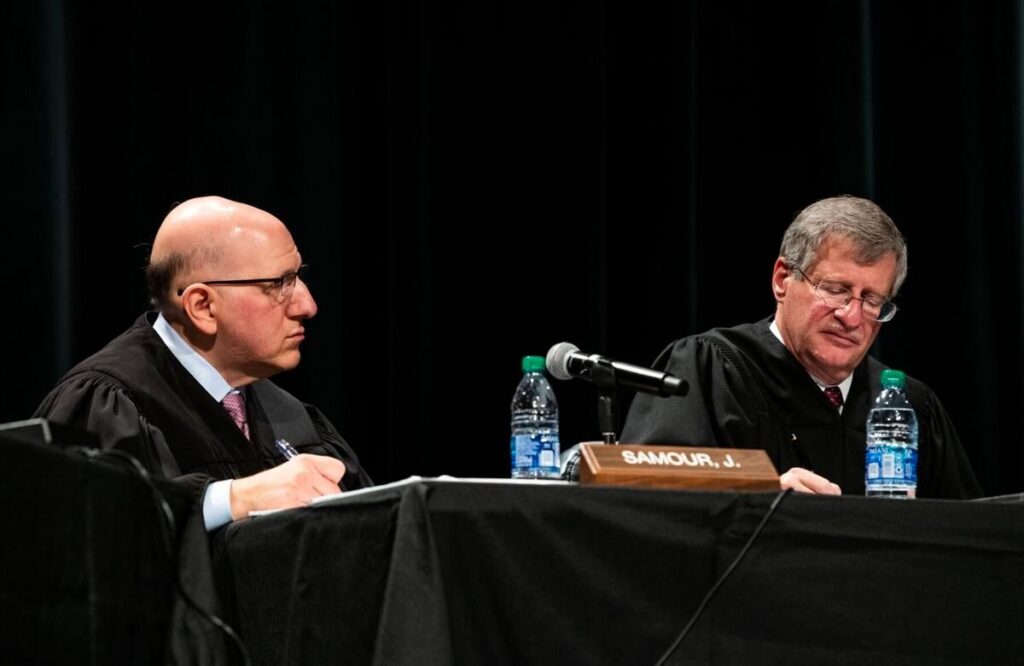
Colorado justices ponder whether insurer should save company from asbestos suits
Michael Karlik
michael.karlik@coloradopolitics.com
Updated 6 hours ago
Some members of the Colorado Supreme Court appeared skeptical last week that an insurance policy that reaches beyond the limits and coverage of a company’s other policies must “step down into the shoes” of those policies after they become insolvent....

Colorado business confidence improves but still pessimistic
Bernadette Berdychowski
bernadette.berdychowski@denvergazette.com
Updated 4 hours ago
Halfway into the year, business confidence across Colorado has improved but is still negative, a new report found. The Leeds Business Confidence Index, a measurement of how business leaders across Colorado feel about the future of the national and state...

How Melat Kiros pulled Democratic Party left in upset win over Diana DeGette
Ernest Luning
ernest.luning@coloradopolitics.com
Updated 11 hours ago
“It’s time for change,” Democratic congressional candidate Melat Kiros, a political newcomer and self-described democratic socialist, said in her campaign’s TV ad. On Tuesday night, primary voters in Denver agreed, giving the nomination to the 29-year-old, while at the same...
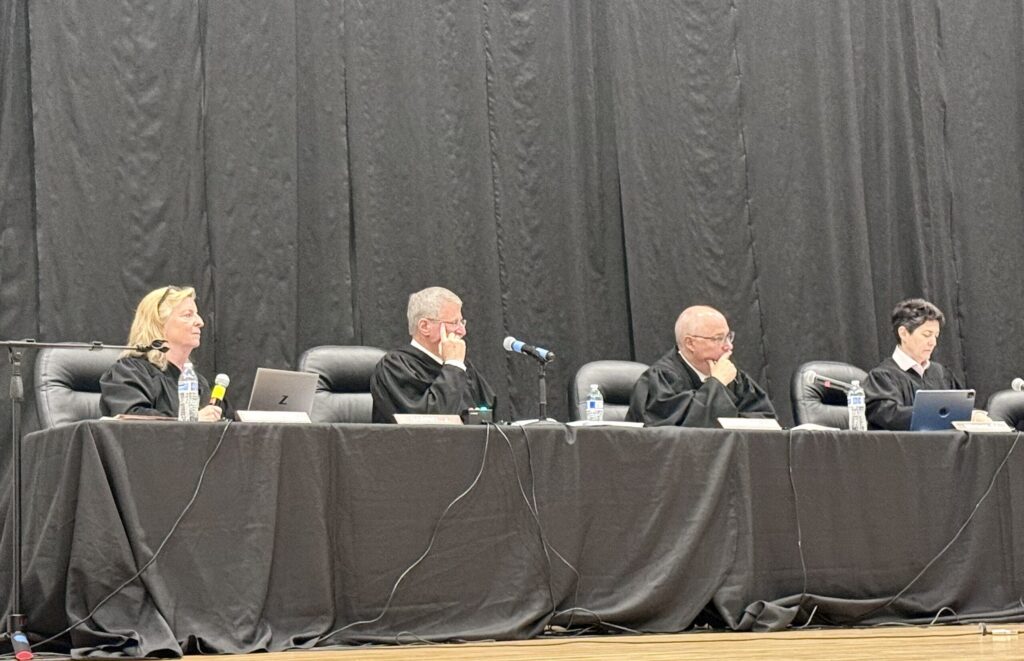
Colorado justices weigh ‘extreme’ proposals for civil jury trial requests
Michael Karlik
michael.karlik@coloradopolitics.com
Updated 23 hours ago
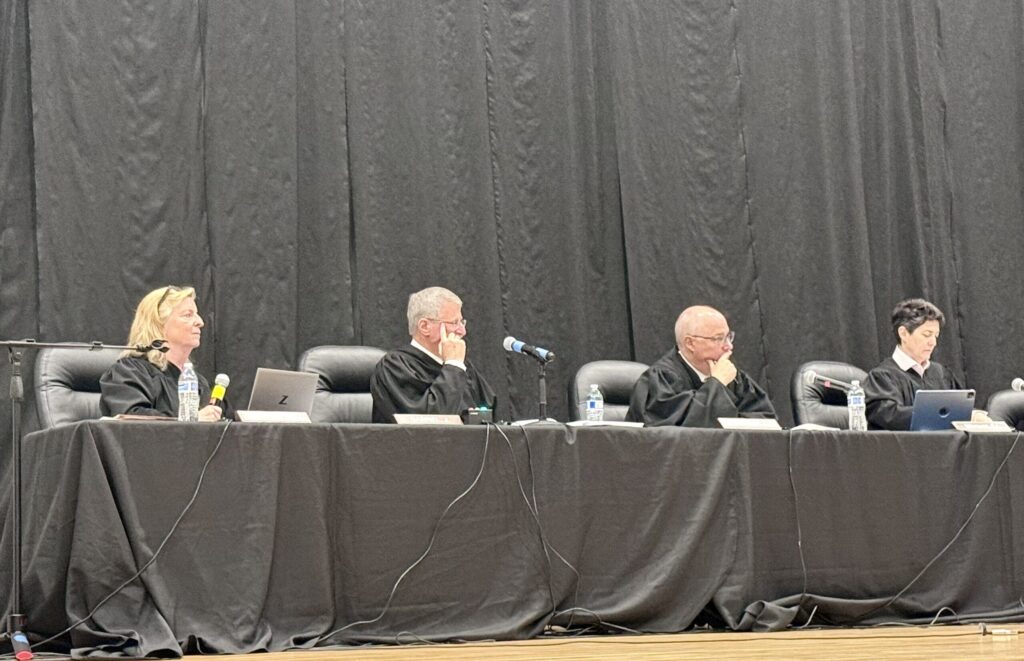
Members of the Colorado Supreme Court grappled last week with two vastly different proposals for evaluating when it is appropriate for a civil litigant to ask for a jury trial, as opposed to a bench trial before a judge. The...
Colorado justices weigh ‘extreme’ proposals for civil jury trial requests
Michael Karlik
michael.karlik@coloradopolitics.com
Updated 1 day ago
Members of the Colorado Supreme Court grappled last week with two vastly different proposals for evaluating when it is appropriate for a civil litigant to ask for a jury trial, as opposed to a bench trial before a judge. The...
PREV
PREVIOUS

10th Circuit allows limited claims to proceed against Denver prosecutor, sheriff deputy
The U.S. Court of Appeals for the 10th Circuit on Monday allowed two claims against a Denver prosecutor and sheriff’s deputy to go forward stemming from their conduct in a 10-year-old criminal case. In 2010, Dean Carbajal violated a protection order for his former romantic partner on several occasions, culminating in a visit to her […]

Hickenlooper sets online talk with Kathleen Sebelius about COVID-19, health care
Democratic U.S. Senate candidate John Hickenlooper plans to hold an online discussion Monday afternoon about health care and the coronavirus pandemic with former Secretary of Health and Human Services Kathleen Sebelius. The FacebookLive event is scheduled to take place at 4 p.m. Monday on the former two-term governor’s campaign page. Participants can submit questions for Hickenlooper […]