

Coronavirus need could exceed Colorado hospital capacity
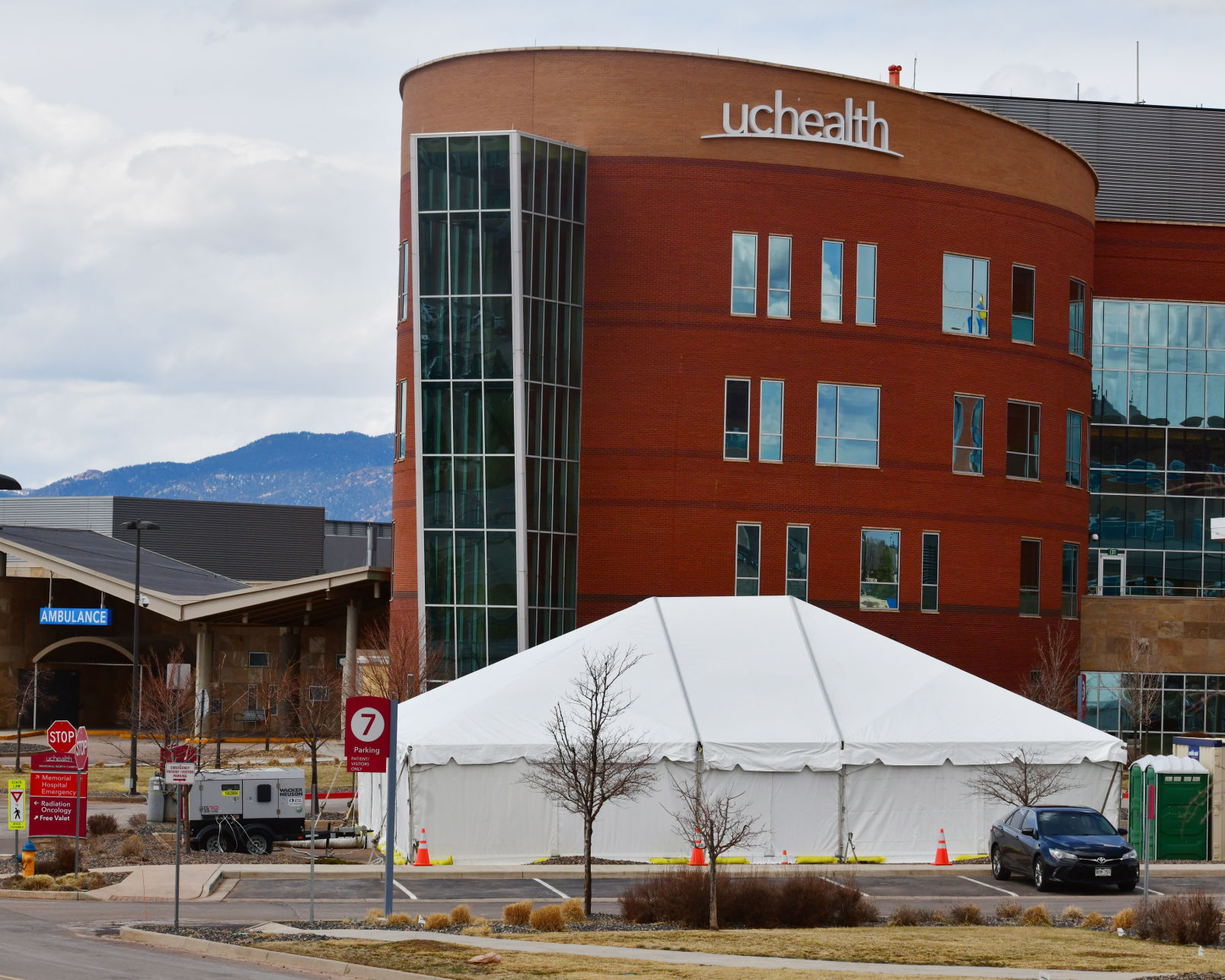
Colorado hospitals may be forced to grapple with a surge of COVID-19 patients beyond the current capacity to treat them, depending on what portion of the population becomes infected by the novel coronavirus and over how many months, estimates show.
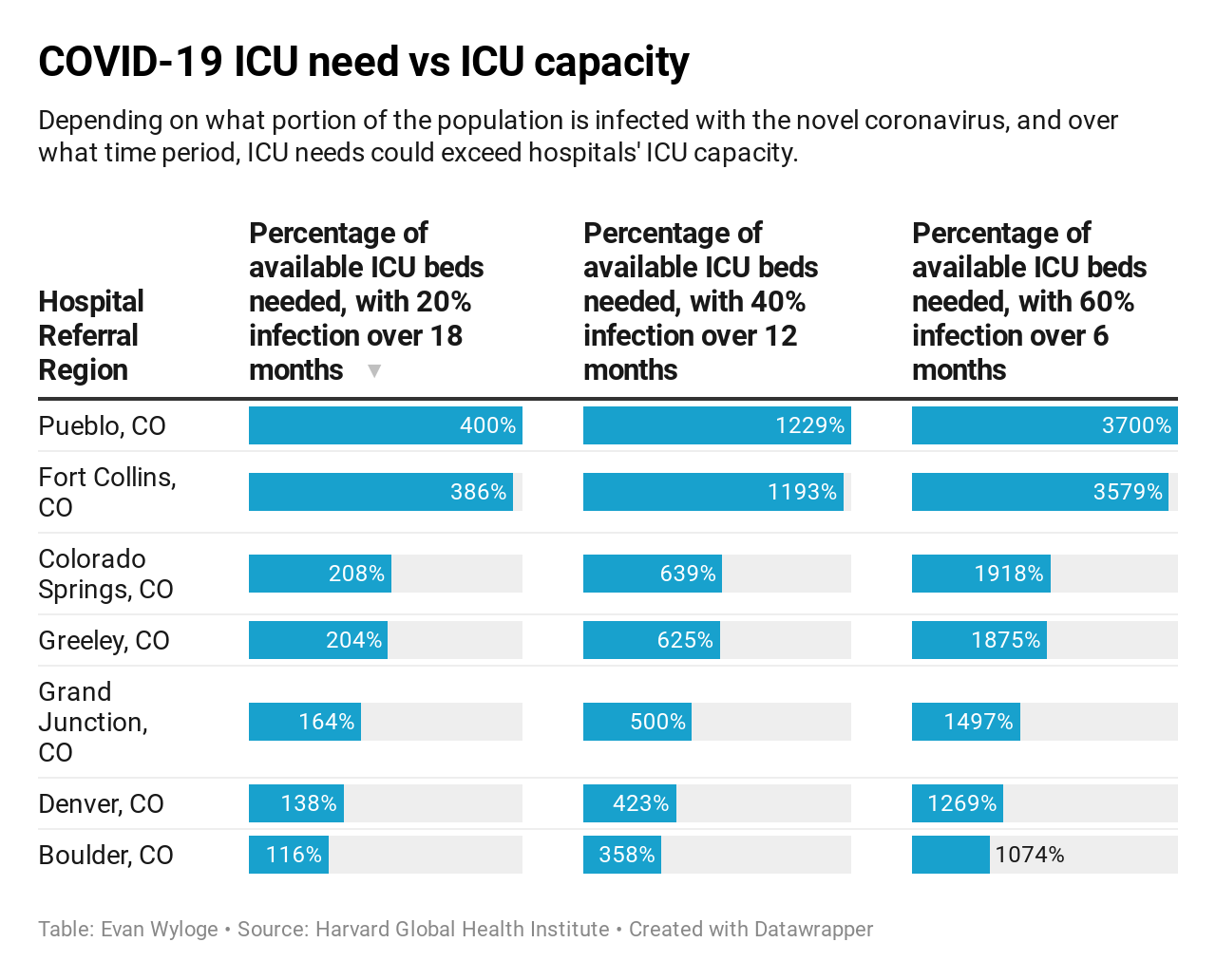
Even under optimistic projections, hospitals in the Colorado Springs and Pueblo regions could be hit especially hard when it comes to the number of beds available for potential COVID-19 patients.
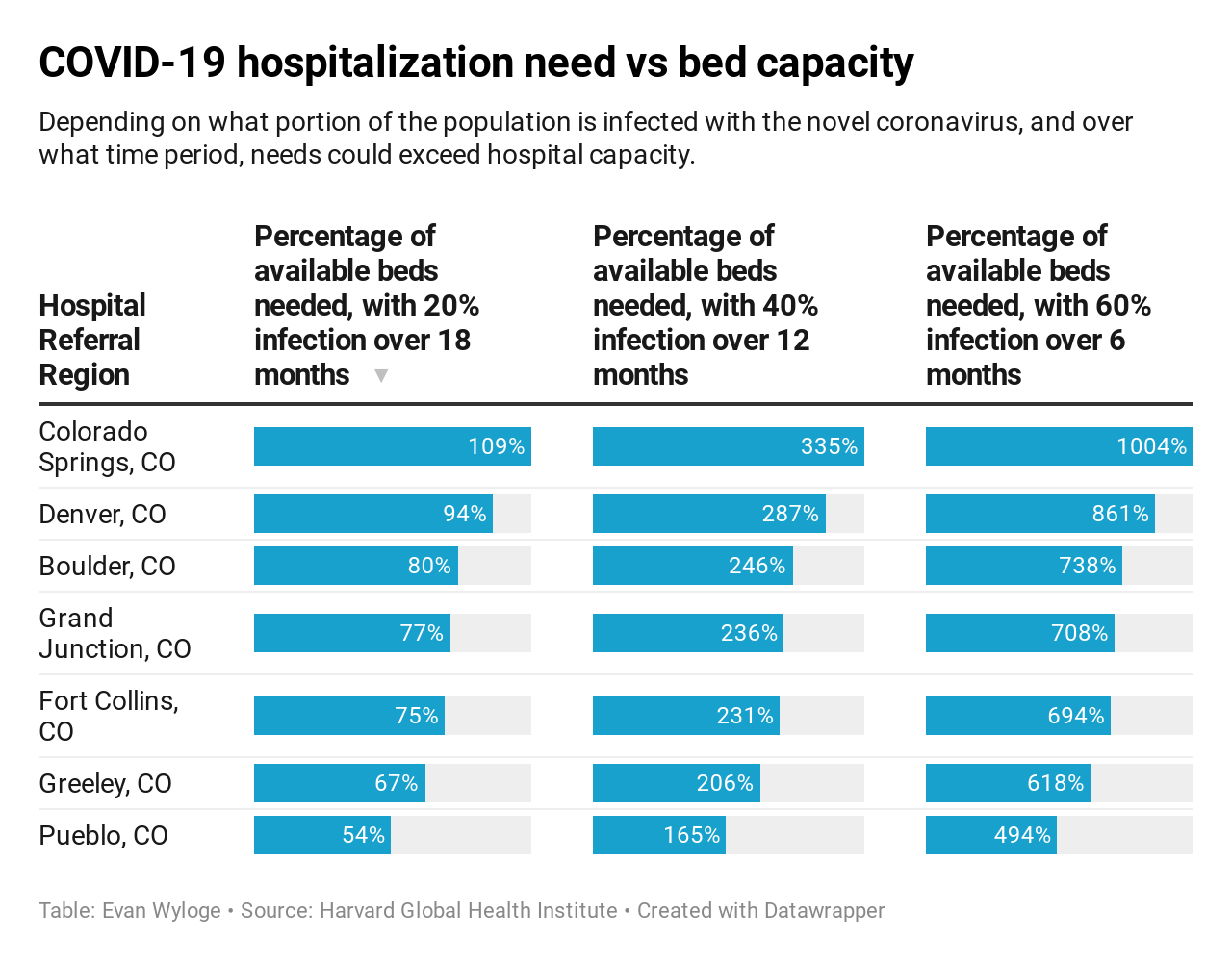
The new estimates come from the Harvard Global Health Institute and combine projections of coronavirus spread with hospital bed capacity. The data use three different estimates of infection rates: 20%, 40% or 60% of the population becoming infected, and three different time periods that the infection rates could be spread out: six months, 12 months and 18 months. The projected medical need also factors what portion of the population in each region is above the age of 65, an age group affected more by the virus.
Even in the rosiest of scenarios studied, hospital capacity around the state would be pushed to the limit.
And the various scenarios considered in the new research would put Colorado in a worse situation than the national average when it comes to whether medical demand could outstrip hospital capacity.
The forecasts show the greatest stresses on hospitals in the state likely would be concentrated in the Colorado Springs and Pueblo Hospital Referral Regions, the geographic unit used by the federal government to tally hospital capacity.
Using the most modest infection rate estimates, assuming 20% of the Colorado Springs area population, or about 135,000 people, become infected, and if that is spread out over the next 18 months, the need for medical attention would outpace hospital bed capacity in the Colorado Springs Hospital Referral Region (HRR) by 10%. In that scenario, the other hospital regions around the state would remain below their capacity, the research shows.
Using the moderate infection rate – 40% of the Colorado Springs area population or about 269,000 people – and the moderate time period – spread over 12 months – the demand for hospital beds could be 3.4 times beyond what is available in the Colorado Springs hospital region. That figure is greater than any other hospital region in the state.
And if the worst case projections play out, if 60% of the Colorado Springs area population, or about 404,000 people, becomes infected, and if those infections come within the shortest six-month time period analyzed, demand would exceed capacity by 10 times, according to the data.
That level would make Colorado Springs among the most vulnerable regions in the state, again outpacing the potential medical need in excess of hospital capacity for all regions in the state.
The only way for the Denver hospital region to remain below 100% capacity, according to the research, is for only 476,000 people or 20% of the region’s population to become infected, and over the course of 18 months, the longest time period considered in the research.
If 40% of the region’s population, or about 952,000, become infected, the moderate infection rate estimate, and over the course of 12 months, the moderate time frame, the need for a bed will be 2.9 times the hospital region’s capacity.
Under the worst-case scenario considered, demand for a hospital bed could be 8.6 times what is available. All of the projections estimate a shortage of ICU beds in the Denver region.
While the Pueblo region rates better, and would have less capacity issues than the rest of the state in the overall number of hospital beds, it lacks capacity when it comes to intensive care unit beds.
When the ICU bed need projections are compared to the number of available beds, the Pueblo region could see ICU demand between four and 40 times the capacity of the Pueblo region’s available ICU beds, exceeding the potential ICU bed need-to-ICU bed capacity ratio of any other region in the state.
The moderate infection rate of 40% would mean about 55,000 people in the Pueblo hospital region would become infected, and using the moderate spread time-frame of 12 months, the research estimates Pueblo would have 12 times as many ICU beds needed than are available.
The analysis considers that each bed would be used multiple times over the duration of the virus’ spread.
Even in the best-case scenario considered in the research, all hospital regions in Colorado will see more ICU bed demand than ICU bed capacity, the research suggests.
The research adds weight to the global effort to slow the spread of the virus, over fears that a deficit of hospital capacity around the nation and around the world could lead to massive shortages in care. In Italy, news media has reported there have been so many COVID-19 cases in excess of hospital capacity that physicians have had to make choices about who gets treatment and who doesn’t.
Colorado’s public health officials on Tuesday sought to quell fears of supply shortages, saying in a news conference that the state’s Department of Public Health and Environment is “working closely with the federal government to get more supplies.”
“Obviously, this is a challenging situation,” said Rachel Herlihy, state epidemiologist. “It’s unlike other disasters or situations where we have crises in that there are needs for these resources across the country right now, not just here in Colorado.”
She added that the department is hoping to receive resources from the Strategic National Stockpile, a national repository of medical supplies.
Liz Henderson contributed to this report.


Tapped: Douglas County looks to diversify water supply as population grows
Nicholas Fogleman
nicholas.fogleman@denvergazette.com
Updated 2 days ago
Tapped: The Denver metro region sits at the center of one of the American West’s most complex and consequential water challenges. This series examines the interconnected systems that determine how the region secures, stores, and conserves its water — while...
Tribes sue to halt exploratory drilling in Black Hills near sacred ceremonial site | OUT WEST ROUNDUP
Ernest Luning
ernest.luning@coloradopolitics.com
Updated 4 days ago
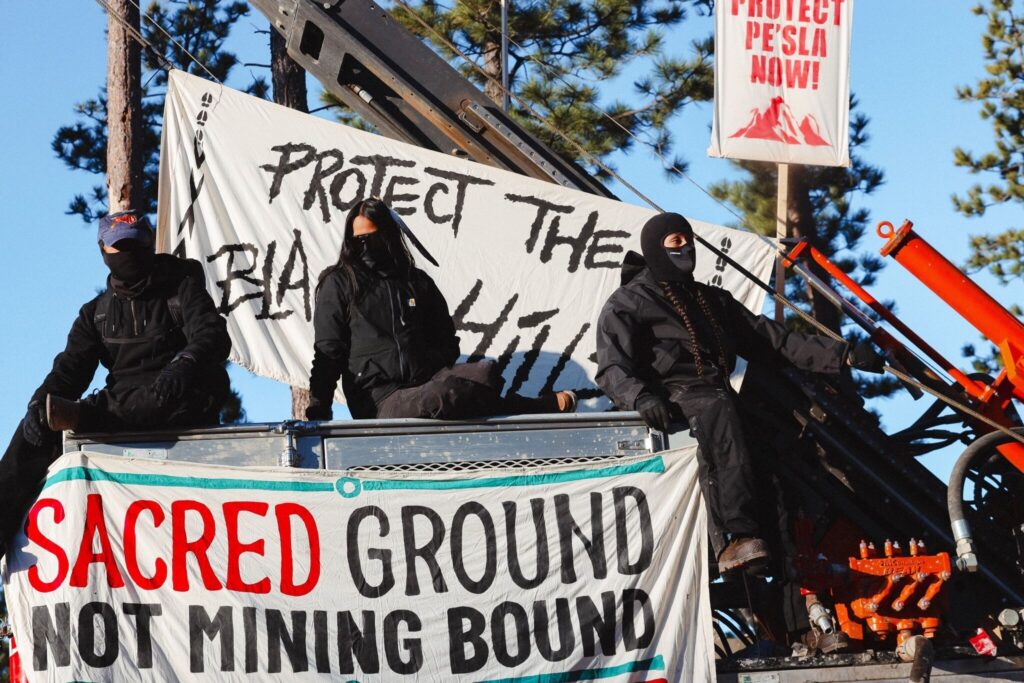
SOUTH DAKOTA Tribes sue to halt drilling SIOUX FALLS — Nine Native American tribes in South Dakota, North Dakota and Nebraska are suing the federal government in a bid to stop exploratory drilling for graphite near a sacred site in...

Tapped: Is water a problem for data centers in Colorado?
Deborah Grigsby
deborah.smith@denvergazette.com
Updated 1 day ago
Editor‘s Note: The Denver metro region sits at the center of one of the American West’s most complex and consequential water challenges. This series examines the interconnected systems that determine how the region secures, stores, and conserves its water while...
TAPPED: Front Range residents face higher water rates, restrictions as rapid snowmelt threatens supplies
Kyla Pearce
kyla.pearce@gazette.com
Updated 1 day ago
Tapped: The Denver metro region sits at the center of one of the American West’s most complex and consequential water challenges. This series examines the interconnected systems that determine how the region secures, stores, and conserves its water while navigating...
TAPPED: Front Range residents face higher water rates, restrictions as rapid snowmelt threatens supplies
Kyla Pearce
kyla.pearce@gazette.com
Updated 1 day ago
Tapped: The Denver metro region sits at the center of one of the American West’s most complex and consequential water challenges. This series examines the interconnected systems that determine how the region secures, stores, and conserves its water while navigating...
TAPPED: Aurora cracks down on water use as reservoirs fall, runoff shrinks
Kyla Pearce
kyla.pearce@gazette.com
Updated 18 hours ago
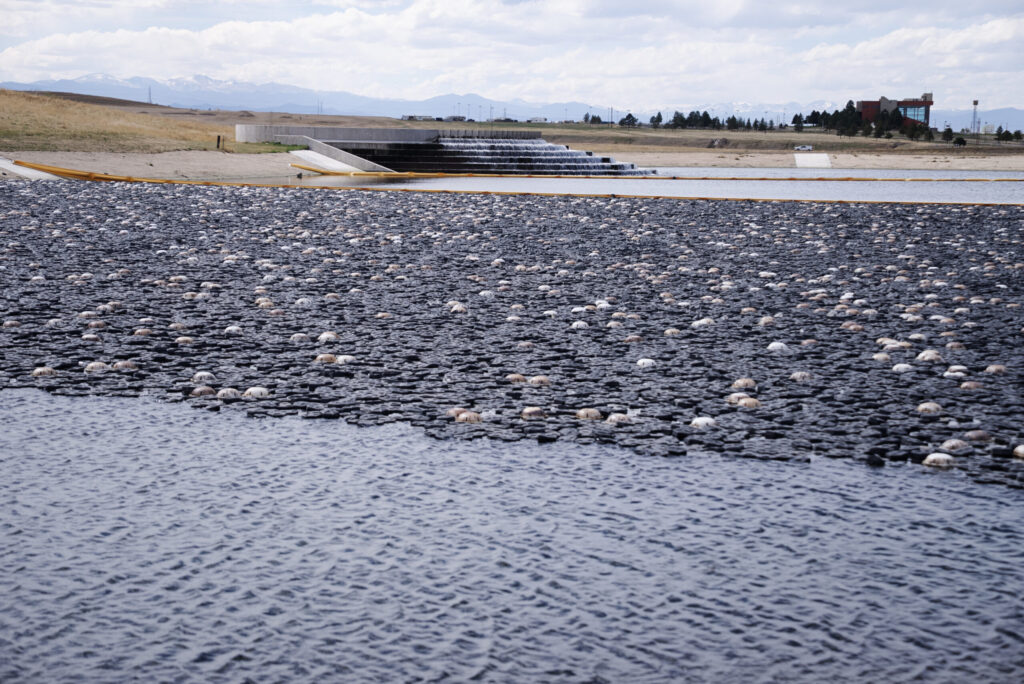
Editor’s note: The Denver metro region sits at the center of one of the American West’s most complex and consequential water challenges. This series examines the interconnected systems that determine how the region secures, stores, and conserves its water while...
Tapped: Colorado River overallocation collides with record drought conditions
Nico Brambila
nico.brambila@denvergazette.com
Updated 2 days ago
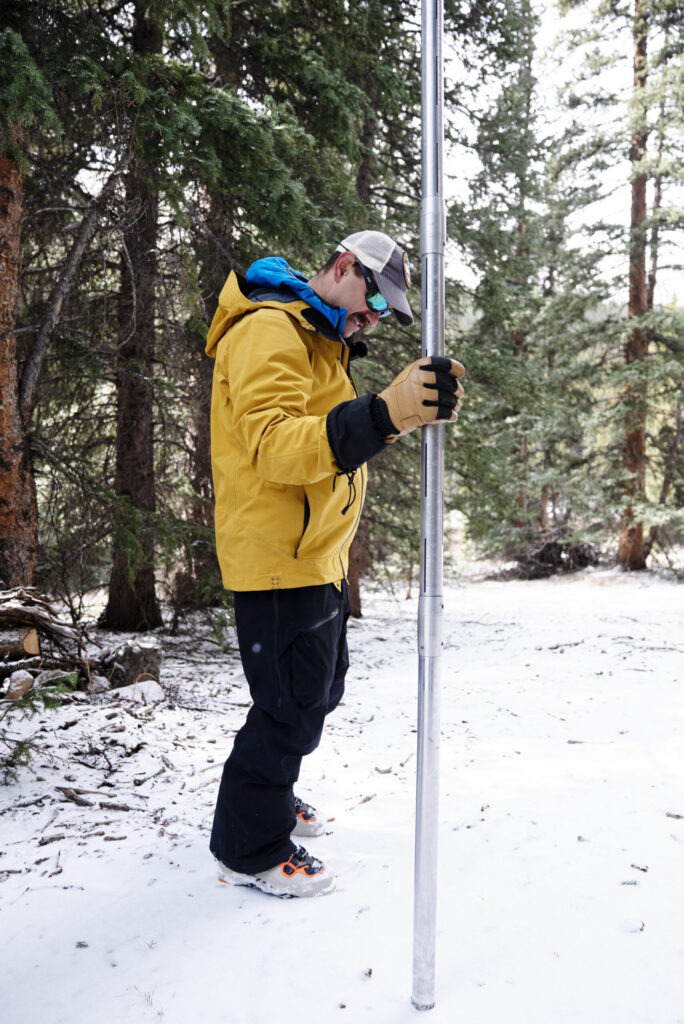
Editor’s Note: The Denver metro region sits at the center of one of the American West’s most complex and consequential water challenges. This series examines the interconnected systems that determine how the region secures, stores and conserves its water while...
TAPPED: Front Range residents face higher water rates, restrictions as rapid snowmelt threatens supplies
Kyla Pearce
kyla.pearce@gazette.com
Updated 1 day ago
Tapped: The Denver metro region sits at the center of one of the American West’s most complex and consequential water challenges. This series examines the interconnected systems that determine how the region secures, stores, and conserves its water while navigating...
Tapped: Denver residents face hotter, costlier summer under new drought rules
Deborah Grigsby
deborah.smith@denvergazette.com
Updated 18 hours ago
Editor’s note: The Denver metro region sits at the center of one of the American West’s most complex and consequential water challenges. This series examines the interconnected systems that determine how the region secures, stores, and conserves its water while...

Tapped: Golden tightens water rules as Clear Creek snowpack falters
The Denver Gazette
the-denver-gazette@coloradopolitics.com
Updated 18 hours ago
Editor’s Note: The Denver metro region sits at the center of one of the American West’s most complex and consequential water challenges. This series examines the interconnected systems that determine how the region secures, stores, and conserves its water while...
PREV
PREVIOUS
Coronavirus glossary: What all those terms really mean
What’s the difference between isolation and quarantine? How about the difference between an epidemic and a pandemic? What does COVID-19 even stand for? With coronavirus in the daily lives of Coloradans, medical terms and acronyms are being presented like they’re a second language. But what do they even mean? Here are some common terms and […]
State suspends requirements for medical professionals to speed COVID-19 response
Anticipating the need to bring in additional healthcare providers from other states, the Department of Regulatory Agencies on Wednesday announced the suspension of a slew of regulations in favor of quickly adding licensed personnel to assist with COVID-19 response. “DORA divisions have been working diligently to address the many questions and concerns of Colorado professionals […]