

Tapped: Colorado River overallocation collides with record drought conditions
Editor’s Note: The Denver metro region sits at the center of one of the American West’s most complex and consequential water challenges. This series examines the interconnected systems that determine how the region secures, stores and conserves its water while navigating the competing demands of fast‑growing urban communities and the increasingly unpredictable mountain snowpack that underpins the entire system.

The mighty Colorado River — which carved the Grand Canyon and supplies water to 40 million people across seven states — starts as snow in the Rocky Mountains.
This year, there wasn’t much of it.
The snowpack was exceptionally low, raising the risk of water shortages from Denver to Las Vegas.
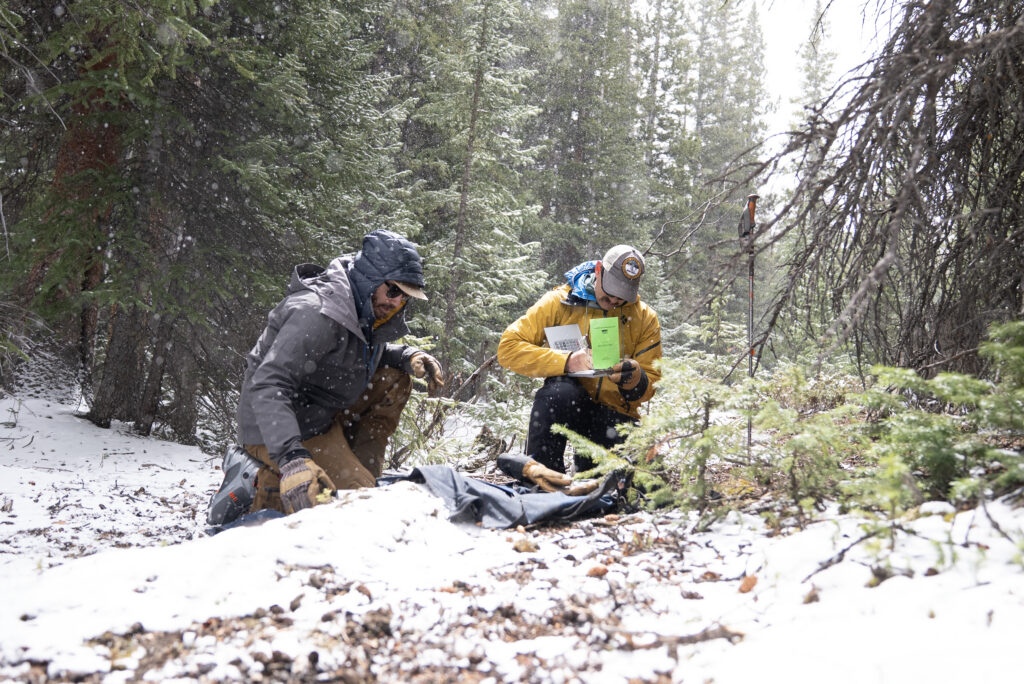
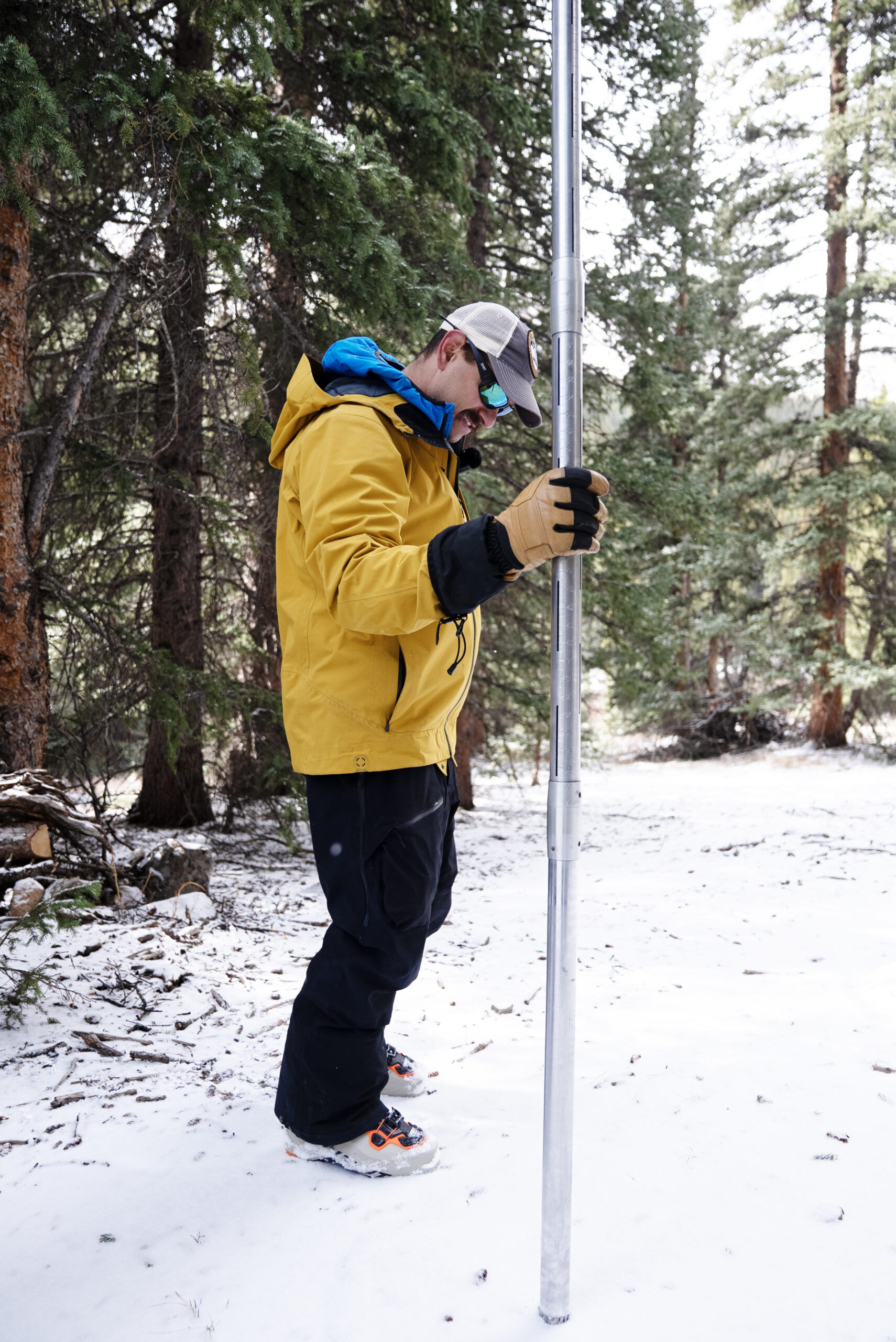
In Colorado, snowpack peaked at about 58% of normal — and weeks earlier than usual. An unusually warm March accelerated the melt, and parched soils will absorb much of that runoff before it ever reaches streams and reservoirs — leaving less water flowing downstream.
“The snowpack was destroyed by the temperatures and lack of precipitation the likes of which have never occurred in the basin,” said Brad Udall, senior water and climate research scholar at Colorado State University’s Colorado Water Center.
Udall added, “The river basin was already in dire straits. This only makes it worse.”
In response, cities across the Denver metro region have imposed water restrictions — a strategy adopted so early in the year that it reflects how quickly conditions have deteriorated.
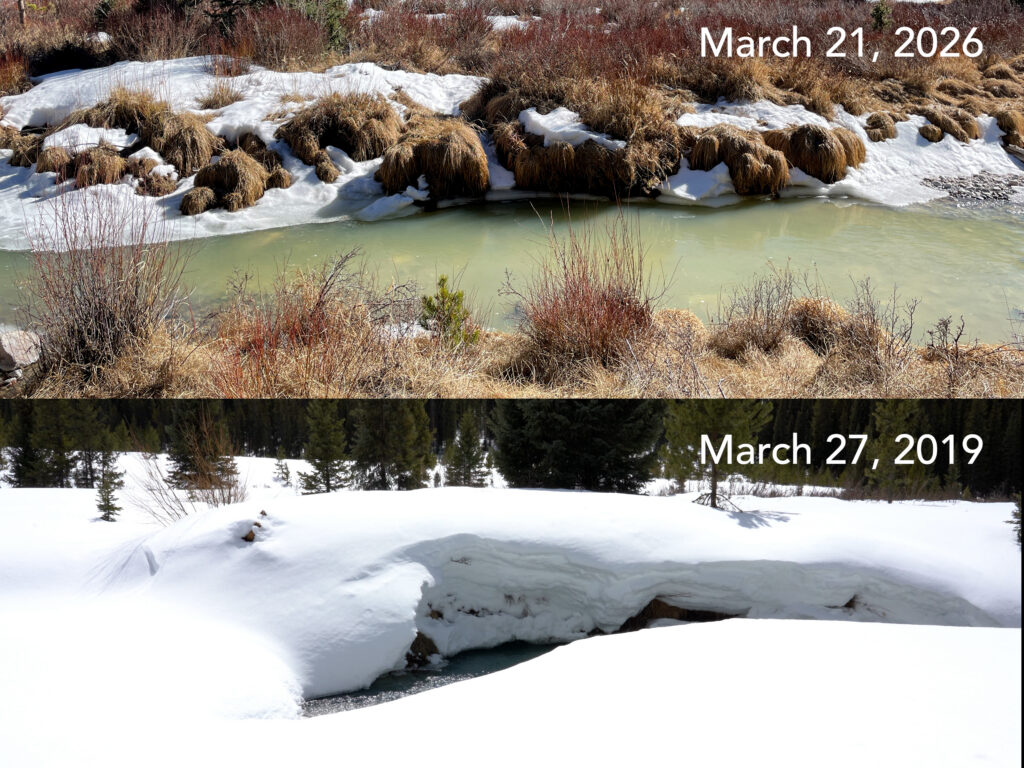
“By many measures, it’s the worst snowpack that we’ve seen,” said Nathan Elder, manager of water supply with Denver Water. “The numbers really are alarming.”
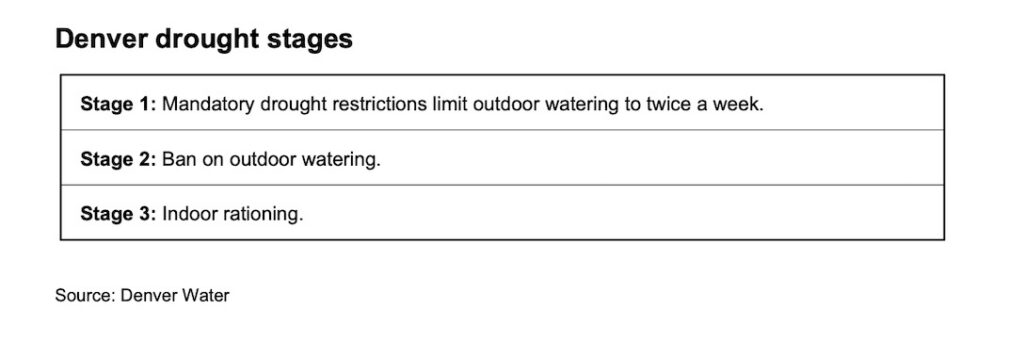
Denver Water — which depends on snowpack for a water supply that serves 1.5 million people across the metro area, or roughly one in four Coloradans — declared a Stage 1 drought in March to preserve water levels and avoid stricter restrictions this summer.
Denver Water has never implemented Stage 2 drought restrictions, which bans outdoor watering altogether.
That could change next year.
Continued dry conditions could force Denver to implement an outdoor watering ban, Elder said.
Other cities — Arvada, Aurora, Boulder, Golden and Thornton — have followed suit.
The snowpack doesn’t just feed the Colorado River. It supplies rivers across the region, including the South Platte, which provides water to much of the Denver metro area. But the already strained Colorado River is where the impact is most visible, experts said.
The Colorado River has always cycled through wet and dry years. But over the past two decades, prolonged drought and rising temperatures have reduced the river’s overall flow — a trend water experts say is unlikely to reverse.
The stakes extend far beyond Colorado.
In Arizona, roughly 85% of residents live in cities that rely, at least in part, on the river.
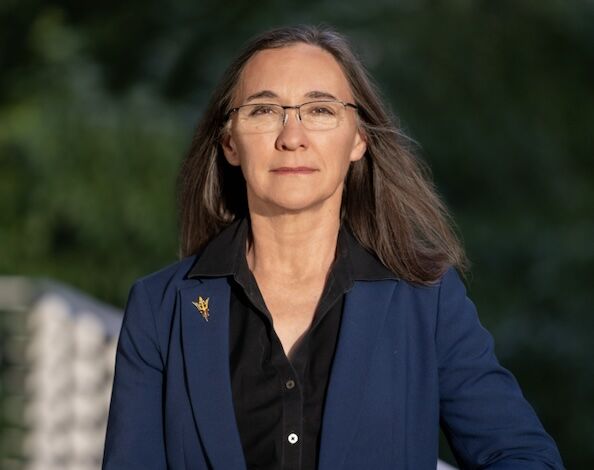
Sarah Porter, director of the Kyl Center for Water Policy at Arizona State University, said the trend is hard to ignore.
“We have to think of it as the new normal,” Porter said.
‘Overallocation‘
What happens in the mountains doesn’t stay there.
The nation’s fifth largest river winds 1,450 miles through the arid west and — until intensive water consumption, dams and agriculture — into the Sea of Cortez. The river hasn’t reliably reached the sea in decades, except in rare wet years or for a temporary “pulse flow” experiment, which last occurred in 2014.
Much of the expansion of the West would not have been possible without the Colorado River.
In addition to supplying water to Denver, Phoenix and Los Angeles, the Colorado also irrigates about 5 million acres of farmland.
Because it’s shared by seven states and Mexico, the river is one of the most heavily managed — and contested — in the country. It’s been called one of the most regulated rivers in the world.
Now the river has been stretched beyond its limits.
When it was divvied up in the early 20th century, the Colorado River was experiencing a wetter period than many understood, although, even then, studies showed there was less water than assumed.
The political choices made when drafting the 1922 compact, which governs the river, have left the system tasked with delivering more water than nature can reliably provide.
“Part of what we’re seeing today is because of the overallocation,” said Mehdi Nemati, an environmental economics professor at the University of Riverside California.
“There was not simply the amount of water in the river when it was allocated.”
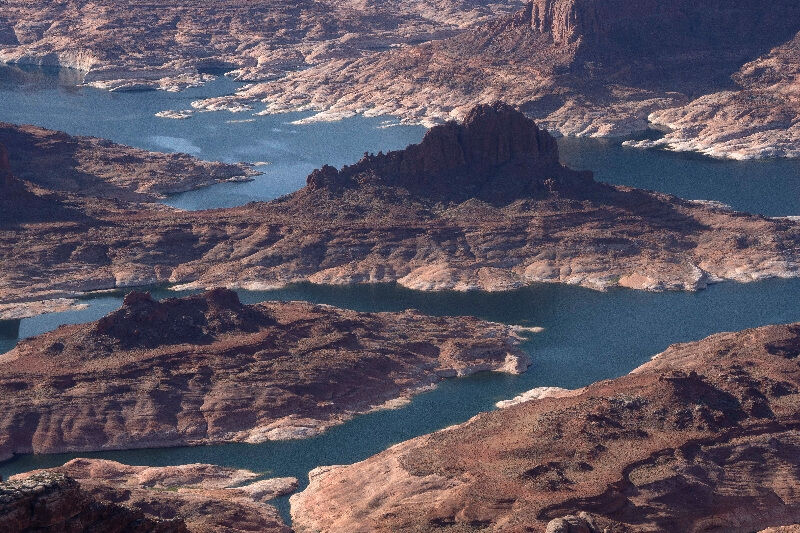
And that has created tension between the Upper Basin states, including Colorado, Wyoming, Utah, and New Mexico, where most of the water originates, and the Lower Basin, including Arizona, California, and Nevada, where most of it is used.
Mexico is not part of either basin but receives a share under a 1944 treaty.
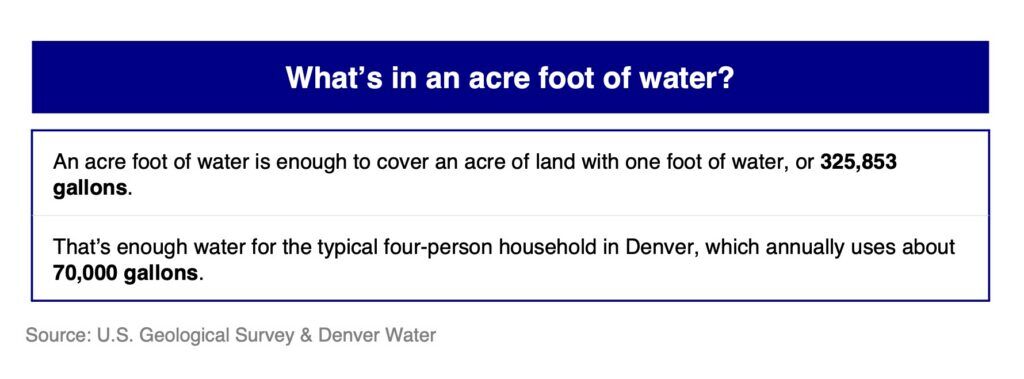
Under the compact, 7.5 million acre-feet of water was allocated to each basin, which is further divided among users in the each state based on junior and senior water rights. These allocations were based on an assumption that the river would produce far more water than it does today.
Historically, the actual average flow has been 14 to 15 million acre-feet.
But over the past two decades, even that has shrunk to about 13 million acre-feet.
“If we continue to drive our operational base on legal theories, that’s not going to solve the mathematics,” Estevan Lopez, New Mexico’s Upper Colorado River Compact commissioner, said.
‘We definitely did it to ourselves’
Even as conditions worsen, some water systems still have room to absorb short-term shocks.
Denver Water, for example, has never had to move beyond Stage 1 drought restrictions — a sign of both conservation efforts and the buffer provided by storage.
But that flexibility has limits, especially when dry years pile up.
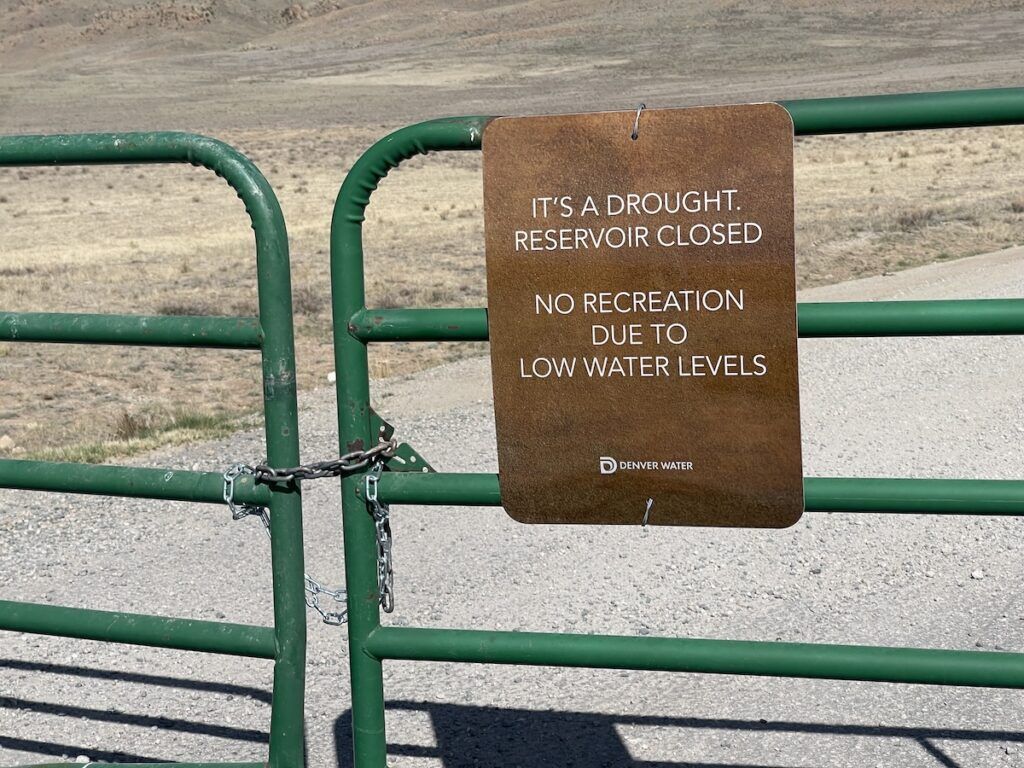
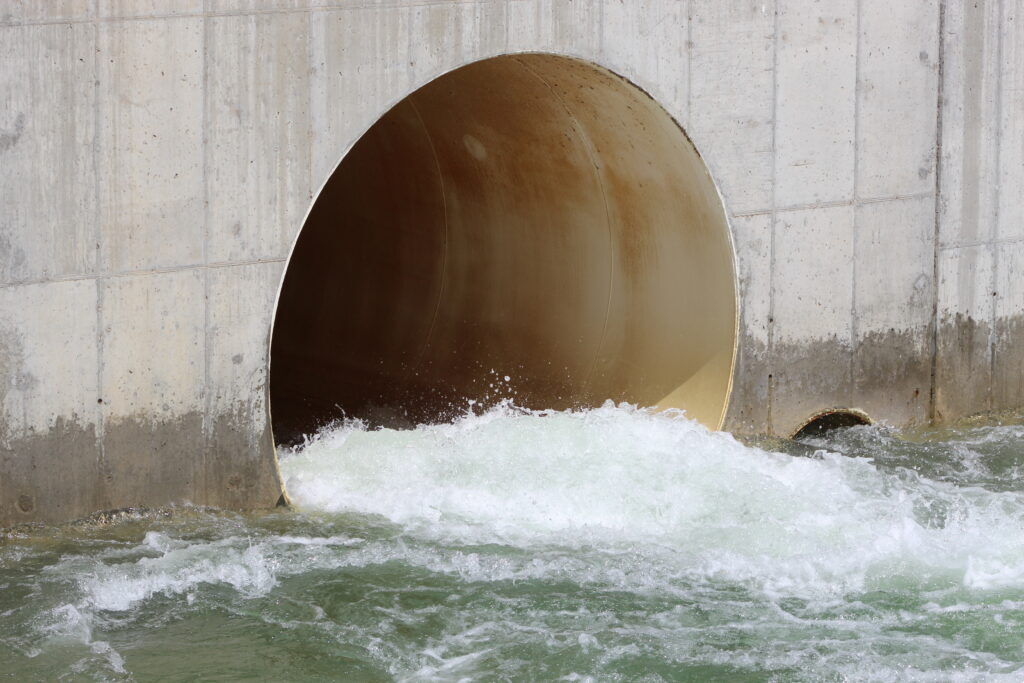
Earlier this month, Denver Water began releasing water from the Antero Reservoir, located 100 miles southwest of Denver, to reduce evaporation losses and preserve water supplies. The reservoir, a popular recreation spot known for its trophy-sized trout, typically receives about 13,700-acre feet of water a year.
Not this year.
“This year we’re expecting 500-acre feet of inflow,” Elder said. “It would be the lowest we’ve ever seen.”
And that’s despite a May snowstorm two weeks ago that delivered 5 to 12 inches across the Denver metro region and recent rainfall — a reminder that isolated spring storms are not enough to reverse the broader drought conditions.
Much of the pressure on the Colorado River comes from how the water is used.
Agriculture — particularly crops like alfalfa grown for cattle feed in the Imperial Valley in the Southern California desert — accounts for the majority of consumption, while indoor household use makes up a fraction.
But water officials say sprawling suburban landscapes and outdoor lawn watering across the West also place significant pressure on already strained supplies.
“What we don’t have is enough water to grow cattle feed and big yards,” said Eric Kuhn, former general manager of the Colorado River Water Conservation District.
“We definitely did it to ourselves,” said Kuhn, who co-authored “Science be Damned: How Ignoring Inconvenient Science Drained the Colorado River.”
While Denver has been spared much of the pain of the prolonged drought, cities across the metro area are offering financial incentives for residents to remove their grass and replace it with more drought-tolerant species.
Kaeli Barrett, a Littleton homeowner, has planned to xeriscape her yard since she moved here from Arizona in 2021.
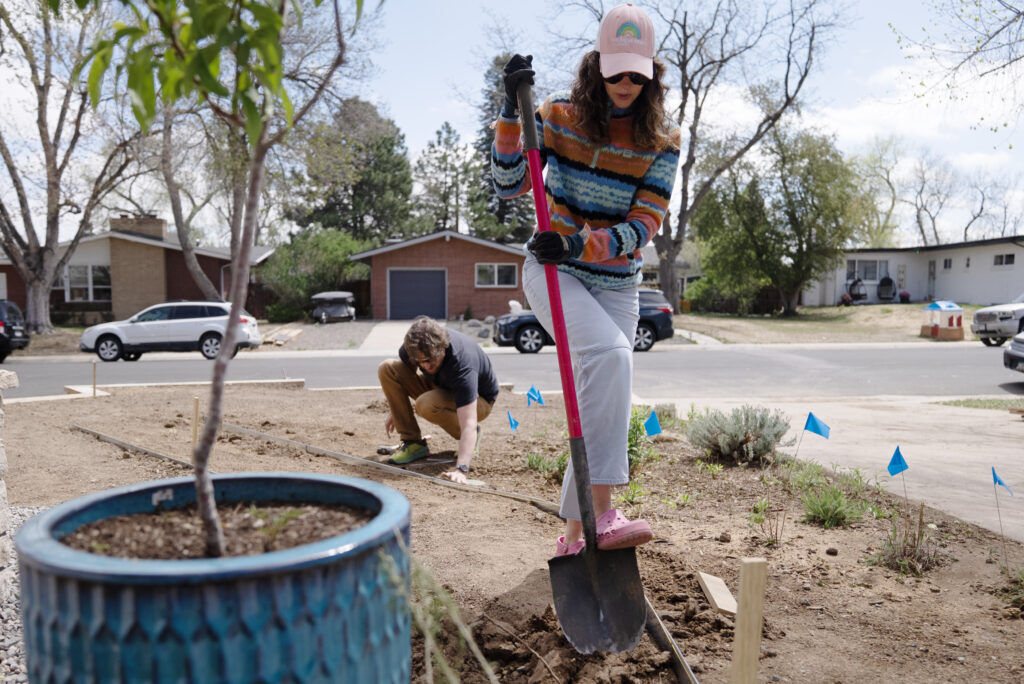
“I think it’s really important, and this summer especially,” Barrett said.
The strategies adopted in Denver are part of a broader shift already underway in the West.
Las Vegas has reduced its overall water use to levels not seen since the 1980s, despite significant population growth. And Sin City now recycles nearly all its indoor water and returns it to the system.
In Arizona, officials have approved plans for a $1 billion facility to turn treated wastewater into drinking water, part of a broader push to stretch limited supplies.
Even with those efforts, water managers say conservation alone won’t solve the imbalance.
“Rather than trying to point fingers at each other, we should be trying to help each other,” said Porter.
‘Pressure on the negotiations’
The rules governing how the Colorado River is shared under drought conditions expire this year, forcing states and the federal government back to the negotiating table at a time when there is less water to divide.
Years like this only add urgency.
With less snow feeding the system, there is less water to store in reservoirs like Lake Powell and Lake Mead — and less flexibility for states already struggling to agree on cuts.
“I think a year like this puts pressure on the negotiations,” said Raquel Flinker, director of interstate and regional water resources for the Colorado River District. “These conditions? We’re probably going to see them more often.”
Officials have warned that, under the driest scenarios, even significant cuts may not be enough to stabilize the system, leaving states to grapple with increasingly difficult decisions.
“We can hope for a good year, but we have a reason to expect deeper cuts next year,” said John Entsminger, general manager of the Southern Nevada Water Authority.
The negotiations ahead are not just about dividing water, but about how the West adapts to having less of it.
The system is so stressed that managers are now moving water around just to keep reservoirs functioning.
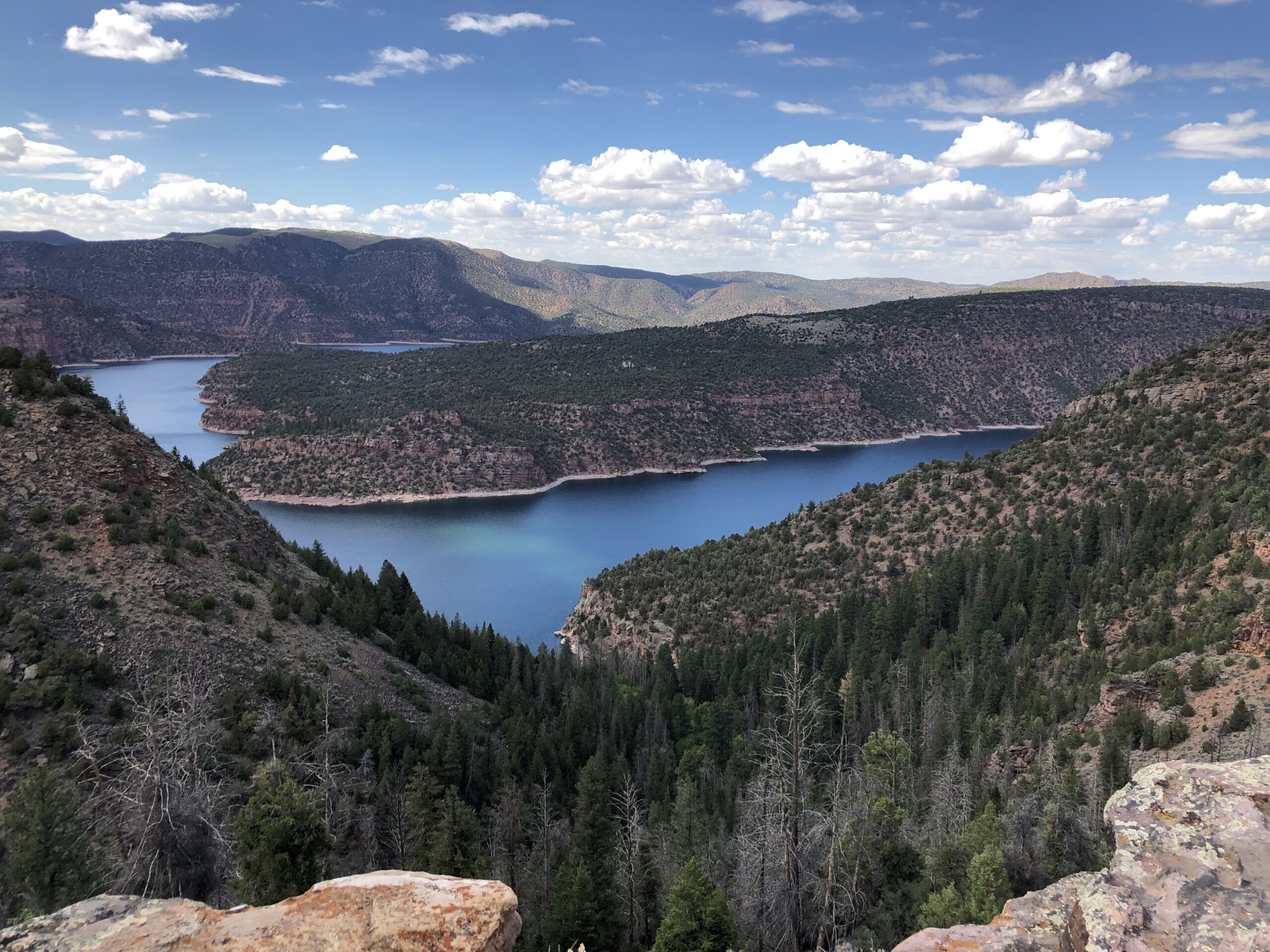
In recent years, federal officials have released water from upstream reservoirs like Flaming Gorge in Wyoming to send downstream to Lake Powell in Utah and Arizona. At about 23% capacity, Powell is nearing levels that threaten hydropower generation at Glen Canyon Dam. To compensate, the U.S. Bureau of Reclamation has reduced releases to Lake Mead.
Lake Mead — the nation’s largest reservoir — is now roughly one-third full, its shrinking shoreline revealing long-submerged debris and, in several cases, human remains.
While Upper Basin states have reservoirs, they are far smaller than system-scale storage like Powell and Mead lakes, limiting their ability to buffer against prolonged drought.
“We actually feel the impact of the hydrology immediately,” said Colorado River Commissioner Becky Mitchell. “We don’t have the reserves above us.”
That leaves little room to make up the difference when water falls short.
“We can’t create water that’s not there,” Mitchell said.
Read more from the Tapped series here:
Tapped: As fire risk climbs, Colorado faces threat to drinking water
Tapped: Denver residents face hotter, costlier summer under new drought rules
Tapped: Is water a problem for data centers in Colorado?
Tapped: Aurora cracks down on water use as reservoirs fall, runoff shrinks
Tapped: Douglas County looks to diversify water supply as population grows
Tapped: Colorado River overallocation collides with record drought conditions
Tapped: Golden tightens water rules as Clear Creek snowpack falters
Tapped: As snowpack levels shrink, Jefferson County cities take divergent paths on water
Tapped: Colorado River overallocation collides with record drought conditions


Healthcare Freefall: Longer drives, fewer options for maternity care in Colorado
Thelma Grimes
thelma.grimes@coloradopolitics.com
Updated 18 hours ago
Editor’s Note: Colorado’s healthcare system is entering a period of accelerating instability — a “tsunami,” as multiple leaders describe it — driven by collapsing hospital finances, shrinking Medicaid reimbursements, disappearing services and a political fight over who is responsible for...
Polis requests federal disaster declaration for Colorado wildfires and floods
9News
9news@coloradopolitics.com
Updated 11 hours ago
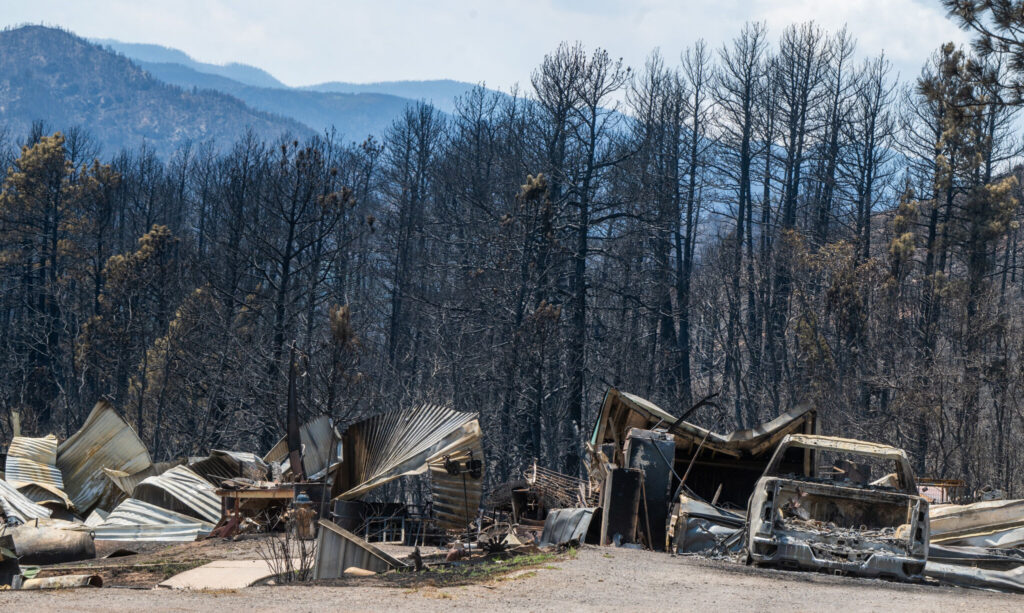
On Sunday, Gov. Jared Polis officially requested a Major Disaster Declaration from President Donald Trump and the Federal Emergency Management Agency to support recovery from two wildfires and the subsequent flooding and debris flows on both burn scars. Polis requested a declaration...
Operation Foster helps ensure troops can return home to their pets
Mary Shinn
mary-shinn@coloradopolitics.com
Updated 18 hours ago
As more troops have been sent overseas, more pets are in need of temporary care while they await their owner’s return home. Operation Foster, a nationwide nonprofit, helps provide some of that care by connecting service members with volunteers willing...
Operation Foster helps ensure troops can return home to their pets
Mary Shinn
mary-shinn@coloradopolitics.com
Updated 18 hours ago
As more troops have been sent overseas, more pets are in need of temporary care while they await their owner’s return home. Operation Foster, a nationwide nonprofit, helps provide some of that care by connecting service members with volunteers willing...
Castle Pines to hear annexation policy following moratorium on new requests
Nicholas Fogleman
nicholas.fogleman@denvergazette.com
Updated 18 hours ago
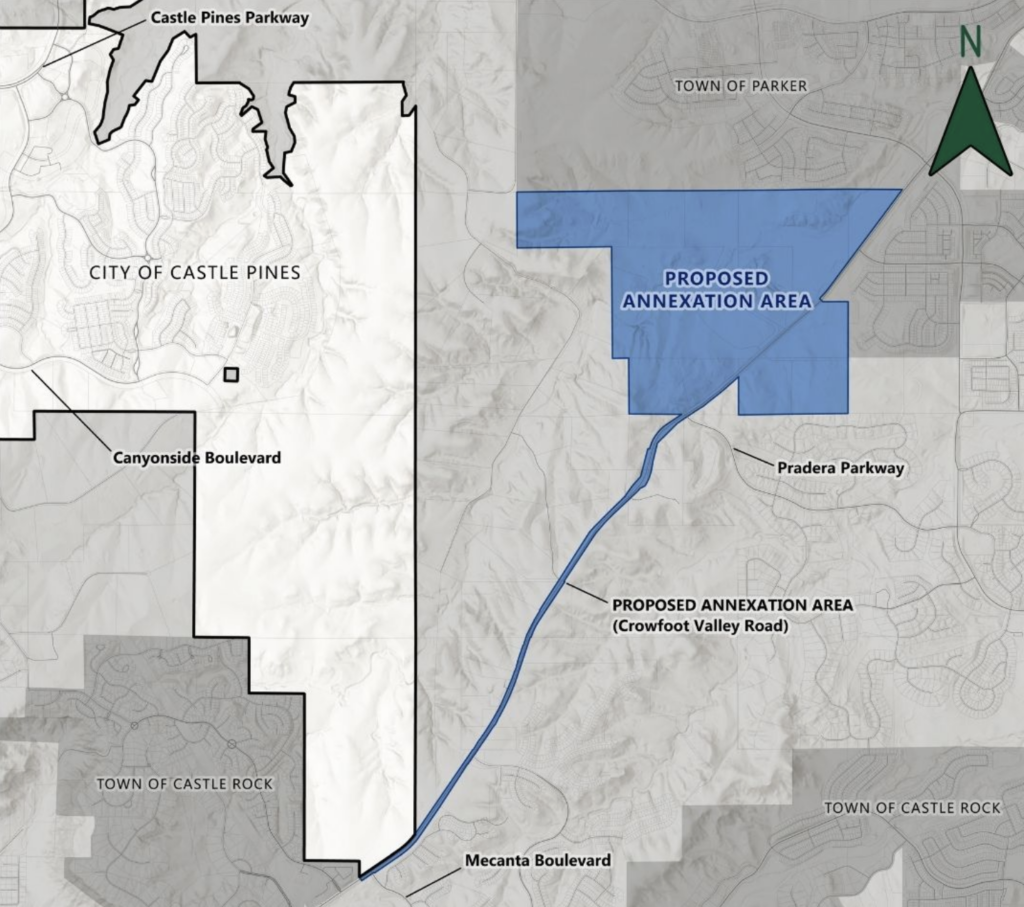
The Castle Pines City Council is set to consider a proposed annexation policy Tuesday that would establish the city’s first formal framework for reviewing future annexation requests. The policy emerged after the Crowsnest annexation proposal prompted significant public debate and...
Aurora lawmakers to discuss first of new data center regulations
Kyla Pearce
kyla.pearce@gazette.com
Updated 18 hours ago
Aurora’s lawmakers will discuss the specifics of data center regulations Monday night, specifically focusing on an evaporative cooling ban and zoning changes. At the last council meeting, council members approved a resolution directing city management to update data center development...

Why local police departments are left to grapple with electric vehicle trends
Nicholas Fogleman
nicholas.fogleman@denvergazette.com
Updated 18 hours ago
Littleton officials are weighing new regulations for electric bicycles as cities and counties across the metro Denver area increasingly grapple with safety concerns involving e-bikes, electric motorcycles and other motorized vehicles that often fall into gray areas of Colorado law....

Colorado schools reopen with measles vaccination rates below protective threshold
Nico Brambila
nico.brambila@denvergazette.com
Updated 18 hours ago
Colorado is entering the new school year without active measles transmission, but health officials remain concerned as kindergarten MMR coverage sits at just 87.8% and most counties fall below the 95% threshold considered protective against outbreaks. “These declining vaccination rates,...
Jeffco Public Schools board votes to put $133M mill levy override before voters
Matt Kyle
matt.kyle@denvergazette.com
Updated 18 hours ago
Voters in Jefferson County will decide this November whether or not to approve a $133 million mill-levy override that Jeffco Public Schools officials say is needed to cover funding shortfalls in the district. The Jeffco Public Schools Board of Education...
Democratic candidate in Colorado’s 4th CD urges long-term water planning
Marianne Goodland
marianne.goodland@coloradopolitics.com
Updated 2 days ago
The Democrat hoping to become the next representative of Colorado’s 4th Congressional District on Thursday made her case on the final day of Colorado Water Congress in Steamboat Springs. Eileen Laubacher, who spent 34 years in the U.S. Navy and...
PREV
PREVIOUS
Tapped: Aurora cracks down on water use as reservoirs fall, runoff shrinks
Editor’s note: The Denver metro region sits at the center of one of the American West’s most complex and consequential water challenges. This series examines the interconnected systems that determine how the region secures, stores, and conserves its water while navigating the competing demands of fast‑growing urban communities and the increasingly unpredictable mountain snowpack that […]
Tapped: Denver residents face hotter, costlier summer under new drought rules
Editor’s note: The Denver metro region sits at the center of one of the American West’s most complex and consequential water challenges. This series examines the interconnected systems that determine how the region secures, stores, and conserves its water while navigating the competing demands of fast‑growing urban communities and the increasingly unpredictable mountain snowpack that […]