

General Assembly leaders announce plan of action, including steps to pause session
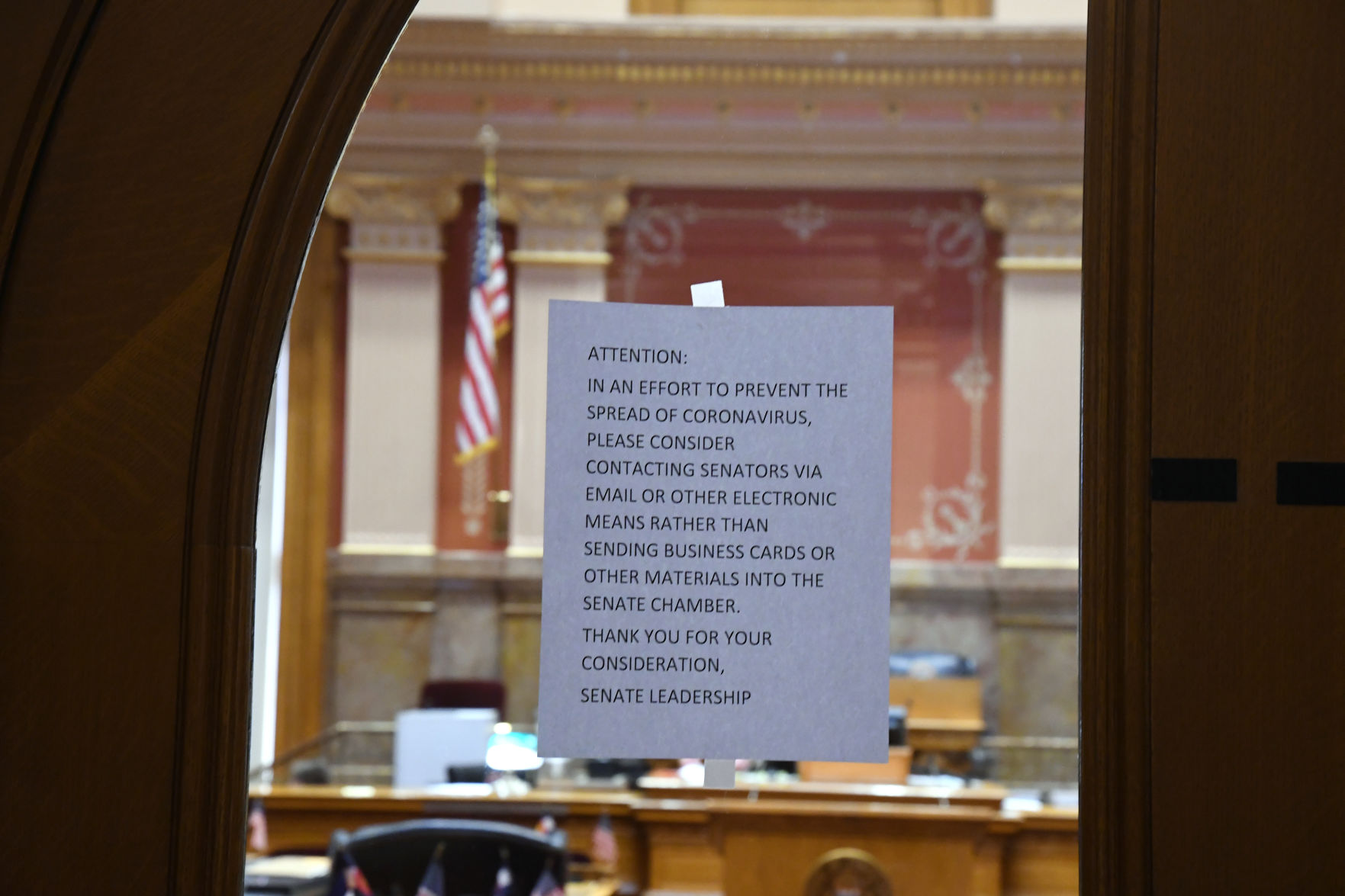
The leaders of the Colorado General Assembly released a “plan of action” that will guide them in the coming days as they deal with the growing outbreak of the novel coronavirus.
The plan’s first step is already well underway. Thursday night, the House gave preliminary approval to House Bill 1359, which gives the state’s major and minor political parties additional time to deal with county assemblies, which begin on Saturday. The bill will be approved Friday morning, and then it’s off to the Senate, which could have its work done by Saturday, should the Senate hold a rare Saturday session.
Step two in the plan is to seek guidance from the Colorado Supreme Court on a constitutional question that will determine how they will temporarily pause the General Assembly to wait out the worst of the outbreak.
That timeline is tied to bills that must be completed, either by constitutional requirement or that are considered mission critical. That includes the 2020-21 state budget, the school finance act, a bill that confirms rules adopted by state agencies in 2019 and bills that reauthorize occupational licensing and other state programs. Of the 21 “sunset” bills, not one has yet to make it out of the General Assembly and on to the governor’s desk.
The third step in the plan is a resolution to temporarily adjourn, although a statement issued Thursday night by the leadership doesn’t say when it would be introduced and how long the break would last. The resolution is being drafted “so that we are prepared in the event that the General Assembly decides it is in the best interest of staff, legislators lobbyists and the public” to temporarily adjourn.”
The question being sent to the Colorado Supreme Court deals with the 120-day calendar. The state constitution mandates that lawmakers meet for 120 days, but it’s silent on whether those days are to be consecutive.
That’s clarified in the joint rules of the House and Senate. In normal times, lawmakers meet for 120 consecutive days, which include weekends, although the General Assembly rarely meets on weekends.
But in a time of a disaster emergency declared by the governor and that impacts public health, a different rule – Joint Rule 44 – says the 120 days are “separate working calendar days,” which would indicate that those days would not need to be consecutive.
That’s the opinion of the legislature’s legal team. But others, including Sen. Bob Gardner, R-Colorado Springs, disagree, and he suggested Wednesday that the lawmakers clarify it with the court.
What’s at stake: should the lawmakers adjourn for more than three days, it would push the end of the session past May 6. And those who might oppose any bills adopted after May 6 could sue, claiming those actions were unconstitutional.
It’s not an idle threat. Several of the Democrats’ most significant bills in 2020, including the public option for health care and the yet-to-be-introduced bill on paid family and medical leave, which have drawn strong opposition both inside and outside the Capitol, would be top targets for such litigation.
The action plan says the resolution, which will be introduced Friday, will ask the Supreme Court, a request known as an interrogatory, to clarify the issue.
The four top leaders of the General Assembly spoke in a joint statement Thursday night on the action plan, sounding strong notes of bipartisanship as they decide those next steps.
Senate President Leroy Garcia, D-Pueblo, said “Protecting the health and safety of state employees as well as the public, is our top priority right now. We are currently navigating all of our options and will continue to do our due diligence in determining how to proceed in the coming weeks. By taking these next steps, we are laying the groundwork to act quickly if necessary, while allowing essential tenets of democracy to continue. In moments like this, Coloradans need unity, and I applaud my colleagues in both chambers in working together during this difficult time.”
Senate Minority Leader Chris Holbert, R-Parker, has raised concerns over the constitutional questions during the past week. “Unlike a sports league, an amusement park, or a parade, the General Assembly is obligated to follow the Colorado Constitution,” he said in the Thursday statement. “We are determined to prioritize the health and safety of all who work in – or visit – the Colorado State Capitol, and that means taking these steps to ensure we remain constitutionally compliant in every action we take. I am thankful for Democrat and Republican leadership in both chambers for working collaboratively. This is truly a Colorado effort.”
Holbert told Colorado Politics that they cannot bar the public from the state Capitol, which he called “the People’s House, and the only way to keep the public safe is for lawmakers to not be there, eliminating the need for people to come to the building.”
In the House, Speaker of the House KC Becker, D-Boulder, added that “The health and safety of all Coloradans is our top priority. We are closely monitoring the spread of COVID-19 and are in close contact with state agencies, public health experts and the governor. Any decision we make will be informed by public health experts and our State’s Constitution. Today we are taking steps to prepare the General Assembly for actions we may need to take to protect the public, and I am grateful for the willingness of leaders in both parties and in both chambers to work together during this public health emergency.”
During executive committee discussions this week, House Minority Leader Patrick Neville, R-Castle Rock, said he could not do his job without public input, such as testimony during committee hearings, quashing any notion of doing business without the public being allowed in the building.
“As a legislature, we need to ensure the safety of not only this body, but more importantly the public,” he said in the Thursday statement. “The Capitol sees hundreds, sometimes thousands, of visitors a day and we have a duty to protect them. That being said, we, as legislators, are unable to perform our duties without public input. I cannot represent the people of Colorado if they are shut out of the building. If we go into recess, we have to make certain that no legislative business is done without the participation of the people. As many of my colleagues know, public testimony can make or break a bill.”



Colorado Politics Calendar Apr. 6-12
Rachael Wright, Special to Colorado Politics
rachael.wright@coloradopolitics.com
Updated 3 days ago
CoPo’s weekly political calendar will help you find political and public-policy events throughout Colorado. It includes candidate and issue campaign events, public policy meetings, court hearings, state and local party conventions, assemblies, debates, rallies, parades, speaking engagements, traveling dignitary appearances,...

Democrats rebounding without learning necessary lessons | SONDERMANN
Eric Sondermann
eric-sondermann@coloradopolitics.com
Updated 9 hours ago
“When we fight, we win!” That, reportedly, was the chant heard over and over again at the Colorado Democratic Assembly a week ago. It suggests that pugilism has been the piece missing from the Democratic toolkit. Perhaps it was just...
An April Fool’s Day to remember | Capitol M | Week of April 4, 2026
Marianne Goodland
marianne.goodland@coloradopolitics.com
Updated 2 days ago
The lighter side of the Capitol, and if light were weight, the Capitol would have lifted off better than the Artemis II rocket on April Fool’s Day. There was a plethora of Fools at the Capitol for April Fool’s Day...
Federal judge sides with Mesa County school district in ex-student’s First Amendment claims
Michael Karlik
michael.karlik@coloradopolitics.com
Updated 23 hours ago
A federal judge concluded last week that Mesa County Valley School District 51 and three of its administrators did not violate the First Amendment rights of a former student when they imposed minor discipline in response to disruptive behavior. In...

Colorado Supreme Court intervenes in 4 ongoing cases
Michael Karlik
michael.karlik@coloradopolitics.com
Updated 1 day ago
The Colorado Supreme Court recently moved to intervene in four ongoing cases, including two criminal prosecutions, a civil lawsuit, and a child welfare proceeding. At least four of the court’s seven members must agree to hear a case outside of...
Colorado ski resorts announce early closures amid historic snowpack lows, high temperatures
Kyla Pearce
kyla.pearce@gazette.com
Updated 7 hours ago
Vail Resorts is the latest area to announce season closure Wednesday As Colorado’s historically low snowpack year comes to a close and spring conditions take over the mountains, the state’s major ski resorts are announcing closing dates — some of...

Kentucky Gov. Andy Beshear set to headline Colorado Democrats’ annual fundraising dinner
Ernest Luning
ernest.luning@coloradopolitics.com
Updated 1 day ago
Kentucky Gov. Andy Beshear, one of the Democrats’ top 2028 presidential prospects, is scheduled to deliver the keynote address at the Colorado Democratic Party’s annual fundraising dinner in June in Denver, the party said Friday. Serving his second term as...
Gov. Polis names new leaders for Colorado health agencies in wake of Medicaid turmoil
Marianne Goodland
marianne.goodland@coloradopolitics.com
Updated 1 day ago
Gov. Jared Polis, on Thursday, announced he was appointing Gretchen Hammer to serve as acting executive director of the Colorado Department of Health Care Policy and Financing, and deputy executive director Stephanie Beasley to become the next commissioner of the...
Federal judge releases man immediately as consequence for immigration judge disobeying orders
Michael Karlik
michael.karlik@coloradopolitics.com
Updated 1 day ago
A federal judge ordered a man’s immediate release from immigration detention on Thursday after finding an immigration judge disregarded his prior orders requiring a bond hearing. For the past year, Colorado’s federal district court has faced a flood of “habeas corpus”...
Colorado sues Trump administration, calling new election order ‘unconstitutional’
Marissa Ventrelli
marissa.ventrelli@coloradopolitics.com
Updated 7 hours ago
Colorado Attorney General Phil Weiser has joined a multistate coalition suing President Donald Trump over a new executive order on elections, arguing the directive unlawfully intrudes on states’ authority to run their own voting systems and threatens access to mail...
PREV
PREVIOUS

Weiser warns of coronavirus scams as feds crack down on deceptive marketing
Attorney General Phil Weiser is warning Coloradans to be wary of false claims, unsafe websites and announcements impersonating government agencies in the wake of the COVID-19 coronavirus. “Scammers take advantage of natural disasters and emergencies,” said Weiser in a statement. “By learning how to avoid scams related to coronavirus, we can work together to ensure […]

Bennet co-sponsors legislation addressing black mothers’ health
U.S. Sen. Michael Bennet announced that he is co-sponsoring a package of legislation designed to address the maternal mortality rates of black women through data collection, provision of child care and equity for incarcerated mothers. “The maternal mortality rate in this country is shameful, and it is especially devastating for black women. We have to […]