

Berkeley funeral chapel gets new owner, hope for historic preservation

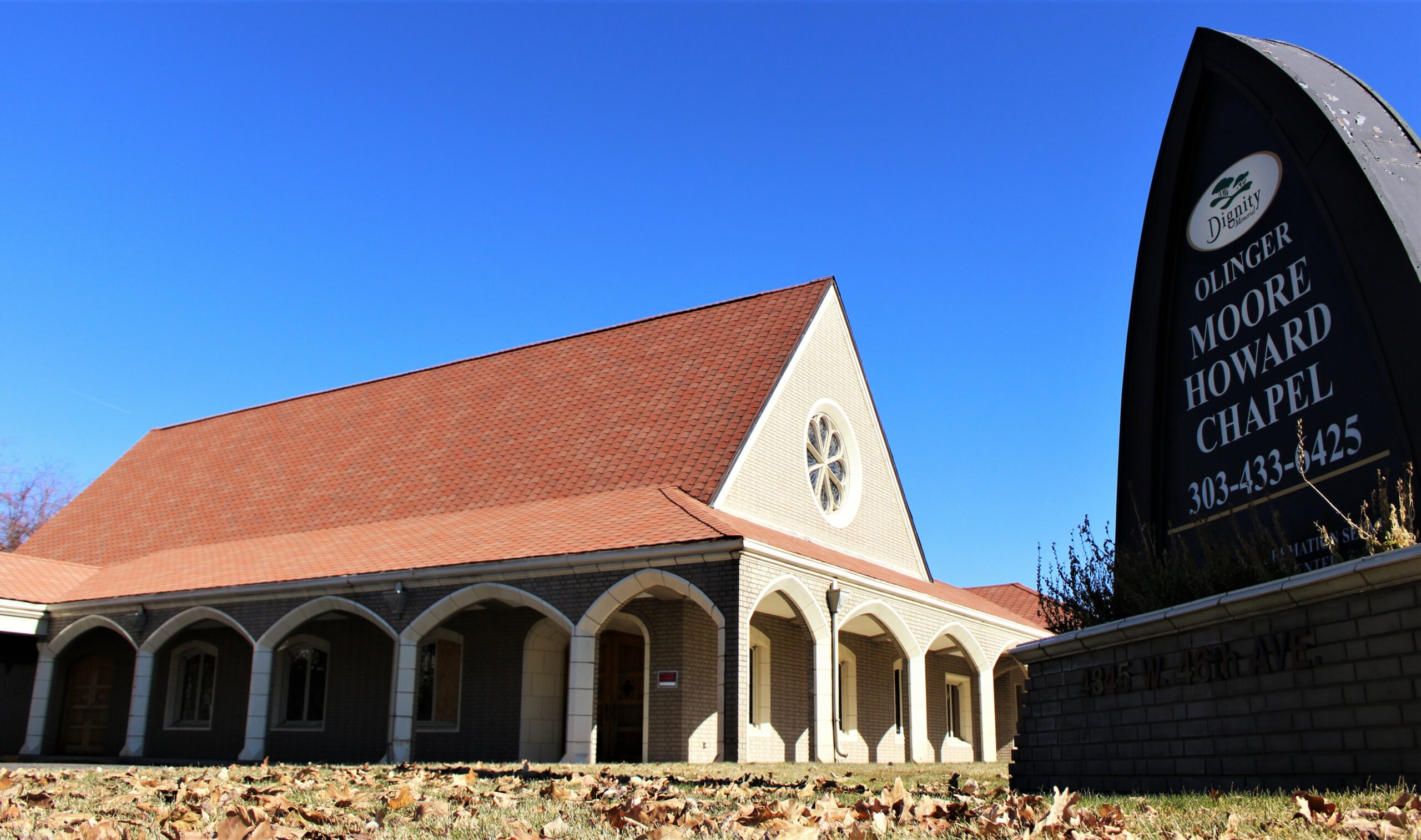
The Howard Berkeley Park Chapel has a new owner, one who isn’t planning to tear it down.
For much of the past year, a brewing debate over whether to preserve the former mortuary as a historic structure has pitted the building’s prior owner, Service Corporation International – who wanted to sell the property for a townhome development – against preservationists and the local community, who’ve sought the city’s help to establish landmark designation for the 60-year-old terracotta-roofed funeral home.
After months of negotiations, an agreement between the previous owner, developer and grassroots group fighting for the landmark status paused the designation process and allowed the group to identify prospective new buyers who would preserve the chapel. As a result, the chapel was sold for $4.5 million to Denver-based company GM Development, which plans to submit a new landmark designation application.
Historic Berkeley Regis, the grassroots historic preservation group that advocated against the demolition of the building, said in a statement that it was “pleased” with the outcome, which it credited in part to Denver City Councilwoman Amanda Sandoval, who helped arrange the negotiations.
“Historic Berkeley Regis (HBR) believes that repurposing historic buildings helps preserve the fabric and character of our neighborhood, while providing for current needs and fostering sustainability,” the group stated. “HBR will support GM Development’s submission of a new Landmark application for the Chapel, ensuring that the building will remain.”
In the meantime, Redemption Church Denver will soon become the building’s first tenant. There is also additional space available for rent, ranging from 900 to 8,000 square feet.
The building is located at 4345 W. 46th Ave and is prized for its “direct association with the history and development of the city,” as well as its prominent location and “distinguishing” architecture of the late J. Roger Musick, a Denver architect whose work included residential development, commercial structures and civic institutions.
The structure is identified as one of Musick’s “most important designs” over a 20-year period.


US service member missing after Iran shot down fighter jet has been rescued, US officials say
Associated Press
associated-press@coloradopolitics.com
Updated 11 hours ago
JERUSALEM — President Donald Trump announced early Sunday that the U.S. had rescued an aviator nearly two days after he was shot down over Iran. The extraction came after a frantic search in what appears to be a remote, mountainous region of...

Low and slow meets forever: US postage stamps honor lowrider car culture | OUT WEST ROUNDUP
The Associated Press
the-associated-press@coloradopolitics.com
Updated 4 days ago
NEW MEXICO Stamps honor lowrider culture ALBUQUERQUE — From Mexican American and Chicano barrios in the American Southwest to the halls of the Smithsonian on the National Mall and even the streets of Japan, lowrider culture has become part of...

Colorado Politics Calendar Apr. 6-12
Rachael Wright, Special to Colorado Politics
rachael.wright@coloradopolitics.com
Updated 4 days ago
CoPo’s weekly political calendar will help you find political and public-policy events throughout Colorado. It includes candidate and issue campaign events, public policy meetings, court hearings, state and local party conventions, assemblies, debates, rallies, parades, speaking engagements, traveling dignitary appearances,...

Democrats rebounding without learning necessary lessons | SONDERMANN
Eric Sondermann
eric-sondermann@coloradopolitics.com
Updated 1 day ago
“When we fight, we win!” That, reportedly, was the chant heard over and over again at the Colorado Democratic Assembly a week ago. It suggests that pugilism has been the piece missing from the Democratic toolkit. Perhaps it was just...
An April Fool’s Day to remember | Capitol M | Week of April 4, 2026
Marianne Goodland
marianne.goodland@coloradopolitics.com
Updated 3 days ago
The lighter side of the Capitol, and if light were weight, the Capitol would have lifted off better than the Artemis II rocket on April Fool’s Day. There was a plethora of Fools at the Capitol for April Fool’s Day...

Federal judge sides with Mesa County school district in ex-student’s First Amendment claims
Michael Karlik
michael.karlik@coloradopolitics.com
Updated 2 days ago
A federal judge concluded last week that Mesa County Valley School District 51 and three of its administrators did not violate the First Amendment rights of a former student when they imposed minor discipline in response to disruptive behavior. In...
Colorado Supreme Court intervenes in 4 ongoing cases
Michael Karlik
michael.karlik@coloradopolitics.com
Updated 2 days ago
The Colorado Supreme Court recently moved to intervene in four ongoing cases, including two criminal prosecutions, a civil lawsuit, and a child welfare proceeding. At least four of the court’s seven members must agree to hear a case outside of...
Colorado ski resorts announce early closures amid historic snowpack lows, high temperatures
Kyla Pearce
kyla.pearce@gazette.com
Updated 1 day ago
Vail Resorts is the latest area to announce season closure Wednesday As Colorado’s historically low snowpack year comes to a close and spring conditions take over the mountains, the state’s major ski resorts are announcing closing dates — some of...

Kentucky Gov. Andy Beshear set to headline Colorado Democrats’ annual fundraising dinner
Ernest Luning
ernest.luning@coloradopolitics.com
Updated 2 days ago
Kentucky Gov. Andy Beshear, one of the Democrats’ top 2028 presidential prospects, is scheduled to deliver the keynote address at the Colorado Democratic Party’s annual fundraising dinner in June in Denver, the party said Friday. Serving his second term as...
Gov. Polis names new leaders for Colorado health agencies in wake of Medicaid turmoil
Marianne Goodland
marianne.goodland@coloradopolitics.com
Updated 2 days ago
Gov. Jared Polis, on Thursday, announced he was appointing Gretchen Hammer to serve as acting executive director of the Colorado Department of Health Care Policy and Financing, and deputy executive director Stephanie Beasley to become the next commissioner of the...
PREV
PREVIOUS

Year-round Daylight Saving Time bill goes dark
Those dreams of never again having to wake up an hour early because of Daylight Saving Time will just have to stay dreams, for now. On Wednesday, Democrats on the Senate State, Veterans and Military Affairs Committee, who apparently don’t mind losing that hour of sleep in 10 days, shot down a bill that would […]

Trump rally in Colorado Springs (PHOTOS AND LIVE BLOG)
WATCH: Trump in Colorado Springs President Donald Trump appeared in Colorado Springs on Thursday evening at a campaign rally at The Broadmoor World Arena. The Gazette and Colorado Politics had multiple reporters and photographers on scene. Below is transcript of our live coverage. 7:46 p.m. That’s a wrap on this live blog, folks. Thanks for following […]