

Colorado officials release plan to encourage banks to serve legal marijuana industry

Colorado Gov. Jared Polis and the state Department of Regulatory Agencies released an initiative on Monday aimed at increasing the number of financial services available in the state to businesses in the recreational marijuana and industrial hemp industries.
“As the first state to establish a legal marijuana industry and one of the first to implement an industrial hemp program, Colorado has become a national economic leader in the cannabis industry,” Polis said at the Arvada office of Partnership Colorado Credit Union, which has pioneered offering some services to marijuana-related businesses.
“We are excited to release a bold, forward-thinking roadmap to provide much-needed guidance, clarity and support to state-chartered financial service providers that work with or are interested in working with the state-legal cannabis industry.”
The initiative addresses a problem faced by legal marijuana businesses unable to access financial services – including banking, lending and insurance – because the drug remains illegal at the federal level, discouraging many banks and other financial institutions from handling the industry’s money.
Retail sales in Colorado last year topped $1.6 billion through November, putting 2019 on track to post record revenue since the state became the first jurisdiction in the world to establish a legal recreational marijuana market in 2014.
U.S. Rep. Ed Perlmutter was on hand to applaud the state program and pitch federal legislation he’s sponsoring to clear up issues at the federal level.
The Secure and Fair Enforcement Act of 2019, known as the SAFE Banking Act, passed the U.S. House with broad bipartisan support and is awaiting action in the U.S. Senate, where Colorado U.S. Sen. Cory Gardner is a key supporter.
Perlmutter noted that he began working on the issue with Polis, when the governor was a member of Congress, in 2013, the year after Colorado voters legalized recreational marijuana.
“This is a real public safety issue,” Perlmutter said. “Because marijuana remains illegal under federal law, businesses in Colorado and 46 states, four U.S. territories and the District of Columbia are forced to deal in cash. These businesses and their employees and ancillary business cannot access the banking system as any other legitimate business might, leaving them as targets for crime – robbery, assault and other crimes due to the conflict between state and federal law when it comes to cannabis banking.”
Even though marijuana is legal in some form for more than 97% of Americans, it’s still largely a cash-based business, creating a “significant risk to public safety,” State Treasurer Dave Young said at the press conference.
“By providing essential banking services to cannabis businesses, Colorado can lead the way in protecting public safety and promoting financial transparency,” he said.
DORA Executive Director Patty Salazar said the lack of clarity at the federal level “creates a level of uncertainty and apprehension” for state-chartered banks and credit unions in Colorado working with the industry.
“This roadmap is designed to lay out a path whereby our state-chartered financial institutions can explore whether or not they are in a position to provide services to this industry.”
The roadmap’s element include “providing clear regulatory guidance, encouraging new and emerging technologies in the banking and financial services space, reducing barriers while upholding consumer protection guardrails, and demonstrating state support for financial businesses wishing to explore cannabis banking.”
Perlmutter told Colorado Politics he’s optimistic the federal legislation can clear a few hurdles and start moving but said in the meantime Colorado’s approach will be a big help to state businesses.
“The roadmap the state is providing says, look, so long as you’re meeting the FinCEN guidance” – 2014 rules issued by the Department of Treasury’s Financial Crimes Enforcement Network – “and the business that you’re providing services to are legal, have their licenses and aren’t out of compliance, then we, the state, are going to have your back,” he said. “But we still have to get this federal fix.”
A goal of the plan is to increase the number of financial-service providers serving the cannabis industry by 20% by June 30.
Salazar wouldn’t say how many state-regulated institutions are currently working with the industry – the law prohibits disclosing that, she said – but the Associated Press reported in October that roughly 35 banks and credit unions were providing services to cannabis-related companies at that time.
Jeff Hunt, director of Colorado Christian University’s Centennial Institute and a persistent critic of legalized marijuana, denounced the initiative.
“The science is clear: marijuana harms developing brains, lowers IQ, and can lead to psychosis,” Hunt told Colorado Politics. “Gov. Polis and others are demonstrating that the marijuana movement is really only about making money off the harm of others. We should be encouraging people not to use drugs instead of encouraging financial investment in the harmful marijuana drug industry.”
The government affairs director for Boulder-based cannabis company Terrapin Care Station called the announcement encouraging.
“While we remain hopeful that Congress will find a long-term solution to cannabis banking, exploring alternative financial options on the state level is a necessary path in the absence of a more robust system,” Nico Pento said in a statement.



Immigration reporting measure fuels debate over Colorado’s role with ICE
Marissa Ventrelli
marissa.ventrelli@coloradopolitics.com
Updated 9 hours ago
A coalition of advocacy groups and several district attorneys rallied outside the Colorado Capitol on Thursday to oppose a ballot measure that, if approved by voters in November, would require state and local law enforcement to cooperate with federal immigration...

Colorado Politics Calendar Sept. 14-20
Rachael Wright, Special to Colorado Politics
rachael.wright@coloradopolitics.com
Updated 4 days ago
CoPo’s weekly political calendar will help you find political and public-policy events throughout Colorado. It includes candidate and issue campaign events, public policy meetings, court hearings, state and local party conventions, assemblies, debates, rallies, parades, speaking engagements, traveling dignitary appearances,...
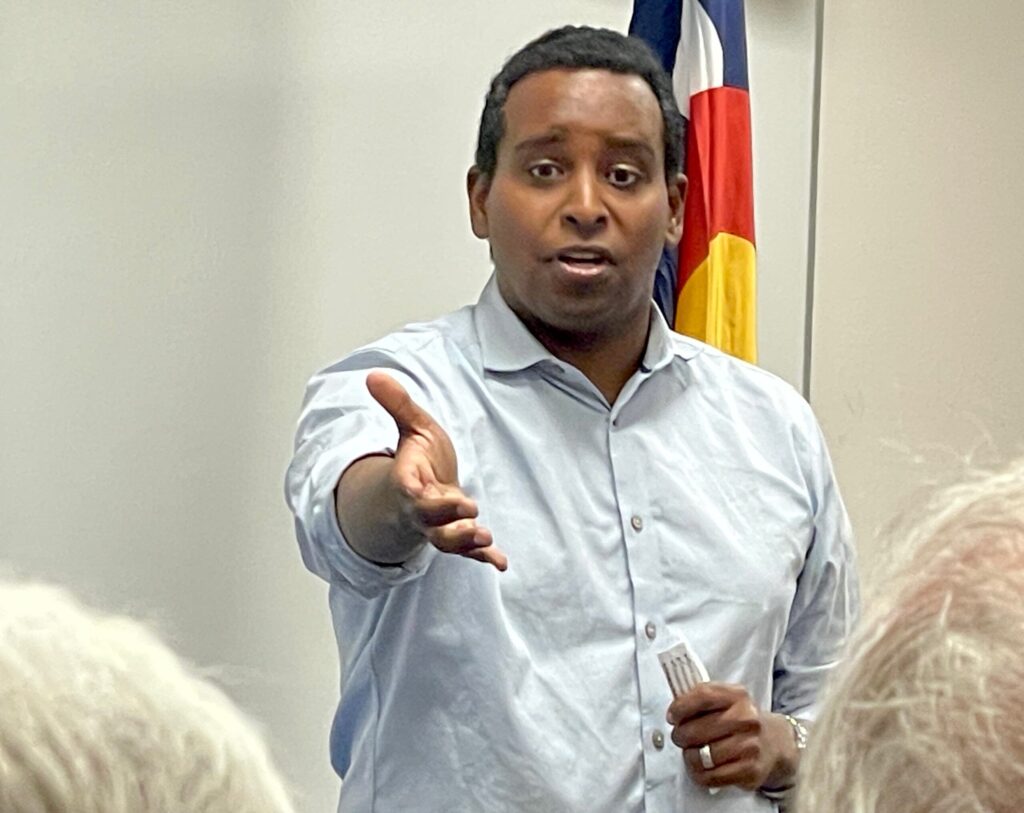
The African roots of three Colorado leaders | SONDERMANN
Eric Sondermann
eric-sondermann@coloradopolitics.com
Updated 3 days ago
Colorado’s political transformation is measured in many ways. A once reliably red state (with asterisks) became purple and is now a rather deep blue. For better or worse, probably the latter, power is ever more consolidated along the Front Range...
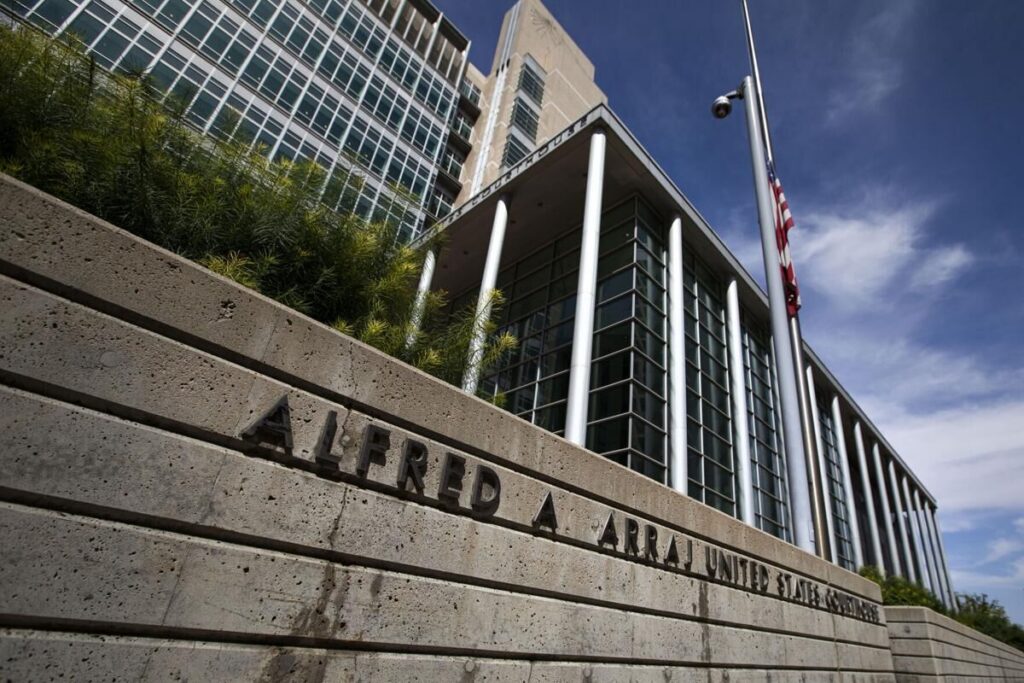
Federal judge green-lights civil trial against ex-Fort Collins DUI officer
Michael Karlik
michael.karlik@coloradopolitics.com
Updated 1 day ago
A federal judge ruled on Thursday that Fort Collins’ former “DUI officer” will face a civil trial for allegedly investigating a motorist for impaired driving without any reasonable suspicion to do so. In recent years, several people arrested by Officer...

Denver police reopen 13 sex assault cases after retesting Missy Woods’ CBI work
Jenny Deam
jenny.deam@gazette.com
Updated 1 day ago
Thirteen previously closed Denver sexual assault cases have been reopened after the city’s crime lab retested DNA evidence once analyzed by former Colorado Bureau of Investigation forensic analyst Yvonne Woods. A police spokesperson told The Denver Gazette the once-closed cases...

Ballot measure aims to shift Colorado sporting goods tax revenue to land, water and wildfire projects
Marissa Ventrelli
marissa.ventrelli@coloradopolitics.com
Updated 9 hours ago
Colorado voters this November will decide whether to direct a share of sales tax revenue from sporting goods — including bicycles and skiing equipment — toward land and water conservation, wildfire prevention and expanding outdoor recreation. Supporters say the measure...

Colorado Supreme Court suspends Mesa County judge pending misconduct investigation
Michael Karlik
michael.karlik@coloradopolitics.com
Updated 11 hours ago
The Colorado Supreme Court suspended Mesa County Court Judge Michael J. Grattan on Thursday amid a misconduct investigation. The court’s Sept. 10 order gave Grattan 21 days to explain why his paid suspension should not continue through the end of...

Trump honors the fallen of the 9/11 terrorist attacks during Pentagon speech
Mabinty Quarshie
mabinty-quarshie@coloradopolitics.com
Updated 2 days ago
President Donald Trump and first lady Melania Trump honored the roughly 3,000 Americans killed during the Sept. 11, 2001, terrorist attacks during a ceremony at the Pentagon. The event marking the 25th anniversary of the deadliest attack on American soil...
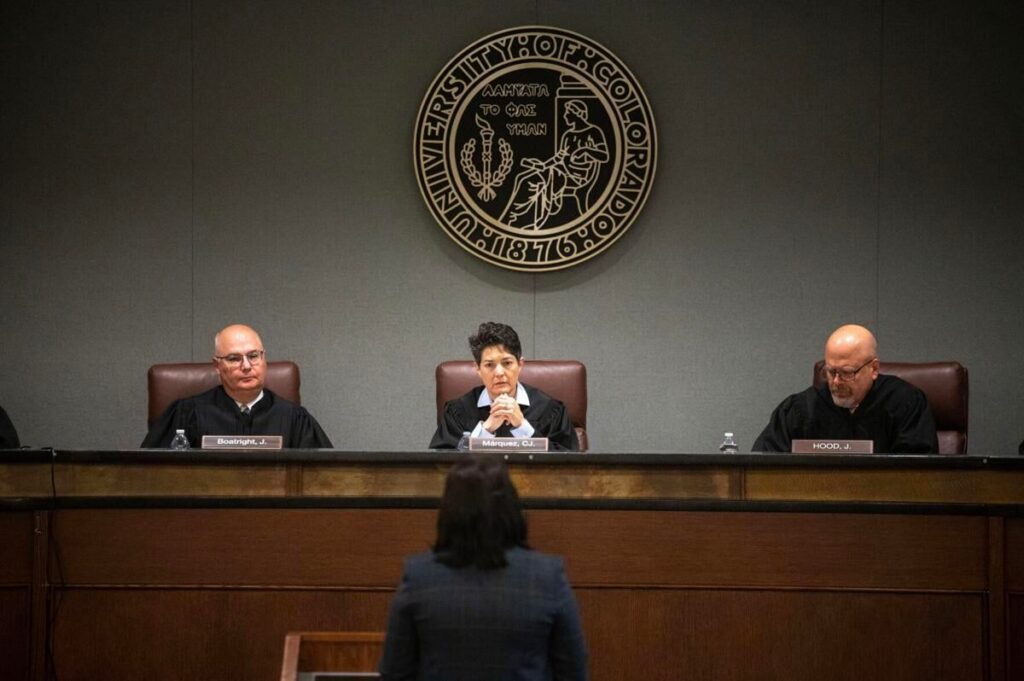
Colorado Supreme Court changes course, dismisses case about special district bonds
Michael Karlik
michael.karlik@coloradopolitics.com
Updated 11 hours ago
The Colorado Supreme Court declined on Friday to decide a dispute between a large-scale Commerce City development and the various districts financing it, after initially showing interest in the ongoing case. Colorado has roughly 2,800 special districts, which are local...

Colorado leaders express outrage and pain following 9/11 attacks | A LOOK BACK
Rachael Wright, Special to Colorado Politics
rachael.wright@coloradopolitics.com
Updated 2 days ago
Twenty-Five Years Ago This Week: “Responding to the 9/11 terrorist attacks, Colorado Gov. Bill Owens told reporters in a statement, “I join all Coloradans in expressing outrage and horror at the senseless terrorist bombings in New York and Washington D.C....
PREV
PREVIOUS

Colorado Supreme Court to take up case on cruel and unusual punishment for juvenile sex offenders
The state Supreme Court announced on Monday its intention to hear the issue of whether mandatory, lifetime sex-offender registration constitutes cruel and unusual punishment under the Constitution for minors who offend multiple times. T.B. is a juvenile who had to register as a lifetime sex offender under the Colorado Sex Offender Registration Act, which mandates the […]

After a re-vote, Denver city government will move into the Post building's top floor after all
Plans for Denver city government to take up the top floor of The Denver Post building are back on. After voting down the contract last month, Denver City Council on Monday night passed the nine-year, roughly $9.9 million sublease agreement that will secure the 11th floor of the DP Media Network-owned building and about 25,000 […]