

Audit finds flawed system in oil and gas revenue reporting; Democrats blame industry

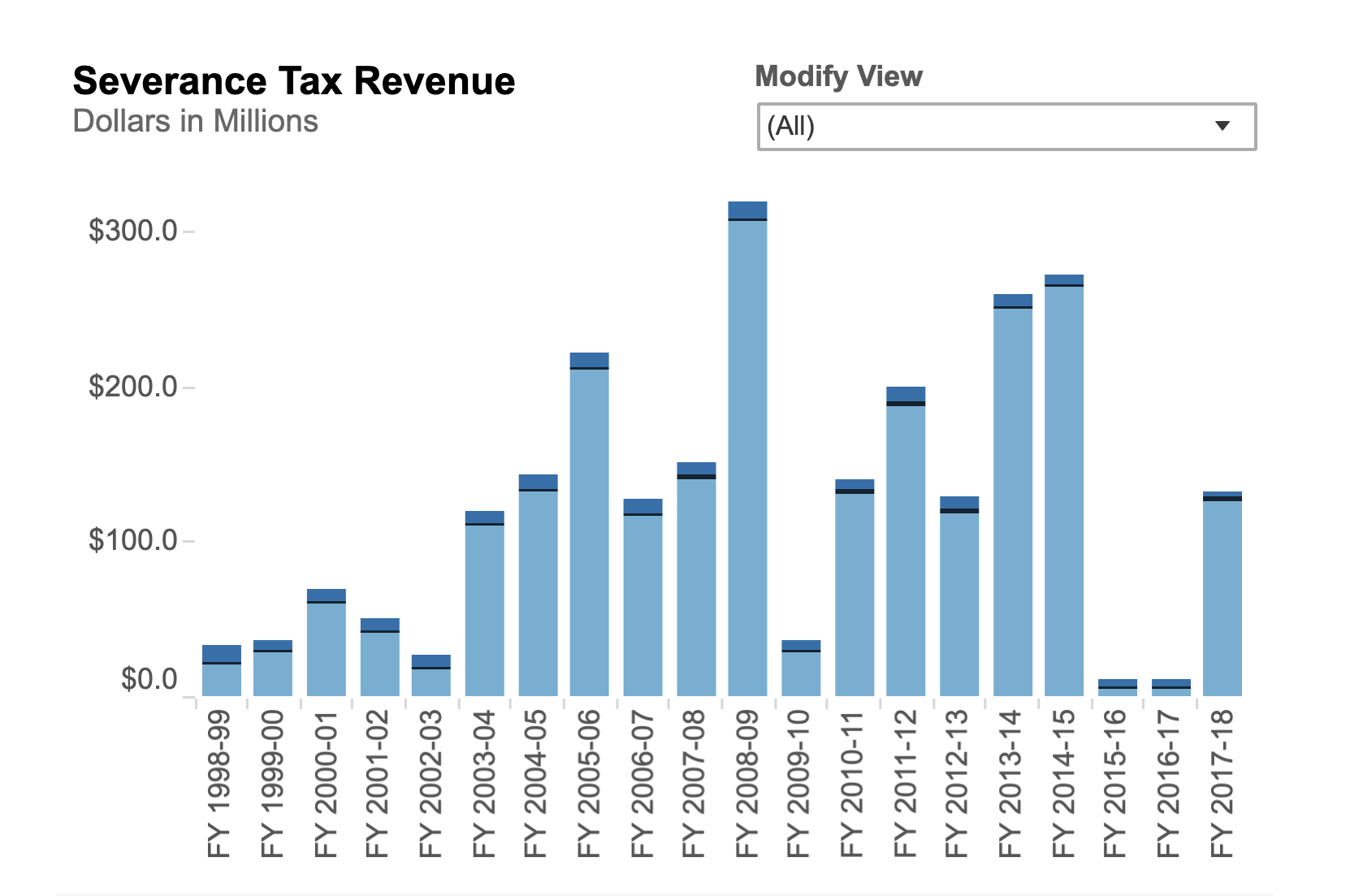
Legislators are raising questions at the Capitol about whether companies in the extraction businesses are pocketing millions in tax revenue. The oil and gas industry trade group, however, said its members are being blamed for state agencies failing to do their jobs.
Tuesday the Joint Legislative Audit Committee heard a report that found “unacceptable reporting noncompliance” by oil, gas and mining operators to the state Department of Revenue and the Department of Natural Resources. The reports are used to calculate how much companies pay in severance taxes.
“This audit shows how oil and gas operators have failed to pay millions in tax revenue to the state, local governments, and their communities, all the while running expensive television ads to tout their contributions to the state,” House Speaker KC Becker, a Democrat from Boulder, said in a statement Tuesday.
“We have one of the lowest severance tax rates in the nation and yet operators aren’t even paying what they owe. This highlights yet another aspect of the oil and gas industry that has gone unchecked for years, and we need a reliable reporting and compliance system so this industry can no longer skirt the system with impunity.”
The audit found that from the 420 companies that produced oil and gas in the state from 2016 to 2018, 316 filed incomplete well reports involving thousands of wells.
If regulators had issued the maximum $200 per day fine for failing to report information, penalties would have added up to $308 million during the two-year audit period, according to a press release from the Colorado House Democrats.
Dan Haley, the president and CEO of the Colorado Oil and Gas Association trade group, pushed back and suggested the Democratic politicians – who have aligned against the industry for some time – might be blame shifting by foisting responsibility for the problems within state agencies onto the private enterprise, instead.
“Assuming state elected leaders are looking for substantive conversations on this issue, and not just scoring political points, as some of their comments today indicate, we’re open to having conversations as one of the state’s largest taxpayers,” Haley told Colorado Politics in an email. “We welcome the opportunity to illustrate how our oil and natural gas industry contributes $1 billion in local and state taxes every year, $600 million of which goes to K-12 and higher education. This industry’s property is assessed at 87.5%, which is 3 times larger than commercial businesses and more than 12 times larger than homeowners.”
Haley pointed to a passage in the audit that states it’s the “sole responsibility” of the two state agencies and the Colorado Oil and Gas Conservation Commission to follow the report’s recommendations and related implementation dates.
“The audit highlights several flawed processes within multiple states agencies that prevent the auditor from collecting accurate information among these agencies,” he said.
Rep. Michaelson Jenet, a Democrat from Commerce City who is the vice chair of the audit committee, found the findings on noncompliance to be “astounding.”
“This money is critical for local governments, and is intended to be used for infrastructure projects in communities impacted by the extraction industry,” she stated.
Conservation Colorado, the state’s largest environmental organization, also faulted industry Tuesday.
“For years, the oil and gas industry has spent millions of dollars on lobbying and public relations to tell us how much they contribute to Colorado, when the reality is that they aren’t paying their fair share,” executive director Kelly Nordini said in a statement. “It’s past time for industry to put the health and safety of communities, workers and the environment first.”
The full audit is available by clicking here.



Senate advances judicial nominee, Montezuma County judge agrees to discipline | COURT CRAWL
Michael Karlik
michael.karlik@coloradopolitics.com
Updated 46 minutes ago
Welcome to Court Crawl, Colorado Politics’ roundup of news from the third branch of government. A U.S. Senate committee advanced a judicial nominee from Colorado, plus a Montezuma County judge agreed to receive discipline for his misconduct that stops short...

Tunnel to Towers brings 9/11 steel to Denver
Nicholas Fogleman
nicholas.fogleman@denvergazette.com
Updated 4 hours ago
A nationwide tour commemorating the 25th anniversary of 9/11 brought a piece of the World Trade Center to Denver on Saturday as the Tunnel to Towers Foundation hosted a ceremony at the Wings Over the Rockies Air & Space Museum....
Top officials in Arizona’s Maricopa County agree on how to oversee elections | OUT WEST ROUNDUP
The Associated Press
the-associated-press@coloradopolitics.com
Updated 5 days ago
ARIZONA Officials agree on election oversight PHOENIX — Election officials in Arizona’s most populous county reached an agreement a week before the state’s July 21 primary on how to jointly oversee the vote, ending a prolonged legal battle. Republican Maricopa...
First Air Force Academy class of just 306 cadets started out in WWII barracks, faced high standards
Mary Shinn
mary-shinn@coloradopolitics.com
Updated 4 hours ago
When the first class of the Air Force Academy arrived at Lowry Air Force in Denver, they were welcomed with an air show featuring bombers and fighter jets. “Most of us were overwhelmed,” recalled retired Col. Max Miller, the president...
Colorado Politics Calendar Aug. 3-9
Rachael Wright, Special to Colorado Politics
rachael.wright@coloradopolitics.com
Updated 5 days ago
CoPo’s weekly political calendar will help you find political and public-policy events throughout Colorado. It includes candidate and issue campaign events, public policy meetings, court hearings, state and local party conventions, assemblies, debates, rallies, parades, speaking engagements, traveling dignitary appearances,...
The primary political reform and precondition for all others | SONDERMANN
Eric Sondermann
eric-sondermann@coloradopolitics.com
Updated 5 days ago
In its current state, the American political system has no end of ailments. Far too many factors accelerate polarization and work against moderation and narrowing the differences. Media, and the way so many citizens limit themselves to agreeable, reinforcing sources,...
Susemihl wins surprise victory to replace Steve Durham as Colorado Springs state senator | A LOOK BACK
Rachael Wright, Special to Colorado Politics
rachael.wright@coloradopolitics.com
Updated 5 days ago
Forty-five years ago this week: In a closed session, the vacancy committee for Colorado’s Senate District 12 selected attorney Peter Susemihl to complete Sen. Steve Durham’s, R-Colorado Springs, term. Durham resigned his seat to become Region 8 Director of the...
Judge denies Calderon injunction case against Denver, Johnston
Deborah Grigsby
deborah.smith@denvergazette.com
Updated 4 hours ago
A U.S. District Court judge has denied a preliminary injunction in the case of Jessica Calderon, the Denver city employee who won a temporary restraining order preventing the City and County of Denver from terminating her amid the 2025 citywide...

10th Circuit partially revives lawsuit over 2020 Denver protest injuries
Michael Karlik
michael.karlik@coloradopolitics.com
Updated 23 hours ago
The Colorado-based federal appeals court revived a man’s claims against Denver on Friday after concluding a trial judge resolved the case in the city’s favor without analyzing two of the three instances of alleged excessive force and other constitutional violations....

At conservative summit, Colorado Republican leaders concede Democrats’ election edge
Marissa Ventrelli
marissa.ventrelli@coloradopolitics.com
Updated 2 days ago
Four Republican state lawmakers told attendees at a gathering of conservative leaders on Friday they doubt their party can win statewide races, noting that Colorado’s electorate has been shifting toward Democrats but adding they see an opening in several pockets....
PREV
PREVIOUS

Lundeen offers idea on carving out transportation funds
On Wednesday, the Senate State, Veterans and Military Affairs Committee will hear Senate Bill 44, sponsored by Sen. Paul Lundeen, R-Monument, and Rep. Terri Carver, R-Colorado Springs. The bill attempts to find a way to fund transportation without raising taxes or taking money from other sources in the budget, according to Lundeen. The bill takes 10% of […]

CBI reports fewer gun background checks in 2019, higher denial rate
Firearm sales decreased in Colorado for the fifth year in a row, while denials of firearm transactions rose slightly, data from the Colorado Bureau of Investigation indicate. CBI processed 342,439 background checks for gun purchases in 2019, the lowest since 2014. The majority of sales were for handguns, and in December the average time to […]