

BIDLACK | Beware those ballot titles; some could backfire on all of us

It’s possible, that to regular readers, I might come off as a, well, policy nerd (Ed: No!). I like to understand the details of a proposal, and I prefer to consider the full scope of legislative actions. Like I said, I’m a nerd (Ed: well, if you say so…).
To start off today’s missive, let’s ask a basic question: Is government a good thing?
OK, I admit, it’s a trick question. For the past generation or so, we’ve seen the anti-government efforts of the Koch brothers and others bare fruit, with more and more Americans taking an attitude that government is inherently evil, and everything possible should be done to reduce its size and ability to function. Oddly, those same folks do, in fact, call the fire department when their house catches on fire (socialism!), but such anti-governmental efforts continue unabated.
Which brings me to the titles of proposed referendums on Colorado ballots. Hang in there, gentle reader, it all connects at the end.
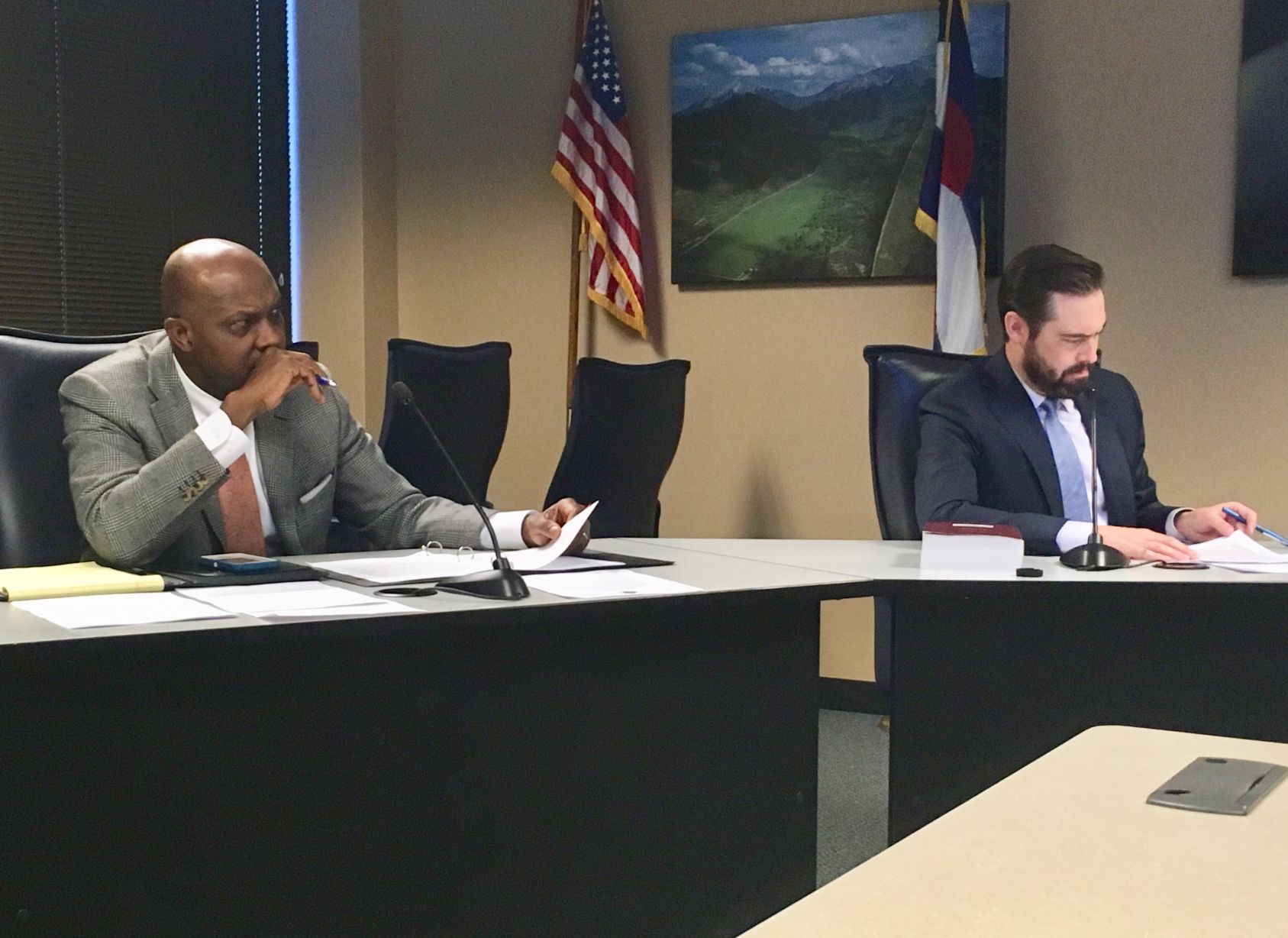
I’m guessing a few regular readers of Colorado Politics may have skipped a recent article, “Title Board rejects sweeping 2020 amendment seeking to change petitions process.” That’s a mouthful. And a careful reading explains that there is a thing called the Title Board (its full legal name is “The Initiative Title Setting Review Board”), and the people who serve on that board have the task of approving or rejecting proposed titles of proposed amendments to the state constitution. That may seem trivial (such as, I dunno, a proposal called “Don’t Hunt with Hand Grenades”) but it really isn’t. There are twists and turns to the process, and what ends up as a title can really be important.
We see this all the time at the national level. Bills are named in such a way as to suggest that supporting them is the inherently right thing to do. After all, wouldn’t you want to support “the Patriot Act?” How about the “Buy American Act” or the “Veterans Benefits Delivery and Other Improvement Act?” Those are all real. So, what we call a bill is important. People are far more likely to vote in favor of, say, “Keeping Americans Safe Act” than the “Let’s Limit More of your Freedoms Act.”
So, the Title Board, as it is commonly called, has the task of making sure that titles follow Colorado law. Currently, that law – doubtlessly well-intended – limits titles to a single subject. You can’t have a proposed amendment or initiative with more than one purpose. The current law requires titles to be “brief’ and “unambiguously state the principle” involved. I imagine that was to support clarity and simplicity, and most of the time it works fine.
But there are those who oppose the single-issue requirement and would like to change it. They argue that the process of petitioning for changes. As the article explains, there is an effort to change the law. In the case reviewed, it seems there are people who seek to create what they call a “universal right to initiative” at all levels of government. Their proposed amendment, formally known as initiative 127, would in one fell swoop repeal several constitutional and legal requirements on the books now, and would create a new system with the State Supreme Court in charge. The title board would go away. Those in favor asserted that 127 was, in fact, a single-subject proposal – change the petitioning system. The Board thought otherwise, given the large number of changes across several areas of government that would ensue.
My father had a saying – when you can think two things about a person, choose to think the kinder one. And in following that admonition, I won’t suggest that there is a sub-plot going on here. But I do get a sense, from reading the article, that there may be an anti-government motive slipping through here, in terms of the desire to greatly empower the petition process.
I’ve written before that we elect a government, from the people, and we should let them do their jobs, with proper oversight of course. But all too often, today’s voters are too mad, too off put, and they rail against the very idea of government. Look, I’m pro-government, having spent my entire adult working life there (as a military officer and later a Senate staffer). These proposals to increase the ease of petitioning onto a ballot to ask the voters to make fundamental changes to our system are, in my view, shortsighted and dangerous.
When a doctor decides on what medicine to give a sick person, they don’t take a vote and give the patient the drug that gets the most votes. When we have building inspectors check out, say, the construction of a new day care center, we don’t put which electrical wires are safest up to a vote. No, we accept that in areas of our lives where we are not experts, we ask experts to do the work, under proper supervision.
Sometimes, something as simple as a title can be very important.
Hal Bidlack is a retired professor of political science and a retired Air Force lieutenant colonel who taught more than 17 years at the U.S. Air Force Academy in Colorado Springs.


Add Lynn Bartels to Colorado’s roll call of legends | Dick Wadhams
Dick Wadhams
dick-wadhams@coloradopolitics.com
Updated 1 day ago
A few weeks after the Rocky Mountain News shut its doors forever in 2009, more than 600 Republicans gathered for the state party’s annual Centennial Dinner. Lamenting the historic significance of the loss of one of Colorado’s great daily newspapers,...

Conservation efforts emphasize the lesser prairie chicken | Rachel Gabel
Rachel Gabel
rachel-gabel@coloradopolitics.com
Updated 1 day ago
Reid DeWalt, deputy director of Colorado Parks and Wildlife, spoke to the Water Resources and Agriculture Review Committee about the Lesser Prairie Chicken and moving conservation forward. He said in 2026, CPW staff counted 77 males on 13 leks, a...

Colorado’s regulations should address policy challenges only as truly needed | Miller Hudson
Miller Hudson
miller-hudson@coloradopolitics.com
Updated 24 hours ago
As Colorado approaches its 150th birthday, we should remember its first 100 years were characterized by repeated boom-and-bust economic cycles. Dependence on mineral extraction and agricultural commodity prices was subject to the volatility of these markets. In 1972, as I...

The last, best hope for the Colorado GOP | Kelly Sloan
Kelly Sloan
kelly-sloan@coloradopolitics.com
Updated 24 hours ago
If the Colorado Republican Party desires to retain any relevancy, let alone wrest back any of the levers of political control in the state, it needs to elect Barb Kirkmeyer in the June 30 primary. To be sure, Kirkmeyer would...
Understanding Trump’s remarkable political comeback in 2024 | Cronin and Loevy
Tom Cronin Bob Loevy
tom-cronin-bob-loevy@coloradopolitics.com
Updated 1 day ago
President Donald Trump lost the 2020 presidential election. He inspired a riot at the U.S. Capitol to try to overthrow the results of that election. He was impeached by the U.S. House of Representatives and later was indicted for several...

Read Michener’s ‘Centennial’ | Jon Caldara
Jon Caldara
jon-caldara@coloradopolitics.com
Updated 4 days ago
If you’ve been reading my columns, you’ve noticed I’m basically illiterate. I blame my dyslexia and public education, but my Olympic-level laziness could be the driving factor. Anyway, I basically can’t read (and, still, I graduated from CU Boulder, so...

Giving credit to Polis where credit is due | SONDERMANN
Eric Sondermann
eric-sondermann@coloradopolitics.com
Updated 5 days ago
It is an understatement to suggest that Gov. Jared Polis has had a tough couple of months. The bloom was already off the rose and Coloradans were paying far more attention to the choice of his replacement than they were...
Will one unqualified AG replace another? | George Brauchler
George Brauchler
george-brauchler@gazette.com
Updated 4 days ago
Colorado Democrats are poised to nominate another attorney general candidate with de minimis relevant credentials or experience. Far from disqualifying, Colorado’s recent voting history mirrors that of America in favoring biography over experience, partisanship over policy, and emphasizing what divides...
Pueblo’s mayor keeps stirring the pot | Dennis Maes
Dennis Maes
dennis-maes@coloradopolitics.com
Updated 4 days ago
Pueblo Mayor, Heather Graham, has clearly proven to be a disciple of the Donald Trump school of governance. And, like her mentor, she is experiencing the same catastrophic results. The format is to ignore what the electorate approved and expects...

The perils of Colorado’s unregulated abortions | GUEST COLUMN
Colorado Politics
colorado-politics@coloradopolitics.com
Updated 4 days ago
By Tom Perille How did the movement which grew out of a genuine concern for the health and safety of women become the same movement that undermines women’s health and safety today? Despite good intentions, it was a long route...
PREV
PREVIOUS

NOONAN | Drilling down to the details of oil & gas health risks in Colorado
Paula Noonan The oil and gas industry is sponsoring two rallies, one in Rifle and one in Loveland, against Air Quality Control Commission (AQCC) draft regulations three and seven that will affect the state’s compliance with the U.S. Clean Air Act and implementation of SB19-181. The rallies are set for Dec. 10 in Rifle and Dec. 16 in Loveland […]

HUDSON | Coloradans watch and wait as prescription drug reform idles in D.C.
Miller Hudson Independent or unaffiliated voters are now the largest voting bloc in 11 states, including Colorado, and larger than at least one of the major parties in another 20. Their increasing political power is evident in the growing number of states that are opening primary elections to them. The theory is that these participants […]