

INSIGHTS | ‘Dreamers’ are about life — and politics, too
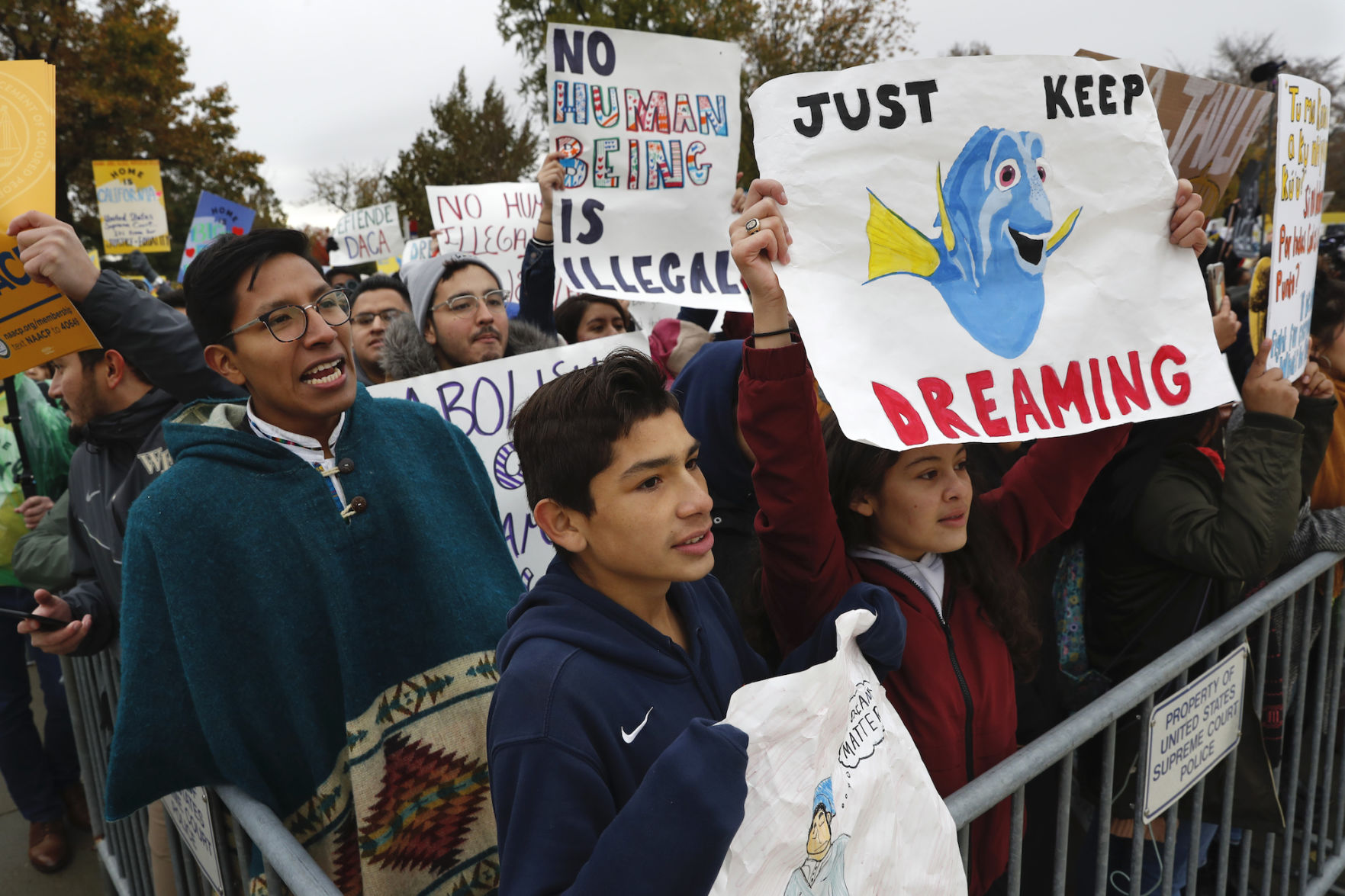
Immigration will be a touchstone issue in next year’s elections, if not a driving issue in American politics for the next two decades. As a pretext, the U.S. Supreme Court in the spring will render an opinion on another policy of President Trump’s that takes on the issue, again, with toughness over compassion.
In 2012, President Obama told undocumented immigrants who were brought here as children to step into the bureaucratic light, to give their names and promise to be good members of the workforce and stay in school. After the Dream Act couldn’t get through a divided Congress, Obama signed an executive order to create the Deferred Action for Childhood Arrivals program.
The Supreme Court will determine whether Trump can render the deal between immigrants and the government null and void. If he wins, Dreamers face deportation to a country many don’t remember. It’s a life sentence fought on technical grounds.
RELATED: Metro students rally in Denver as Supreme Court hears case for Dreamers
Erik Gamboa didn’t trust it to begin with. He waited a year to step out of the shadows, as he described it, to sign up to be a Dreamer. At 37, now, he cleared the bar on age by just two months.
“It’s been a life changer,” he said of DACA.
Gamboa’s family landed in California from Mexico when he was a year old, then came to Colorado when he was 12.
When he graduated from Aurora Central High School, out-of-state tuition for a noncitizen put the cost of college out of his family’s reach. He wanted to join the Navy but he was daunted by the bureaucratic challenges of getting in the U.S. military as a noncitizen, so another pathway was a dead end.
Gamboa operates his family’s painting and remodeling company, which, with papers, he’s grown to include buying and selling real estate.
That’s well and good, but having a daughter was “the best thing that ever happened to me,” Gamboa said. She’s 16, and they’re very close. Because he has a driver’s license now, they can fly together to Chicago, New York and San Francisco, Gamboa said, rattling off their adventures.
“When Donald Trump got elected, I had the conversation with her about the possibility of me being deported, and what that would mean for us, and how if I’m not around I’ll still always be there for her,” Gamboa said. “It’s a hard conversation to have, but it’s the reality of things.”
RELATED: What they are saying: Coloradans respond to DACA oral arguments
DACA is about real lives and real livelihoods, but it’s also really about politics.
Latino voters are an emerging bloc that both parties should covet. Republicans who side with Trump are betting that those who came here legally want everyone else to play by the same rules.
Immigration, by no means, is the only issue that sways any voter, but mishandling it could set either party back for a generation.
Colorado Gov. Jared Polis contends DACA, despite its broad public and political support, is on life support solely because President Trump and his conservative base’s “relentless attempts” to kill it and to “set us against one another.”
“We worry about the impact ending DACA would have on the economy of our state and the American lives who are affected,” he said. “It’s unconscionable that 15,000 fellow Coloradans – our families, our friends, our neighbors – could be uprooted from their jobs, from their schools, from their communities and deported to a country they don’t even remember.”
Dreamers in Colorado have a champion in the governor’s office, as Republicans propose a ballot measure next year to ensure undocumented immigrants are never granted voting rights in local elections. Initiative 76 is part of a national campaign that’s living in a political powder keg and giving off sparks.
More the 700,000 immigrants signed up for DACA nationwide. Their numbers in Colorado amount to more than all the living souls in Steamboat Springs.
“They are in all ways Americans, and that’s a fact Congress will ultimately recognize,” Polis said.
In Congress, Polis was one of the Democrats who urged the president go press ahead with DACA. He co-sponsored the Dream Act and legislation to provide assistance to children facing deportation. His congressional staff included an immigration attorney for casework in the 2nd Congressional District.
As governor, Polis already has signed legislation to allow Dreamers to qualify for college financial aid. Polis appointed the first Dreamer ever to a state board, Marissa Molina, who serves on board at Metropolitan State University of Denver.
“Representation matters,” Polis explained. “Of course we should treat our DACA recipients as the de facto Americans they already are, as we wait for Congress to someday finally update their ability to someday take their place alongside their fellow Americans.”
He campaigned on a “Colorado for all,” and he said Dreamers are included.
“These are kids that your kids and my kids grew up with. They’re cheerleaders on the football team, in school plays, they’re friends, they’re dates, they’re just as American as any other Coloradan,” the governor said.
In the meantime, there’s Trump.
“Everyone will suffer if the Trump administration is allowed to start rounding up Dreamers for deportation,” the governor said.

Colorado board permits state to appeal injunction against arthritis drug price cap
Marissa Ventrelli
marissa.ventrelli@coloradopolitics.com
Updated 15 hours ago
A Colorado board voted Friday to allow the Attorney General’s Office to fight an injunction against a price cap on a drug that treats arthritis. A U.S. district court judge had granted the company Amgen a preliminary injunction, temporarily blocking...

Federal judge rejects constitutional claims, ‘expressions of hatred’ by Club Q defendant
Michael Karlik
michael.karlik@coloradopolitics.com
Updated 15 hours ago
A federal judge rejected a defendant’s claims that he received constitutionally ineffective assistance of counsel while facing federal hate crime and firearms charges for murdering five people at a Colorado Springs LGBTQ nightclub in 2022. Anderson Lee Aldrich is serving...

Divided 10th Circuit upholds Colorado congestion fee on car rentals
Michael Karlik
michael.karlik@coloradopolitics.com
Updated 11 hours ago
The Denver-based federal appeals court concluded on Monday that a 2024 “congestion impact fee” that lawmakers imposed on short-term vehicle rentals did not conflict with a federal prohibition on certain airport-related charges. Beginning in the 1970s, Congress began limiting the...

Space Force should measure workforce needs as it prepares to double in size, GAO report says
Mary Shinn
mary-shinn@coloradopolitics.com
Updated 20 hours ago
The Space Force needs more people. It’s just not precisely sure how many more. A Government Accountability Office report released earlier this month found that the youngest and smallest military branch does not have a process to consistently or accurately...

Colorado schools receive $24 million for free meals program
Marissa Ventrelli
marissa.ventrelli@coloradopolitics.com
Updated 15 hours ago
The Colorado Department of Education is providing Colorado schools with nearly $24 million in grant funding to implement a free lunch program. Approved by voters in 2022, the Healthy School Meals for All provides free breakfast and lunch to all...

Secret Service agent placed on administrative leave after arrest for near-deadly hazing ritual
Claire Carter
claire.carter@washingtonexaminer.com
Updated 22 hours ago
A Miami Secret Service agent in Florida was placed on administrative leave following his arrest on Sunday in connection with a near-deadly hazing incident at a University of Miami fraternity. Marquez Christopher Pinder, 29, was arrested alongside two other individuals...
Forest fire west of Sedalia prompts evacuations in Douglas County
Nicholas Fogleman
nicholas.fogleman@denvergazette.com
Updated 1 day ago
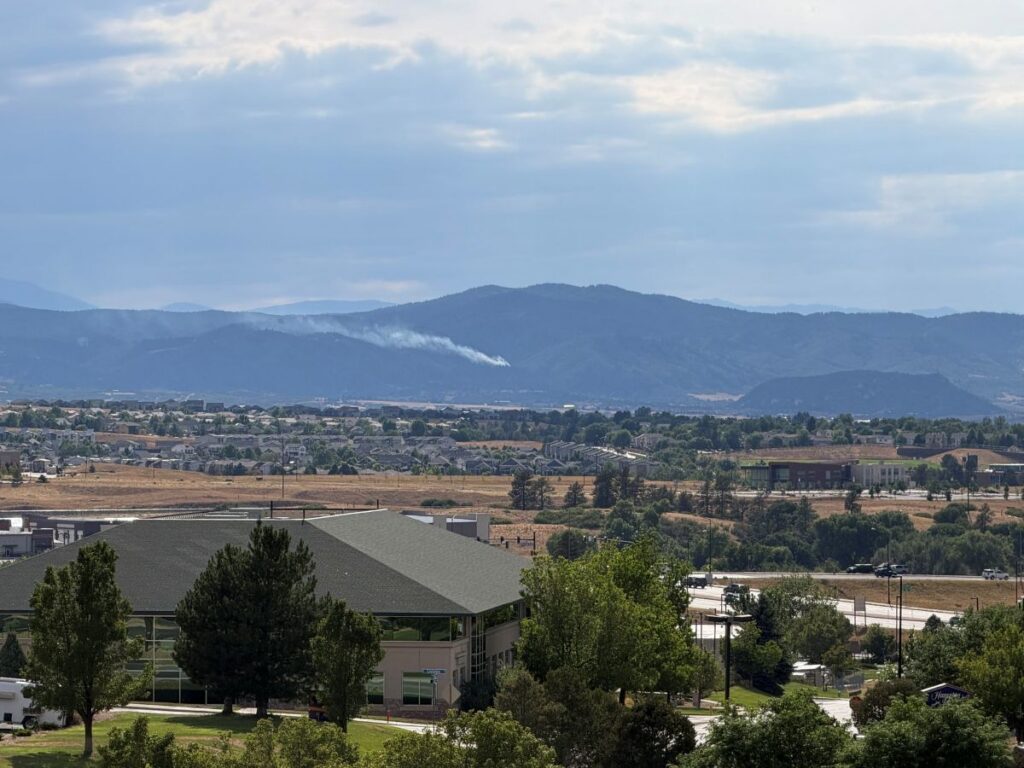
Emergency crews are responding to a forest fire burning west of Sedalia, prompting evacuation orders for nearby residents Sunday afternoon. At about 5 p.m. Sunday, the Douglas County Sheriff’s Office issued an evacuation order for residents within a 2-mile radius...

Airstrikes have paused and talks are pressing forward. But can the US and Iran take the off-ramp?
The Associated Press
the-associated-press@coloradopolitics.com
Updated 1 day ago
WASHINGTON (AP) — The U.S. military has paused its airstrikes on Iran after nearly two weeks of intensifying bombing, while diplomatic efforts have pushed forward to try to avert a return to all-out war. But it remains to be seen...
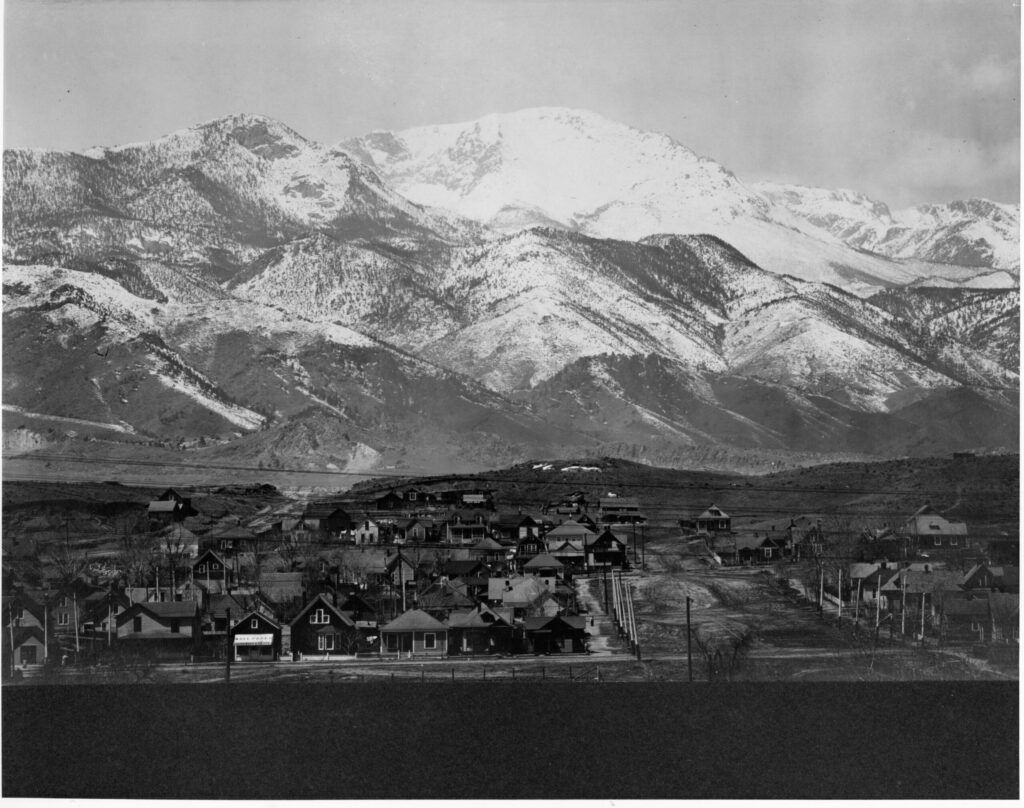
Penrose fortune paved the way for Colorado Springs to be a military, space and sports town
Mary Shinn
mary-shinn@coloradopolitics.com
Updated 1 day ago
Colorado Springs is always working to catch the next big economic wave. “We’re always trying to figure out what the next thing is going to be,” explained Matt Mayberry, director of the Colorado Springs Pioneers Museum. In the early days,...

Colorado Politics Calendar July 27-Aug. 2
Rachael Wright, Special to Colorado Politics
rachael.wright@coloradopolitics.com
Updated 6 days ago
CoPo’s weekly political calendar will help you find political and public-policy events throughout Colorado. It includes candidate and issue campaign events, public policy meetings, court hearings, state and local party conventions, assemblies, debates, rallies, parades, speaking engagements, traveling dignitary appearances,...
PREV
PREVIOUS

OUT WEST ROUNDUP | Millions at stake in Montana dinosaur fight; Orwell exhibit displays 'doublespeak'
MONTANA Millions at stake in dinosaur fight: Are fossils minerals? HELENA – The discovery of two fossilized dinosaur skeletons intertwined in what looks like a final death match could make a Montana ranching couple rich beyond their dreams. Or they may have to share the wealth. It all comes down to how the state Supreme […]

Fired Air Force Academy commandant vows fight in the wake of scorching report
The former Air Force Academy commandant of cadets claims her firing last spring was due to a mutinous staff and homophobia. But a Pentagon report sustained seven allegations against Brig. Gen. Kristin Goodwin, including that she charged personal travel to the government, billed the government for work when she was on vacation and lied to […]