

CRONIN | A Colorado man of letters chronicles life on the forgotten frontier
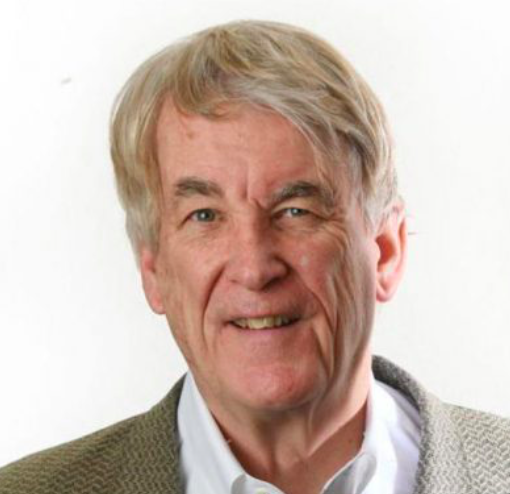
Hal Borland (1900-1978) was raised in Colorado a century ago and went on to become a celebrated nature writer, novelist and poet. He authored about 30 books and enjoyed a long professional career as an essayist and editorial writer with The New York Times.
He is mostly forgotten nowadays in Colorado – even though some of his books are invaluable accounts of growing up in rural Colorado. Borland readers will have to take out their state maps, as he describes Brush, Gary, Woodrow, Flagler, Hugo, Akron, Pagosa, Bayfield, Arboles, and Ignacio, along with Kit Carson Hill, Horse Mountain and a lot more Centennial State geography.
When Borland was 9 years old, he was brought by his parents, Will and Sarah, to homestead a barren, treeless 320-acre tract located about 30 miles south of Brush. His classic memoir, “High, Wide and Lonesome” (1956), recounts his family’s often painful five years trying to make a go of it on the vast plains of eastern Colorado.
Young Hal learned to milk cows, raise chickens, shoot rabbits, plant and harvest corn and collect cow and sheep dung for the fireplace. He learned the art of haystack-building, the challenges of free-range cattle, the rhythms of shepherding and how to endure winter blizzards on the frontier.
The Borlands lived 12 miles from the nearest post office and 30 miles from the nearest doctor. They were not the first to pioneer eastern Colorado, yet this frontier proved an exacting test for these Nebraskans.
His dad, Will Borland, had been trained as a printer, yet was inspired by “the Westward urge,” and his own version of the American Dream. Sarah, his wife, was a stoic, practical and somewhat skeptical partner in what became a constant endurance struggle.
Hal Borland’s memoir is brutally honest about their setbacks, including his father almost dying, and their inability to make a steady living on the farm.
Lacking friends his own age, young Borland became a keen observer of his natural surroundings and his environment. His vivid memoir, written decades later, recounts not only the varied flora and fauna of the region, but also a pride of place: “Our land lies east and west, half a mile wide north and south and a mile long.” It was, as they called it, a half-section. “That land, as far as I could see, belonged to us.”
Borland is at his literary best describing meadow larks, buffalo grass, kit foxes, turtledoves, bullbats, and his encounters with coyotes and rattlesnakes. And describing the wide variety of sheep-herders, adventure seekers, cattlemen and cowboys he encountered out on the plains. He also recounts his long walks with his dog, Fritz, as he surveys what we nowadays would call “non-postcard Colorado.”
He grows up fast, quickly assuming adult chores – especially when his dad is sick or has to leave to make much-needed income from newspapering jobs. He learns to shoot and he has a firsthand lesson about meanspirited characters when he takes a demanding job with a distant and grumpy neighbor.
But most of all he learns about grit and determination as he tries to help his parents tame the land and deal with the elements.
His parents barely survive their five years yet triumphantly “prove up” their patent claim, and get an official document to that effect signed by President Woodrow Wilson.
Yet it was time to move on. His father Will was not cut out to be a farmer, so the Borlands moved 90 miles south to the small town of Flagler, pop. 600, in Kit Carson County. “High, Wide and Lonesome” ends with an epigram if not epitaph that “a frontier is never a place: it is a time and way of life” Frontiers may pass yet they endure in their people and, fortunately for us, Hal Borland helps us remember and appreciate this not so distant part of our state’s history and culture.
Years later, Borland wrote a sequel to his homesteading years. His “Country Boy’s Editor” (1970) is a nonfiction recounting of his high school years growing up in Flagler. His father had bought the struggling yet promising Flagler News in this two-newspaper town. Young Borland and his mother are enlisted as supporting cast members – and Borland learns all about type setting, editing and the travails of recruiting ads, customers and legal notices.
His father borrows heavily from the town’s Republican banker, yet editorializes on behalf of a progressive agenda including municipal incorporation, a municipal utility and the re-election of Woodrow Wilson. These crusades all lead to victories- including Colorado and Kit Carson County voting Democratic in 1916.
Meanwhile, young Borland enjoys his high school classes, where he excels both in his studies as well as on his football squad. His team plays and successfully competes, without uniforms or protective gear, against mighty Hugo, Akron and Burlington. Borland dispairs at not being elected captain of his team but becomes his class president (a class of about 15) as he also runs track and joins the debating club.
Borland continues his learning as a naturalist but spends more and more time working at odd jobs, in a local mercantile, as projectionist at the new movie theater in town and as a crew member for a visiting Chautauqua troop.
The strength of this narrative is its capturing small-town Colorado life during the World War I period. Young Borland rebels like other teenagers, yet he excels as a student and athlete and is rewarded with a scholarship to the University of Colorado, where he studies journalism and launches his own distinguished career.
My favorite Hal Borland work (so far) is his bestselling and Reader’s Digest book selection novel, “When the Legends Die” (1963).
Much of this fictional work is set in the southwestern Colorado town of Pagosa and the nearby San Juan Mountains and Ute Reservation. His complicated protagonist is a young Ute initially named Thomas Black Bull. Black Bull becomes one of the most intriguing and perplexing fictional creations in Western literature. We watch him, in Borland’s literary characterization, go from a shy, introverted mountain kid to becoming a resourceful bear-loving mountain orphan to a sullen, rebellious reservation school lad, to a compulsively driven rodeo bronc riding star, followed by a “search for identity” return to the mountains.
Borland romanticizes the “old ways” and the “old chants” of Black Bull’s mountain years. He depicts a number of villains, both Indian and whites, who are ever present to rip-off Black Bull and his family. He is especially instructive in capturing the rodeo circuit and the gambling folks and harsh realities of that profession.
Black Bull rides under the name of Tom Black and later earns the nickname of Killer Tom Black for his ruthless and punishing style of riding. He first competes in small towns like Aztec and Socorro, and graduates to riding in Albuquerque, Denver, Nampa, Calgary and wherever rodeos are held in the Southwest.
Tom Black was viewed as more than a rider – he challenged every horse he rode, killing a number of them in the process. “And he was known,” Borland writes, “as a hostile, silent man at the chutes, on the streets, in the hotel lobbies. He had no friends, wanted none, needed none.” He lived for the thrill and elemental violence of his arena rides.
Crowds loved watching him. They didn’t cheer him as much as sit in awe and watched, expectantly, as to whether horse or rider would be punished. The bronc busting Tom Black displayed a mastery in his work even if he was obviously alienated from the culture in which he thrived. He could take pride in his success yet he was vaguely aware that he was betraying the values of his parents and upbringing.
It is impossible to condense this terrific Borland storytelling. Tom Black suffers a near-fatal injury in Madison Square Garden. His recovery is slow and gives him time to reflect on who he is and what is important.
Borland’s final chapters – somber, melancholy and a bit sappy – have Black Bull returning to Pagosa and the mountains of his youth. His is a classic search for identity and a returning to one’s roots.
“When The Legends Die” raises all kinds of questions and has made it a widely used instructional young adult classic. But it is also a splendid book for Coloradans of any age. It captures an important part of Colorado’s past and it is an impressive attempt by an Anglo writer (akin to our Helen Hunt Jackson) to pay respects to our Colorado’s Ute culture.
Thank you Hal Borland.
Tom Cronin is a retired political science professor who was a longtime member of the faculty at Colorado College in Colorado Springs. He has written several books about Colorado and American politics and is the author of, “Imagining A Great Republic: Political Novels and the Idea of America” (2018).


Private equity has no place in health care | GUEST COLUMN
Colorado Politics
colorado-politics@coloradopolitics.com
Updated 1 day ago
By Miah Ntepp Of all the financial pressures placed on working people in this country, the skyrocketing costs of health care rank near the top. As families struggle under the cuts to Medicaid made by the Trump administration, they are...
Some pointed questions for the gubernatorial hopefuls | George Brauchler
George Brauchler
george-brauchler@gazette.com
Updated 2 days ago
Earlier this month, the Republican and Democratic candidates for governor participated in a televised interview moderated by well-known, left-leaning legacy media folks. Predictably, the questions asked of the GOP candidates were more aggressive, pointed, biographical and almost entirely disconnected from...
Chaotic funding throws monkey wrench into governor’s-race money madness | Paula Noonan
Paula Noonan
paula-noonan@coloradopolitics.com
Updated 2 days ago
Chaos Monkey, Inc., gave a trifle $20,000 donation to Rocky Mountain Way (RMW), the independent expenditure committee (IEC) supporting U.S. Sen. Michael Bennet for Colorado governor. But why, Coloradans should ask, would a guy who has assigned his contributor name...

Lindsay Datko on school safety, misconduct and transparency in Jeffco schools | The OpEdge Podcast
Tony Olivero
tony.olivero@gazette.com
Updated 4 days ago
Jeffco Kids First founder Lindsay Datko joins The OpEdge to explore concerns about school safety, staff misconduct and transparency in Jefferson County Schools. Datko tells host and investigative columnist Jimmy Sengenberger why she believes Colorado’s second-largest district has too often...

Candidate’s disturbing anti-animal agriculture history | Rachel Gabel
Rachel Gabel
rachel-gabel@coloradopolitics.com
Updated 6 days ago
Rep. Manny Rutinel has busted out a cowboy hat for campaign photos and has thrown it into the ring to represent Colorado’s 8th Congressional District in D.C. He is endorsed by U.S. Sen. Cory Booker, a New Jersey democrat who serves on the Committee...
Marx, Bottoms, a primary death wish for Colorado GOP | Dick Wadhams
Dick Wadhams
dick-wadhams@coloradopolitics.com
Updated 6 days ago
Colorado Republicans stand on the brink of total irrelevance and embarrassment if they nominate one of the two nonsensical, buffoonish candidates running for governor, Victor Marx and Scott Bottoms. Republicans are already in a very defensive, tenuous position as Democrats...

Remember the grassroots reason for DEI | Miller Hudson
Miller Hudson
miller-hudson@coloradopolitics.com
Updated 5 days ago
The Trump administration’s jihad against Diversity, Equity and Inclusion (DEI) programs has metastasized into the most unexpected corners of American life. Yet, before examining this policy “incursion,” it’s worthwhile to examine the roots of DEI which reach back more than...

Why I’m voting Democrat | Jon Caldara
Jon Caldara
jon-caldara@coloradopolitics.com
Updated 1 week ago
It makes no sense to be a Republican in Colorado. Or a Democrat for that matter. On the day I turned 18, even before I bought my first legal 3.2 beer (remember 3.2 beer?), I went to the courthouse and...

A primary brings out primal instincts | SONDERMANN
Eric Sondermann
eric-sondermann@coloradopolitics.com
Updated 1 week ago
There are no Stanley Cup finals or NBA title showdowns involving local teams this June. In their place, we are inundated with primary election campaign ads. Coloradans can be excused for missing the diversion and alternate programming. But life can...
Colorado’s role in Spirit Airlines’ demise should not be ignored | GUEST COLUMN
Colorado Politics
colorado-politics@coloradopolitics.com
Updated 1 week ago
By Robin Rossenfeld At a time when Colorado families are already struggling with rising transportation costs, the collapse of Spirit Airlines could not come at a worse moment. According to the U.S. Bureau of Labor Statistics, prices in the Denver-Aurora-Lakewood...
PREV
PREVIOUS
HUDSON | Those who would tweak TABOR ought to try a new tactic
Miller Hudson Russell Long of Louisiana chaired the Senate Finance Committee for 15 years, negotiating the bipartisan tax restructuring desired by President Ronald Reagan well before Congressional Republicans committed themselves to tax cuts and nothing else. Apparently, Colorado voters have taken Long’s wry take on taxes to heart. The defeat of referendum CC last week […]
BIDLACK | BLM's new address could be the right move even if it's for the wrong reasons
Hal Bidlack You likely have heard the one, if you are over a certain age, about even blind pigs finding truffles from time to time. To convert that to what you young people say today (ed: ok, boomer), sometimes policies may have a particular goal, and yet may end up having an impact either very […]