

Denver Council committee continues its push to chip away at mayor’s power
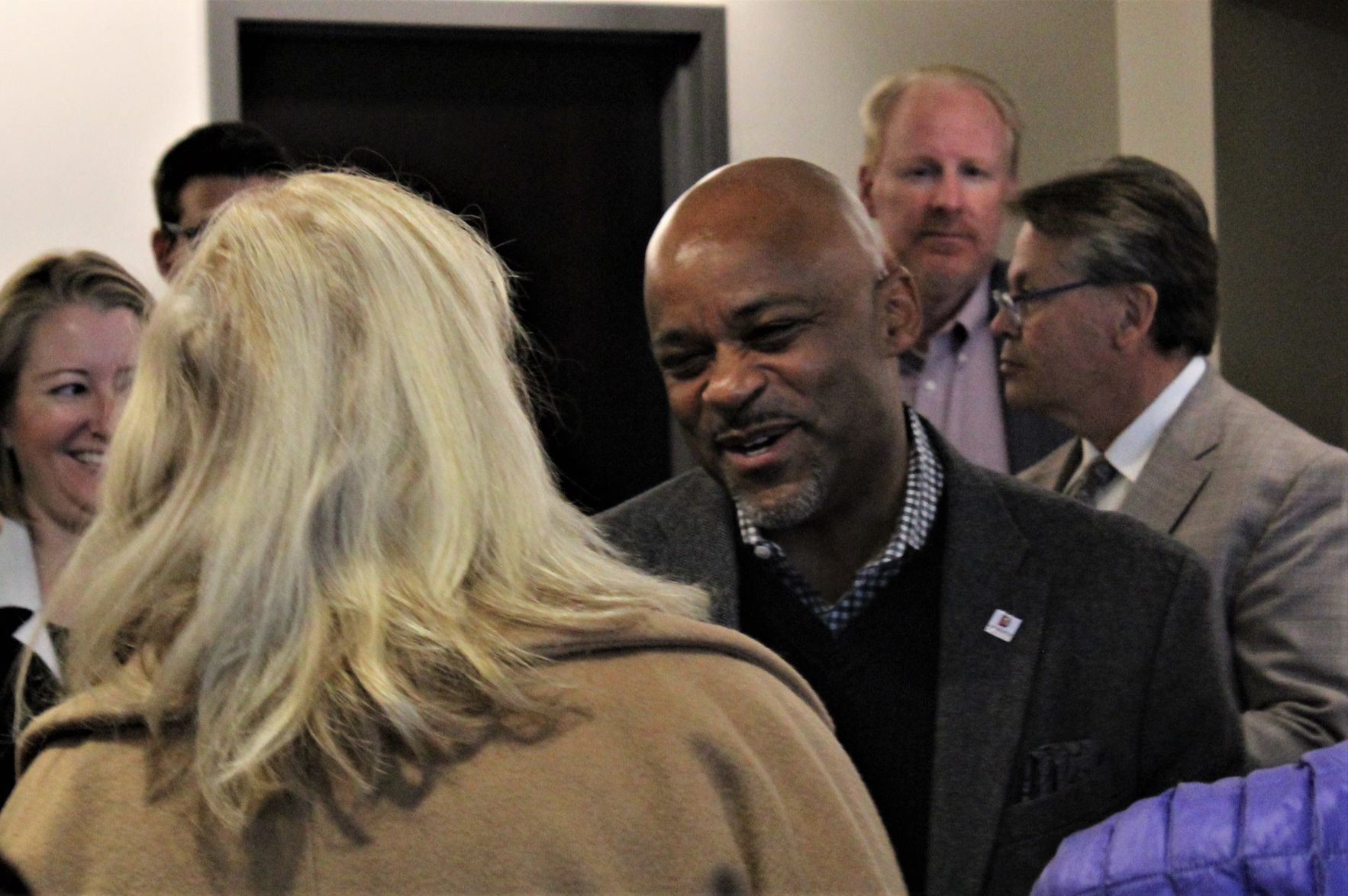
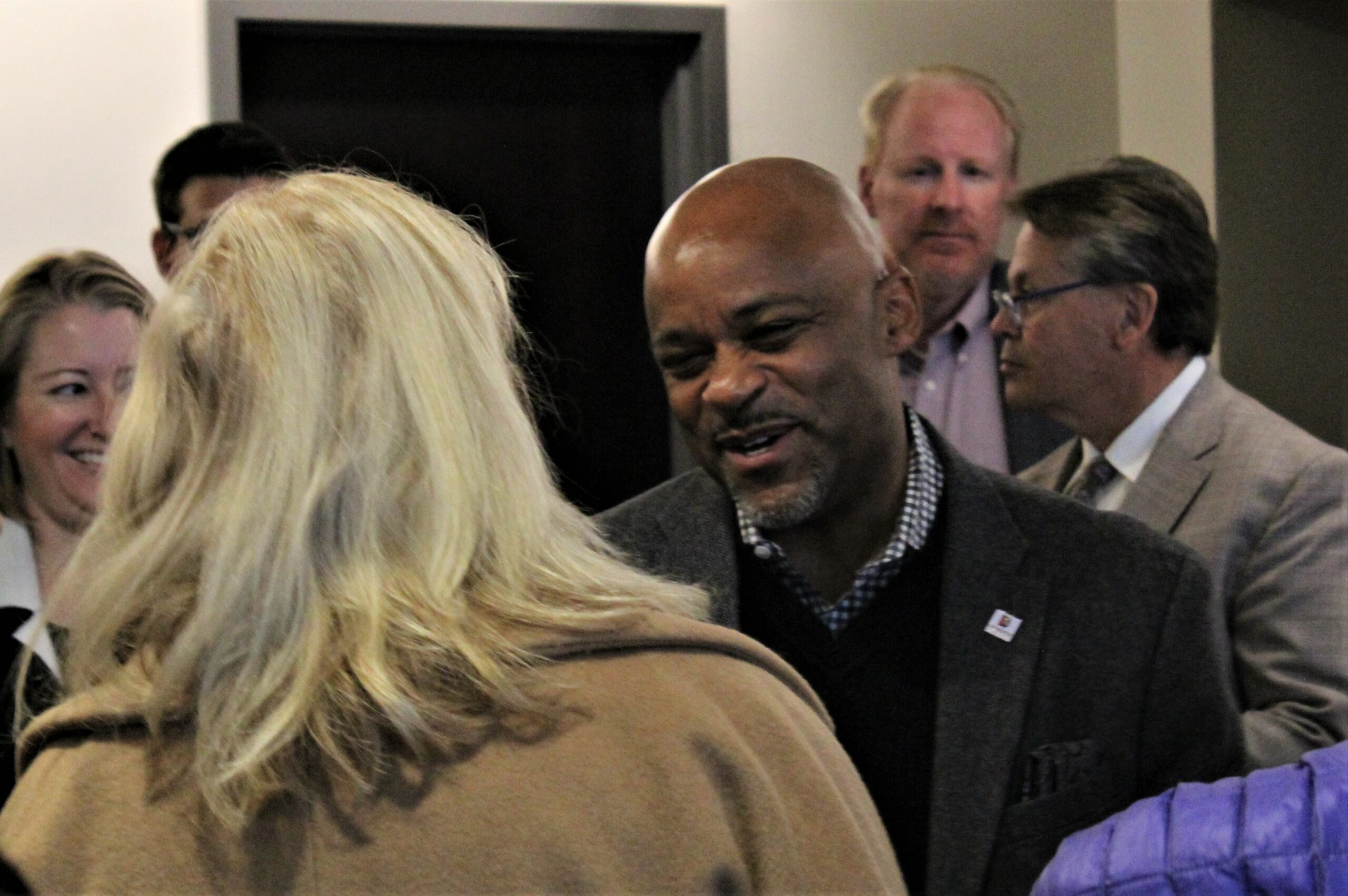
The power struggle between Denver City Council and the mayor’s office took on more urgency during a special charter committee meeting Monday, when council members proposed more control over the city’s most powerful mayoral-appointed positions and the Office of the Independent Monitor .
Councilwoman Amanda Sawyer brought forward a proposal to establish council oversight and approval of mayoral-appointed cabinet positions specified in the city charter.
The proposal is intended to provoke “more thought and more planning” when it comes to choosing cabinet members, Sawyer said Monday, and for city council to have some “buy-in” when it comes to deciding who holds these “really big, powerful, political positions.”
Of focus are 11 cabinet positions, whose salaries are set by ordinance, including the city attorney as well as heads of Public Works, Parks and Recreation, Finance, Safety, Excise and Licenses, General Services, Human Services, Aviation, Community Planning and Development, and the Department of Public Health and Environment.
The action makes good on a promise that Sawyer made in a previous charter committee meeting.
“The people of the City of Denver really feel like there needs to be some more guardrails for our city council around mayoral appointees and around our strong mayor system,” Sawyer said on Oct. 14.
Under Sawyer’s proposal, the appointments would require majority council approval, and a standard resolution would be required within 30 days.
An appointment would move forward unless opposed by a council member, upon which a council interview would be conducted during a meeting of the committee that supervises the agency in question.
After an interview, City Council would vote on the appointment at a regularly scheduled council meeting.
As is the case now, the mayor would retain sole dismissal authority. But the resolution calls for positions to be filled in a “timely manner,” language not currently specified in the city charter.
To justify the new language, Sawyer gave the example of the recent 18-month vacancy in the Community Planning and Development agency, which she said has caused “significant problems” with no one steering its ship.
Councilwoman Kendra Black worried about “unintended consequences” and asked what research had been done, as well as whether any feedback had been gathered from the mayor’s office.
“There’s certainly some concerns on the chilling effect it might have on the process for finding qualified applicants,” said Skye Stuart, legislative director for the mayor’s office, “but [we] don’t have a position at this point and are waiting to hear a little bit more detail.”
Sawyer said a study of Denver’s sister cities – aside from the outlier of San Francisco – seemed to have a “straightforward” process that did not appear to have many drawbacks. Those included Baltimore, Seattle, Tulsa, Okla., and Colorado Springs.
Councilwoman Candi CdeBaca also presented her plan to make Denver’s independent monitor a council-appointed position rather than a position at the will of the mayor.
“The main things that we’re trying to do is complement some of the other ideas that have come forward to balance out the power of the strong mayor,” CdeBaca said.
CdeBaca in the Oct. 14 committee meeting initially said her proposal would push for the independent monitor to be an elected position, as she is attempting to do with the Denver sheriff position, which would require a city charter amendment.
But as the proposal stands now, the position would only require a city ordinance amendment and therefore be more “nimble,” Councilwoman Robin Kniech acknowledged.
“Independent should mean independent,” CdeBaca said in the Oct. 14 committee meeting, “and right now that’s not the case.”
Paradoxically, the move would require the approval of the mayor, who also has the power to veto the bill.
The two proposals will move forward as a package to the Council’s government committee prior to being brought to the floor of the full City Council.


Colorado Politics Calendar Apr. 6-12
Rachael Wright, Special to Colorado Politics
rachael.wright@coloradopolitics.com
Updated 3 days ago
CoPo’s weekly political calendar will help you find political and public-policy events throughout Colorado. It includes candidate and issue campaign events, public policy meetings, court hearings, state and local party conventions, assemblies, debates, rallies, parades, speaking engagements, traveling dignitary appearances,...

Democrats rebounding without learning necessary lessons | SONDERMANN
Eric Sondermann
eric-sondermann@coloradopolitics.com
Updated 5 hours ago
“When we fight, we win!” That, reportedly, was the chant heard over and over again at the Colorado Democratic Assembly a week ago. It suggests that pugilism has been the piece missing from the Democratic toolkit. Perhaps it was just...
An April Fool’s Day to remember | Capitol M | Week of April 4, 2026
Marianne Goodland
marianne.goodland@coloradopolitics.com
Updated 2 days ago
The lighter side of the Capitol, and if light were weight, the Capitol would have lifted off better than the Artemis II rocket on April Fool’s Day. There was a plethora of Fools at the Capitol for April Fool’s Day...
Federal judge sides with Mesa County school district in ex-student’s First Amendment claims
Michael Karlik
michael.karlik@coloradopolitics.com
Updated 18 hours ago
A federal judge concluded last week that Mesa County Valley School District 51 and three of its administrators did not violate the First Amendment rights of a former student when they imposed minor discipline in response to disruptive behavior. In...

Colorado Supreme Court intervenes in 4 ongoing cases
Michael Karlik
michael.karlik@coloradopolitics.com
Updated 22 hours ago
The Colorado Supreme Court recently moved to intervene in four ongoing cases, including two criminal prosecutions, a civil lawsuit, and a child welfare proceeding. At least four of the court’s seven members must agree to hear a case outside of...
Colorado ski resorts announce early closures amid historic snowpack lows, high temperatures
Kyla Pearce
kyla.pearce@gazette.com
Updated 3 hours ago
Vail Resorts is the latest area to announce season closure Wednesday As Colorado’s historically low snowpack year comes to a close and spring conditions take over the mountains, the state’s major ski resorts are announcing closing dates — some of...

Kentucky Gov. Andy Beshear set to headline Colorado Democrats’ annual fundraising dinner
Ernest Luning
ernest.luning@coloradopolitics.com
Updated 22 hours ago
Kentucky Gov. Andy Beshear, one of the Democrats’ top 2028 presidential prospects, is scheduled to deliver the keynote address at the Colorado Democratic Party’s annual fundraising dinner in June in Denver, the party said Friday. Serving his second term as...
Gov. Polis names new leaders for Colorado health agencies in wake of Medicaid turmoil
Marianne Goodland
marianne.goodland@coloradopolitics.com
Updated 1 day ago
Gov. Jared Polis, on Thursday, announced he was appointing Gretchen Hammer to serve as acting executive director of the Colorado Department of Health Care Policy and Financing, and deputy executive director Stephanie Beasley to become the next commissioner of the...
Federal judge releases man immediately as consequence for immigration judge disobeying orders
Michael Karlik
michael.karlik@coloradopolitics.com
Updated 22 hours ago
A federal judge ordered a man’s immediate release from immigration detention on Thursday after finding an immigration judge disregarded his prior orders requiring a bond hearing. For the past year, Colorado’s federal district court has faced a flood of “habeas corpus”...
Colorado sues Trump administration, calling new election order ‘unconstitutional’
Marissa Ventrelli
marissa.ventrelli@coloradopolitics.com
Updated 3 hours ago
Colorado Attorney General Phil Weiser has joined a multistate coalition suing President Donald Trump over a new executive order on elections, arguing the directive unlawfully intrudes on states’ authority to run their own voting systems and threatens access to mail...
PREV
PREVIOUS

ELECTION 2019 | 11% voter turnout on last day to receive a mail ballot
Eight days before the statewide general election, just over 11% of active voters have cast their ballots. Monday was the last day to request a mail ballot. Beyond that, voters and prospective voters can still register and cast a ballot up to and including election day, a change the General Assembly enacted in 2013. After […]

LYNN BARTELS | Rodriguez adds power to Latino voice in Colorado
On the third Saturday of each month, the Colorado Democratic Latino Initiative meets in a nondescript building on an industrialized stretch of Pecos Street just across the Denver County line in Adams County. The organization overseen by Mannie Rodriguez has played an outsize role in helping elect Democrats and encourage Latinos to run for office. […]