

BIDLACK | RTD has plenty of riders but too few advocates
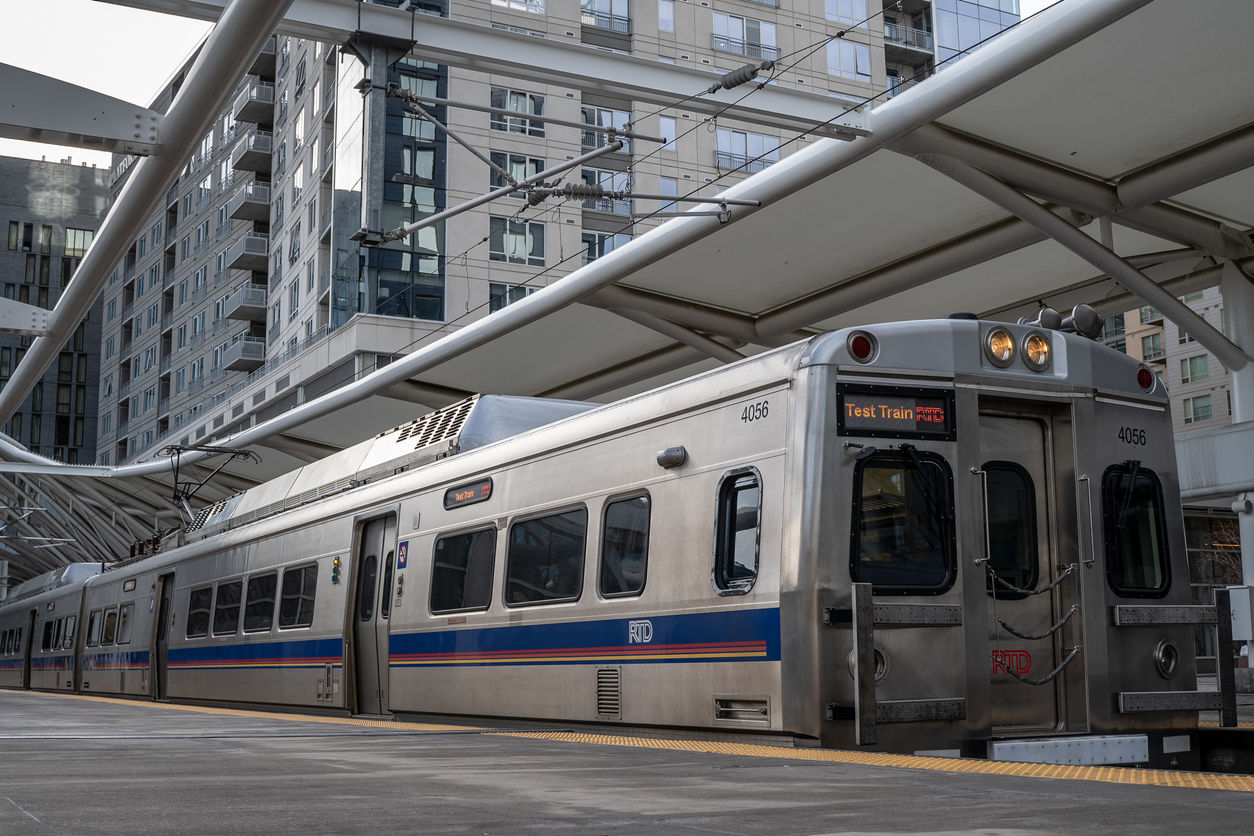

If there is one thing my kindly editor likes, (Ed: er…what?) it is op eds on the current situation in Washington, D.C. I’m sure he wants my thoughts on Mr. Trump and his upcoming impeachment (Ed: no, not really). He really wants me to write on Trump because there are only about 716 other columnists writing about the president and his 80-plus-tweet weekend. My editor really, really likes it when I comment on the goings on in D.C. and ignore Colorado Politics (Ed: look, we’ve talked about this…). But today I must disappoint him, as I intend to muse about what’s happening in our fair state. (Ed: well, that took a while, but ok).
Regular readers may recall my repeated rants on the importance of honor and honesty in all things, but especially in public works. So I could write my Tuesday column about the story in CP about the recently shuttered effort to recall Gov. Jared Polis (in hopes of undoing an election only six months after he took office), and that organization’s “ooppsie” when they apparently passed out leftover campaign funds to some of the folks involved in the effort. Or I could write about gun owners and the Red Flag law. Or I could try to sneak one by my kindly editor and write on Trump (Ed: don’t even think about it)
But instead, I will rail on a bit about a different story – taking the bus.
It’s been a very long time since I’ve taken the bus. I have a car, and I can drive myself where I need to go. When I was working up at the AF Academy, I drove up there every morning, and drove home every night. But for many people, that simple act is not an option, which is why Caitlin Curley’s article is an important one for everyone in Denver and the Front Range, and not just the folks who queue up daily for a ride.
It seems the Regional Transportation District is finding that revenues are falling well short of costs. The agency reports that in 2018 it took in $143 million, while costs were $777 million. They are looking at deficits of roughly $12 million each year from 2026 to 2040. It would seem they have a poor business model, and they need to raise fares or cut services or reduce assets. That just makes sense, right?
Well…
Many years ago, in college, I read the story of a village in South America with too many cats (Ed: dude…). They were becoming bothersome, so the village elders set about reducing the cat population. They were successful in essentially wiping out feral cats and all was well and good, until their houses fell down.
It seems the cats had been eating the rats, upon which lived fleas and other vermin. In that vermin group was a type of bug that ate, primarily, starches such as the straw thatch used to make the homes in the village. Wipe out the cats, the rats flourish, as do the critters that live on them, and bang, your house falls down. The point of that story was to stress both the interconnectedness of communities, and the dangers of overlooking those connections. In my old world of teaching political science, we talked about the “tragedy of the commons,” wherein those aspects of society that are seen as owned by everyone, such as the taxpayers, are the “commons” in which we do business, recreate (parks), and otherwise enjoy life. The problem is that no one has direct responsibility for the commons, and thus there is no natural advocate for such places.
I argue that bus service in Denver and the region is such a commons. The taxpayers “own” the RTD, but very few folks have a direct sense of ownership. Many benefit from the common good, in this case bus service, both directly and indirectly, but few see themselves as advocates for the RTD.
Many people can’t afford car payments, insurance, gas and parking fees, and the other costs associated with car ownership. Thus, every day (and every night for those on shift work) lots of people rely on the transit system to get them to and from work every day. Cutting the bus service to “save on costs” may end up costing more, as those who once relied on a bus now find themselves unemployed, and suddenly are on various forms of public assistance. Just like the cats in the thatch town, we are all connected, one to another.
And so, I’d urge you to think beyond the simple financial statement of the RTD and to resist the Trumpian (see? I got a reference in) notion of cutting the programs that help the less fortunate and to remember that ultimately, we all live in houses with thatched roofs. The only question is, do we have enough cats?
Hal Bidlack is a retired professor of political science and a retired Air Force lieutenant colonel who taught more than 17 years at the U.S. Air Force Academy in Colorado Springs.

Some pointed questions for the gubernatorial hopefuls | George Brauchler
George Brauchler
george-brauchler@gazette.com
Updated 15 hours ago
Earlier this month, the Republican and Democratic candidates for governor participated in a televised interview moderated by well-known, left-leaning legacy media folks. Predictably, the questions asked of the GOP candidates were more aggressive, pointed, biographical and almost entirely disconnected from...
Chaotic funding throws monkey wrench into governor’s-race money madness | Paula Noonan
Paula Noonan
paula-noonan@coloradopolitics.com
Updated 15 hours ago
Chaos Monkey, Inc., gave a trifle $20,000 donation to Rocky Mountain Way (RMW), the independent expenditure committee (IEC) supporting U.S. Sen. Michael Bennet for Colorado governor. But why, Coloradans should ask, would a guy who has assigned his contributor name...

Lindsay Datko on school safety, misconduct and transparency in Jeffco schools | The OpEdge Podcast
Tony Olivero
tony.olivero@gazette.com
Updated 2 days ago
Jeffco Kids First founder Lindsay Datko joins The OpEdge to explore concerns about school safety, staff misconduct and transparency in Jefferson County Schools. Datko tells host and investigative columnist Jimmy Sengenberger why she believes Colorado’s second-largest district has too often...

Candidate’s disturbing anti-animal agriculture history | Rachel Gabel
Rachel Gabel
rachel-gabel@coloradopolitics.com
Updated 4 days ago
Rep. Manny Rutinel has busted out a cowboy hat for campaign photos and has thrown it into the ring to represent Colorado’s 8th Congressional District in D.C. He is endorsed by U.S. Sen. Cory Booker, a New Jersey democrat who serves on the Committee...

Marx, Bottoms, a primary death wish for Colorado GOP | Dick Wadhams
Dick Wadhams
dick-wadhams@coloradopolitics.com
Updated 4 days ago
Colorado Republicans stand on the brink of total irrelevance and embarrassment if they nominate one of the two nonsensical, buffoonish candidates running for governor, Victor Marx and Scott Bottoms. Republicans are already in a very defensive, tenuous position as Democrats...

Remember the grassroots reason for DEI | Miller Hudson
Miller Hudson
miller-hudson@coloradopolitics.com
Updated 3 days ago
The Trump administration’s jihad against Diversity, Equity and Inclusion (DEI) programs has metastasized into the most unexpected corners of American life. Yet, before examining this policy “incursion,” it’s worthwhile to examine the roots of DEI which reach back more than...

Why I’m voting Democrat | Jon Caldara
Jon Caldara
jon-caldara@coloradopolitics.com
Updated 7 days ago
It makes no sense to be a Republican in Colorado. Or a Democrat for that matter. On the day I turned 18, even before I bought my first legal 3.2 beer (remember 3.2 beer?), I went to the courthouse and...

A primary brings out primal instincts | SONDERMANN
Eric Sondermann
eric-sondermann@coloradopolitics.com
Updated 7 days ago
There are no Stanley Cup finals or NBA title showdowns involving local teams this June. In their place, we are inundated with primary election campaign ads. Coloradans can be excused for missing the diversion and alternate programming. But life can...
Colorado’s role in Spirit Airlines’ demise should not be ignored | GUEST COLUMN
Colorado Politics
colorado-politics@coloradopolitics.com
Updated 7 days ago
By Robin Rossenfeld At a time when Colorado families are already struggling with rising transportation costs, the collapse of Spirit Airlines could not come at a worse moment. According to the U.S. Bureau of Labor Statistics, prices in the Denver-Aurora-Lakewood...
How would Weiser, Bottoms, Bennet, Kirkmeyer address Colorado’s affordability problem? | Paula Noonan
Paula Noonan
paula-noonan@coloradopolitics.com
Updated 7 days ago
It’s decision time in Colorado as primary election ballots hit mailboxes this week. Democrats will pick their candidates in every statewide race, and Republicans select candidates for governor and Attorney General. GOP operatives wanted to exclude unaffiliated voters from their...
PREV
PREVIOUS

OPINION | Colorado motorists still overwhelmingly opt for gas-powered vehicles
Tim Jackson Colorado’s new car and truck dealers succeed by understanding and meeting the needs and desires of the state’s consumers. We enthusiastically offer customers any vehicle technology that’s in demand. We steer clear of pushing consumers into vehicles they don’t want because we know that’s a recipe for failure. Ultimately, we trust Colorado consumers […]

SENGENBERGER | A legendary Colorado Republican bids adieu
Jimmy Sengenberger Colorado lost a national treasure last week. And I, like many, lost a dear friend. Mort Marks – husband, father, grandfather, mentor and a Colorado Republican godfather – passed away Sept. 23 at the age of 94. Among the many things Mort rightly had to be proud of, his service in World War II […]