

Deal between residents, developer could save Berkeley mortuary chapel before another Denver landmark debacle

Residents in Denver’s Berkeley neighborhood have sought historic landmark status for a local mortuary chapel that’s slated for demolition.
Now someone might buy it to save it from being razed and redeveloped.
Several people have made are or are making “serious offers” on the Olinger Moore Howard Chapel mortuary at 4345 W. 46th Ave., Tom Simmons told a Denver City Council committee Tuesday morning.
Simmons is one of three residents who applied for the historic designation against the wishes of the building’s owner, Howard Mortuaries & Cemeteries Corp. He’s also with the Historic Berkeley Regis neighborhood group.
Residents are working with the owner and developer to pause the city’s historic preservation process and come up with a plan to buy the parcel and redevelop or reuse the acre or so of parking space around the building, he said.
City Council members appeared optimistic about the proposed compromise, which comes in the wake of the controversy over Tom’s Diner.
“This application can actually be an example of how this process can move forward,” Councilwoman Amanda Sandoval said during the meeting of the Land Use, Transportation & Infrastructure Committee. “I think I can speak for everyone sitting here: Nobody wants to vote on an owner-opposed designation. It’s really divisive to the community.”
The committee voted to advance the proposed landmark designation for the mortuary chapel, with the hope that the developer, owner and residents can agree to a hiatus to make a deal before the designation heads to the full council for a public hearing later this month.
“We’ve been meeting with the neighborhood group to identify some ways forward,” said developer Carl Koelbel of Koelbel Urban Homes. “There is a proposal that we’ve put forward that we think offers some pretty major concessions on our side that would allow for a pause, and for neighborhood groups or other potential users for the building to come forward if they can meet the economic price.”
Denver’s Landmark Preservation Commission has recommended that the council approve the designation.
The mortuary chapel, which opened as Denver’s suburbs blossomed after World War II, has become a “focal point” of the neighborhood, said City Planner Kara Hahn. Its exterior boasts of architectural features rare to the area, including Gotchic and Tudor arches, a stained glass rose window and terracotta ornamentation.
While owner-opposed historic designations seldom come before the council, city officials are grappling with how to handle them since the heated controversy over Tom’s Diner.
When news surfaced that Tom Messina wanted to sell his 52-year-old diner on East Colfax Avenue to a developer, a group sought historic preservation status for the establishment.
The residents later withdrew that request, saying in a letter to the city’s Landmark Preservation Commission that they instead intended to work with Messina and the property owner to “find alternative solutions” for the site.
A city task force has proposed amendments to Denver’s landmark preservation ordinance that would allow more time for those involved to explore other options in such cases before the full council must decide on whether to OK an owner-opposed designation.
The task force also proposed adding a category of “culture” to the criteria considered when designating landmarks, to encourage residents to seek more landmark designations in racially and economically diverse neighborhoods.
Councilwoman Kendra Black is seeking support from her colleagues to add an amendment that would require a super-majority of the council, 10 of 13 votes, to approve a historic designation when the property owner disagrees.
But the committee voted 4-2, with Black and Councilman Christoper Herndon opposed, to advance the task force’s proposed changes to the full council without adding the amendment she suggested.
The council can still add Black’s recommendation, though, when it considers the task force’s proposals this fall or weighs changes to the ordinance once those amendments have passed.
Black said Councilwoman Stacie Gilmore also supports the super-majority requirement to pass an owner-opposed designation.
But other council members, including Robin Kniech and Sandoval, have said they don’t support the idea because it was not part of the consensus reached by the task force, which drafted its amendments over about 18 months.
“I have to support the work of the task force,” Sandoval told her colleagues.

Top officials in Arizona’s Maricopa County agree on how to oversee elections | OUT WEST ROUNDUP
The Associated Press
the-associated-press@coloradopolitics.com
Updated 4 days ago
ARIZONA Officials agree on election oversight PHOENIX — Election officials in Arizona’s most populous county reached an agreement a week before the state’s July 21 primary on how to jointly oversee the vote, ending a prolonged legal battle. Republican Maricopa...

Colorado Politics Calendar Aug. 3-9
Rachael Wright, Special to Colorado Politics
rachael.wright@coloradopolitics.com
Updated 4 days ago
CoPo’s weekly political calendar will help you find political and public-policy events throughout Colorado. It includes candidate and issue campaign events, public policy meetings, court hearings, state and local party conventions, assemblies, debates, rallies, parades, speaking engagements, traveling dignitary appearances,...

The primary political reform and precondition for all others | SONDERMANN
Eric Sondermann
eric-sondermann@coloradopolitics.com
Updated 4 days ago
In its current state, the American political system has no end of ailments. Far too many factors accelerate polarization and work against moderation and narrowing the differences. Media, and the way so many citizens limit themselves to agreeable, reinforcing sources,...
Susemihl wins surprise victory to replace Steve Durham as Colorado Springs state senator | A LOOK BACK
Rachael Wright, Special to Colorado Politics
rachael.wright@coloradopolitics.com
Updated 4 days ago
Forty-five years ago this week: In a closed session, the vacancy committee for Colorado’s Senate District 12 selected attorney Peter Susemihl to complete Sen. Steve Durham’s, R-Colorado Springs, term. Durham resigned his seat to become Region 8 Director of the...

10th Circuit partially revives lawsuit over 2020 Denver protest injuries
Michael Karlik
michael.karlik@coloradopolitics.com
Updated 2 days ago
The Colorado-based federal appeals court revived a man’s claims against Denver on Friday after concluding a trial judge resolved the case in the city’s favor without analyzing two of the three instances of alleged excessive force and other constitutional violations....

At conservative summit, Colorado Republican leaders concede Democrats’ election edge
Marissa Ventrelli
marissa.ventrelli@coloradopolitics.com
Updated 24 hours ago
Four Republican state lawmakers told attendees at a gathering of conservative leaders on Friday they doubt their party can win statewide races, noting that Colorado’s electorate has been shifting toward Democrats but adding they see an opening in several pockets....
Federal judges find Colorado immigration judge violated several orders
Michael Karlik
michael.karlik@coloradopolitics.com
Updated 18 hours ago
Multiple federal judges in Colorado have freed people from immigration custody after determining that one immigration judge violated their directives for properly conducting bond hearings. For nearly a year, Colorado’s U.S. District Court has faced a flood of habeas corpus petitions...
Q&A with Mike Pence | Former vice president says GOP’s populist turn from conservatism isn’t permanent
Ernest Luning
ernest.luning@coloradopolitics.com
Updated 21 hours ago
Former Vice President Mike Pence says he’s concerned that the Republican Party has taken a populist turn away from bedrock conservative principles during President Donald Trump’s second term, but he believes the party will return to its roots when Trump...

New federal plan sets short-term rules for Colorado River management
Marianne Goodland
marianne.goodland@coloradopolitics.com
Updated 2 days ago
Interior Department’s plan spares Colorado from mandatory cuts for now After years of stalled negotiations among the seven states that rely on the Colorado River, the federal government on Friday released its own plan for managing the drought-strained system. Calling...
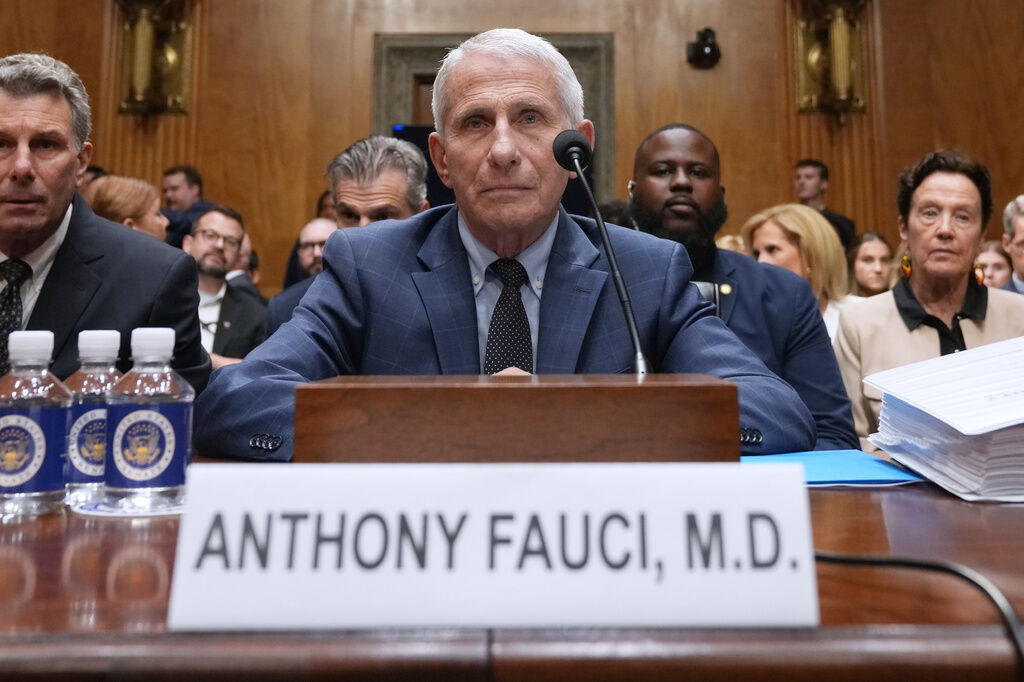
Fauci’s diary details blooming outrage toward ‘far right,’ softness toward Biden and China
Hudson Crozier
hudson.crozier@washingtonexaminer.com
Updated 2 days ago
Dr. Anthony Fauci increasingly railed against “far right” critics of his approach to COVID-19 issues while describing strong support from the Biden White House in his pandemic-era diary, which was recently released by Congress. The former National Institute of Allergy...
PREV
PREVIOUS

Greeley halts enforcement of pedestrian median ban after ACLU sues
The ACLU of Colorado filed a lawsuit Tuesday alleging that a Greeley ban is intended to target panhandlers, but that solicitation is speech protected by the First Amendment. Greeley’s Municipal code 11.01.809 says “no pedestrian may remain upon a median for longer than is reasonably necessary to cross the street.” When active, violators of the […]

Recall effort against 2 Democratic state senators ends; lawmakers seek to reform recall process
Efforts to recall Democratic state Sens. Pete Lee of Colorado Springs and Brittany Pettersen of Lakewood have come to an end. Just before 5 p.m. Tuesday, the Secretary of State’s Office announced that organizers of both recall efforts had notified the state that they would not turn in recall petition signatures collected for either senator. […]