

Q&A with Cheri Jahn | True to her district, true to herself

Cheri Jahn made waves at the state Capitol and headlines in the media when she became one of the few Colorado legislators ever to leave a political party while still in office.
The longtime Jefferson County lawmaker from Wheat Ridge had decamped from Democratic ranks in late 2017 not to join the “other” party but to serve out her last year in the state Senate as a member of Colorado’s biggest and fastest-growing voting bloc, the unaffiliated.
Though Jahn’s move didn’t come as a complete surprise given her moderate views, resistance to party-line votes and repute for working well with both sides of the aisle to advance policy, it still was an extraordinary event by the lights of the political set. Yet, her reasoning hardly seems controversial. The way she puts it in this week’s Q&A, it could be a tenet of textbook civics, a truism for good government and a standard for how all lawmakers should approach public office: “The first allegiance should be to their district, not a party.”
Term-limited after the 2018 legislative session, Jahn has taken up a new calling in the state’s movement to combat substance abuse while also assisting another movement – to cultivate and champion independent-minded candidates for office. Read on as she catches us up on those developments and more, and she elaborates on what it was like to be the “outsider” in her own party so she could get more done for the constituents inside her own legislative district.
Colorado Politics: One endeavor you have carried with you from your work in the legislature is combating substance abuse. Opioids have been getting the headlines in recent years, but of course the problem is a lot broader. Fill us in on your latest work on that issue, and tell us what you think needs to be accomplished next on the policy front in fighting substance abuse across Colorado.
Cheri Jahn: It was during my last two years serving in the legislature that it had really come to light that our state and the entire country were facing the greatest addiction threats we’d seen. We were facing horrific incidences of overdose deaths due to opioids and heroin as well as alcohol, which has been a very longtime problem in the addiction world.
My colleagues and I began meeting with experts on the magnitude of the problem and then what could be done to start addressing the issues. We made great strides in my last two years, and I became more educated and aware of the problem and shortcomings we faced in prevention, intervention, treatment and recovery. I’m grateful that the legislature has continued work on this issue.
There were and still are significant barriers to treating this issue and I’m thrilled to be able to continue working on an issue that I’m so passionate about. I am currently working with [the Colorado Providers Association], a trade association representing substance-use disorder prevention, intervention, treatment and recovery service providers. My work with the organization is to continue the public awareness of this epidemic of substance use throughout our communities and to help promote good policies so Colorado can continue being on the forefront for prevention, intervention, treatment and recovery.
While I still hear people say, “These people should just get clean,” or, “Maybe they just shouldn’t have started drugs in the first place,” I will say that the communities are starting to understand more about addictions. Understanding that many of the people with addiction issues were started on legal prescriptions given to them by doctors for injuries, post-surgery and dental procedures.
Alcohol has the highest number of addictions and hasn’t been properly addressed in the past since it is a legal substance. My hope is to continue with addressing the stigma around substance-use disorders and bringing awareness to communities.
Cheri Jahn
- Executive director, Colorado Providers Association, a trade association representing prevention, intervention, treatment and recovery providers; since November 2018.
- President & owner, Ascend Consulting & Government Affairs LLC; since June 2018.
- Served in the Colorado Senate, January 2011-January 2019; served in the Colorado House of Representatives, January 2001-January 2009.
- Owner-operator of Colorado Housekeeping Services LLC, 1977 to present.
- Holds a paralegal degree from the Community College of Denver.
CP: You declared your independence from the two-party system – registering unaffiliated your last year in the legislature – after a long tenure as a Democrat in the Colorado House and Senate. In a commentary published in Colorado Politics, you wrote of “the immense pressure legislators are under to fall in line” with party platforms and related interests’ priorities. Describe how that pressure conflicted with the realities of actually representing your district in the House and later the Senate.
Jahn: There is an immense pressure on legislators from both sides of the aisle when voting on legislation. I always believed that my first commitment was to serve my district where I was elected. What I found was pressure to vote how one or another interest group wanted the party to vote.
There were many times I just was not able to support legislation due to what I’ve always said, the devil is in the details. I quickly developed a reputation of needing facts, doing a lot of research on the topic, and talking to experts in my own district before I could determine my position on a bill. That isn’t what people wanted to hear on either side of an issue. The one thing people could always count on is the fact that I am straightforward and don’t walk the line.
It is true that outside interest groups play a big part in the legislative process through donations to campaigns. There’s always big money being given to the caucuses and campaigns, Democrat or Republican, so many times legislators are afraid to vote against them due to the threat they will not receive any funding from a particular group.
There were many times throughout my 16 years that a colleague would come to me and say they wished they had my guts to vote with a yes or a no but they needed this group or that group to support them in their next campaign.
I served with really great people; I just wish more would have stood up against the big money that comes into campaigns. It did make me an outsider many times but like I always told my kids, “At the end of the day, you always have to be true to yourself.”
In my mind, negotiating is never about winning or outsmarting the other side, it’s about finding common ground and creative solutions that benefit both parties. This is how you get good policy done. It’s about building relationships because everyone deserves respect even when they don’t agree.
A colleague may not be there on this proposal, but I guarantee you they will be there on others. I learned very quickly when I was first elected not to burn bridges. I became known as a bridge builder and I’m proud of that.
I wish both parties would take time to just sit and listen to independent/unaffiliated voters and ask many of them why they no longer belong to the Democrat or Republican party. I had the privilege and opportunity to sponsor some really meaningful, valuable legislation and when I left in 2018, I had maintained a 100% bipartisan record in the proposals I carried and passed.
CP: Unite Colorado, a relatively new project of which you are a part, aims to open up elections to unaffiliated candidates. You’d think that wouldn’t be a particularly tall task in a state where by far the largest voting bloc is registered unaffiliated. Yet, an unaffiliated candidate can’t seem to crack what some call the two-party duopoly in Colorado. Some of the barriers are statutory, but some are also attitudinal. Even unaffiliated voters seem to default either Republican or Democrat in the ballot choices.
What do you think will it take to turn the corner and open up the field to unaffiliated candidates? How close is an effort like Unite Colorado to achieving that goal?
Jahn: The unaffiliated voters in Colorado are at the highest percentages carrying over 40% of the votes. That being said, it really is a two-party system. One of the most important things to remember about unaffiliated voters is that they generally are not a one-party voter. They vote issues and candidates they can generally agree with on policies.
I think the big movement we see in trying to have more unaffiliated people run is due to the fact that the public is so tired of seeing bickering and disrespect and the fact that it really has become about party politics and not what is best for all people. I think it is more advantageous for organizations like Unite Colorado to focus on candidates who are perhaps Democrat or Republican but who are not on the extreme sides of issues as we see happening today.
CP: You were born Sterling on the eastern plains; owned and operated a housekeeping service; took a paralegal degree from the Community College of Denver, and of course represented Wheat Ridge for years in the legislature. Which is to say, you’re about as Middle American as a Coloradan can get. Your rep over the years at the statehouse was as one of the truly “real” people who served there – in what can be a surreal environment of hyper-ambitious and hyper-partisan pols.
Party and ideology aside, does the legislature need more “regular” Coloradans who just want to represent their districts on bread-and-butter issues, and fewer glory-bound overachievers?
Jahn: I think what the legislature needs more of is people who are passionate about their districts, which all elected officials are, but are willing to stand up and vote making the best interest of their district the priority. If it is a Democrat representing the district they were elected in because their values aligned on that side – and it is the same with Republicans – that should never mean an elected official should give up their autonomy and vote yay or nay on a measure because a special-interest group is demanding that. The first allegiance should be to their district, not a party.
There is a big difference between Denver and Jefferson County; between Denver and Logan County; between Pueblo and Delta County, for example. I want to see policy and district representation come back to being first when deciding how to vote on legislation.
CP: After years of representing swing districts at the Capitol, what do you think is the longer-term political trajectory of Colorado? Is our state going to go from blue to bluer and maybe even stay there -in line with changing demographics? Or, will the pendulum swing back as it has so often in the past in Colorado?
Jahn: There is always a trickle down when we look at what party is in the majority at the top levels like the president, U.S. Senate and Congress, and I’ve seen that, as the public is feeling about those policies and elected leaders, so goes state and local elections. We saw this play out in Colorado during the last election in 2018 when people showed such a dislike for the president.
The 2018 election was overwhelmingly supported on the Democrat side. I think the Democrats will hold the majority but would caution them not to take this last election as a mandate. Colorado is still very independent in its voting and also its policies. If (Democrats) venture too far to the left, I definitely think the pendulum will swing back around. Colorado is still very middle-of-the-road, and I hear from centered Democrats as well as unaffiliated voters that they think the Democrats could be on a road going too far to the left.
CP: Name a Colorado Republican and a Colorado Democrat, past or present, whom you especially admire and what it is, or was, about them that earned your respect.
Jahn: I have always admired former state Sen. Norma Anderson. She was a tough leader, knew how to get things done; she was a strong advocate for bringing people together. I met with her soon after I was elected to the House. She had a great reputation and was the majority leader for the Senate Republicans. I wanted to know how to work with everyone, including colleagues on the other side of the aisle, and really wanted an in-depth view of the inside process. She was very gracious when I called and asked for some of her time. I learned so much from her, and we became quite good friends. I still call her today, and we chat over lunch and both talk about how crazy things have become!
I have so much respect and gratitude for former state Sen. Lucia Guzman. She always wanted to know what I thought when big issues were coming before us. She always told me she appreciated hearing (from me) since I was much more to the center and from a very swing district. She genuinely cared about my thoughts and suggestions, and many times she would agree and make changes here and there to the legislation coming through. She and I had the opportunity to work on some really amazing legislation together, some being my most passionate, on the judicial system. She is a great listener, and her word was always her bond, and you have nothing at all down there if your word cannot be trusted. She believed strongly in working with the other side of the aisle and would ask my assistance when she needed it.
CP: Would you ever run for another elected office?
Jahn: It was a privilege serving in this great state and representing the district I really grew up in since moving to Wheat Ridge from Sterling when I was 13 years old. I very much love policy and bringing value to my community.
I remember one of the first big issues I had the pleasure of working on was passing a mill levy/bond issue for Jefferson County. They had been unable to pass one for quite some time. Larry Merkl (former Wheat Ridge Councilman) and I went to the board and told them that they could not pass it without the votes from the area east of Wadsworth, and they agreed. He and I made a commitment to take on this area in educating the voters by knocking on doors and talking to people. It was an incredible amount of work. We won the district needed and hence, passed the mill levy/bond measure and got a new middle school and grade school for our area. The two schools replaced had massive structural issues, so if the school district wasn’t interested in dealing with those issues, then the residents weren’t willing to pass a measure either.
That was the first big issue I took on and realized how much I loved being an advocate in my city. The rest is history.
I have been blessed and privileged to serve but my time has ended. I don’t see myself running for any further elected positions, but I’ll forever be grateful for the years I had.

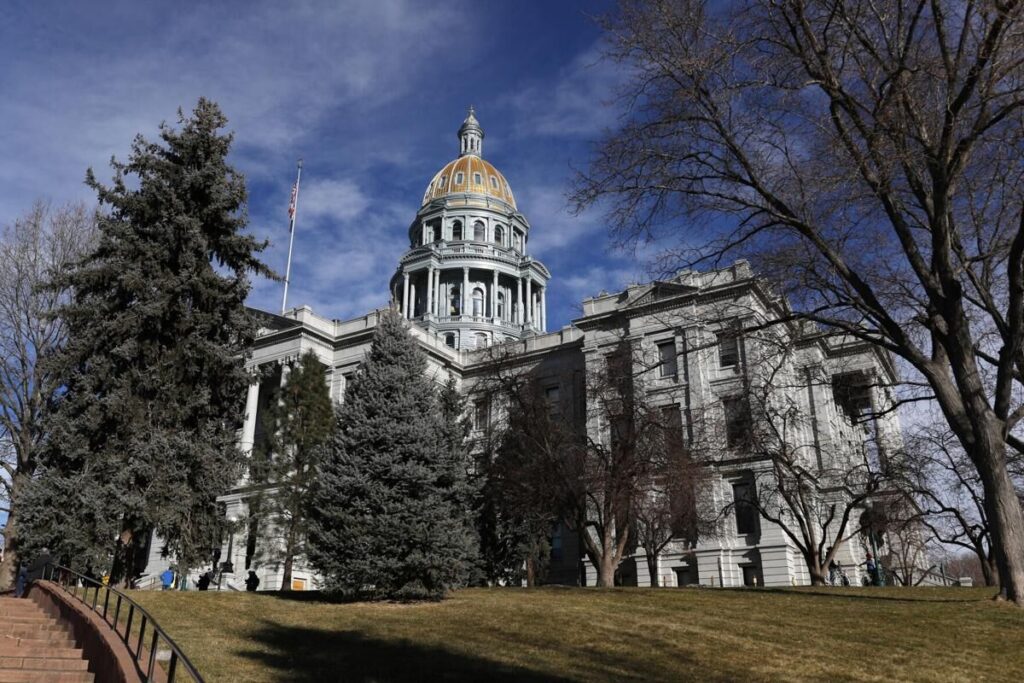
Colorado board permits state to appeal injunction against arthritis drug price cap
Marissa Ventrelli
marissa.ventrelli@coloradopolitics.com
Updated 13 hours ago
A Colorado board voted Friday to allow the Attorney General’s Office to fight an injunction against a price cap on a drug that treats arthritis. A U.S. district court judge had granted the company Amgen a preliminary injunction, temporarily blocking...

Federal judge rejects constitutional claims, ‘expressions of hatred’ by Club Q defendant
Michael Karlik
michael.karlik@coloradopolitics.com
Updated 12 hours ago
A federal judge rejected a defendant’s claims that he received constitutionally ineffective assistance of counsel while facing federal hate crime and firearms charges for murdering five people at a Colorado Springs LGBTQ nightclub in 2022. Anderson Lee Aldrich is serving...

Divided 10th Circuit upholds Colorado congestion fee on car rentals
Michael Karlik
michael.karlik@coloradopolitics.com
Updated 9 hours ago
The Denver-based federal appeals court concluded on Monday that a 2024 “congestion impact fee” that lawmakers imposed on short-term vehicle rentals did not conflict with a federal prohibition on certain airport-related charges. Beginning in the 1970s, Congress began limiting the...

Space Force should measure workforce needs as it prepares to double in size, GAO report says
Mary Shinn
mary-shinn@coloradopolitics.com
Updated 18 hours ago
The Space Force needs more people. It’s just not precisely sure how many more. A Government Accountability Office report released earlier this month found that the youngest and smallest military branch does not have a process to consistently or accurately...

Colorado schools receive $24 million for free meals program
Marissa Ventrelli
marissa.ventrelli@coloradopolitics.com
Updated 13 hours ago
The Colorado Department of Education is providing Colorado schools with nearly $24 million in grant funding to implement a free lunch program. Approved by voters in 2022, the Healthy School Meals for All provides free breakfast and lunch to all...

Secret Service agent placed on administrative leave after arrest for near-deadly hazing ritual
Claire Carter
claire.carter@washingtonexaminer.com
Updated 20 hours ago
A Miami Secret Service agent in Florida was placed on administrative leave following his arrest on Sunday in connection with a near-deadly hazing incident at a University of Miami fraternity. Marquez Christopher Pinder, 29, was arrested alongside two other individuals...
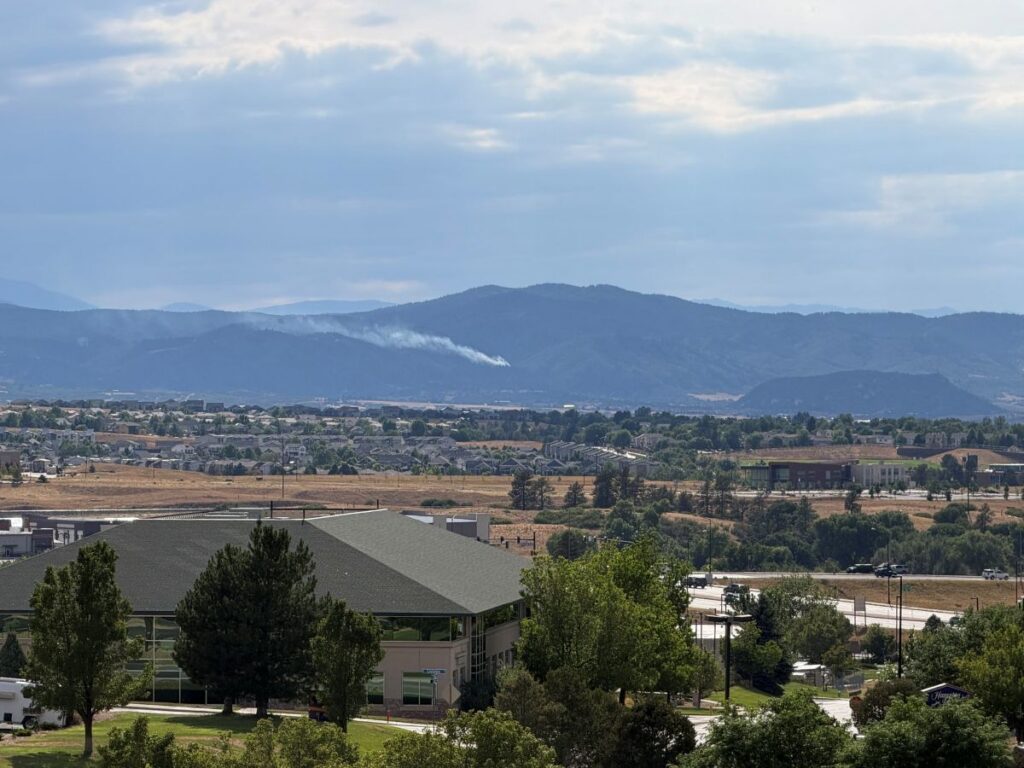
Forest fire west of Sedalia prompts evacuations in Douglas County
Nicholas Fogleman
nicholas.fogleman@denvergazette.com
Updated 22 hours ago
Emergency crews are responding to a forest fire burning west of Sedalia, prompting evacuation orders for nearby residents Sunday afternoon. At about 5 p.m. Sunday, the Douglas County Sheriff’s Office issued an evacuation order for residents within a 2-mile radius...

Airstrikes have paused and talks are pressing forward. But can the US and Iran take the off-ramp?
The Associated Press
the-associated-press@coloradopolitics.com
Updated 22 hours ago
WASHINGTON (AP) — The U.S. military has paused its airstrikes on Iran after nearly two weeks of intensifying bombing, while diplomatic efforts have pushed forward to try to avert a return to all-out war. But it remains to be seen...
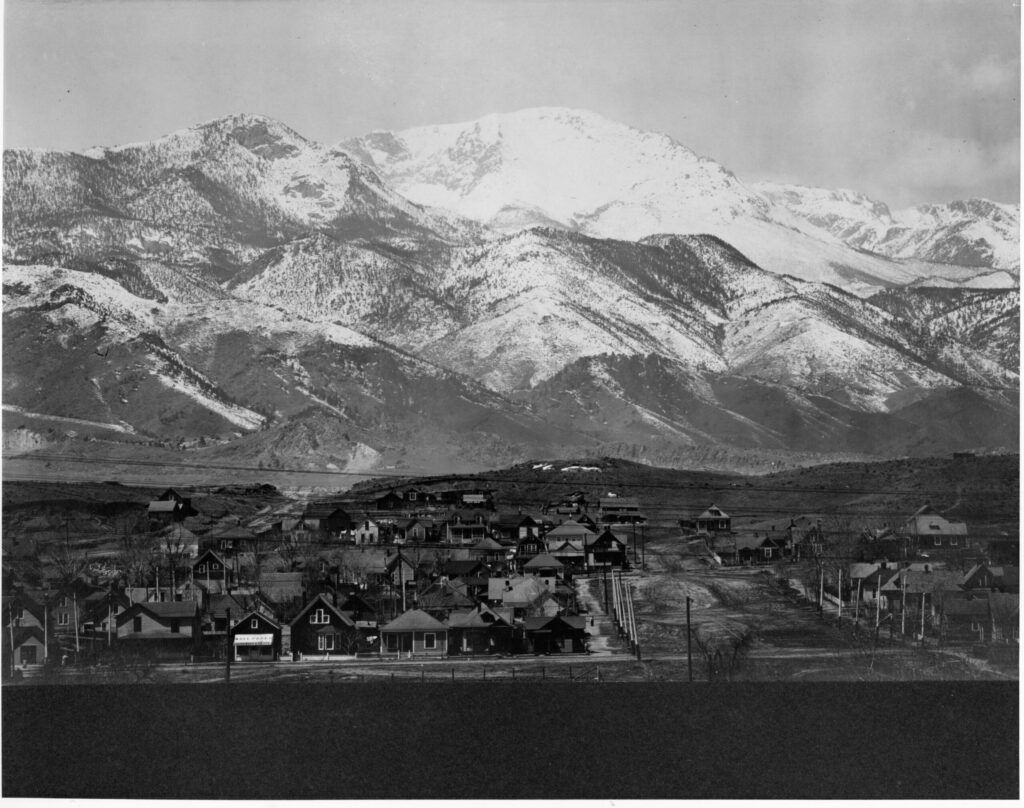
Penrose fortune paved the way for Colorado Springs to be a military, space and sports town
Mary Shinn
mary-shinn@coloradopolitics.com
Updated 22 hours ago
Colorado Springs is always working to catch the next big economic wave. “We’re always trying to figure out what the next thing is going to be,” explained Matt Mayberry, director of the Colorado Springs Pioneers Museum. In the early days,...
Colorado Politics Calendar July 27-Aug. 2
Rachael Wright, Special to Colorado Politics
rachael.wright@coloradopolitics.com
Updated 6 days ago
CoPo’s weekly political calendar will help you find political and public-policy events throughout Colorado. It includes candidate and issue campaign events, public policy meetings, court hearings, state and local party conventions, assemblies, debates, rallies, parades, speaking engagements, traveling dignitary appearances,...
PREV
PREVIOUS

Near Denver and elsewhere, wildlife now roams where US once forged its deadliest weapons
From Rocky Flats to a tiny Pacific island, from the Rocky Mountain Arsenal to a leafy Indiana forest, a handful of sites where the United States manufactured and tested some of the most lethal weapons known to humankind are now peaceful havens for wildlife. An astonishing array of animals and habitats flourished on six obsolete […]

Colorado Water Congress to convene this week in Steamboat Springs
The three-day annual summer conference of the Colorado Water Congress – the principle voice of the state’s water community – is coming up this week, with an agenda chock-full of discussions on the state’s water future. The conference in Steamboat Springs will launch with a look at agricultural policy that will include the state’s ag commissioner, Kate […]