

SLOAN | Putting the BLM right where it belongs — at last
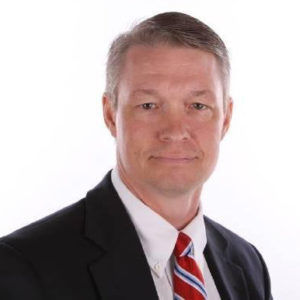
Cory Gardner, in what may be his greatest achievement to date as U.S. senator, announced early last week that the Bureau of Land Management was to dislodge itself from its moorings in Washington, D.C., and relocate amidst the land it manages.
It’s a rather remarkable event, insomuch as one of the more depressing constants in American governance is the centripetal migration of authority to Washington D.C. It is exceedingly rare to witness any part of the bureaucracy escape the gravitational pull of the capitol, much less a significant chunk like the BLM.
To place the agency’s HQ in the neighborhood of the communities it most directly impacts is more than merely symbolic, though the value of symbolism ought not be dismissed out of hand; having the director sleep, eat, and show up for work among the people whose lives his decisions will affect tacks on an element of accountability against which immersion in Washington D.C. insulates. This insulation is uniquely magnified in the case of the BLM – virtually all of the land the agency manages is west of Denver; only 10,000 of the 247 million acres under its purview are scattered east of the Mississippi River.
As one would expect, the news was received enthusiastically from most everyone in the state, and not always respective of party delineations; a bit surprising, perhaps, given the inclinations of Democrats to generally favor centralization of government. Nonetheless, Bennet actively supported the move, and even Gov. Polis expressed cheerful optimism, proving, happily, that geographic loyalty still occasionally outranks strict ideological considerations.
Predictably, and from the predictable circles, there was expressed discontent. Some of it could be chalked up to the simple fact that the agency went to Colorado rather another state. Congressman Raúl M. Grijalva (D-AZ), who happens to be chair of the House Natural Resources Committee, parroted the company line in opposing the move, saying that “the agency will lose a lot of good people because of this move, and I suspect that’s the administration’s real goal here.” He reportedly clarified that the “real goal” was to hand over all of BLM’s land to Exxon and Chevron. One suspects his opposition would be less robust were the agency to be relocated to, say, Flagstaff.
The environmental left chimed in, naturally. The Center for Western Priorities called the move a “PR stunt” that would deplete the agency of officials who didn’t want to move out of the Beltway. The ever-sensible Sierra Club called it “foolhardy.” Neither commented on the irony of groups who spent much of the last legislative session in Colorado clamoring ostensibly for “local control” of resource management now recoiling in horror at the prospect of it occurring.
A bevy of career bureaucrats from past Democratic administrations had objections as well, most, again, centering on the potential flight of officials repulsed at the thought of living in the hinterlands, and on concerns over the separation of the agency from Congress – a strange consternation, given that most of them spent their careers trying their best to make Congress irrelevant.
Another animadversion raised was the rather conspiratorial concern that the relocation is simply an opening move toward the transfer of federally-owned lands to the states – a concept spoken with undisguised contempt, much as one might describe a zoning permit for a puppy mill. Setting aside the fact that none of the proponents proffered that as a reason, like the rest of the arguments against, this one is tinted with a degree of arrogance; whatever the merits for or against local assumption of public lands (and certainly there are valid logistical concerns), the suggestion that only the types of people who want to live in Washington D.C. are capable of the task of managing land that others live on and, in some cases, have worked for generations, is heavy with insult.
Further, the collectivist notion that the BLM manages federal lands “for all Americans” is true only in the most abstract and theoretical sense. None but a microscopic percentage of Americans will ever even cast an eye on those lands, and the only benefit they would glean is from resource development – energy, livestock grazing, mining – the prohibition of which is the stated goal of the groups who most loudly make that claim.
The total number of positions being bused out of Washington as part of the move may not be of a particularly grand scale – 27 to the HQ in Grand Junction, another 54 to Lakewood; but the greater value may be in reminding Americans that the District of Columbia is not the center of the universe.
Kelly Sloan is a political and public affairs consultant and a recovering journalist based in Denver.

We have the chance to change Colorado’s cancer outcomes | PODIUM
Colorado Politics
colorado-politics@coloradopolitics.com
Updated 9 hours ago
By Erika Hanson Brown Colorado ranks among the healthiest states in the nation by nearly every measure. Yet even here — amid the Rocky Mountains and our deeply rooted culture of health and activity — cancer casts a long and...

Colorado has a playbook for youth mental health — our next governor must use it | GUEST COLUMN
Colorado Politics
colorado-politics@coloradopolitics.com
Updated 1 day ago
By Karen Ron-Li Liaw From the rural communities on the western slope to the eastern plains, to the major urban regions on the Front Range, Colorado families are navigating an all-too-familiar crisis: kids are struggling, and Colorado’s mental health system...

Pigs engineered to fight alpha-gal syndrome | Rachel Gabel
Rachel Gabel
rachel-gabel@coloradopolitics.com
Updated 2 days ago
If I were an evil genius trying to hamstring animal agriculture, I would create a fly that eats livestock alive and a tick whose bite and spit causes some people to have an allergic reaction to meat. (Insert evil laugh...

Registered voters on the eve of the 2026 primaries | Cronin & Loevy
Tom Cronin Bob Loevy
tom-cronin-bob-loevy@coloradopolitics.com
Updated 4 days ago
The Colorado Secretary of State’s Office has published the latest voter registration figures for the state and its counties as of June. Colorado ranks among the highest states for independent, or unaffiliated, voters. Only Alaska and Massachusetts have more. New Hampshire, New Jersey, Maine and Oregon also rank highly. So here...

A room for Sundance, a reality check for big-government Boulder | Jon Caldara
Jon Caldara
jon-caldara@coloradopolitics.com
Updated 5 days ago
There are few things more satisfying to watch than socialists getting mugged by reality. The Sundance Film Festival is invading my hometown of Boulder early next year. Sundance drew 85,000 attendees last year in Park City, Utah. Boulder’s hotel room...
Rep. Jeff Crank thinks Democrats are too focused on Trump, not enough on Colorado Springs | Vince Bzdek
Vince Bzdek
vince.bzdek@gazette.com
Updated 3 days ago
For U.S. Rep. Jeff Crank, who’s unopposed in the Republican primary for the 5th Congressional District but the main target of both candidates in the lively Democratic primary, the big question in the midterms is not who will stand up...
Does character matter anymore? | SONDERMANN
By Eric Sondermann
by-eric-sondermann@coloradopolitics.com
Updated 7 days ago
The last few weeks have been illuminating in the manner of a headlamp pointing the way to some deep, dark, murky netherworld. Graham Platner, a hero to the populist set on the Democratic side, became his party’s Senate nominee in...

Private equity has no place in health care | GUEST COLUMN
Colorado Politics
colorado-politics@coloradopolitics.com
Updated 5 days ago
By Miah Ntepp Of all the financial pressures placed on working people in this country, the skyrocketing costs of health care rank near the top. As families struggle under the cuts to Medicaid made by the Trump administration, they are...
Some pointed questions for the gubernatorial hopefuls | George Brauchler
George Brauchler
george-brauchler@gazette.com
Updated 6 days ago
Earlier this month, the Republican and Democratic candidates for governor participated in a televised interview moderated by well-known, left-leaning legacy media folks. Predictably, the questions asked of the GOP candidates were more aggressive, pointed, biographical and almost entirely disconnected from...
Chaotic funding throws monkey wrench into governor’s-race money madness | Paula Noonan
Paula Noonan
paula-noonan@coloradopolitics.com
Updated 6 days ago
Chaos Monkey, Inc., gave a trifle $20,000 donation to Rocky Mountain Way (RMW), the independent expenditure committee (IEC) supporting U.S. Sen. Michael Bennet for Colorado governor. But why, Coloradans should ask, would a guy who has assigned his contributor name...
PREV
PREVIOUS
NOONAN | Even under new law, change will come slowly to oil & gas regulation
Paula Noonan If anyone in the Broomfield area heard a loud ba-boom recently, it’s because there was a loose cannon wheeling around the area representing the Colorado Oil and Gas Conservation Commission (COGCC) trying to explain what the commission is doing before it gets around to what it’s supposed to do. Senate Bill 181 established […]

BIDLACK | It's time to abolish the recall in Colorado
Hal Bidlack Jared Polis once gave me a box of candy, so maybe I’m sweet on him and his administration because of confectionary bribery. You see, back when I ran for the U.S. House District 5 in 2008, and Jared was running in District 2, I attended one of his events as a favor and […]