

BIDLACK | The demise of pensions casts doubt on the future for workers

There are few things that get people as excited as talking about theories of economics, right? I mean, who doesn’t love talking about supply and demand, coupled with actions by the Fed to stabilize both M1 and M2?
Ok, I get it, economics can be pretty dull, all while being one of the most important things undergirding most Americans’ daily lives. Small economic policy changes, whether by law, executive action, court ruling or other economic actors, can create significant impacts on the pocketbooks of large numbers of Americans.
Which brings us, quite naturally, to my military career. You see, the smartest thing I ever did, I did by accident. Similarly, the minor story reported on page 26 of the newspaper may turn out to be, in hindsight, the most important story of the day.
Both those thoughts occurred to me when I read the Colorado Politics story about a change in governmental policy that was announced with no fanfare or fuss. It seems that in early March, the U.S. Department of the Treasury quietly changed a rule to permit companies that had been offering traditional pensions to dump those pensions (and the decades of responsibility that came with them) by giving retired workers a lump sum payment to “buy out” the pension of said workers.
The smartest thing I did was stay on active duty for over 25 years. I initially joined the Air Force, after ROTC in college, with a plan to stay for a tour or so, out of a sense of duty to the country that had allowed me to grow up in a middle-class society in Ann Arbor, Michigan. I overcame, well, not much, in life, and I felt it proper to “pay back” my great country with a few years of military service.
Then I blinked, and it was 25 years later, and I was retiring.
I very much enjoyed my military time and I got to do and see some amazing things. And a military pension was, at least in the first few years, the farthest thing from my mind.
I think that my indifference to the pension plan, at least at first, was due in part to my growing up in southeast Michigan. Our fourth-grade school trip was to the GM plant in Detroit to watch cars being made. We did entire units on the auto industry (I still remember there were 11 major steps to final assembly of a car). I flew my R/C airplanes with lots of Ford workers, who had great union jobs and good pension plans. Being taken care of in your old age by the company you served for decades was normal.
Back in 1980, 92 percent of private savings plans were employer driven and looked a lot like a pension. But just 30-plus years later, better than three-quarters of retirement plans converted to an employee-driven system, most often a 401 (k) plan. Most Americans now work within a system wherein their retirement future is largely dependent on their own willingness to shift a chunk of each paycheck into a savings account. And we Americans are notoriously short-sighted when it comes to saving for our retirements.
Which brings me to the “minor story” that is anything but minor. The aforementioned Treasury Department policy change does not seem likely to be in the retiree’s best interest. Companies can dump their responsibility for the future with a lump sum payment now. And how likely do we think it is that the lump sum payment, calculated by the company, will actually reflect what the retiree would have gotten over the years, especially when they live long lives? And people are people – the allure of what seems like a really big check right now may seem like a siren song, but alas, in the out years, when that money is gone more quickly than expected, well, let’s just say times will be rough for lots of old people (I am so fortunate to have earned a military pension that can’t be bought out).
And why are companies doing this? Because pensions are big expenses to companies, and Wall Street likes companies with lean, efficient business models. I urge you to read the entire article, even though it is from CNN (I tossed that in to irritate my conservative friends). It’s eye-opening.
Mr. Trump is continuing his war on the middle class, which may help if you are already rich, but if you are a “working Joe or Jane” you need to pay attention. Sometimes the most important story isn’t the one with the biggest headline.
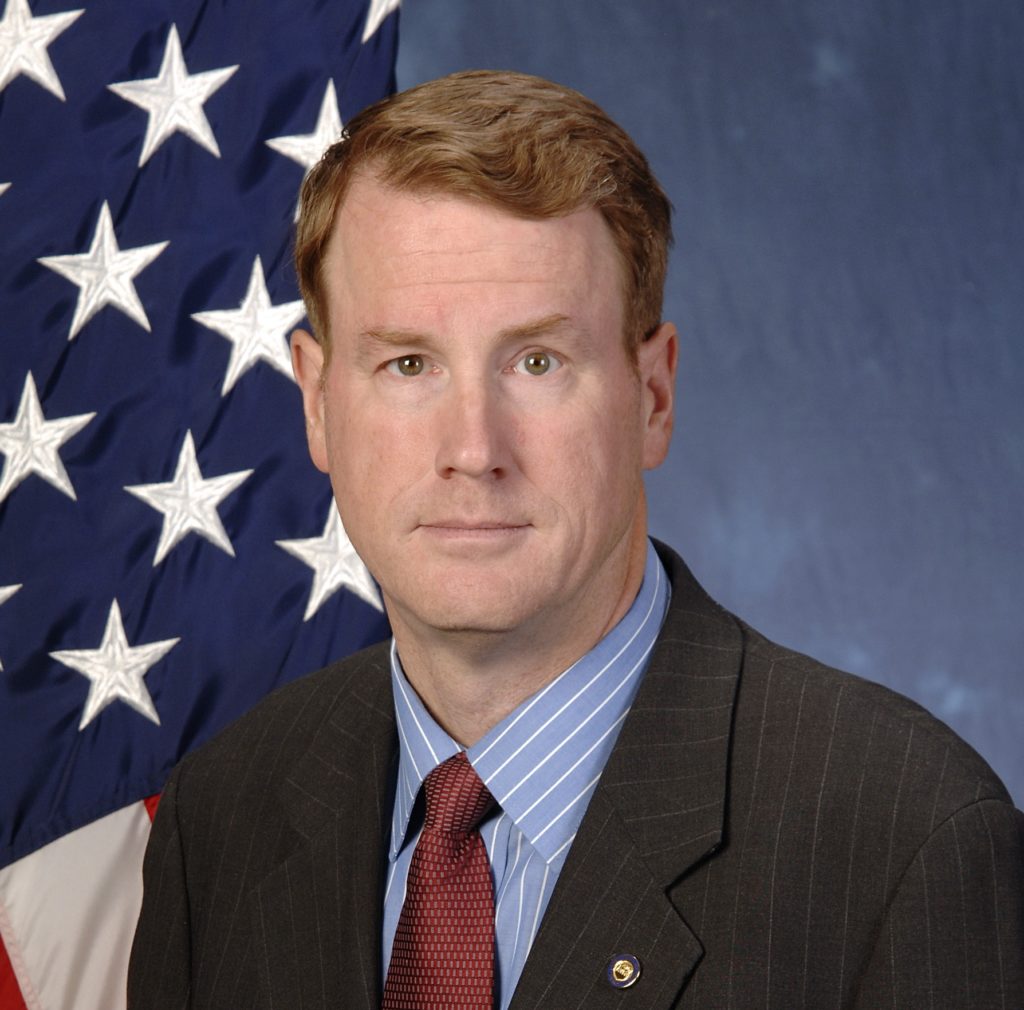
Hal Bidlack is a retired professor of political science and a retired Air Force lieutenant colonel who taught more than 17 years at the U.S. Air Force Academy in Colorado Springs.

Colorado’s precarious position protecting from wildfires | Paula Noonan
Paula Noonan
paula-noonan@coloradopolitics.com
Updated 2 hours ago
Fourteen firefighters died in the Storm King Mountain fire west of Glenwood Springs in 1994 when 2,115 acres burned. In August 2020, the Grizzly Creek fire burned 32,631 acres along the Interstate 70 corridor east of Glenwood causing mudslides from flooding...

We must deliver on cost of living | GUEST COLUMN
Colorado Politics
colorado-politics@coloradopolitics.com
Updated 2 hours ago
By Ryan Gonzalez Insurance premiums are on the rise. Property taxes are increasing. Groceries are becoming more expensive. Gas prices are reaching record levels. Housing costs are becoming unsustainable. These are the concerns I hear from people in my district....

Dan Haley on the role of oil and gas in Colorado’s energy future | The OpEdge Podcast
Tony Olivero
tony.olivero@gazette.com
Updated 11 hours ago
Dan Haley, executive director of Coloradans for Responsible Energy Development, joins The OpEdge to discuss the role of oil and natural gas in Colorado’s energy future amid the state’s aggressive push toward “net zero.” Haley tells host and investigative columnist...

Rural hospitals don’t want special treatment, just a chance to care for locals | PODIUM
Colorado Politics
colorado-politics@coloradopolitics.com
Updated 1 day ago
By Kevin Stansbury As chief executive of Lincoln Health, my responsibility is simple: ensure the people of eastern Colorado have access to high-quality healthcare close to home when they need it most. That mission has never been easy. Rural hospitals...
Blue states should avoid disasters | Hal Bidlack
Hal Bidlack
hal-bidlack@coloradopolitics.com
Updated 2 days ago
Back when I was teaching political science at the U.S. Air Force Academy (and amazingly to me, a week from this column’s publication will mark 20 years since my retirement from active duty. Where the heck did that time go?)...
Right-to-hunt ballot measure’s a cruel, anti-wildlife solution to a nonexistent problem | GUEST COLUMN
Colorado Politics
colorado-politics@coloradopolitics.com
Updated 2 days ago
By Eric Washburn I love to hunt. Every year I try to hunt big game in Colorado and waterfowl in Louisiana. This year, I applied for five Colorado big game licenses — elk, deer, pronghorn, moose and bighorn sheep. I...

Jena Griswold’s record: corruption, incompetence | Dick Wadhams
Dick Wadhams
dick-wadhams@coloradopolitics.com
Updated 5 days ago
There is no statewide elected official going back decades who is as breathtakingly corrupt and incompetent as Secretary of State Jena Griswold, who is now running for attorney general of all things. And compliant ruling Democrats know it. Their silence...

Kiros exudes why Colorado’s political times are a-changin’ at annual Denver Dems gala | Miller Hudson
Miller Hudson
miller-hudson@coloradopolitics.com
Updated 5 days ago
Among Colorado’s few remaining bipartisan rituals are county and state party dinners. I was particularly intrigued by last week’s Denver Democratic Party’s 2026 Annual Gala, a “New Deal for a New Era.” Their glossy program featured an artist’s Technicolor rendering...

Livestock grazing regulations need flexible updates | Rachel Gabel
Rachel Gabel
rachel-gabel@coloradopolitics.com
Updated 5 days ago
The Bureau of Land Management last updated their livestock grazing regulations the year I graduated from high school. I am 49. Assessing rangeland health can’t be done once and not revisited. This year is a prime example that managers must...

Taxpayers donate to tax increase campaign | Jon Caldara
Jon Caldara
jon-caldara@coloradopolitics.com
Updated 6 days ago
Give the man his due. President Donald Trump has undeniable talents. Colorado politicians are learning. Chief among The Don’s skills is taking the self-serving, ethically dubious behavior of previous politicians and putting it on steroids. Or, to borrow from the...
PREV
PREVIOUS
OPINION | Docking pay to collect debt digs a hole for poor Coloradans; reform is on the way
Bob Connelly If someone hasn’t been keeping up with bill payments, a creditor can go to court to try to collect the debt. If successful, the creditor will obtain a court order requiring that the entire debt be repaid, plus interest at a high rate. At that point, the creditor can start a garnishment action […]

HUDSON | Another workaround on TABOR, anyone?
Miller Hudson It is a challenge to fully apprehend the ingenuity of Colorado’s schemes for evading TABOR fiscal restrictions. Doing so would devour this entire column and then some. Two of the largest evasions, which frame the quarter century since 1992’s voter approval, are Colorado opportunity grants and the hospital provider fee. Higher education institutions […]