

Lawmakers plan to ask Colorado voters to end TABOR refunds (VIDEO)

Colorado lawmakers want to ask voters for an end to refunding excess tax revenue so that it can be spent on the state’s roads and schools.
A bill being introduced Wednesday would put a question on the November ballot asking voters to let the state keep revenue it otherwise would have to refund under the 1992 Taxpayer’s Bill of Rights, House Speaker KC Becker of Boulder said.
A companion bill would allocate a third of any excess revenue equally to transportation infrastructure, K-12 schools and higher education each year.
Coloradans voted in 2005 for a five-year time-out on TABOR refunds. The Democrats’ proposal would make that permanent if approved by voters, Becker said.
Becker called it “a common sense first step,” but not a permanent solution, to funding schools and roads that have been underfunded for years because of TABOR which requires voter approval to raise taxes.
Democratic Sen. Lois Court of Denver and Republican Sen. Kevin Priola of Henderson, who joined Becker in announcing the initiative, said they hoped to build bipartisan support in the Democratic-controlled Legislature. Becker read a message from Democratic Gov. Jared Polis endorsing it.
Colorado voters consistently have rejected ballot measures asking them to raise state taxes for education and other priorities. In November, they defeated an education tax hike and competing measures to raise money for the state’s deteriorating roads.
TABOR, a constitutional amendment, allows government to ask voters to raise taxes or keep excess revenue, and many local municipalities have done so. In November, voters in suburban Lakewood authorized the city to keep excess revenue for public safety and other purposes.
TABOR sets an annual revenue limit that can trigger tax refunds based on a formula that involves population and inflation. It’s blamed by many Democrats for contributing to a $9 billion backlog in road projects and a multimillion-dollar debt to schools – all at a time when Colorado’s economy is one of the nation’s strongest.
Colorado Republicans, in contrast, credit TABOR and its tax limits for the strong economy.
Republicans began this legislative session wanting to build on a bipartisan effort last year that could generate $2.8 billion for transportation through bonding and direct spending. That measure will go before voters in November. If it fails, a 2017 law kicks in authorizing $1.9 billion in bonding for roads.
Priola said he hopes to generate Republican support for Wednesday’s initiative. He noted that Colorado hasn’t raised its 22-cents per gallon gasoline tax, a primary funding source for roads, since 1993.
“The power of TABOR is that you can go to the voters and let the voters decide,” Priola said.
The measure approved by voters in 2005, known as Referendum C, allowed the state to hold onto revenue that exceeded the state’s TABOR cap for five years.
Transportation advocates, such as Sandra Hagen Solin of Fix Colorado Roads, said Becker’s proposal is a “cherry on top” of anything we can get in funding but not the solution.
Still, she said, “We’re encouraged by any effort to direct additional funds to transportation.”
The Colorado Department of Transportation estimates it needs $9 billion over the next decade for its wish list of major road and bridge projects. The 2019-20 state budget scheduled to be introduced next week includes about $30 million for transportation, which Solin called a drop in the bucket.
She doesn’t expect to see transportation to rise on Polis’ priority list, at least this year.
Estimates on how much would be available from Becker’s “Son of Ref C” measure differ.
The governor’s Office of State Planning and Budgeting has a rosier projection of around $350 million in 2019-20 and as much as $700 million the following year.
The General Assembly’s economists are pretty close on that $350 million for 2019-20, but that’s where they diverge. They don’t believe there will be any surplus available in 2020-21.
Solin said the latest forecast shows there will be little if anything available for higher education, education and transportation past this next budget year.
And that’s the problem, Solin told Colorado Politics. This is only one-time money, she said and intermittent at that, which means the state can’t bond against it or rely on it for large-dollar transportation projects. “It won’t make a meaningful dent,” she said, in the state’s $9 billion transportation backlog.
The state budget should include a more meaningful amount of money for transportation, coupled with a continued discussion of new revenue sources, she said.
“We’ve engaged in discussions with leaders on what that looks like, and whether they’re ready for prime time this legislative session or next remains to be seen,” Solin said.
“We have to recommit ourselves to making transportation funding a priority in this state,” but it’s not a top priority for the governor, at least for now, she added. “Once he’s able to check the box on the things he’s had as his highest priorities, he can re-focus some energy around transportation.”
The hope for bipartisan support already may have hit a roadblock. House Minority Leader Republican Patrick Neville of Castle Rock sent out a news release that claimed the measure would spell the “ELIMINATION” of TABOR.
“Democrats can’t pay for all of their empty promises made in the last election, so now they want to permanently eliminate your tax refunds to pay for their expensive programs,” Neville said. “It is egregious that the Democrats want to forever take away your consent on what is done with your tax dollars.”
The Associated Press contributed to this report.


Colorado House pass bill raising threshold for agriculture overtime by one vote
Marianne Goodland
marianne.goodland@coloradopolitics.com
Updated 3 hours ago
The bill that would raise the overtime threshold for overtime pay for certain agricultural workers won the narrowest of votes Thursday in the Colorado House. Senate Bill 121 won a 33-32 vote, a dramatic difference from votes cast Wednesday on...
Colorado’s $46.8 billion budget nears finish line
Marianne Goodland
marianne.goodland@coloradopolitics.com
Updated 5 hours ago
The Colorado Senate on Thursday voted largely along party lines to approve $46.8 billion in spending for the next state budget. The spending plan is bigger than what legislators originally approved for the current fiscal year’s budget, driven by increases...
Colorado Senate passes bill for voluntary $5 fee to fund wildlife crossings
Scott Weiser
scott.weiser@gazette.com
Updated 5 hours ago
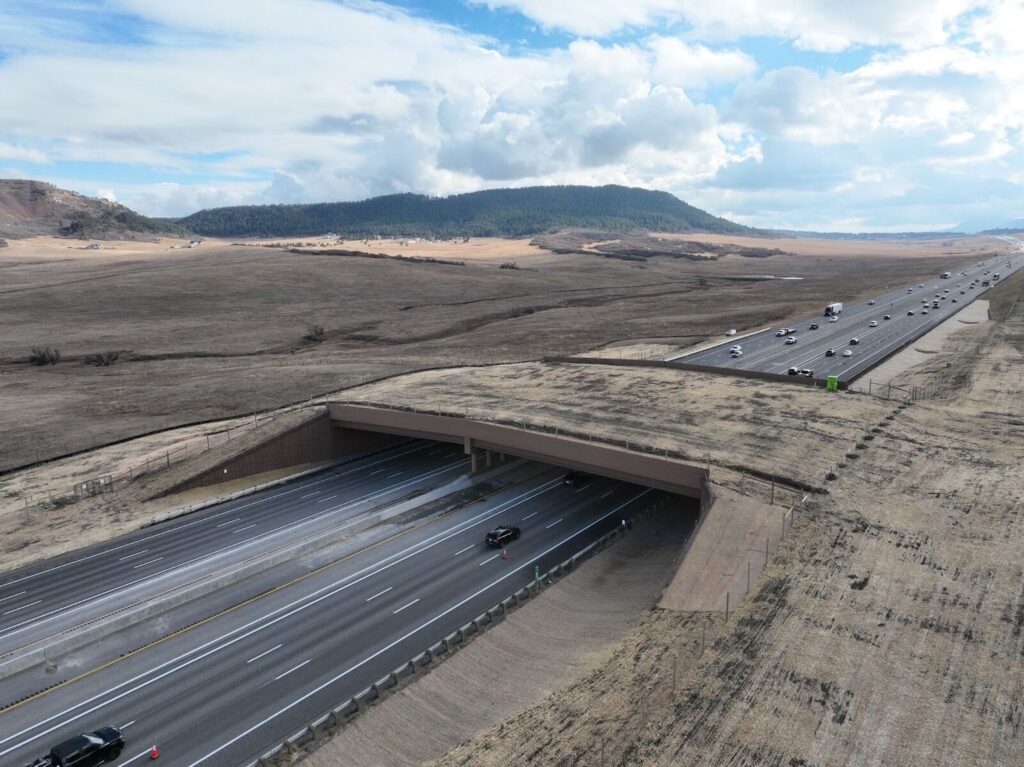
The Colorado Senate approved bipartisan legislation allowing drivers to voluntarily pay an extra $5 when registering their vehicles to help finance wildlife crossings and reduce the growing number of dangerous collisions between cars and animals on state highways. In 2024...
A proposed Democratic bill would make taking Colorado workers’ IDs a crime
Marissa Ventrelli
marissa.ventrelli@coloradopolitics.com
Updated 6 hours ago
After a narrow 6–5 vote, a bill to bar employers from taking workers’ identification documents is moving to the full Colorado House, sparking questions about how often such intimidation occurs and whether a new state law is necessary. House Bill...
House rejects effort to withdraw US forces from the Iran war as Republicans stick with Trump
Kevin Freking
kevin.freking@associatedpress.com
Updated 10 hours ago
WASHINGTON (AP) — The House rejected a resolution Thursday requiring President Donald Trump to withdraw U.S. forces from the war with Iran unless Congress authorizes military action. It was the latest such vote that fell short of passage as Republicans...
9 Colorado hospitals at risk of closing due to Medicaid cuts
Nico Brambila
nico.brambila@denvergazette.com
Updated 11 hours ago
The $900 billion in Medicaid cuts over the next decade could threaten the viability of more than 400 hospitals nationally and at least nine in Colorado, a new report has found. The hospitals span the Front Range and rural communities,...
Democrats vow to block next Trump Supreme Court pick amid Alito speculation
Ramsey Touchberry, Washington Examiner
ramsey.touchberry.washington.examiner@gazetteedit.wpenginepowered.com
Updated 11 hours ago
Justice Samuel Alito hasn’t tipped his hat on retiring just yet, but Senate Democrats are already entrenched in opposing the confirmation of a successor that would deliver President Donald Trump his fourth lifetime appointment to the high court. Democrats need...
Lakewood mayor calls for unity, community in State of the City speech
Sage Kelley
sage.kelley@denvergazette.com
Updated 12 hours ago
Lakewood held its first State of the City address since 2018 on Wednesday — timing Mayor Wendi Strom attributed to fate. “We got bumped a few times on dates,” Strom said to a room of nearly 100 residents and officials....
Colorado Senate reworks key programs, gives preliminary nod to $46B budget
Marianne Goodland
marianne.goodland@coloradopolitics.com
Updated 12 hours ago
With the Senate’s traditional Budget Day barbecue setting a lighter tone, lawmakers worked through the $46.8 billion state budget Wednesday, navigating a long list of amendments but avoiding the partisan clashes that defined the House debate last week. The Senate...
Colorado budget plan seeks to keep $306 million by canceling TABOR refunds
Marianne Goodland
marianne.goodland@coloradopolitics.com
Updated 12 hours ago
Tucked deep within the hundreds of pages of the proposed $46.8 billion 2026–27 state budget is a line item showing $306.1 million in savings — achieved by canceling Taxpayer’s Bill of Rights refunds. Gov. Jared Polis has recommended withholding TABOR...
PREV
PREVIOUS

Family medical leave bill gets first real hearing but stalls over amendments
The Senate Finance Committee hearing on Senate Bill 188 Tuesday took a very different look than the hearing in the Senate Business, Labor and Technology Committee a week ago. For one thing, people who opposed the bill finally got to testify against it on the record. Tuesday night’s seven-and-a-half hour hearing on the FAMLI family medical […]

Hancock tops fundraising in Denver mayor's race with $1.5 million
Denver Mayor Michael Hancock has built a commanding lead over his challengers in campaign fundraising, amassing more than $1.5 million, this week’s finance reports show. That’s more than double the combined money raised by his five rivals. It’s $882,000 more than money collected by Jamie Giellis, Penfield Tate III, Lisa Calderon, Kalyn Rose Heffernan and […]