

Colorado bill would let school boards meet privately on negotiating strategy
To undo a perceived disadvantage for public entities, a state legislative committee on Tuesday advanced a bill allowing Colorado school boards to meet privately to prepare for employee bargaining sessions.
Backers say House Bill 1201 closes a loophole created by a 2014 voter-approved measure that requires school districts and unions to conduct bargaining sessions in public.
The Independence Institute, a libertarian think tank, advocated for that measure, called Proposition 104, which opened employee contract bargaining sessions to the public. Because administrators, rather than elected board members, typically negotiate with teacher unions, bargaining usually took place behind closed doors before the proposition passed.
The institute has not opposed the bill that passed the committee Tuesday.
In 2014, school board members warned that the new law would make it tough for boards to agree on terms before bargaining begins.
Since then, most school boards have operated under the presumption that the law bans private meetings to discuss bargaining strategy. Unions, on the other hand, as private entities aren’t covered by open meetings laws and don’t have to meet in public to discuss negotiations.
Bill sponsor state Rep. Jim Wilson, a Salida Republican, likened the current situation to an unfair poker game.
“The other side already knows where you are, where you’re coming from, what you’re dealing with,” he said. “Knowing what the other person at the table has in their hand makes the game a little lopsided.”
Wilson is a former school superintendent. The other House sponsor, state Rep. Cathy Kipp, a Fort Collins Democrat, is a former school board member.
Ron Mitchell, Jeffco Public Schools board president, agreed that school boards are at a disadvantage when talking with administrators in public meetings about upcoming negotiations.
“We try to advise our team,” he said. “We are very general with our instructions to our bargaining team. At the same time, the other team is sitting in the room either recording it or listening to it.”
For example, if a school board publicly indicates agreement to certain concessions in advance of negotiations, Mitchell said, a union might add other items to its list of objectives.
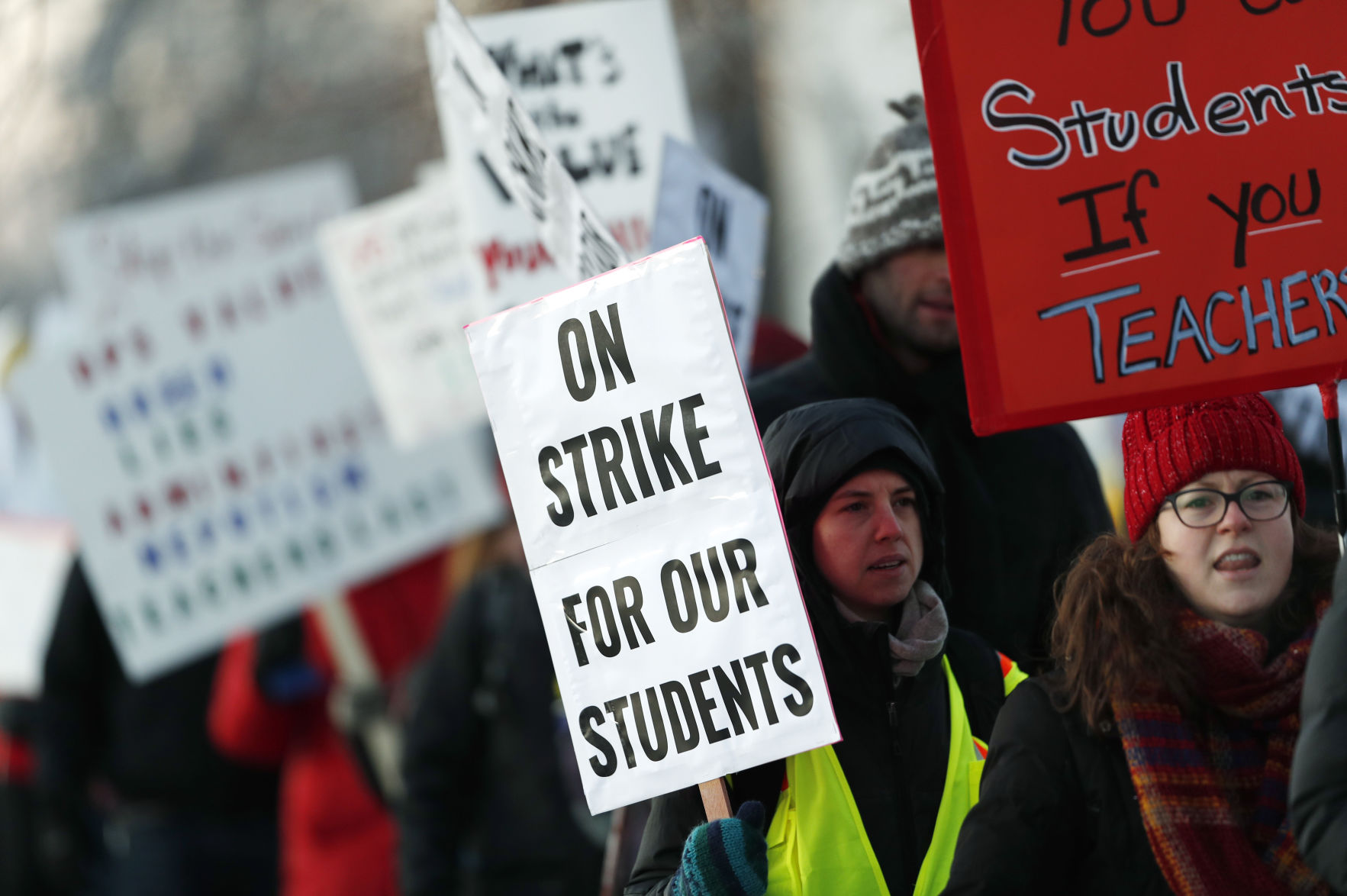
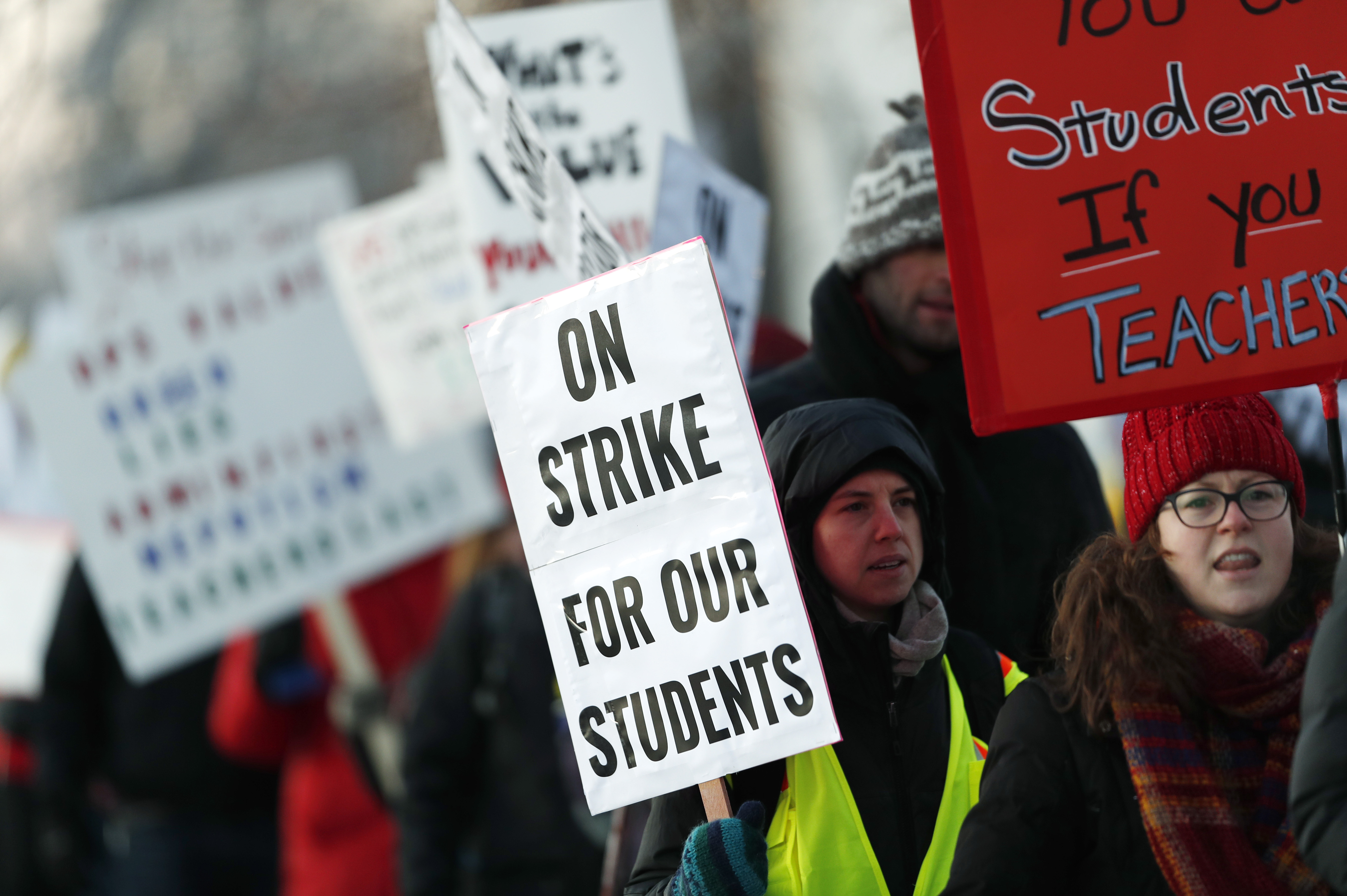
In the recent Denver teacher strike, school board members publicly expressed support for paying incentives to teachers at high-poverty schools, a key district priority, but they did not otherwise discuss strategy or areas of potential compromise. For more strategic aspects of the negotiations, the district team met with board members two at a time to avoid violating restrictions on executive sessions.
“So the board didn’t get the benefit of having a full board discussion to inform directors’ feedback on negotiation strategy,” district spokesperson Anna Alejo said in an email.
Marathon bargaining sessions, often packed with red-shirted teachers who loudly booed or cheered speakers, did take place in public – though most of the final hours of negotiations occurred with the bargaining teams in separate rooms communicating via a mediator out of earshot of the audience.
Jon Caldara, executive director of the Independence Institute, said even though the institute doesn’t oppose the new bill, he doesn’t think it is needed.
“I think it’s unnecessary because 104 doesn’t prevent school boards from having strategy sessions just like they do any other executive sessions,” Caldara said. “If school boards feel they need more clarification on that, by all means. It’s a silly thing to say they can’t do it already.”
Legislative analysts who reviewed Proposition 104 said the interpretation was ambiguous.
The Colorado Education Association, the state’s largest teachers union, agrees with the intent behind the bill, said CEA President Amie Baca-Oehlert.
However, she said, the union would like to see more clarity about when and how often such closed meetings are held.
The committee approved the bill without amendments or discussion. It next goes to the House floor.
Erica Meltzer contributed to this report.
This story was originally published by Chalkbeat, a nonprofit news organization covering public education. Sign up for their newsletters here.

Grand Canyon flooding threatens economy that’s still recovering from a fire | OUT WEST ROUNDUP
Ernest Luning
ernest.luning@coloradopolitics.com
Updated 3 days ago
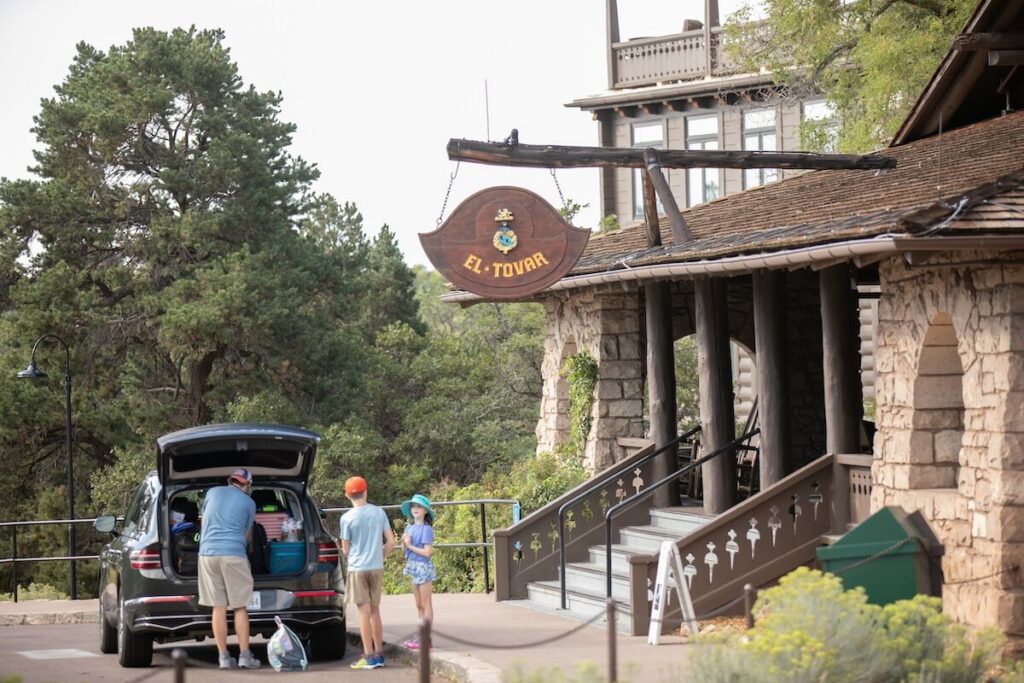
ARIZONA Flooding slams park’s economy Deadly flooding at the Grand Canyon is damaging the area’s economy, with a washed-out pipeline severing the South Rim’s water supply and shutting down lodging at the popular tourist vista for an indefinite period. The...

Immigration reporting measure fuels debate over Colorado’s role with ICE
Marissa Ventrelli
marissa.ventrelli@coloradopolitics.com
Updated 5 hours ago
A coalition of advocacy groups and several district attorneys rallied outside the Colorado Capitol on Thursday to oppose a ballot measure that, if approved by voters in November, would require state and local law enforcement to cooperate with federal immigration...

Colorado Politics Calendar Sept. 14-20
Rachael Wright, Special to Colorado Politics
rachael.wright@coloradopolitics.com
Updated 4 days ago
CoPo’s weekly political calendar will help you find political and public-policy events throughout Colorado. It includes candidate and issue campaign events, public policy meetings, court hearings, state and local party conventions, assemblies, debates, rallies, parades, speaking engagements, traveling dignitary appearances,...
The African roots of three Colorado leaders | SONDERMANN
Eric Sondermann
eric-sondermann@coloradopolitics.com
Updated 3 days ago
Colorado’s political transformation is measured in many ways. A once reliably red state (with asterisks) became purple and is now a rather deep blue. For better or worse, probably the latter, power is ever more consolidated along the Front Range...
Federal judge green-lights civil trial against ex-Fort Collins DUI officer
Michael Karlik
michael.karlik@coloradopolitics.com
Updated 2 days ago
A federal judge ruled on Thursday that Fort Collins’ former “DUI officer” will face a civil trial for allegedly investigating a motorist for impaired driving without any reasonable suspicion to do so. In recent years, several people arrested by Officer...

Denver police reopen 13 sex assault cases after retesting Missy Woods’ CBI work
Jenny Deam
jenny.deam@gazette.com
Updated 5 hours ago
Thirteen previously closed Denver sexual assault cases have been reopened after the city’s crime lab retested DNA evidence once analyzed by former Colorado Bureau of Investigation forensic analyst Yvonne Woods. A police spokesperson told The Denver Gazette the once-closed cases...

Ballot measure aims to shift Colorado sporting goods tax revenue to land, water and wildfire projects
Marissa Ventrelli
marissa.ventrelli@coloradopolitics.com
Updated 21 hours ago
Colorado voters this November will decide whether to direct a share of sales tax revenue from sporting goods — including bicycles and skiing equipment — toward land and water conservation, wildfire prevention and expanding outdoor recreation. Supporters say the measure...

Colorado Supreme Court suspends Mesa County judge pending misconduct investigation
Michael Karlik
michael.karlik@coloradopolitics.com
Updated 23 hours ago
The Colorado Supreme Court suspended Mesa County Court Judge Michael J. Grattan on Thursday amid a misconduct investigation. The court’s Sept. 10 order gave Grattan 21 days to explain why his paid suspension should not continue through the end of...

Trump honors the fallen of the 9/11 terrorist attacks during Pentagon speech
Mabinty Quarshie
mabinty-quarshie@coloradopolitics.com
Updated 2 days ago
President Donald Trump and first lady Melania Trump honored the roughly 3,000 Americans killed during the Sept. 11, 2001, terrorist attacks during a ceremony at the Pentagon. The event marking the 25th anniversary of the deadliest attack on American soil...
Colorado Supreme Court changes course, dismisses case about special district bonds
Michael Karlik
michael.karlik@coloradopolitics.com
Updated 23 hours ago
The Colorado Supreme Court declined on Friday to decide a dispute between a large-scale Commerce City development and the various districts financing it, after initially showing interest in the ongoing case. Colorado has roughly 2,800 special districts, which are local...
PREV
PREVIOUS
Conservationists fight oil shale plan in eastern Utah
SALT LAKE CITY – A coalition of environmental groups objected Tuesday to the U.S. government’s approval of the early stages of an oil shale project near the Utah-Colorado border by a company with ties to Estonia. An intent to sue filed by a coalition including Earthjustice and the Center for Biological Diversity challenges the Bureau […]

Supreme Court seems inclined to retain cross on public land
WASHINGTON – The Supreme Court seemed inclined Wednesday to rule that a 40-foot-tall cross that stands on public land in Maryland is constitutional, but shy away from a sweeping ruling. The case is being closely watched because it involves the place of religious symbols in public life, but the particular memorial at issue in the […]