

New Colorado bill aims to keep young students in school after they misbehave

Last school year, Colorado’s public schools handed out nearly 6,000 out-of-school suspensions to young children.
This week, a bipartisan group of lawmakers proposed legislation that could reduce those numbers – the latest push in a four-year effort to get early childhood discipline reform across the finish line.
The bill introduced Wednesday would limit suspensions and expulsions of students in preschool through second grade to certain circumstances, including if they bring weapons or drugs to school, or are deemed a safety threat. It would also require schools to exhaust other alternative discipline options before removing students from school. Finally, the bill would limit suspensions to three school days.
If passed, the law would take effect July 1, 2020.
While the bill would apply to all public K-12 schools, it would apply to only some preschools – those housed in school districts or charter schools, as well as community-based programs serving children eligible for certain kinds of public funding, such as state preschool dollars.
The behavior that gets little kids suspended varies, but can include biting, kicking, fighting or causing frequent classroom disruptions.
Across the nation, boys, children of color, and children with disabilities receive a disproportionate share of suspensions.
In Colorado, the disparities are pronounced. Last year, for example, young boys received 86 percent of K-2 suspensions though they made up only half of the K-2 population.
Black students, who made up just 5 percent of K-2 enrollment statewide, received nearly 12 percent of K-2 suspensions last year. Students with disabilities, who made up 10 percent of K-2 enrollment statewide, received 37 percent of K-2 suspensions.
The Colorado Department of Education tracks suspension data for public schools, but not for preschools that operate outside of public schools.
Opponents of suspensions and expulsions say sending kids home from school for acting out doesn’t help them learn appropriate behavior, increases the likelihood they’ll be suspended again, and feeds the school-to-prison pipeline.
But school district leaders who’ve pushed back against discipline legislation have argued that limiting suspensions takes away one of their few tools for addressing disruptive and violent behavior. They’ve also expressed frustration about the lack of staff and resources, especially in small rural schools, to handle students’ mental health needs.
This year’s early childhood bill is similar to one that was defeated in 2017, but allows schools a little more leeway in doling out suspensions and expulsions. For example, the earlier bill would have allowed expulsions only when young students brought guns to school. Now, there would be several reasons a young student could be expelled.
Likewise, the previous bill would have allowed suspensions only if a student endangered others, but didn’t specify that bringing drugs, controlled substances, or weapons to school could also be grounds for suspension.
The earlier bill faced sharp opposition from rural school district leaders, among other groups. It ultimately died in a Republican-controlled committee.
Bill Jaeger, vice president of early childhood and policy initiatives at the Colorado Children’s Campaign, said the coalition of groups that worked on the latest bill tried hard to incorporate feedback from critics while staying true to their goals.
“We’ve done our best all along the way to be responsive,” he said.
Besides broadening the grounds for out-of-school discipline, the latest version of the bill delays implementation by a year.
Jaeger said that delay will allow state-level mental health and funding initiatives in the works now to trickle down to school districts and give districts more time to adapt local discipline practices.
// <![CDATA[ // <![CDATA[ // &lt;![CDATA[ // &amp;lt;![CDATA[ // &amp;amp;lt;![CDATA[ // &amp;amp;amp;lt;![CDATA[ // &amp;amp;amp;amp;lt;![CDATA[ // &amp;amp;amp;amp;amp;lt;![CDATA[ var publish = new pym.Parent(“1Kspyz4dW4VwYrdR6n8MjIpmPq6gUcha8CQHDGC5e90w”, “/wp-content/static/shortcodes/table/?sheet=publish&amp;amp;amp;amp;amp;amp;key=1Kspyz4dW4VwYrdR6n8MjIpmPq6gUcha8CQHDGC5e90w”, {}); // ]]&amp;amp;amp;amp;amp;gt; // ]]&amp;amp;amp;amp;gt; // ]]&amp;amp;amp;gt; // ]]&amp;amp;gt; // ]]&amp;gt; // ]]&gt; // ]]> // ]]>

Federal judge allows retaliation claims to proceed against prison officials
Michael Karlik
michael.karlik@coloradopolitics.com
Updated 52 minutes ago
A federal judge agreed last week that a man incarcerated at Sterling Correctional Facility had credibly alleged that employees retaliated against him for filing grievances, including by taking away his disability accommodations and turning off his electricity. Louis Peoples Jr.,...

Treasury releases five-step guidance for employers to make contributions to Trump Accounts
Christian Datoc
christian-datoc@coloradopolitics.com
Updated 1 hour ago
Treasury Secretary Scott Bessent published new guidance Tuesday outlining the specific steps employers must take to contribute to employee Trump Accounts. The accounts, one of the most popular provisions included in President Donald Trump’s One Big Beautiful Bill Act, are...

DPS to refinance bonds to create capacity for future borrowing
Nico Brambila
nico.brambila@denvergazette.com
Updated 59 minutes ago
Less than two years after voters approved a record $975 million school bond, Denver Public Schools (DPS) is refinancing older debt — a move district officials say will save taxpayers money while creating capacity for another bond election. DPS has...

Russia frees imprisoned US Marine over health concerns
Brady Knox
brady-knox@coloradopolitics.com
Updated 2 hours ago
Russia freed former U.S. Marine Robert Gilman upon the urging of U.S. officials so he could receive medical care in the United States. Gilman, 32, was released after 1,666 days in prison, having been arrested on Jan. 17, 2022. Eric...

Colorado students push AI task force as schools navigate new tech era
Marissa Ventrelli
marissa.ventrelli@coloradopolitics.com
Updated 3 hours ago
A group of students is urging lawmakers to establish a task force on artificial intelligence in education to advise districts on how to ensure that students and educators use the technology effectively without becoming overly reliant on it. The students...

Parker data center could get $19M tax rebate from Douglas County
Nicholas Fogleman
nicholas.fogleman@denvergazette.com
Updated 4 hours ago
At a time when Denver and Front Range governments are restricting or banning data center development, Douglas County commissioners are poised to approve a $19.3 million tax rebate agreement Tuesday for a new data center under construction in Parker. The...

Denver City Council rejects contract that would have given video maker 8-year deal
Deborah Grigsby
deborah.smith@denvergazette.com
Updated 7 hours ago
Denver’s Office of Human Resources will have to get creative to attract new city employees and place them in “hard-to-fill” jobs after a proposed five-year contract extension, valued at $600,000, failed to gain favor with the Denver City Council. The...
Denver Mayor Mike Johnston files to run for reelection in 2027
Michael Braithwaite
michael.braithwaite@gazette.com
Updated 7 hours ago
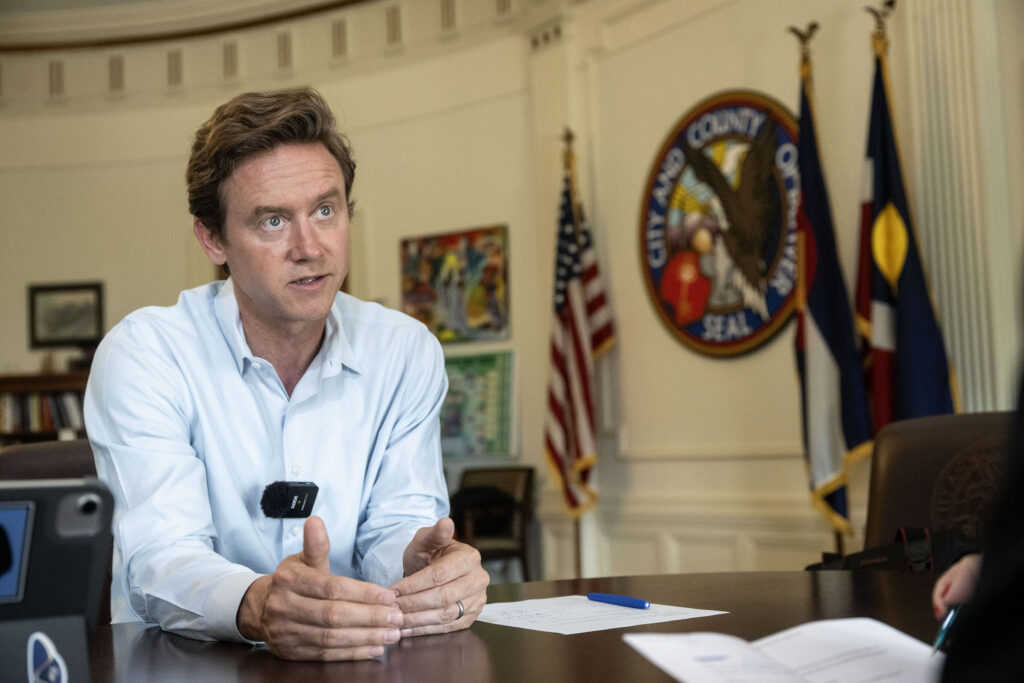
Denver Mayor Mike Johnston officially filed his paperwork Monday to run again for Denver’s mayoral office next year. The filing comes weeks after Johnston confirmed to The Denver Gazette that he would seek reelection as he focuses the final year...

U.S. Rep. Lauren Boebert’s son arrested, faces charges of sexual exploitation of minor
Matt Kyle
matt.kyle@denvergazette.com
Updated 20 hours ago
U.S. Rep. Lauren Boebert’s son Tyler Jay Boebert has been arrested and accused of recording and sharing a video depicting himself having intercourse with a minor, according to court records. The case originated in Garfield County in Western Colorado and...

Clean and Safe program made nearly 3,000 contacts in first year of downtown Colorado Springs outreach
Brennen Kauffman
brennen-kauffman@coloradopolitics.com
Updated 6 hours ago
The pilot version of the Clean and Safe program in downtown Colorado Springs has hit the one-year mark, marking thousands of contacts with visitors and some intransigent homeless residents. Leaders from the Downtown Partnership presented a progress report to Colorado...
PREV
PREVIOUS

Colorado bill would take back money from state-authorized charter schools
A bill introduced in the Colorado House would take back money set aside for state-authorized charter schools and return it to the general fund, where it would be available for any purpose. The bill, sponsored by state Rep. Cathy Kipp, a Fort Collins Democrat and former Poudre School District board member, would repeal one portion […]
Colorado lawmakers hope winter-driving bill gains traction
Winter driving this year has been a little trickier, with (thank goodness) more snow this year. But that means that motorists have to be a little more in tune with what’s on their vehicles to get them through winter driving conditions. Three state lawmakers want to tighten up the rules around the equipment on people’s […]