

The state’s economy isn’t working for many workers

Colorado has much to celebrate: Our economy has diversified to attract new industries and has become a magnet for highly educated, creative people. Over a hundred thousand new jobs were created in Colorado in 2017 and unemployment is at a historic low.
While these measures sound good on paper, they don’t tell the whole story about how Colorado’s economy is working. According to the 2018 State of Working Colorado, a compendium of data published by Colorado Center on Law and Policy (CCLP), there are a number of troubling trends and disparities that reveal not everyone is enjoying the fruits of Colorado’s economic prosperity.
Despite our “prospering” economy, financial insecurity is a reality for too many Coloradans. Colorado Center on Law and Policy seeks to build a Colorado where everyone – no matter what their age, background, race, gender or economic status – has the opportunity to live meaningful, fulfilling lives. Achieving that vision requires seriously reckoning with the data in the 2018 State of Working Colorado.
Among this year’s findings:
- The likelihood of Coloradans enjoying a higher standard of living than the previous generation has significantly diminished. Among Coloradans born in 1980 – today’s 38 year olds – only half make as much as their parents did.
- Colorado’s middle class is shrinking. The proportion of middle-income households has fallen over the last 40 years. Since 1980, the share of Coloradans who could be described as middle class has shrunk from 59 percent to 52 percent.
- Despite economic gains, wages remain relatively stagnant for most Colorado workers. While the unemployment rate has dropped every year since 2010, the median wage has been mostly flat over that same period with modest increases starting in 2015. Still, declining unemployment has not delivered the upward pressure on wages typically associated with a tight labor market.
- While job growth has been strong in the state, an increasing share of this growth is occurring in low-wage sectors. The estimated share of jobs providing annual income less than what’s necessary for a single adult to be self-sufficient has more than doubled between 2001 and 2017. Low-wage service sector employees – child care workers, home health care aides and food-service workers – are essential members of our communities. Yet, these jobs increasingly do not pay enough for many workers to make ends meet.
- Wage gains are only experienced by top earners in the state. The wealthiest Coloradans have seen their wages grow much faster and more consistently compared to middle- and low-wage earners. Workers earning wages at the 90th percentile have seen their wages increase by 40 percent from 1979 to 2017 after adjusting for inflation. Meanwhile, workers in the 20th percentile only earn 11 percent more than the 1979 level.
- The basic cost of living for all families has increased by nearly 80 percent on average between 2001 and 2018. Child care and health care costs have doubled over this period, resulting in increasing pressure on family budgets. Since 2009, rent for one- and two-bedroom apartments increased by 33 percent, while the income for the median-renter household increased by only 2 percent.
- Rural communities have the highest rates of financial insecurity in Colorado. In many rural counties in the state, the share of households living below self-sufficiency ranges from 30 to 41 percent. Our rural communities and remote mountain towns are struggling with a declining and aging population, fewer good-paying jobs, and seasonal economies that often cannot sustain local workers.
- Colorado is increasingly a multiracial state with a persistent race-based economic divide. Rates of unemployment and underemployment among people of color are higher than for Whites in Colorado. Meanwhile, the gap in income between families of color and White families is just as large as it was five decades ago. People of color also experience lower economic returns on their education. ??We’re hopeful that policymakers, opinion-leaders and those who care to improve these conditions enact policies that lead to a future in which all Coloradans share in the wealth and prosperity of this state. Those policies include greater worker protections, increasing the supply of affordable and safe housing, equitable access to quality health care, and policies that ensure more Coloradans can achieve financial security.
Together, we can shape a better Colorado that works for all of us.
Claire Levy is executive director of the Colorado Center on Law and Policy, a nonprofit, non-partisan advocacy organization that engages in legislative, administrative and legal advocacy on behalf of low-income Coloradans.


Hunting is a privilege, not a constitutional right | GUEST COLUMN
Colorado Politics
colorado-politics@coloradopolitics.com
Updated 6 hours ago
By Roland Halpern Colorado voters may soon be asked to place hunting and fishing in the state constitution. Proposition 302 would establish the right to hunt, fish and take wildlife using “traditional methods,” while declaring hunting and fishing are the...

DEA’s Miguel Chino describes Colorado’s place on the ‘fentanyl pill superhighway’ | The OpEdge Podcast
Tony Olivero
tony.olivero@gazette.com
Updated 13 hours ago
Miguel Chino, Acting Special Agent in Charge of the Drug Enforcement Administration’s Rocky Mountain Field Division, joins The OpEdge to paint the picture of Colorado’s place on America’s “fentanyl pill superhighways.” Chino updates Gazette and Colorado Politics Deputy Opinion Editor...
A right to buy a product? | Hal Bidlack
Hal Bidlack
hal-bidlack@coloradopolitics.com
Updated 1 day ago
A recent story in Colorado Politics caught my eye, as I learned of a “citizen initiative” that has qualified for the November ballot. It seems supporters of Initiative 177 have collected enough signatures, 146,165 legitimate ones out of a total...

Fourteen years after Aurora — we can’t afford to go backward | GUEST COLUMN
Colorado Politics
colorado-politics@coloradopolitics.com
Updated 1 day ago
By John Hickenlooper and Gabby Giffords Two Saturdays ago, a gunman shot and killed three people and wounded several others in Twin Falls, Idaho. This latest deadly shooting comes only days after we remembered the lives we lost 14 years...

A daring and fearless rescuer — is afraid of a debate | Dick Wadhams
Dick Wadhams
dick-wadhams@coloradopolitics.com
Updated 4 days ago
Victor Marx, the Republican nominee for governor who says he can exorcize demons and who claimed he has fearlessly rescued 45,000 women and children during 150 “high-risk” missions around the world, appears to be intimidated by the notion of debating...
Colorado’s ballot-initiative process again a battleground for deep pockets, special interests — not the people | Miller Hudson
Miller Hudson
miller-hudson@coloradopolitics.com
Updated 2 days ago
The Oxford English Dictionary defines a constitution as, “The set of fundamental principles according to which a state is constituted and governed, a body of rules prescribing the major elements of the structure and activities of any organization.” Somewhere in...
Proposed EPA changes could save truckers billions | Rachel Gabel
Rachel Gabel
rachel-gabel@coloradopolitics.com
Updated 4 days ago
Agriculture is in distress across nearly every segment across much of the nation, and certainly to a more dire degree in the western United States. If it were not a historic drought, some pressures could be eased. Others can be...

Colorado Democrats, your time is coming | Jon Caldara
Jon Caldara
jon-caldara@coloradopolitics.com
Updated 4 days ago
Hey, Colorado Democrats! All the fun you’ve had watching Republican dysfunction in Colorado for the last 20 years was just a preview of what is about to happen to you. The Colorado Republican Party no longer exists as a competitive...

Perspective: Hunters and anglers are pushing back
Chris Dorsey
chrisd@gmail.com
Updated 2 days ago
For generations, Coloradans hunted elk, caught trout and managed wildlife without consulting a constitutional attorney. That was before wildlife management became a recurring statewide election issue, replete with consultants, national pressure groups and enough political mail to denude an aspen...
The relevance of Watergate more than a half-century later | SONDERMANN
By Eric Sondermann
by-eric-sondermann@coloradopolitics.com
Updated 7 days ago
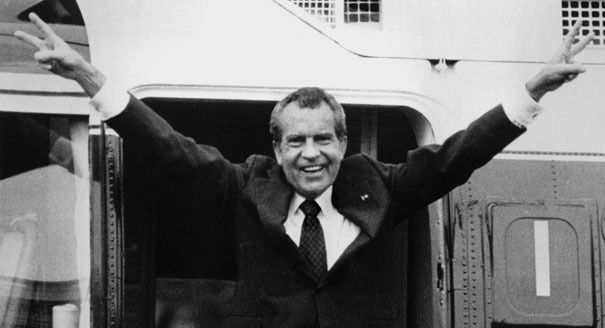
It was the scandal for which all other scandals are now named. In June 1972, a small group of Cuban burglars with high-level connections broke into the headquarters of the Democratic National Committee. Those headquarters were located in the Watergate...
PREV
PREVIOUS

BIDLACK | True justice acknowledges that children deserve another chance
Hal Bidlack My long-suffering editor really likes it when I write on strange and unusual topics (Ed: no, not so much…) and especially when I find ways to introduce obtuse political theory into today’s arguments (Ed: no, no, no!). A recent Colorado Politics story has inspired me to write about juvenile inmates in the prison system, […]

THE PODIUM | Colorado should steer clear of the partisan push for a national popular vote
Barry Fagin The Colorado legislature is considering making Colorado the next state to award its Electoral College votes to the presidential candidate who gets the most votes nationwide. This is a blatantly partisan attempt to abolish the Electoral College through non-constitutional means. It should be stopped dead in its tracks. Of all the delusions in […]