

Secretary of State Griswold sets priorities on campaign finance, voting ease
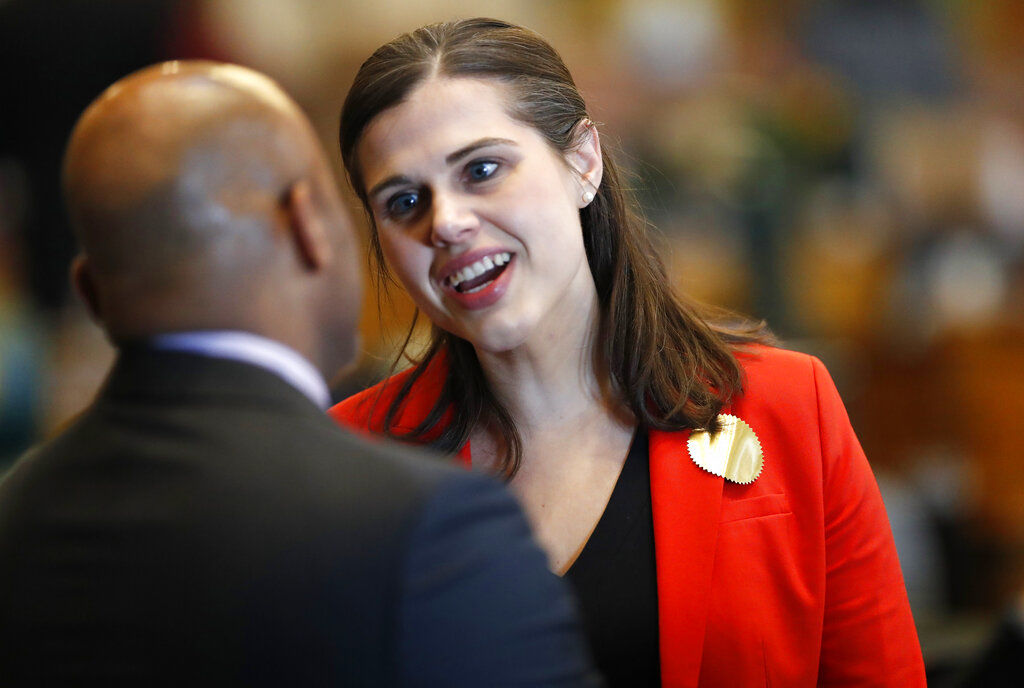
Secretary of State Jena Griswold on Thursday laid out her policy priorities – including cracking down on secret political spending – in a visit to the state Capitol and the House State, Veterans and Military Affairs Committee.
Griswold began by lauding the work of her predecessors and other public servants in making Colorado what many contend is one of the safest places in the nation to cast a ballot.
“That every registered voter in Colorado receives a ballot in their mailbox shines in stark contrast to the voter suppression we see across the nation in places like Georgia, Florida and North Dakota,” Griswold said.
“The fact that Coloradans can register to vote in person, online and on Election Day removes barriers to participation that too many of our fellow citizens confront. And Colorado holds the distinction of being one of the safest and most secure states to cast a ballot in the nation.”
But the state can do better, she said, particularly for people who are unable to visit driver’s license offices to register to vote, such as those with those with disabilities, low-income Coloradans and the elderly. Griswold suggested expanding voter registration to other state agencies, although she did not suggest which ones.
Griswold also suggested using data to cut down on the time people spend in voter lines on Election Day, and expanding voting opportunities. The later includes opening voting service centers on the Sunday prior to Election Day, expanding voting hours and requiring voting service centers on college campuses.
For her third policy priority — campaign finance — Griswold offered the most specifics. The state is awash with massive secret political spending, she said.
“We must bring transparency to the millions and millions of dollars used to influence our elections,” she said. “Now is our time to act to increase disclosure requirements of secret political spending. Now is our time to act to close coordination loopholes. And we must act now to enforce our campaign finance laws.”
Griswold pointed to states like Washington and Montana, considered one of the toughest campaign finance transparency states in the nation, as examples to follow.
“Corporations and special interests should follow the same set of disclosure rules that candidates already do,” she told the committee. “In Colorado, we do a better job of tracking a $50 contribution to a candidate than we do tracking a $50,000 contribution to an independent expenditure committee, which is the Colorado version of a super PAC.”
And at a time when “foreign actors may be funneling money through nonprofits that then engage in political activity, we must do more to protect the integrity of our elections,” she added.
Griswold proposed requiring disclosure of secret political spending, expanding the “paid for by” disclosure requirements on political advertisements, and exercising the secretary of state’s audit and enforcement power to act on campaign finance, ballot access, and lobbyist violations.
Griswold also suggested that potential candidates should be blocked from “raising millions of dollars in unchecked and uncapped contributions into ‘independent’ committees designed to support them when they officially declare their candidacy,” a direct slap at former Republican gubernatorial candidate Walker Stapleton, for whom an independent expenditure committee — Better Colorado Now — advocated for his candidacy before he declared he was running for governor.
Independent expenditure committees can raise unlimited amounts of money as opposed to candidate committees, which, for governor, are limited to contributions of $1,150 per person per election cycle.
Up until the point that Stapleton declared for governor, there was nothing in state law that would prohibit him working with the IEC, including fundraising.
As to campaign finance enforcement, Griswold said she would ensure that independent expenditure and other committees are held accountable for campaign finance violations, and hinted she would use audits and other investigative tools. As of December, the state was owed more than $2.3 million in campaign finance violations, The Colorado Sun reported.
Democratic Rep. Jovan Melton of Aurora applauded Griswold’s idea of opening up voting on Sundays but questioned whether the secretary of state could do so without additional appropriations. About 5 percent of Coloradans visit the ballot box on Election Day, Griswold said, adding that her office will look at where the most traffic takes place and “come to a conclusion that will not require an increase to the budget.”
Griswold also was asked about what she could do to improve lobbyist transparency. Under the current system, a lobbyist has to report on the secretary of state’s website which bills he or she is working on and for whom. But that system falls short with the mad influx of bills in the last month of the legislative session, according to Democratic Rep. Susan Lontine of Denver.
“It doesn’t help with the confusion on who is lobbying on what,” Lontine said. “I’d love to see a more real-time registry.”
Griswold said her office is working to streamline reporting and that it will work to update those systems. That includes incorporating TRACER, the state’s campaign finance system, with the lobbyist registry, she said.
Committee Chair Chris Kennedy of Lakewood asked what preparations Griswold is taking for the presidential primary in 2020, and if the Legislature will need to help.
Judd Choate, the elections director, replied that the election system was tested in 2018, when unaffiliated voters were first allowed to vote in the primary. Much of the information gained last year will apply in 2020, he explained.
“We anticipate those strategies from 2018 will work well in 2020.”

Atop taxes, here’s how much each Colorado resident pays in fees
Marissa Ventrelli
marissa.ventrelli@coloradopolitics.com
Updated 6 hours ago
Each Colorado resident paid nearly $5,000 in state-sanctioned fees last year, according to a report by a policy think tank. The report, which analyzed how fees have affected Colorado’s economy, found that fee revenue has more than tripled since 2008...

Colorado National Guard, Swiss Armed Forces celebrate partnership
Marissa Ventrelli
marissa.ventrelli@coloradopolitics.com
Updated 7 hours ago
Colorado’s National Guard marked a year of partnership with the Swiss Armed Forces at the Governor’s Mansion on Monday. “This anniversary marks one strong year of friendship and collaboration between the State of Colorado and Switzerland,” said Gov. Jared Polis....
Judge allows Trump to refile $15 billion lawsuit against the New York Times
Emily Hallas
emily-hallas@coloradopolitics.com
Updated 8 hours ago
A federal judge declined to dismiss President Donald Trump’s multibillion-dollar lawsuit against the New York Times on Monday, giving him roughly four weeks to amend his case after the outlet moved to toss it on First Amendment grounds. District Judge...

Gov. Polis celebrates Colorado’s first-place education ranking by U.S. News
Marianne Goodland
marianne.goodland@coloradopolitics.com
Updated 5 hours ago
Colorado officials said they have something to celebrate this week, in addition to the state’s sesquicentennial birthday on Saturday. U.S. News & World Report on Tuesday gave Colorado its top ranking for education efforts from pre-K to postsecondary, though it...
Denver detox center did not violate man’s rights with 10-hour hold, 10th Circuit says
Michael Karlik
michael.karlik@coloradopolitics.com
Updated 5 hours ago
The Colorado-based federal appeals court concluded on Tuesday that Denver’s detoxification facility did not violate a man’s rights by holding him against his will for 10 hours until his blood alcohol content was projected to reach zero. Unusually, Brian Garrett’s...
Federal judge clarifies ex-GOP treasurer candidate’s burden to prove defamation claims
Michael Karlik
michael.karlik@coloradopolitics.com
Updated 5 hours ago
A federal judge clarified last week that businessman and former Republican statewide candidate Brian Watson will need to surmount a higher hurdle in proving his claim that a party guest’s alleged description of him as a “criminal” amounted to defamation....

Denver City Council sends Xcel franchise deal to voters
Deborah Grigsby
deborah.smith@denvergazette.com
Updated 10 hours ago
This November, Denver voters will decide whether to renew the city’s longstanding franchise agreement with Xcel Energy. Members of the Denver City Council approved on Monday sending a proposed 20-year franchise agreement with Xcel that would deliver more than $180...
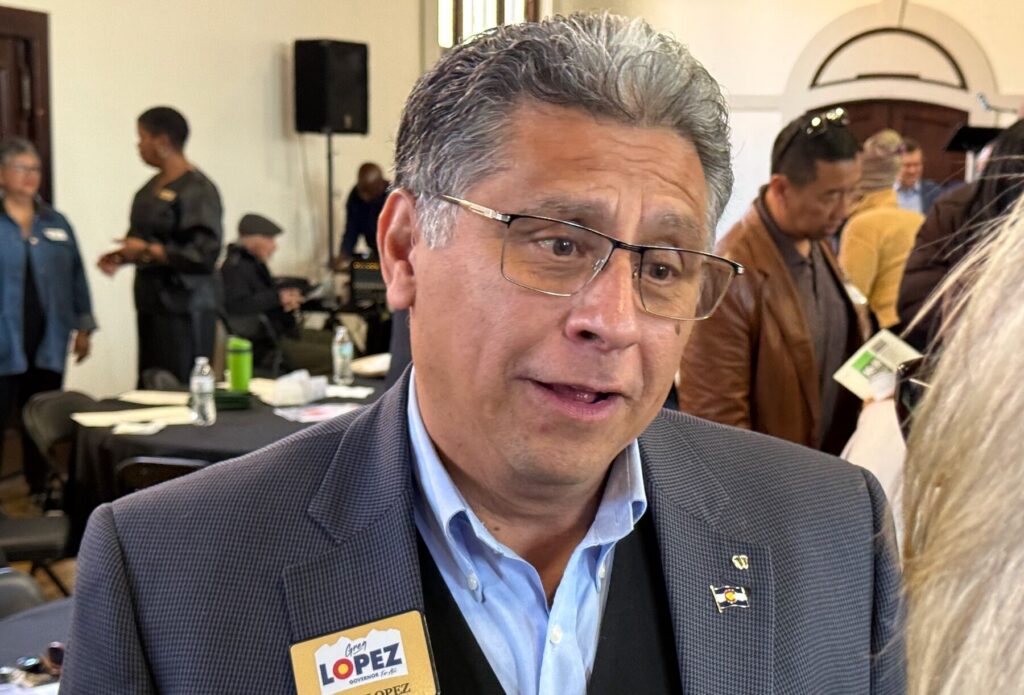
Independent gubernatorial candidate Greg Lopez, a former GOP congressman, qualifies for Colorado ballot
Ernest Luning
ernest.luning@coloradopolitics.com
Updated 6 hours ago
Unaffiliated gubernatorial candidate Greg Lopez, a former Republican congressman from Elizabeth who left the GOP to run as an independent, has qualified for the ballot by submitting enough petition signatures, the Colorado Secretary of State’s Office said Tuesday. He’ll face...

At Colorado’s 150th anniversary, leaders offer birthday wishes
Thelma Grimes
thelma.grimes@coloradopolitics.com
Updated 11 hours ago
As Colorado’s 150th anniversary approaches, leaders from across the state reflect on the spirit that binds the plains, mountains, Western Slope and Front Range — a shared commitment, they underscored, to opportunity, community, stewardship and personal freedom. Their tributes highlight...
Fauci’s private COVID-19 diaries: Six takeaways on fame, prize money and the lab leak debate
The Washington Examiner
the-washington-examiner@coloradopolitics.com
Updated 14 hours ago
Anthony Fauci’s private writings from 2020 and beyond portray a public health official who was fixated on his growing celebrity while privately grappling with a pandemic response he believed was chaotic, leaderless and consumed by internal rivalries. The writings of...
PREV
PREVIOUS

Senate panel advances bill to strip school-choice language from foster-kids measure
The Colorado state Senate’s Education Committee on Thursday gave a party-line OK to a bill removing school-choice language from a 2018 measure on foster children that was the subject of a court challenge. The action followed a Denver District Court ruling last month that declared a portion of the 2018 bill unconstitutional. On a 3-2 […]

TRAIL MIX | 'Nanu nanu' for all: With great geekiness comes great opportunity for Polis
Colorado Gov. Jared Polis didn’t have to establish his geek cred when he delivered his first State of the State address. The 43-year-old tech entrepreneur from Boulder, who served five terms in Congress before being sworn in as governor on Jan. 8, has been getting his geek on in public for years. This is a […]