

THE PODIUM | Prop 112’s defeat proved only that oil & gas industry has lots of cash and clout

In the aftermath of the vote on fracking setbacks Proposition 112, Coloradans might think, certainly hope, that the oil and gas industry’s campaign of scare tactics and misinformation would be over. Sadly, it’s not. It has merely shifted to focus on influencing the incoming legislature and Polis administration against trying to do anything substantive to protect our neighborhoods from the toxic threats of fracking.
This is best evidenced by guest editorials appearing around the state penned by operatives from groups like Vital for Colorado, an industry front created by oil lobbyists and others with industry ties. The main talking point of these operatives, or “Research Fellows” as Vital professes to call them, is that the people spoke clearly and loudly in defeating 112, so no legislator or public official should attempt any constructive change to the business-as-usual lineup of inadequate setbacks, rubber-stamped permits, and hamstrung and gagged local governments.
But let’s take a closer look at the campaign and vote on 112.
The oil and gas industry spent approximately $45 million to flip about a quarter of those whom initial polling indicated supported the concept of 2,500-foot setbacks. Proponents would have needed to change the minds of only about 10 percent of those who voted against 112 to have received majority support for the proposition. If you take into account those who support the notion of increased setbacks, but who might have been uncomfortable with provisions concerning waterways and vulnerable areas, it’s reasonable to conclude that the opposition to Colorado’s fracked oil and gas industry is solid and substantial, while much of the industry’s support is tenuous and shallow.
In short, the vote was not so much a vote against stronger fracking regulations, as it was a reflection of the sorry state of our campaign finance rules and the media’s political issue advertising policies.
So what should be the takeaway going forward into the next legislative session?
Grassroots citizen groups and environmental organizations are urging Gov-elect Polis and Democratic representatives to take strong action to protect families, schools, and communities from the ongoing, unrestricted onslaught of neighborhood fracking. Along with reforming the Colorado Oil and Gas Commission (COGCC), both its personnel and its mission, the emphasis is on establishing setback distances based on the best available independent science and research, and not based on industry expediencies or arbitrary compromises, in order to reasonably ensure safety for our health and environment, and safety from fires, explosions, evacuation zones, etc. These setback distances should also comply with the Precautionary Principle which asserts, according to the National Institutes of Health, “that the burden of proof for potentially harmful actions by industry or government rests on the assurance of safety and that when there are threats of serious damage, scientific uncertainty must be resolved in favor of prevention.”
No, oil and gas industry, there was no mandate for the continued free ride of toxic neighborhood fracking. You need only look at the recent response to the plans of a fracking operator to frack in the town of Superior and underneath Rocky Flats. Town Board meetings held with short notice were packed to overflowing, and spoke with one voice from citizens, town trustees, and the mayor. That voice said “No.”
The oil and gas industry loves pre-emption. It is at the heart of its Colorado Oil and Gas Conservation Act, which effectively gave sole authority to the frack-fostering COGCC to place toxic operations next to our homes and schools, pre-empting both local control and basic state constitutional provisions. Now the industry wants to pre-empt efforts by various communities, citizens, and grassroots organizations to push for real, essential, corrective action in the state legislature.
Will its revisionist reframing of the election results work with our new state government? It’s too soon to tell. But grassroots organizations are working hard to ensure that neighborhood fracking is recognized for the threat it is, that fracking is sufficiently regulated and restricted from our neighborhoods, homes, and schools to fully protect Coloradans and their families, and that we move forward toward an environmentally and economically-sustainable clean energy future as quickly and as deliberately as possible.
Harv Teitelbaum heads the Beyond Oil and Gas Campaign for the Sierra Club’s Colorado Chapter.


Hunting is a privilege, not a constitutional right | PODIUM
Colorado Politics
colorado-politics@coloradopolitics.com
Updated 8 hours ago
By Roland Halpern Colorado voters may soon be asked to place hunting and fishing in the state constitution. Proposition 302 would establish the right to hunt, fish and take wildlife using “traditional methods,” while declaring hunting and fishing are the...

DEA’s Miguel Chino describes Colorado’s place on the ‘fentanyl pill superhighway’ | The OpEdge Podcast
Tony Olivero
tony.olivero@gazette.com
Updated 1 day ago
Miguel Chino, Acting Special Agent in Charge of the Drug Enforcement Administration’s Rocky Mountain Field Division, joins The OpEdge to paint the picture of Colorado’s place on America’s “fentanyl pill superhighways.” Chino updates Gazette and Colorado Politics Deputy Opinion Editor...
A right to buy a product? | Hal Bidlack
Hal Bidlack
hal-bidlack@coloradopolitics.com
Updated 2 days ago
A recent story in Colorado Politics caught my eye, as I learned of a “citizen initiative” that has qualified for the November ballot. It seems supporters of Initiative 177 have collected enough signatures, 146,165 legitimate ones out of a total...
Fourteen years after Aurora — we can’t afford to go backward | GUEST COLUMN
Colorado Politics
colorado-politics@coloradopolitics.com
Updated 2 days ago
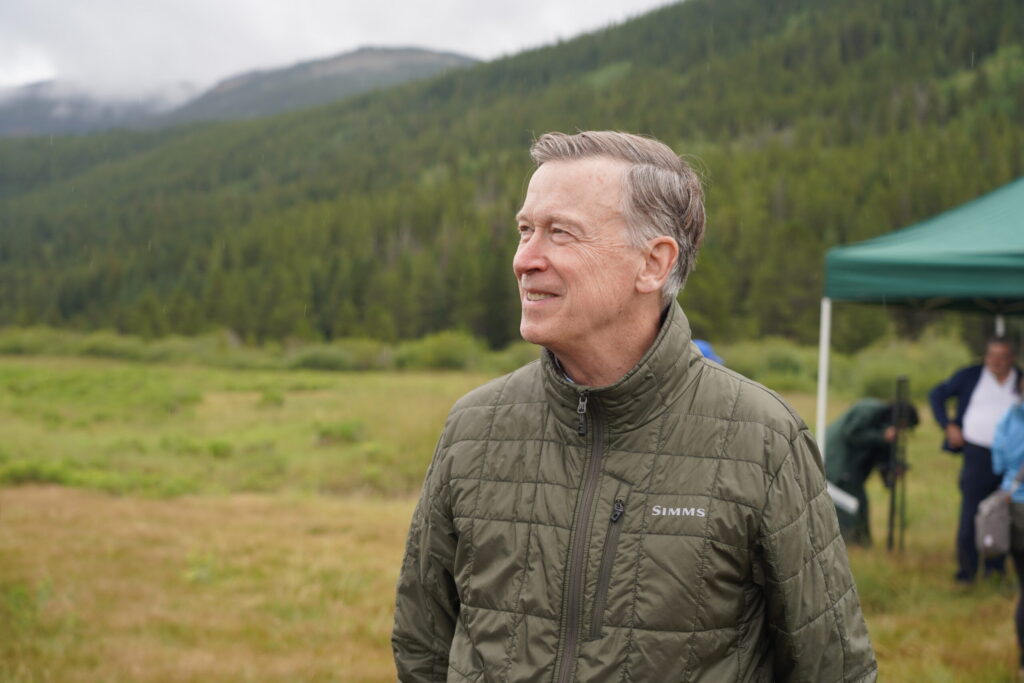
By John Hickenlooper and Gabby Giffords Two Saturdays ago, a gunman shot and killed three people and wounded several others in Twin Falls, Idaho. This latest deadly shooting comes only days after we remembered the lives we lost 14 years...

A daring and fearless rescuer — is afraid of a debate | Dick Wadhams
Dick Wadhams
dick-wadhams@coloradopolitics.com
Updated 4 days ago
Victor Marx, the Republican nominee for governor who says he can exorcize demons and who claimed he has fearlessly rescued 45,000 women and children during 150 “high-risk” missions around the world, appears to be intimidated by the notion of debating...

Colorado’s ballot-initiative process again a battleground for deep pockets, special interests — not the people | Miller Hudson
Miller Hudson
miller-hudson@coloradopolitics.com
Updated 2 days ago
The Oxford English Dictionary defines a constitution as, “The set of fundamental principles according to which a state is constituted and governed, a body of rules prescribing the major elements of the structure and activities of any organization.” Somewhere in...
Proposed EPA changes could save truckers billions | Rachel Gabel
Rachel Gabel
rachel-gabel@coloradopolitics.com
Updated 4 days ago
Agriculture is in distress across nearly every segment across much of the nation, and certainly to a more dire degree in the western United States. If it were not a historic drought, some pressures could be eased. Others can be...

Colorado Democrats, your time is coming | Jon Caldara
Jon Caldara
jon-caldara@coloradopolitics.com
Updated 4 days ago
Hey, Colorado Democrats! All the fun you’ve had watching Republican dysfunction in Colorado for the last 20 years was just a preview of what is about to happen to you. The Colorado Republican Party no longer exists as a competitive...
Perspective: Hunters and anglers are pushing back
Chris Dorsey
chrisd@gmail.com
Updated 2 days ago
For generations, Coloradans hunted elk, caught trout and managed wildlife without consulting a constitutional attorney. That was before wildlife management became a recurring statewide election issue, replete with consultants, national pressure groups and enough political mail to denude an aspen...

The relevance of Watergate more than a half-century later | SONDERMANN
By Eric Sondermann
by-eric-sondermann@coloradopolitics.com
Updated 1 week ago
It was the scandal for which all other scandals are now named. In June 1972, a small group of Cuban burglars with high-level connections broke into the headquarters of the Democratic National Committee. Those headquarters were located in the Watergate...
PREV
PREVIOUS

FEEDBACK | Toward a greener Colorado, a pricier power bill — and more
For Colorado’s sake, renew federal conservation fund With the midterm election revealing an increasingly divided country, it is important that we take time to recognize when issues arise with true, bipartisan support. One of those issues is the Land and Water Conservation Fund (LWCF), a critically important program for the preservation of national parks […]

SLOAN | Will Polis govern from the center? Some hopeful signs
Kelly Sloan I suppose it is second nature to look for silver linings, and this is no less true when one finds their political skies shrouded in overcast, as Colorado Republicans have. It would require an optimism bordering on insanity to believe that Governor-elect Polis will, anytime soon, experience a moment of epiphany liberating him […]