

Insights: Jared Polis’ wonky answer on cost of renewables begins to roar

He has to dumb it down. Jared Polis promises if he’s elected governor Colorado will get all its power from renewable sources by 2040, a future my affection for fried foods suggests I will not see.
Voters might have the same problem, chicken wings aside: This wind-and-solar future is lost in a smog of vague words – a wonky explanation for an electorate trained on catchphrases and memes. A billionaire who speaks on a fourth-grade level now lives in the White House. Simple talk pays political dividends these days.
If Polis’ energy plan has a catchphrase, it’s “You might want to sit down; this could take a while.”
Here’s why I’m on this. Polis continues to take roundhouse kicks from the right over his roundabout answers on the price tag to end the state’s addiction to oil and gas. While he can’t pin it down, all Republicans have to say to voters in response is, “It’s gonna cost ya, folks.” Not hard to get your head around that.
Other Democrats are promising much the same. Polis, however, is the presumed frontrunner, at least Republicans think so, and renewable energy by 2040 is the load-bearing pillar of his platform.
If Polis won’t talk cost, sowers of doubt certainly will. Notably the conservative Independence Institute in Denver crunched the numbers and came up with $45 billion.
The well-regarded Todd Shepherd wrote a piece for the conservative Washington Free Beacon on Feb. 23 alleging Polis was ” sidestepping” the price tag, and he cited media interviews, including one with me. You probably know Todd, if you know Colorado politics. He was a radio reporter at 850 KOA then the investigative reporter for the Independence Institute’s Complete Colorado, before he took his talents to D.C.
After Shepherd’s Free Beacon piece, the Republican Governors Association blasted it to reporters across the state.
“Polis thinks he can get elected by making pie-in-the-sky promises to his base without taking accountability for the consequences,” the RGA told the press. “But Colorado voters are catching on to his act. Polis owes them a real answer.”
He gave me a real answer. It just wasn’t real short.
It was a couple of weeks before Christmas when I met Polis for coffee.
He shot down the Independence Institute’s report. Not his circus, not his clowns, he suggested to me, as I nibbled on a flaky, delicious pastry like a squirrel in November.
“It was about a policy I don’t have,” Polis said. His plan doesn’t force major electricity providers to attain his goals any way they have to, regardless of the price, as the Independence Institute suggested he would.
This was getting good, I thought. I put down my pastry.
“The way we plan to get our state to 100 percent renewable by 2040 … is a bottom-up approach using market mechanisms, like encouraging distributed wind and solar projects, removing regulatory barriers to siting wind projects on state lands and lots of other things I could go into in detail,” Polis said, as I picked up my pastry again.
Broadly and cheaply, Gov. Polis would:
How much will that cost? Eh, hard to say, but a whole lot less than $45 billion, he can tell you that.
Polis has a good reason for being indirect: His promise is built on ifs and maybes that are hard to put a price on.
His 22-year window for his eight years as governor along with his ground-up philosophy constitute what I call the Tao of Jared, the peaceful ever-flowing waters of change that eventually carve the Grand Canyon.
By depending on the ground level – supportive utilities, bought-in customers and local governments that could fuss about wind and solar farms – a lot could go wrong to undermine the Tao the Jared.
It’s not an unrealistic promise, but it’s a complicated one.
And there’s a lot more riding on this than whether Polis wins. If his renewable energy platform is a bust in Colorado, of all places, who else will make a sales pitch of this magnitude elsewhere. The Sierra Club will continue to sign up towns and counties to take similar pledge, but will another candidate for governor?
I went to my old standby for explaining dumbing down sciencey stuff for the sake of message, Conservation Colorado, the state’s largest environmental organization, which pitches and bats from the left. Here’s the skinny.
“Investing in renewable energy sources just makes smart financial sense,” said Amelia Myers, the organization’s energy advocate. “Wind and sunshine are free once energy generating systems are in place, and we’re growing those every day. Clean energy means more jobs – there are already more than 62,000 in Colorado to be exact – and more good-paying, reliable jobs means more money for the state to pay for what it needs.
“Renewable energy means less air pollution, which causes cancer, heart attacks, asthma, and other conditions that drive up healthcare costs for all of us. Instead of continuing to rely on a finite resource that’s hard to extract like coal, we should continue our transition to a clean energy economy.”



Trump lowers flags to half-staff for Dolly Parton: ‘The World loves you’
Naomi Lim
naomi-lim@coloradopolitics.com
Updated 33 minutes ago
President Donald Trump is honoring the life of country music legend and philanthropist Dolly Parton by ordering federal buildings across the country to lower flags to half-staff for a week. “Very sad to report that Dolly Parton, one of the...
Ted Cruz suggests GOP realignment coming after Trump leaves office
Emily Hallas
emily-hallas@coloradopolitics.com
Updated 35 minutes ago
Sen. Ted Cruz (R-TX) on Monday suggested the Republican Party could embrace a directional shift after President Donald Trump leaves office, a transition that promises to leave a gaping hole in the GOP. Cruz is known as a critical ally...
2 Colorado State troopers shot near Woodland Park; suspect killed
DEBBIE KELLEY
debbie-kelley@coloradopolitics.com
Updated 5 minutes ago
Two Colorado State Patrol troopers were hospitalized, and a suspect is dead after a shooting during a traffic stop Tuesday. The initial incident happened at about 7:15 a.m., when a resident reported suspicious activity in the area near milepost 286...
Aurora moves forward with data center regulations
Kyla Pearce
kyla.pearce@gazette.com
Updated 17 minutes ago
The Aurora City Council approved moving forward with two new regulations on data centers and directed staff to come back at the next study session with others. At a council meeting in early August, council members directed city management to...

Aurora City Council considers stricter food truck regulations
Kyla Pearce
kyla.pearce@gazette.com
Updated 16 minutes ago
The Aurora City Council is considering passing laws to limit the number of food trucks on properties in the city and how and when they operate. Councilmember Angela Lawson, who sponsored the ordinance, said she understands the importance of food...
Denver murder conviction reversed for incomplete self-defense instruction
Michael Karlik
michael.karlik@coloradopolitics.com
Updated 4 hours ago
Colorado’s second-highest court reversed a defendant’s murder conviction last week because a Denver judge gave an incomplete instruction to the jury about the man’s right to self-defense. Donald R. Gonzales and Gary McLaughlin met up in a Capitol Hill parking...
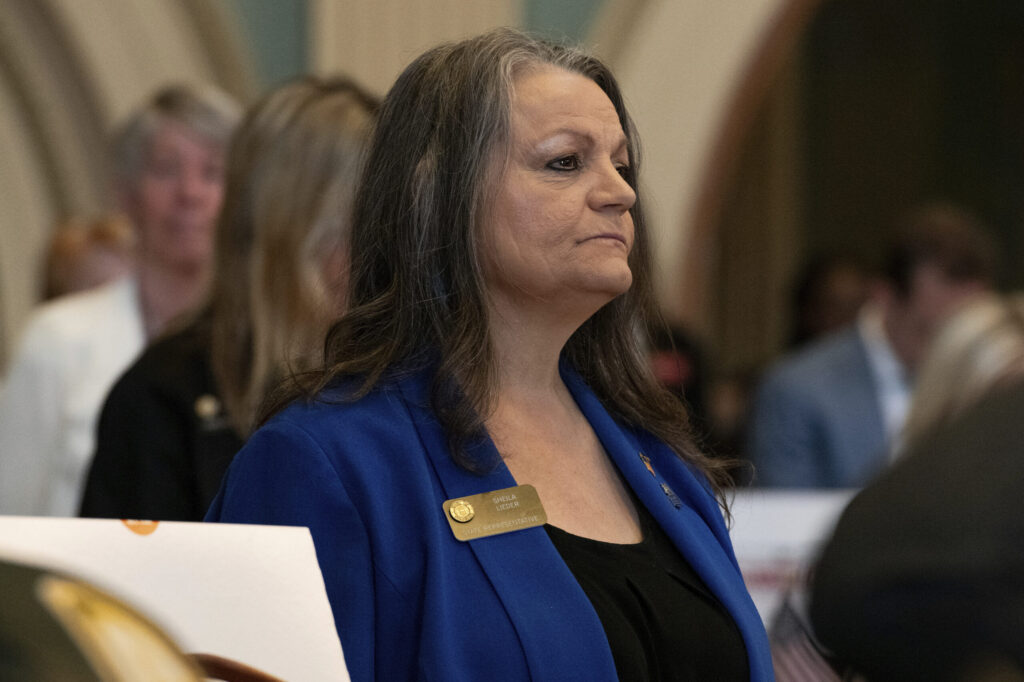
Colorado lawmaker, House leaders named in workplace-retaliation lawsuit
Marianne Goodland
marianne.goodland@coloradopolitics.com
Updated 1 hour ago
A former legislative aide has filed a lawsuit alleging she was mistreated, illegally directed to perform campaign work and harmed by a House leadership structure she charged was fragmented, politicized and ineffective at protecting employees. The lawsuit, filed by Jennifer...

Secret Service confirms awareness of Iranian state media video threatening Barron Trump’s life
The Associated Press
the-associated-press@coloradopolitics.com
Updated 6 hours ago
WASHINGTON (AP) — The U.S. Secret Service has confirmed it is aware that Iranian state media has aired a video that appears to threaten the life of Barron Trump, President Donald Trump’s youngest son. “The U.S. Secret Service is aware...
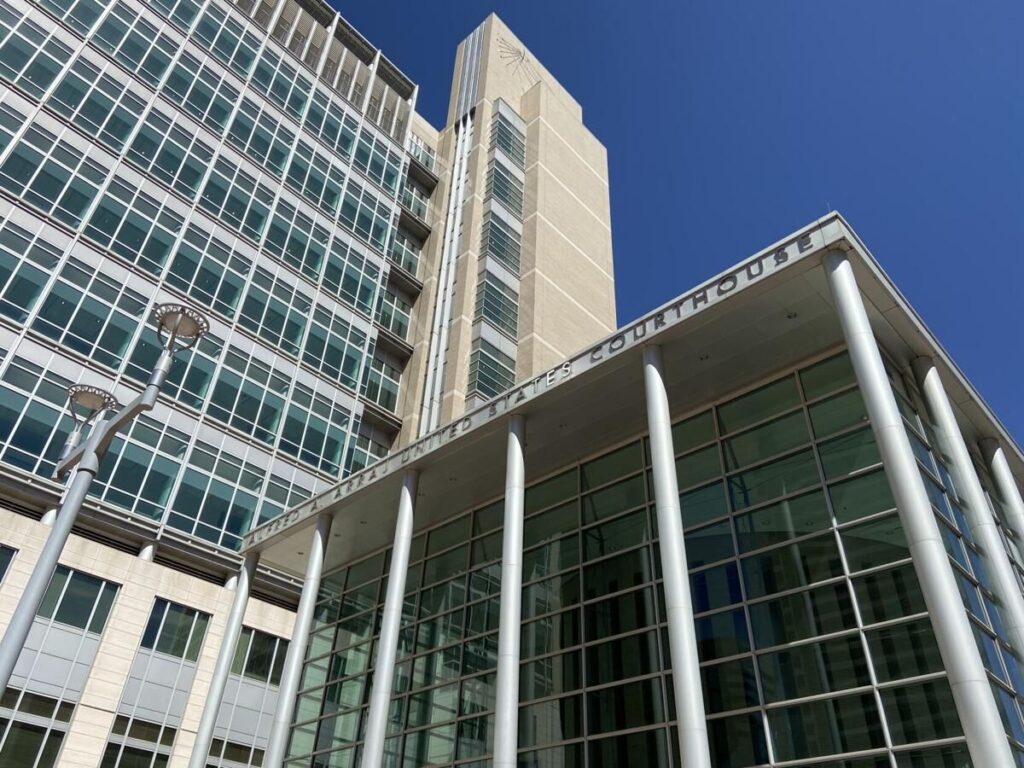
Federal judge hears arguments about Colorado’s 3-day gun purchase waiting period
Michael Karlik
michael.karlik@coloradopolitics.com
Updated 6 hours ago
A federal judge heard arguments on Monday about the constitutionality of a 2023 Colorado law that generally imposes a three-day waiting period on firearm purchases after the initiation of a background check. The test that the U.S. Supreme Court created...

Denver auditor finds oversight failures in $175.6M 16th Street project
Nico Brambila
nico.brambila@denvergazette.com
Updated 9 minutes ago
Surprise historic sewer discovery delayed completion a year, cost $18M The Denver Auditor recently found significant oversight and contracting problems with the $175.6 million 16th Street Improvement Project, including an $18 million contract increase and a nearly one-year extension that...
PREV
PREVIOUS

Republican Brian Watson first to turn in nominating petitions for state treasurer's race
Republican Brian Watson, a candidate for Colorado state treasurer, on Monday turned in petition signatures to the secretary of state’s office in hopes of securing a spot on the June primary ballot. The real estate CEO is one of six Republicans running for the office held by term-limited Walker Stapleton, a GOP candidate for governor. […]

Bill to toughen law on false shooting reports barrels toward the House
For some sick reason, some pranksters think it’s funny to call in false reports to summon a SWAT team. But Sen. John Cooke of Greeley has a bill with momentum that could make them think twice. The former Weld County sheriff’s Senate Bill 68 would increase the crime from a misdemeanor to a felony. The […]