

Drones could get another lift from Colorado lawmakers

Wildfire footage captured from drones can be breathtaking, but getting that footage can often hinder firefighters in their rescue efforts. Currently emergency responders can only ask the public to keep their drones away, however, there are no local penalties. But a new law may change that.
Legislation is set to be introduced at the Capitol in the coming days that would make it a crime to obstruct emergency operations with a drone. The draft legislation, a copy of which was obtained by Colorado Politics, would make flying a drone near active police and firefighters a class two misdemeanor.
The fine would range from $250 to $1,000. but for Chris Swathwood, vice chair for Colorado Aviation Business Association, who helped draft the legislation, it’s not about generating revenue from fines. It’s about safety.
“It’s really important to help educate the general drone population of the importance of staying clear of these operations,” Swathwood said by phone. “It’s a huge education bill, but it also creates penalties for those people who don’t take the education seriously.”
The use of drones by emergency responders is becoming more commonplace in Colorado. The small unmanned aircraft systems have provided rescuers in counties across the state with a new tool to aid in more accurate firefighting, faster search and rescue, and safer SWAT missions.
But the rules designed to ensure safe and lawful drone flight still lag behind at both the state and federal level. Last year the Legislature passed House Bill 1070, which required the Colorado Center of Excellence to study the use of drones by emergency responders. The bill provided no funding to purchase equipment to produce the study, so the center is asking for donations on their website.
Without the funding the Center of Excellence hasn’t been able to start the study, but the state may soon get a welcome assist from the federal government.
In early November the Federal Aviation Administration, in partnership with the Department of Transportation, established a pilot program that asks state, local, and tribal governments to test and evaluate the use of drones in their airspace. The Center for Excellence submitted their proposal Jan. 3. The program won’t provide federal funding, but will allow them to partner with private companies to help offset some costs.
“This felt very natural for us to pursue,” Robert Gann, acting director of the center, said by phone last week. “We see UAVs as an opportunity for us to really make our ability to respond to emergencies better.”
The center will partner with four Colorado county sheriff’s offices: Boulder, Mesa, Larimer and Alamosa. Through planned trainings and live emergencies, these agencies will test different types of drones and collection software, and explore night operations and operating drones out of the site of the pilot.
“This pilot program the FAA is putting together right now will do more than [House Bill 1070] did because you are now getting operators like myself working with these agencies and coordinating how drones can better assist them,” Swathwood said.
If the idea of your county sheriff’s office using drones at nights or from far away scares you, fret not. These officers know they aren’t playing with toys. They see drones as tools, and ones they have been using for a while.
Mesa County had one of the first UAV programs in the country in 2009 and has flown hundreds of missions. Boulder County’s UAV program began in 2012 with their first mission being to aid in the high-profile search for Jessica Ridgeway, the 10-year-old Westminster girl who was kidnapped and later found murdered in Oct. 2012.
“There are lots of tools in an incident commander’s tool box. Not all missions and not all tools go together.” Stephen Meer of the Boulder County Sheriff’s Office said by phone. “It’s not something we do willy nilly. We think about it a lot.”
If the Center for Excellence wins this bid, you won’t have to just take their word for it. The software from one of their private partners, DroneSense, will collect data on the angle of the drone’s camera.
“We will have a robust record of exactly what we did so we can honestly and openly answer any questions about where our aircraft were and what they were doing,” Gunn said.
The feds will select 10 applicants out of hundreds that applied for the three-year pilot program. If the center is selected, they will have until May 8 to sign their contract.



Federal judge recommends dismissing trans athletics lawsuit by area school districts
Eric Young
eric.young@gazette.com
Updated 10 hours ago
A judge has recommended dismissing a federal lawsuit filed by multiple school districts against the Colorado Attorney General’s and Civil Rights Offices over their policies dictating students’ participation in athletics and activities based on their biological sex rather than gender...
DOJ subpoenas Minnesota officials in ICE probe
The Associated Press
the-associated-press@coloradopolitics.com
Updated 10 hours ago
MINNEAPOLIS — Federal prosecutors served grand jury subpoenas Tuesday to Minnesota officials as part of an investigation into whether they obstructed or impeded law enforcement during a sweeping immigration operation in the Minneapolis-St. Paul area, a person familiar with the...
Appeals judge asks Colorado Supreme Court to once again clarify magistrate rules
Michael Karlik
michael.karlik@coloradopolitics.com
Updated 11 hours ago
A member of Colorado’s second-highest court urged the state Supreme Court last week to revise confusing language in the rules governing magistrates, less than two weeks after an attempted cleanup of the rules took effect. Magistrates are judicial employees who are...
Gov. Jared Polis touts Colorado’s ‘significant’ drop in crime in 2025
Marissa Ventrelli
marissa.ventrelli@coloradopolitics.com
Updated 7 hours ago
Gov. Jared Polis is touting a recent report saying Colorado’s overall crime rate decreased by double-digit margins over the past year. “I am thrilled to see our data-driven investments in law enforcement support and crime prevention are working,” Polis said...

UK approves Chinese ‘mega-embassy’ despite espionage concerns
Emily Hallas, Washington Examiner
emily.hallas.washington.examiner@gazetteedit.wpenginepowered.com
Updated 13 hours ago
The United Kingdom on Tuesday authorized a massive new Chinese embassy in London, despite international concerns that the facility could be used to spy on the country. The embassy, set to be China’s largest in Europe, will sit on the...

Greenland talk dominates among world leaders while Ukraine takes a backseat
Mike Brest, Washington Examiner
mike.brest.washington.examiner@gazetteedit.wpenginepowered.com
Updated 13 hours ago
The United States and Europe are engaged in a dispute over the Trump administration’s desire to “own” Greenland, taking attention away from Ukraine as it suffers through another brutal winter of Russian troops targeting its infrastructure. Leaders from around the...

Final appropriations package includes DHS in lofty goal to avoid Jan. 30 deadline
Rachel Schilke, Washington Examiner
rachel.schilke.washington.examiner@gazetteedit.wpenginepowered.com
Updated 13 hours ago
Appropriators released the final package of government funding bills early Monday morning as the House seeks to pass all 12 bills before the shutdown deadline next week. The contentious nature of the final four bills, however, could make passage an...

Democrats Michael Bennet, Phil Weiser and their backers bank $9 million for Colorado gubernatorial race
Ernest Luning
ernest.luning@coloradopolitics.com
Updated 13 hours ago
Democratic gubernatorial candidates U.S. Sen. Michael Bennet and Attorney General Phil Weiser, and the campaign committees that support them, entered the election year with almost $9 million on hand, as the race to succeed term-limited Colorado Gov. Jared Polis heats...
Tina Peters involved in prison altercation caught on video
Dan Boniface
dan.boniface@denvergazette.com
Updated 11 hours ago
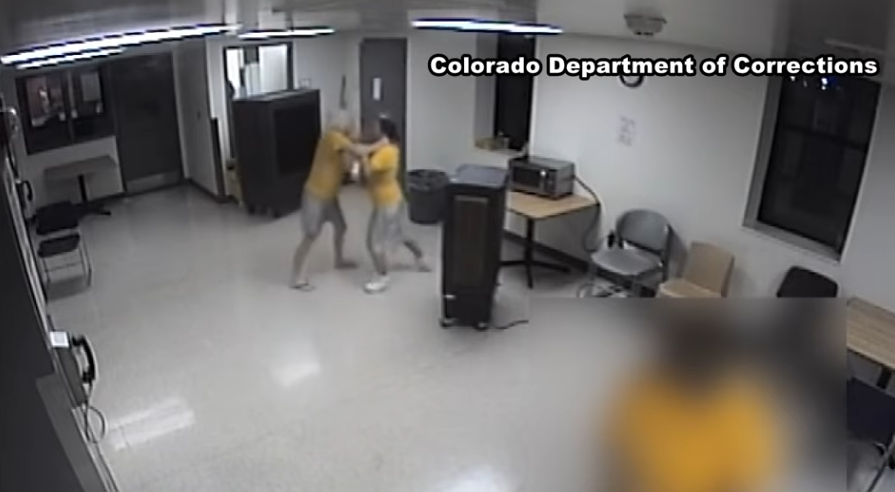
Tina Peters appears to have been involved in a prison altercation on Sunday with another inmate and the incident was caught on video. The incident happened at the La Vista Correctional Facility where Peters is serving a roughly nine-year prison...

Court rules against Colorado Rep. Jason Crow, other Democrats in ICE visitation policy challenge
Michael Kunzelman
michael.kunzelman@associatedpress.com
Updated 9 hours ago
WASHINGTON • A federal judge refused Monday to temporarily block the Trump administration from enforcing a new policy requiring a week’s notice before members of Congress can visit immigration detention facilities. U.S. District Judge Jia Cobb, who is based in Washington, D.C., concluded...