

Comprehensive energy permitting reform benefits Colorado, the mountain west | PODIUM

By Ron Dickson
Thank you, U.S. Reps. Gabe Evans and Jeff Hurd, for your participation in the Congressional Problem Solvers Caucus and your support of comprehensive energy permitting reform. We also appreciate U.S. Sen. John Hickenlooper’s continued efforts to enhance our national electricity grid.
The energy demands of the mountain west are rapidly growing. Data center proliferation, population growth and the electrification of businesses, homes and transportation are increasing our need for more electricity. At the same time, an aging power grid puts reliable and affordable energy at risk.
More energy, coupled with improved and expanded electricity transmission, would meet these power demands. Unfortunately, the slow-motion federal permitting process creates a bottleneck that impedes project delivery, tying up new energy projects for years. This negatively influences investor participation and adds significantly to project costs.
Today, it takes an average of 4.5 years for federal agencies to complete environmental impact statements for major energy projects. These are important assessments, but they could move faster.
Successive administrations from both parties have selectively obstructed certain types of energy projects. As energy concerns grow, selective obstruction creates localized pressure for unilateral actions. A coordinated national approach to permitting reform would benefit everyone.
That is why we appreciate the Congressional Problem Solvers Caucus’s endorsement of a bipartisan permitting reform framework. Stable, predictable permitting is essential for all energy developers, which in turn provides communities’ access to affordable power, private investment and new jobs.
For example, Utah is emerging as a leader in geothermal energy. Colorado also wishes to develop the “heat under our feet” as one of several sustainable energy sources needed to meet its emission reduction goals. However, it is generally easier and less expensive to permit new fossil fuel energy systems on Federal land than it is to permit a new geothermal generating plant. Our objective should be comprehensive permitting reform that levels the playing field so new energy sources can compete on their economic merits. This is particularly important for Colorado’s energy transition.
Electricity transmission is also a particularly urgent challenge. U.S. transmission infrastructure has grown by just 1% per year during the past decade, largely because it takes more than a decade on average to build a new transmission line. Meanwhile, electricity demand is expected to grow by 35% to 50% during the next 16 years.
The TransWest Express transmission line in Wyoming illustrates the problem. After a plus-15-year permitting effort, construction finally began in 2023. The line will send electricity from what will be Wyoming’s (and the country’s) largest onshore wind project for use in California, Arizona and Nevada. The full 3,000-MW line is expected to be completed by the end of 2028.
Permitting delays are compounded by the fragility and fragmentation of the nation’s electricity grids. Limited interconnection between transmission regions makes it harder to balance supply and demand. Improved regional connectivity would allow states to import power during shortages and export excess energy when supplies are abundant.
Montana’s constrained transmission system drives up costs when importing energy during high-demand periods. In contrast, neighboring Idaho — connected to solar generation in the southwest — avoids similar price spikes during extreme weather. Montana needs improved, coordinated transmission connectivity within the state and with neighboring regions. Similarly, Colorado’s Electric Transmission Authority has identified the need to address Colorado’s growing electricity needs by upgrading existing lines, building new ones, and expanding interregional grid connectivity to neighboring transmission regions.
Despite these needs, the U.S. lacks the processes and authority necessary to advance inter-regional transmission at scale. Congressional action could strengthen grid reliability, diversify energy supply, reduce pollution, and enhance national energy security.
The path forward is clear: we need more energy coupled with improved and expanded transmission of electricity. This can be accomplished by faster, more predictable permitting — paired with meaningful community engagement. Comprehensive permitting reform can deliver all three.
This isn’t a partisan issue — it’s an American one. Please join us in asking all our senators and congressional representatives to work together and support comprehensive permitting reform that will benefit Colorado and the mountain west.
Ron Dickson resides in Fort Collins. He has a background in environmental engineering and management consulting. He volunteers with the Citizens’ Climate Lobby focusing on bipartisan climate education.


New Colorado laws going into effect cover AI disclosures, medical marijuana access and gambling limits
Marissa Ventrelli
marissa.ventrelli@coloradopolitics.com
Updated 1 hour ago
More than 100 new Colorado laws take effect Aug. 12, bringing changes to chatbot safety rules, psychedelic research, campus wellness checks and sports betting restrictions. Here is a look at some of those laws set to take effect. The law:...

Colorado background checks surge 195% ahead of new semiautomatic gun law
Marissa Ventrelli
marissa.ventrelli@coloradopolitics.com
Updated 2 hours ago
The Colorado Bureau of Investigation processed a record number of firearm background checks in July, which the agency attributes to a new state law that went into effect on Aug. 1. In total, CBI performed 59,452 background checks in July...

National House Democrats add Colorado seats held by Lauren Boebert, Jeff Hurd to target list
Ernest Luning
ernest.luning@coloradopolitics.com
Updated 41 minutes ago
The national House Democrats’ campaign arm on Wednesday added the Colorado congressional district held by Republican U.S. Reps. Jeff Hurd and Lauren Boebert to the list of targeted seats the party believes are vulnerable in this year’s midterms. The Democratic...
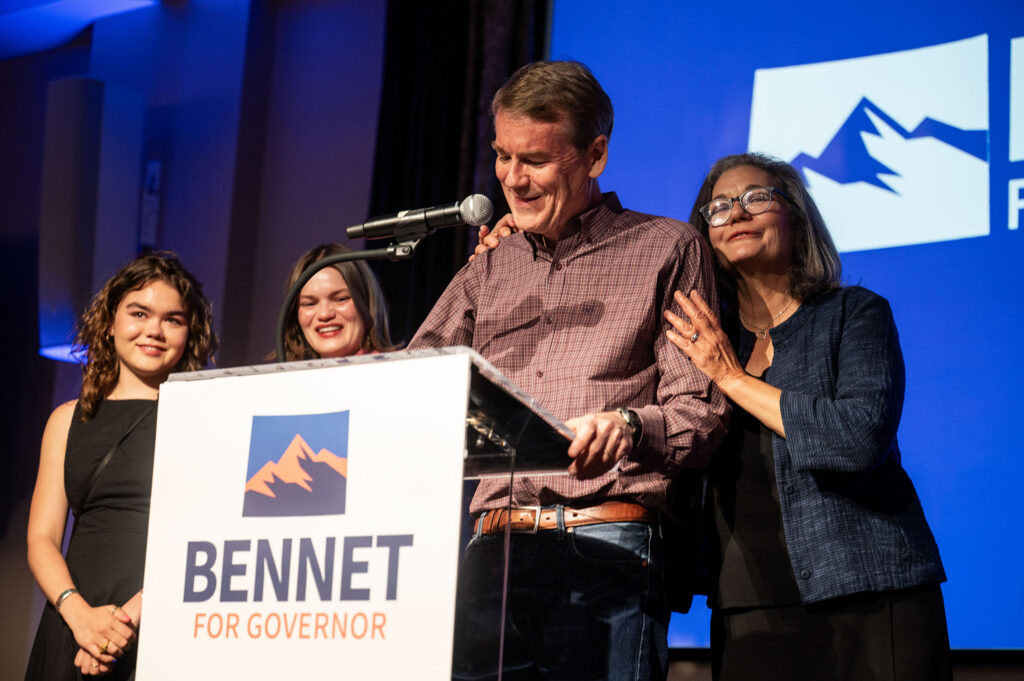
U.S. Sen. Michael Bennet settles campaign finance complaints, admits violating state law
Marianne Goodland
marianne.goodland@coloradopolitics.com
Updated 3 hours ago
U.S. Sen. Michael Bennet’s gubernatorial campaign has agreed to pay a $7,433 fine for using his U.S. Senate campaign account to pay for gubernatorial travel expenses. The July 31 settlement includes an admission by Bennet and his campaign that they...

Colorado to implement new laws on jail standards, safe haven rules, and agricultural labeling
Marissa Ventrelli
marissa.ventrelli@coloradopolitics.com
Updated 3 hours ago
In mid-August every year, a slew of recently passed laws in Colorado go into effect 90 days after the end of the legislative session. This year, all bills without a specified effective date or safety clause — a provision stating...
Colorado records 17th wolf death as CPW kills yearling tied to livestock losses
Marianne Goodland
marianne.goodland@coloradopolitics.com
Updated 4 hours ago
A yearling male wolf in Grand County has become the 17th wolf to die in Colorado in the past two years. Colorado Parks and Wildlife announced the wolf was killed by staff on Aug. 4, because it was believed responsible...

Keeping Colorado’s kids’ trust online | PODIUM
Colorado Politics
colorado-politics@coloradopolitics.com
Updated 17 hours ago
By Stuart Jenkins Almost every day, the kids and teens we serve across Colorado are introduced to new generative artificial intelligence and other emerging technology, including conversational AI systems designed to simulate human conversation. These tools are no longer a...

Marx’s ‘through line’ predates Trump, connects to Maes | FEEDBACK
Colorado Politics
colorado-politics@coloradopolitics.com
Updated 17 hours ago
Eric Sondermann is of course correct Victor Marx is an unserious, unelectable, embarrassing Republican nominee for governor of Colorado. But I respectfully submit that the “through line,” as Mr. Sondermann describes it, is not from Trump to Marx, despite their...

Federal judge rejects DOJ bid to force Colorado to hand over voter information
Marissa Ventrelli
marissa.ventrelli@coloradopolitics.com
Updated 23 hours ago
A U.S. district court judge has dismissed a lawsuit filed by the U.S. Department of Justice against Colorado Secretary of State Jena Griswold for refusing to provide the agency with personal voter information. Last December, the DOJ’s Civil Rights Division asked...

Cedric Pride’s blueprint for opportunity through the trades | The OpEdge Podcast
Tony Olivero
tony.olivero@gazette.com
Updated 1 day ago
Cedric Pride, CEO of the nonprofit Pride Initiative in Denver, joins The OpEdge with a blueprint for workforce development, skilled trades, and economic opportunity. Pride tells host and investigative columnist Jimmy Sengenberger why he believes the trades offer a path...
PREV
PREVIOUS

Colorado kids will die with CDC's recent changes to vaccine schedule | OPINION
By Connie Ingram and Lesley Thompson No parent or grandparent should ever face the terror of watching a child fight for their life against a disease that could have been prevented. Yet more families could be put in exactly this position because of the U.S. Centers for Disease Control and Prevention’s recent decision to change […]

Colorado wildlife officials report first wolf death of 2026 as mortality count reaches 13
Colorado Parks and Wildlife announced late Monday that another British Columbia female gray wolf, known as 2504-BC, was found dead in northwest Colorado on Friday. No cause of death nor an exact location of where the wolf was found was disclosed by CPW. A necropsy will be performed by the U.S. Fish & Wildlife Service. […]