

Local school boards to Colorado board of ed: Butt out on charter schools
For those who believe strongly in the premise of local control of school districts by the people elected to run them, the idea that the Colorado State Board of Education can overrule local decisions on charter schools rankles.
Case in point: Jefferson County. Last year, the local school board gave grudging approval to a charter school backed by the Walton Family Foundation as well as a Walton family member. The school – known as Great Work Montessori – promised it would serve a population that didn’t have access to Montessori education. That’s not entirely accurate: there are two other Montessori schools that accept Jefferson County students within a mile of the Great Work site, including a pre-K school just three blocks away.
That wasn’t the only problem with the charter’s application. According to the Jeffco District Accountability Committee, the application was rife with spelling and grammatical errors – a bad sign for a school, the DAC said – and its financial projections were unrealistic, given that it intended to rely on grant funding from the Foundation.
Those concerns, and the lack of transparency by the charter board in its dealings with the Foundation, led the Jeffco school board to reject the charter application on its first go-round. The charter’s board appealed to the State Board of Education, which ordered the Jeffco board to reconsider.
That’s when everything changed. The Jeffco board knew that if they rejected the application a second time, the charter would appeal to the state board, which would then order Jeffco to accept the charter. The Jeffco board made the best deal they could, including setting an enrollment target of 137, which they hoped would be big enough to meet the charter’s financial projections.
Great Work Montessori didn’t make that enrollment promise. The Colorado Department of Education reported that the school enrolled 125 in its annual counting day last October, with 83 students in the Pre-K and full-day kindergarten portion of the school. The charter, which is supposed to serve low-income families, charges parents between $50 and $1,500 per month for those students. For grades one through three, the school enrolled 42 students; half in grade one, another dozen in grade two and nine in grade three. The school plans to add grades every year until it reaches sixth grade.
The Great Work story has been repeated at least a half-dozen times in Colorado in the past several years. According to Westword, between January 2015 and August 2016, the state board of education forced local school districts six times to accept charter schools whose applications were rejected by the local boards.
That included the Hope Online Learning Academy in Aurora, the lowest-rated school in the district. The Aurora School Board voted unanimously not to renew its charter. The state board of education voted unanimously to force the district to renew it. That state board vote took place after several board members toured the academy’s facilities at the charter’s request, a contact that the Attorney General’s office said was “in error” but didn’t rise to the level of an ethics violation.
That the state board of education has final say over charter schools, including those that fail to meet enrollment targets or don’t meet academic requirements, is troubling to local school districts as well as the Colorado Association of School Boards, which is backing a bill that will be heard Thursday in the Senate Education Committee.
Senate Bill 118 would put local school boards back in control on charter school applications. The bill would still allow a charter board to appeal a denial to the state board of education, but they would only get one bite of the apple. A second appeal, which was what Jeffco was trying to avoid, would go away and the decision of the local school board on the second request would be final.
Jeffco school board President Ron Mitchell told Colorado Politics that the Great Work Montessori school is in financial stress because of its failure to attract enough students to meet its budget projections. However, Mitchell said he expects the Walton Family Foundation will continue to prop up the school financially, at least for now. Great Work Montessori’s head of school, Amy Malick, did not respond to a request for comment.
It’s not like Jeffco, or any district, can afford a charter school that can’t meet its enrollment or financial targets. The district closed one elementary school last year in a low-income neighborhood and is moving sixth graders into middle schools, both for budgetary reasons.
Jeffco charters have a habit of running into early financial trouble. In a series of stories this reporter wrote for the Colorado Independent in 2016, the district revealed that nine of the 16 charter approved in the past decade opened with fewer students than projected, and the district has had to extend lines of credit in the hundreds of thousands of dollars to keep them afloat. Those that took advantage of those lines of credit have since repaid them.
Given that Great Work Montessori didn’t hit their enrollment targets, Mitchell said he questioned where the board is making budget cuts and how that impacts the school and its students. The DAC report indicated that budget cuts would jeopardize the school’s accreditation with the international Montessori association.
There’s another question that Mitchell has, and that’s on accountability. “I wish some of our legislators would carry accountability legislation that would provide someone with the legal authority for oversight of taxpayer dollars when it comes to charter schools. There’s a great case to be made for increased oversight,” he said.
Mitchell added that once a charter school has been approved, oversight responsibilities are essentially turned over to a local, unelected charter board that is not responsible to the taxpayers.
Mitchell said his board has not yet taken a position on SB 158 although he supports it, as does other members of the school board. “This goes back to our local control issue,” Mitchell said. “I believe that at the local level, we have a better handle on the needs of our districts and what would be good to add to our portfolio.”
The state board cannot have that kind of knowledge or insight, Mitchell said. “And based on their track record of sending any charter school rejection right back to us, and forcing us to approve it, is weak public policy.”
Jeffco board member Amanda Stevens said that Great Work Montessori is now a Jeffco public school and the board wants it to succeed. But it’s best when decisions are made at the local level, she said.
They’re not alone in that view.
The Cherry Creek School District has also been forced to accept charter schools its board rejected. In a statement to Colorado Politics, the board said that “too often, the wishes, concerns and suggestions of parents and local taxpayers in the creation of a new charter school are discounted by the State Board of Education.”
That leads to a situation where “there is little incentive for new charter applicants to engage and negotiate with local communities and school boards because they know the State Board of Education will likely give them whatever they want. Our good relationships with our charter schools are based on a culture of working together collaboratively from the beginning. This bill restores a balance in the process and encourages a two-way conversation in the chartering process.”
Americans for Prosperity-Colorado has already weighed in on the bill and found it lacking. “The bill would severely restrict charter schools’ due process if their initial request to certify or renew their charter is denied,” said Jesse Mallory, AFP Colorado state director. “If this proposal becomes law, district school boards could abuse their power to restrict charter school growth or even force charter schools to close.”
Dan Schaller, director of government affairs for the Colorado League of Charter Schools, says his group is opposed, too, mainly because the system has been working very well for the state. “If it ain’t broke, don’t fix it.” he said.
Schaller also pointed out that those who question the state board’s authority should remember that the state board is responsible for general supervision of public schools. “They’re the critical arbiter in cases of disputes and disagreements,” he said.
The bill’s biggest problem is likely to be who’s carrying it: Democratic Sen. Michael Merrifield of Colorado Springs, whose bills are not particularly well-regarded by Senate Republicans. Merrifield and CASB acknowledge that the bill likely won’t make it out of Senate Education, but they’re willing to give it a go just to get the conversation started.
“Colorado believes passionately in local control,” Merrifield told Colorado Politics recently. “If you believe in local control, and school boards are locally elected, you should believe that the decisions about school districts and schools should be left to the school board.”
Currently, he said, if a charter proponent comes to the local school board and wants a new charter school, and the school board has a valid reason to say no, the charter can go to the state board.
The state board then says “sorry, local district, we want you to have this charter school, whether you need it, whether there’s any reason for it, you’re going to have it,” Merrifield explained.
Merrifield said he just wants to go back to the concept that has guided schools for 100 years. “Local school boards make the local choice.


Tunnel to Towers brings 9/11 steel to Denver
Nicholas Fogleman
nicholas.fogleman@denvergazette.com
Updated 2 hours ago
A nationwide tour commemorating the 25th anniversary of 9/11 brought a piece of the World Trade Center to Denver on Saturday as the Tunnel to Towers Foundation hosted a ceremony at the Wings Over the Rockies Air & Space Museum....
Top officials in Arizona’s Maricopa County agree on how to oversee elections | OUT WEST ROUNDUP
The Associated Press
the-associated-press@coloradopolitics.com
Updated 5 days ago
ARIZONA Officials agree on election oversight PHOENIX — Election officials in Arizona’s most populous county reached an agreement a week before the state’s July 21 primary on how to jointly oversee the vote, ending a prolonged legal battle. Republican Maricopa...
First Air Force Academy class of just 306 cadets started out in WWII barracks, faced high standards
Mary Shinn
mary-shinn@coloradopolitics.com
Updated 2 hours ago
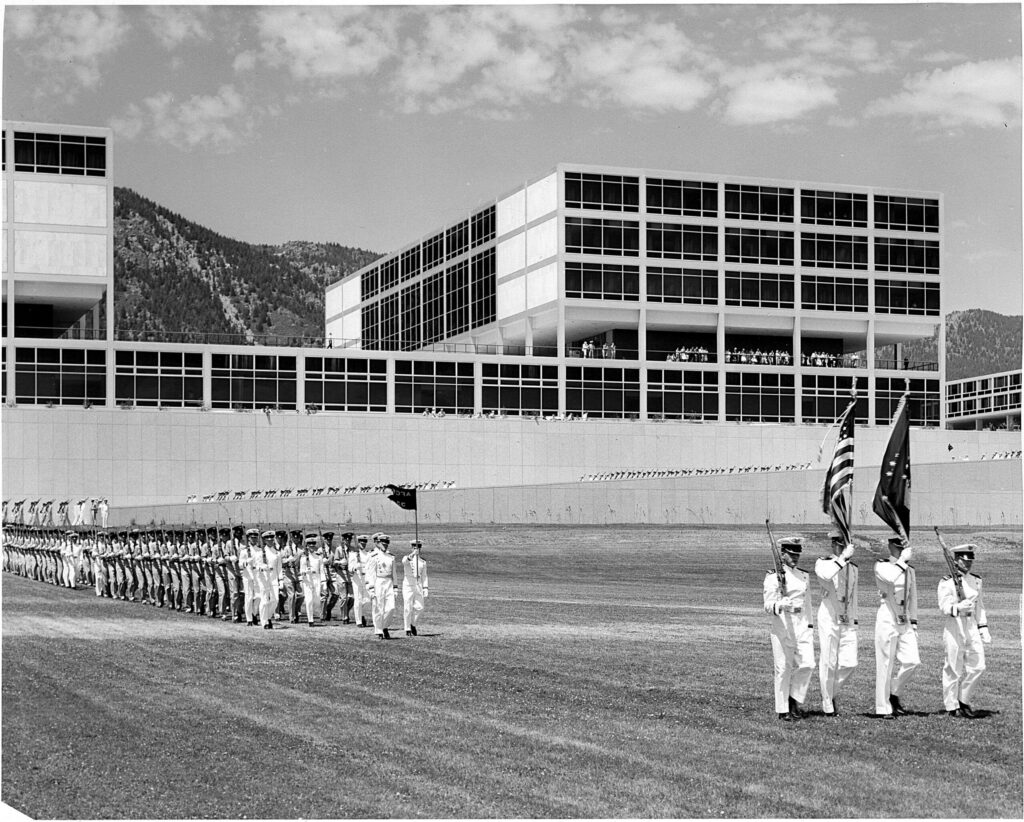
When the first class of the Air Force Academy arrived at Lowry Air Force in Denver, they were welcomed with an air show featuring bombers and fighter jets. “Most of us were overwhelmed,” recalled retired Col. Max Miller, the president...

Colorado Politics Calendar Aug. 3-9
Rachael Wright, Special to Colorado Politics
rachael.wright@coloradopolitics.com
Updated 5 days ago
CoPo’s weekly political calendar will help you find political and public-policy events throughout Colorado. It includes candidate and issue campaign events, public policy meetings, court hearings, state and local party conventions, assemblies, debates, rallies, parades, speaking engagements, traveling dignitary appearances,...

The primary political reform and precondition for all others | SONDERMANN
Eric Sondermann
eric-sondermann@coloradopolitics.com
Updated 5 days ago
In its current state, the American political system has no end of ailments. Far too many factors accelerate polarization and work against moderation and narrowing the differences. Media, and the way so many citizens limit themselves to agreeable, reinforcing sources,...
Susemihl wins surprise victory to replace Steve Durham as Colorado Springs state senator | A LOOK BACK
Rachael Wright, Special to Colorado Politics
rachael.wright@coloradopolitics.com
Updated 5 days ago
Forty-five years ago this week: In a closed session, the vacancy committee for Colorado’s Senate District 12 selected attorney Peter Susemihl to complete Sen. Steve Durham’s, R-Colorado Springs, term. Durham resigned his seat to become Region 8 Director of the...
Judge denies Calderon injunction case against Denver, Johnston
Deborah Grigsby
deborah.smith@denvergazette.com
Updated 2 hours ago
A U.S. District Court judge has denied a preliminary injunction in the case of Jessica Calderon, the Denver city employee who won a temporary restraining order preventing the City and County of Denver from terminating her amid the 2025 citywide...

10th Circuit partially revives lawsuit over 2020 Denver protest injuries
Michael Karlik
michael.karlik@coloradopolitics.com
Updated 21 hours ago
The Colorado-based federal appeals court revived a man’s claims against Denver on Friday after concluding a trial judge resolved the case in the city’s favor without analyzing two of the three instances of alleged excessive force and other constitutional violations....

At conservative summit, Colorado Republican leaders concede Democrats’ election edge
Marissa Ventrelli
marissa.ventrelli@coloradopolitics.com
Updated 2 days ago
Four Republican state lawmakers told attendees at a gathering of conservative leaders on Friday they doubt their party can win statewide races, noting that Colorado’s electorate has been shifting toward Democrats but adding they see an opening in several pockets....

Federal judges find Colorado immigration judge violated several orders
Michael Karlik
michael.karlik@coloradopolitics.com
Updated 2 days ago
Multiple federal judges in Colorado have freed people from immigration custody after determining that one immigration judge violated their directives for properly conducting bond hearings. For nearly a year, Colorado’s U.S. District Court has faced a flood of habeas corpus petitions...
PREV
PREVIOUS

Cory Gardner, Michael Bennet propose DACA fix with $25 billion for border security
Colorado U.S. Sens. Cory Gardner and Michael Bennet introduced immigration legislation Wednesday that includes a path to citizenship for certain young immigrants and funding for President Donald Trump’s border wall. “This amendment is a reasonable solution to break through Washington gridlock and provide a compromise for Dreamers who are counting on us in Colorado and around […]

Lt. Gov. Donna Lynne hits the road to talk about affordable housing
Lt. Gov. Donna Lynne will be talking about affordable housing away from her own homestarting Friday, with town hall meetings in Denver, Boulder, Pueblo, Cañon City, Carbondale, Grand Junction, Glenwood Springs and Steamboat Springs. Lynne is the state’s chief operating officer and in her spare time she’s a Democratic candidate for governor, hoping to take […]