

Lakes Powell and Mead have a little to cheer about to start 2018
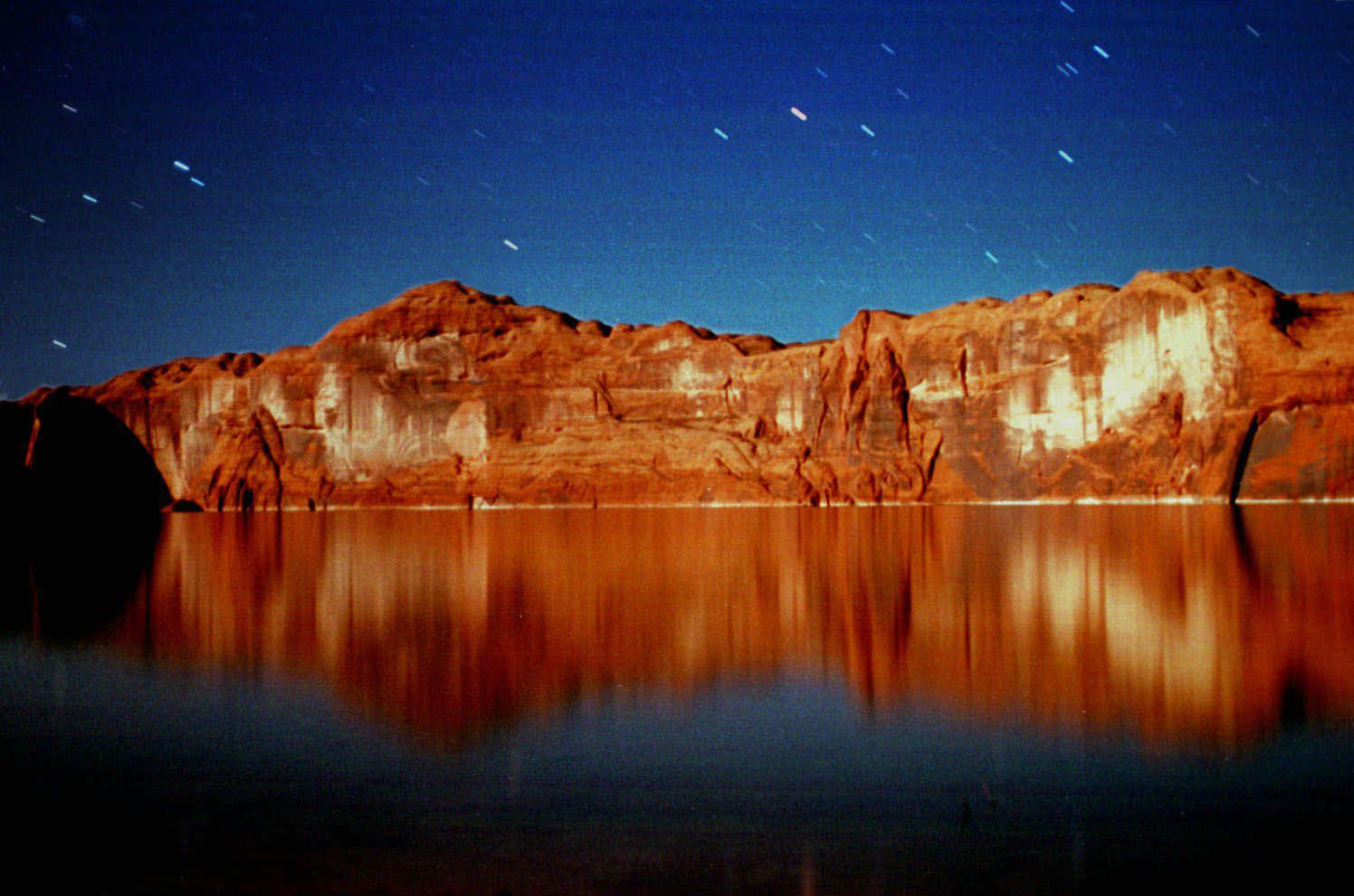
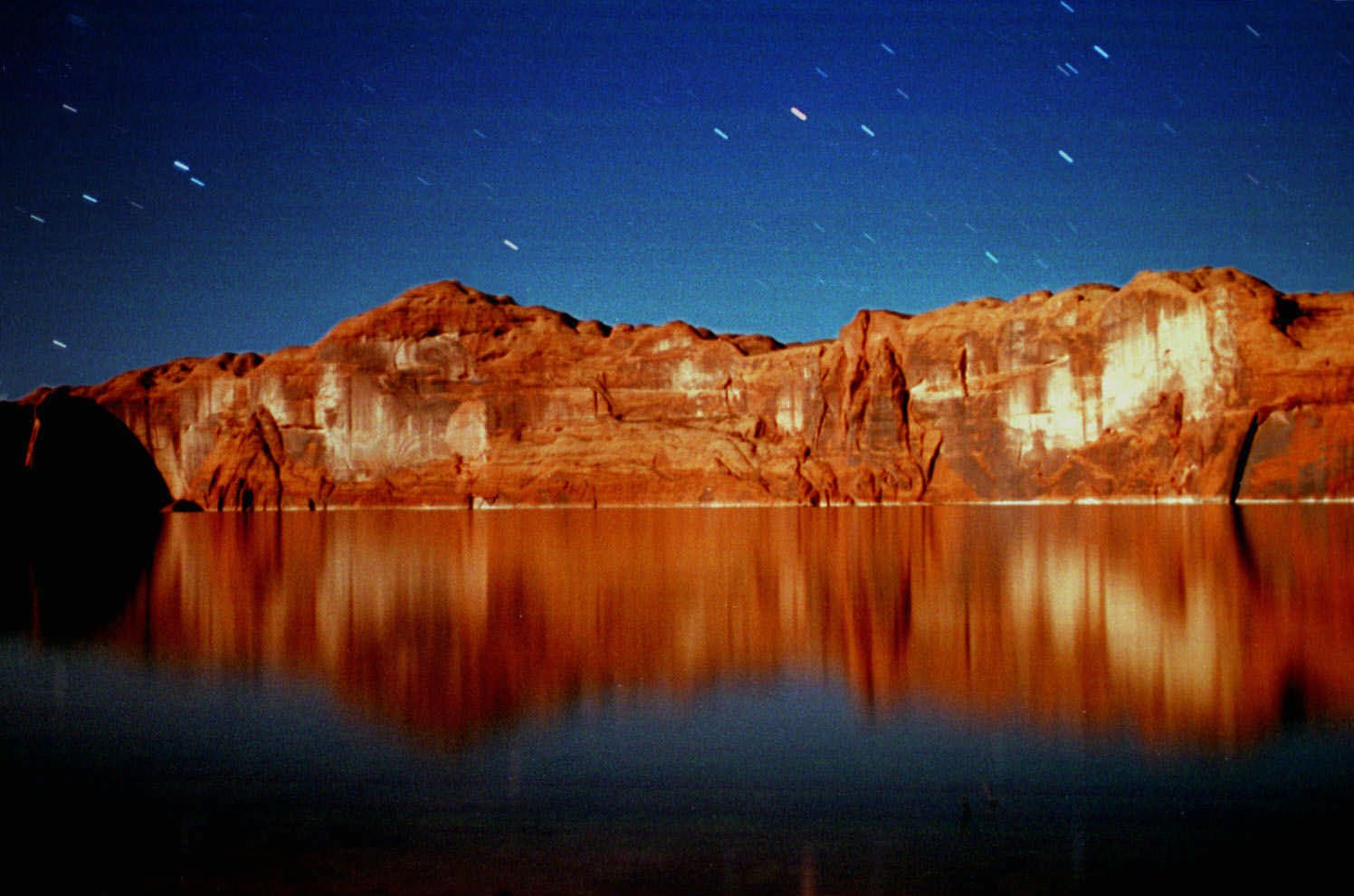
There’s a little good news at the beginning of 2018 regarding water usage along the Colorado River. Lakes Powell and Mead both ended 2017 at higher levels than at the end of 2016.
Water.data.com reported Jan. 1 that Lake Powell, at 490 feet, is at the highest it’s been since 2012, and about 22 feet higher than a year ago. Lake Powell is a reservoir located on the Utah-Arizona border. Lake Powell is the “bank” for the upper basin states of the Colorado River, which includes Colorado, Utah, Wyoming and New Mexico.
Lake Powell also sends water along the Colorado River to Lake Mead, just east of Las Vegas. Lake Mead’s water powers the Hoover Dam, which provides electricity to Las Vegas, among other uses.
Lake Mead had a good year, too, with a water level about two feet higher than a year ago. The water level at Lake Mead at the end of 2016 was at 1,075 feet. This year’s end level was 1,082 feet.
That 1,075 foot-level is critical for Lake Mead. Anything below that could trigger a shortage declaration, and mandatory water reductions for the lower Colorado River basin states – Nevada, California and Arizona – and Mexico.
The improvements might not seem like much, but according to John Fleck, director of the water resources program at the University of New Mexico, that additional water in Mead and Powell represents about 2 million more acre-feet of water. An acre-foot of water is the amount of water it takes to cover, say, Mile High Stadium from endpost to endpost with one foot of water, or about 326,000 gallons. That’s the amount two families of four, on average, would use in a year.
Fleck attributes the higher water levels to an above-average year with snowmelt in the Sierra Nevada mountains of California. But the biggest cause, he says, is that residents of the three lower Colorado River basin states have used far less water than they’re allotted.
Fleck, in his blog Inkstain, claimed the use of Colorado River water by residents of California and Southern Nevada is down 25 percent since its peak in the early 2000s. Arizona is also taking less water than it has in previous years.
At the same time, population in the three states has grown 55 percent. “This is not the result of a shift to groundwater, this is straight up conservation success,” Fleck wrote.
“The lower basin states have all recognized that the old large water supplies they depended on aren’t there anymore,” Fleck told Colorado Politics Tuesday. He believes that realization has been key to reducing water use in those three states, through water-saving techniques like lawn buybacks, more efficient water fixtures and more water-efficient development.
Fleck believes that message that less water is available has not yet taken hold in the upper basin states, including Colorado. The message from the lower basin states, he said, is that once they realize they will get less water, they find ways to conserve. “I’m confident Colorado and the other upper basin states will get there. You can use less water and still have a robust economy.”
While the improved water levels is definitely good news, it’s not even close to time to pop open the champagne or the bottled water, said James Eklund, former director of the Colorado Water Conservation Board and now an attorney in private practice. Eklund represents Colorado on the Upper Colorado River Commission.
Eklund told Colorado Politics Tuesday that he’s been monitoring the water levels at Mead and Powell closely, and is pleased that the lower basin states have taken less water than they’re entitled to. The river, as a result, “is better off than it otherwise would be. It’s a great indicator of what good solid management decisions can do.”
But that great snowpack year isn’t likely to repeat in 2018, he said, which raises concerns that the water levels could again drop to critical levels. And at the same time, both the upper basin and lower basin states need to solidify their drought contingency plans, Eklund said.
In the lower basin, a drought contingency plan would help prevent Mead from dropping too low, which would trigger mandatory water reductions. For the upper basin states, a drought plan would keep Powell from dropping below its critical levels and still maintain its ability to produce hydroelectric power.
That’s important for Colorado, where almost everyone outside of most urban areas benefits from Lake Powell electricity. Chris Treese, government affairs director for the Colorado River District, told Colorado Politics Tuesday that Lake Powell hydroelectricity supplies power all over the Western United States. In Colorado, that power goes to rural electric associations as well as Colorado Springs, Treese said. Even Eastern Plains farmers and ranchers benefit from the power produced by Lake Powell, because it means lower costs for electricity.
“Another couple of dry years” and Powell could fall below the level it needs to produce power, Treese said.
The contingency plan for the Upper Colorado basin states is looking at how to put additional water into the river, and finding alternative ways for keeping water in the river that was previously consumed. The upper basin Colorado is already in a deficit in the amount of water the river is supposed to supply, Treese said, although not to a level of requiring water reductions.
Another part of the drought contingency plan intends to bring in farmers and ranchers to help figure out how quickly farmland can return to full productivity after the land has been fallowed for a year or more, the costs of fallowing as well as impacts.
But it’s snowpack that everyone is watching to see if 2018 keeps both lakes supplied. The Upper Colorado Basin snowpack has been above average since 2013, but predictions for 2018 indicate precipitation in the southwest could be 33 to 40 percent below average.
Lake Powell hasn’t been at full capacity since 1998.

Secret Service confirms awareness of Iranian state media video threatening Barron Trump’s life
The Associated Press
the-associated-press@coloradopolitics.com
Updated 8 minutes ago
WASHINGTON (AP) — The U.S. Secret Service has confirmed it is aware that Iranian state media has aired a video that appears to threaten the life of Barron Trump, President Donald Trump’s youngest son. “The U.S. Secret Service is aware...

Federal judge hears arguments about Colorado’s 3-day gun purchase waiting period
Michael Karlik
michael.karlik@coloradopolitics.com
Updated 6 minutes ago
A federal judge heard arguments on Monday about the constitutionality of a 2023 Colorado law that generally imposes a three-day waiting period on firearm purchases after the initiation of a background check. The test that the U.S. Supreme Court created...
US set for largest mass visa revocation in history targeting up to 200,000 foreigners, officials say
The Associated Press
the-associated-press@coloradopolitics.com
Updated 11 minutes ago
WASHINGTON (AP) — The Trump administration is preparing to revoke the business and tourism visas of up to 200,000 foreigners who have applied for or are currently seeking asylum status in the United States. If it happens, the move would...
U.S. Supreme Court clears way for Trump mail voting order in advance of midterms
Wire Services
wire-services@coloradopolitics.com
Updated 16 hours ago
WASHINGTON • The U.S. Supreme Court on Monday cleared the way for President Donald Trump to move ahead with an executive order that seeks to restrict the mailing of ballots to American citizens in an eligible voters list. The executive...

Colorado Supreme Court intervenes in Weld County prosecution dismissed due to Missy Woods misconduct
Michael Karlik
michael.karlik@coloradopolitics.com
Updated 15 hours ago
The Colorado Supreme Court ordered a Weld County trial judge last week to respond to the district attorney’s claim that he improperly dismissed a criminal case because of “outrageous” conduct by the Colorado Bureau of Investigation. Daniel Lee Eatinger stood...

Trump opens ‘economic D-Day’ offensive against Iran as war nears six-month mark
Christian Datoc
christian-datoc@coloradopolitics.com
Updated 20 hours ago
President Donald Trump is seeking to increase the financial pressure on Iran with new secondary sanctions on nations and foreign actors propping up the regime’s economy as the war between the United States and Tehran nears the six-month mark. Treasury...

Trump announces 50% tariffs on Canadian cars, auto parts, and steel
Naomi Lim
naomi-lim@coloradopolitics.com
Updated 20 hours ago
President Donald Trump escalated the trade war with Canada after talks collapsed last week, announcing Monday that the United States would impose 50% tariffs on cars, trucks, automotive components, and steel starting Jan. 1, 2027. “Canada has been ripping off...

Iran puts out propaganda video tracking Barron Trump’s location, offering $10 million for his assassination
Timothy Nerozzi
timothy-nerozzi@coloradopolitics.com
Updated 22 hours ago
The Islamic Revolutionary Guard Corps is putting a hit out on President Donald Trump’s son, Barron Trump, with an inflammatory video claiming to track his location. State-run television in Iran is broadcasting a propaganda video claiming to show the locations...
Nevada sues Trump administration over Colorado River cuts
Marianne Goodland
marianne.goodland@coloradopolitics.com
Updated 14 hours ago
On Monday, the state of Nevada filed a lawsuit against the Trump administration and Interior Secretary Doug Burgum, seeking to block the Colorado River management plan. On Friday, Burgum released a “record of decision” that would reduce water allocations to...

Healthcare Freefall: Longer drives, fewer options for maternity care in Colorado
Thelma Grimes
thelma.grimes@coloradopolitics.com
Updated 24 hours ago
Editor’s Note: Colorado’s healthcare system is entering a period of accelerating instability — a “tsunami,” as multiple leaders describe it — driven by collapsing hospital finances, shrinking Medicaid reimbursements, disappearing services and a political fight over who is responsible for...
PREV
PREVIOUS

Colorado Democrats, Republicans trade shots over Tancredo's participation in Hispanic GOP forum
Seizing upon an ongoing dispute between state Republicans over whether gubernatorial candidate Tom Tancredo can attend a forum sponsored by the Colorado Hispanic Republicans, a spokesman for the Colorado Democratic Party gleefully tweaked the opposition Tuesday. State GOP officials, for their part, shrugged off the jab from across the aisle, with one calling it a […]

The Colorado Springs Gazette: Build on 2017, and make 2018 better in Colorado Springs and beyond
Saying goodbye to 2017 should not be easy tonight. Though anyone can find much to complain about, this was a pretty good year by community and statewide standards. Here’s why: – Locally and nationally, we saw booming economic growth and record stock market gains. – U.S. News & World Report found Colorado Springs the second-most […]