

How Colorado’s congressional delegation voted this week
H.R. 3043: Hydropower Policy Modernization Act of 2017
This was a vote to pass H.R. 3043 in the House.
H.R. 3043 is intended to modernize the regulatory permitting process and encourage the expansion of hydropower generation by improving administrative efficiency and accountability. It creates incentives for new hydropower infrastructure and reduces what the electrical generation industry calls duplicative oversight. The legislation establishes the Federal Energy Regulatory Commission as the lead agency for all hydropower authorizations and requirements of federal law. The bill modifies the definition of renewable energy to include hydropower, extends the timeframe for preliminary permits from three to four years and extends the time limit on construction “for not more than eight additional years.” The legislation also establishes procedures for trial-type hearings conducted by an administrative law judge to resolve disputes over conditions and fishway prescriptions under Part I of the Federal Power Act. In addition, the legislation is supposed to streamline licensing procedures by minimizing duplication of environmental studies and compiling a collection of relevant studies and data that can be used again for additional licensing applications.
Passed.
H.R. 3911: Risk-Based Credit Examination Act
This was a vote to pass H.R. 3911 in the House.
H.R. 3911 amends the Securities Exchange Act of 1934 to make the annual reporting requirements of the Nationally Recognized Statistical Rating Organizations (NRSROs) risk-based. NRSROs are credit rating agencies whose credit ratings are authorized by the Securities and Exchange Commission (SEC) to be used by other financial firms to meet regulatory requirements. The legislation is supposed to reduce the burden on NRSROs of the current reporting requirements while maintaining the necessary transparency. Under current law, the SEC’s Office of Credit Ratings conducts annual examinations of how NRSROs performed in eight specified review areas. The agency also produces an annual report on its findings. H.R. 3911 allows the SEC to use its resources more efficiently by authorizing the Office of Credit Ratings to select which of the eight areas will be reviewed for each credit rating agency. Their choice would be based on the risk of a rule violation, rather than a blanket review of all eight areas each year for all the credit rating agencies.
Passed.
H.R. 3441: Save Local Business Act
This was a vote to pass H.R. 3441 in the House.
H.R. 3441 amends the National Labor Relations Act (NLRA) and the Fair Labor Standards Act (FLSA) to clarify that two or more employers may be considered “joint employers” only if they have “actual, direct and immediate” control over employees’ essential terms and conditions of employment. The legislation rolls back decisions by the NLRB in the Browning-Ferris case and by the U.S. Court of Appeals for the Fourth Circuit in the Salinas v. Commercial Interiors, Inc. case. In those cases, the NLRB and the federal appeals court changed the three-decade-old definition of “joint employment” in a way that created greater liability and costs for businesses. The NLRB’s 2015 definition of joint employer could make companies liable for labor violations committed by other employers with whom they contract, even if they exercise only indirect control over the other employer’s workers. The legislation passed this week returns to a pre-2015 definition of joint employer to mean the only possible liability would be for employers who hire and supervise workers and determine each employee’s pay rate.
Passed.
H.R. 3922: CHAMPION Act
This was a vote to pass H.R. 3922 in the House.
This bill would extend funding for Community Health Centers and other health programs for two years. It would shorten the grace period to repay delinquent premiums for persons receiving government subsidies for non-group health insurance. It also would reduce federal funding for the Prevention and Public Health Fund. The Congressional Budget Office estimated the extensions for Community Health Centers funding would increase federal spending by $8.9 billion between 2018 and 2027. Many of the grants under the program are used to pay for infrastructure, management and training to provide health care. Other grants fund diabetes research, sexual abstinence training for young people and scholarships for health care providers who work in underserved communities. The most controversial part of the bill was the shorter grace period for repaying delinquent premiums. Under current law, persons who receive subsidized health insurance are given three months to repay delinquent premiums before the policies are canceled. Just under a half-million of them each year choose to let their insurance lapse after three months rather than pay the delinquent amount. Reducing the grace period to one month before their insurance is canceled would reduce the federal deficit by $4.9 billion between 2018 and 2027, according to the Congressional Budget Office.
Passed.
H.R. 1066: VA Management Alignment Act of 2017
This was a vote to pass H.R. 1066 in the House.
H.R. 1066 would require the Department of Veterans Affairs to submit a one-time report to Congress on the Department’s organizational structure. The report is supposed to describe the roles of individuals and components of the VA. It would draw information from the Independent Assessment of the Health Care Delivery Systems and Management Process of the VA established by the Veterans Access, Choice, and Accountability Act of 2014, as well as any study or report by the Commission on Care established by the Act and other studies or reports that might be relevant. The report is intended to optimize the effectiveness of the VA’s administration and staff, its medical facilities and the Veteran Integrated Service Network. The legislation is a response to a 2015 Independent Assessment on the Veterans Health Administration (VHA) that found its organizational structure “intensely, unnecessarily complex” and rampant with mistrust and risk aversion. Additional Government Accountability Office reports revealed problems with the VA’s human resources department and showed that the VA did not follow internal and congressional recommendations to fix problems, including long wait times for patients and management failures.
Passed.
H.R. 3562: To amend Title 38 of the U.S. Code to authorize the Secretary of Veterans Affairs to provide assistance for adaptations of residences of veterans in rehabilitation programs.
This was a vote to pass H.R. 3562 in the House.
H.R. 3562 would allow employees from the Department of Veterans Affairs’ Home Loan Service assigned to implement the Specially Adapted Housing (SAH) benefit to also be tasked with providing home adaptation to eligible veterans enrolled in the VA’s Vocational Rehabilitation and Employment (VR&E) program. Most of these veterans would fall under VR&E’s independent living track, meaning they are severely disabled. Home adaptations would be limited to the current SAH cap of $77,307, unless the veteran can demonstrate a need for more funding. The VR&E program provides assistance to veterans whose disabilities prevent them from working. It includes the cost of modifying veterans’ homes to enable them to live independently. VR&E has counselors to offer specialized home adaptations to veterans in need. However, they often do not have the proper knowledge of how to appropriately adapt a home. This bill tasks SAH agents who know about home adaptations with additional responsibility of ensuring veterans receive the best in-home care available for them.
Passed.
Source: GovTrack

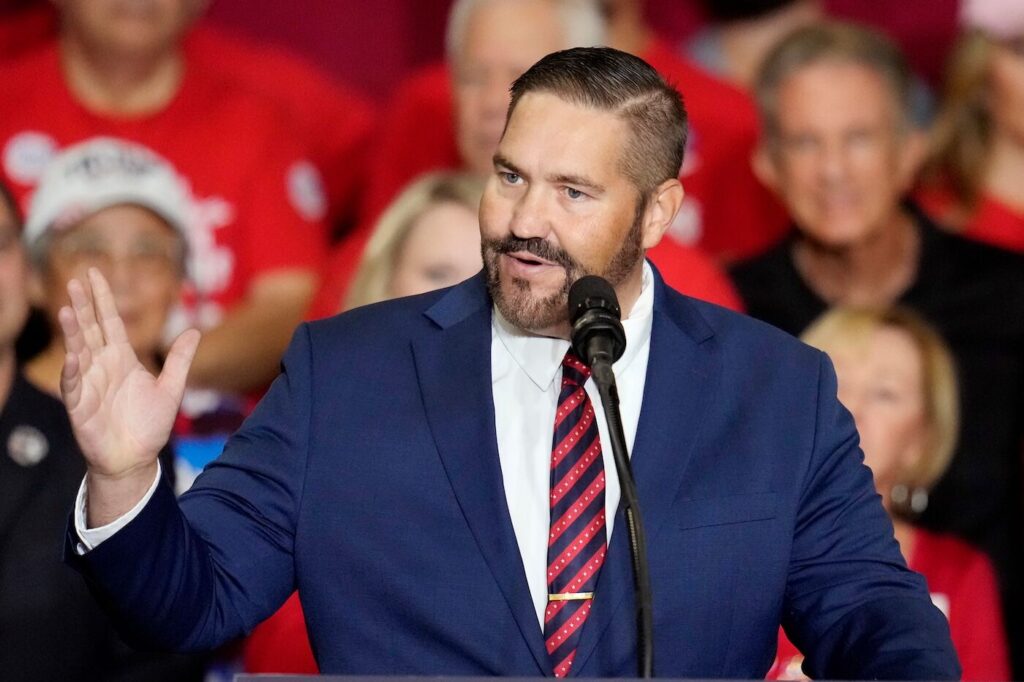
Top officials in Arizona’s Maricopa County agree on how to oversee elections | OUT WEST ROUNDUP
The Associated Press
the-associated-press@coloradopolitics.com
Updated 4 days ago
ARIZONA Officials agree on election oversight PHOENIX — Election officials in Arizona’s most populous county reached an agreement a week before the state’s July 21 primary on how to jointly oversee the vote, ending a prolonged legal battle. Republican Maricopa...
Colorado Politics Calendar Aug. 3-9
Rachael Wright, Special to Colorado Politics
rachael.wright@coloradopolitics.com
Updated 4 days ago
CoPo’s weekly political calendar will help you find political and public-policy events throughout Colorado. It includes candidate and issue campaign events, public policy meetings, court hearings, state and local party conventions, assemblies, debates, rallies, parades, speaking engagements, traveling dignitary appearances,...

The primary political reform and precondition for all others | SONDERMANN
Eric Sondermann
eric-sondermann@coloradopolitics.com
Updated 4 days ago
In its current state, the American political system has no end of ailments. Far too many factors accelerate polarization and work against moderation and narrowing the differences. Media, and the way so many citizens limit themselves to agreeable, reinforcing sources,...
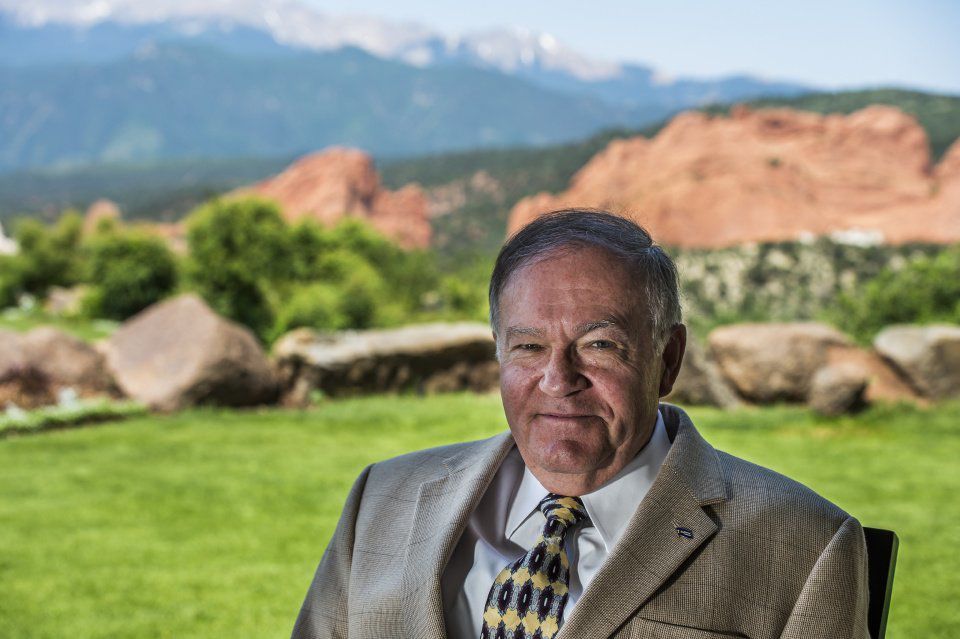
Susemihl wins surprise victory to replace Steve Durham as Colorado Springs state senator | A LOOK BACK
Rachael Wright, Special to Colorado Politics
rachael.wright@coloradopolitics.com
Updated 4 days ago
Forty-five years ago this week: In a closed session, the vacancy committee for Colorado’s Senate District 12 selected attorney Peter Susemihl to complete Sen. Steve Durham’s, R-Colorado Springs, term. Durham resigned his seat to become Region 8 Director of the...

10th Circuit partially revives lawsuit over 2020 Denver protest injuries
Michael Karlik
michael.karlik@coloradopolitics.com
Updated 9 hours ago
The Colorado-based federal appeals court revived a man’s claims against Denver on Friday after concluding a trial judge resolved the case in the city’s favor without analyzing two of the three instances of alleged excessive force and other constitutional violations....

At conservative summit, Colorado Republican leaders concede Democrats’ election edge
Marissa Ventrelli
marissa.ventrelli@coloradopolitics.com
Updated 1 day ago
Four Republican state lawmakers told attendees at a gathering of conservative leaders on Friday they doubt their party can win statewide races, noting that Colorado’s electorate has been shifting toward Democrats but adding they see an opening in several pockets....

Federal judges find Colorado immigration judge violated several orders
Michael Karlik
michael.karlik@coloradopolitics.com
Updated 1 day ago
Multiple federal judges in Colorado have freed people from immigration custody after determining that one immigration judge violated their directives for properly conducting bond hearings. For nearly a year, Colorado’s U.S. District Court has faced a flood of habeas corpus petitions...
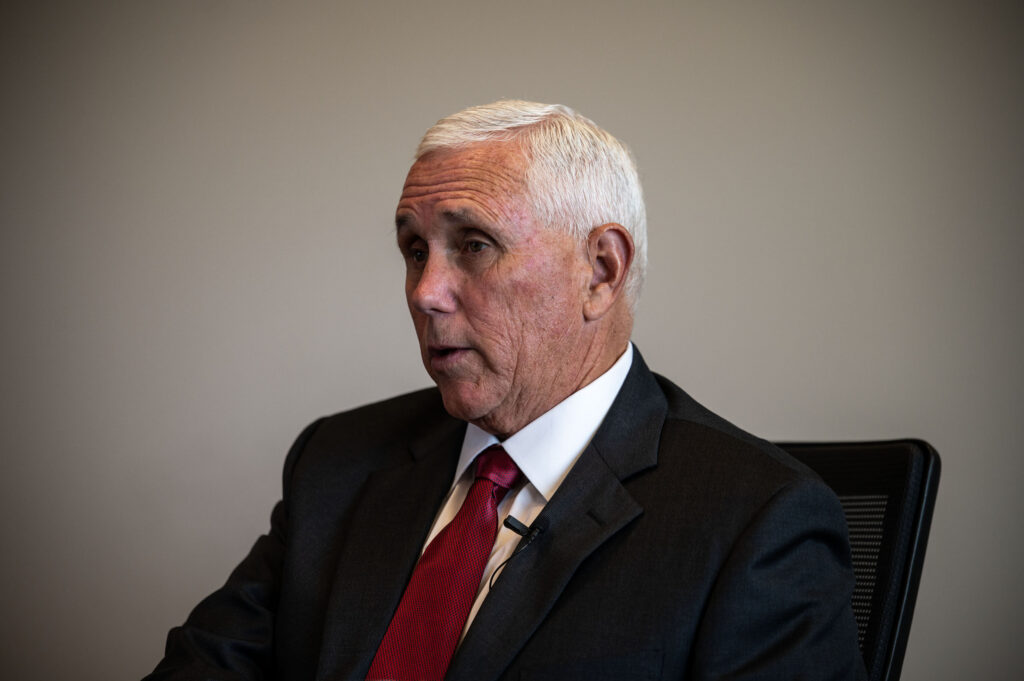
Q&A with Mike Pence | Former vice president says GOP’s populist turn from conservatism isn’t permanent
Ernest Luning
ernest.luning@coloradopolitics.com
Updated 1 day ago
Former Vice President Mike Pence says he’s concerned that the Republican Party has taken a populist turn away from bedrock conservative principles during President Donald Trump’s second term, but he believes the party will return to its roots when Trump...

New federal plan sets short-term rules for Colorado River management
Marianne Goodland
marianne.goodland@coloradopolitics.com
Updated 2 days ago
Interior Department’s plan spares Colorado from mandatory cuts for now After years of stalled negotiations among the seven states that rely on the Colorado River, the federal government on Friday released its own plan for managing the drought-strained system. Calling...
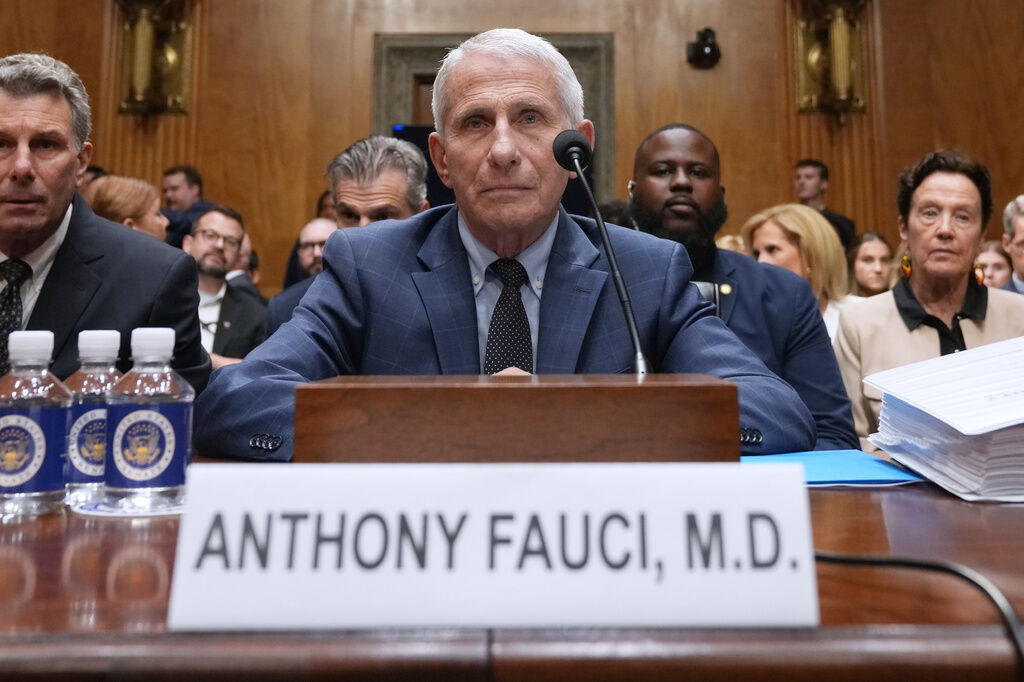
Fauci’s diary details blooming outrage toward ‘far right,’ softness toward Biden and China
Hudson Crozier
hudson.crozier@washingtonexaminer.com
Updated 2 days ago
Dr. Anthony Fauci increasingly railed against “far right” critics of his approach to COVID-19 issues while describing strong support from the Biden White House in his pandemic-era diary, which was recently released by Congress. The former National Institute of Allergy...
PREV
PREVIOUS

Determination and chance lead to reality: Pikes Peak National Cemetery
Nearly two decades after a local coalition began its push for a national cemetery, more than 80,000 Pikes Peak region veterans will soon have a final place to call home. Ground will be broken soon on the Pikes Peak National Cemetery near the Colorado Springs airport after an effort that brought together unlikely allies and […]
Coffman sure on transportation cooperation, not so sure on budget versus taxes
In a wide-ranging 20-minute interview with Colorado Politics Friday afternoon, Attorney General Cynthia Coffman said her transportation plans aren’t quite formed yet, though she recognized it as a critical issue she’ll face as governor. We’ll be bringing our readers more of that interview in the next few days, examining her campaign timing, fundraising and where […]