

Q&A w/Harriet Crittenden LaMair: Planning for the future of a cherished greenway
It meanders across 71 miles of metro Denver, a natural, green ribbon of towering cottonwoods running the length of a seemingly ancient canal bed. It zig-zags through multiple cities and counties, demarcating neighborhoods and helping define them. It is home to as broad an assortment of plant and animal life as you’ll find along Colorado’s Front Range and also serves a host of humans daily: joggers, hikers, bicyclists, bird watchers, summertime day campers on nature walks – the list goes on. Well over a century old, the High Line Canal – manmade yet very much a part of the natural world – is now at a sort of a crossroads as to how it evolves from here. It is also on the cusp of a potential Renaissance, thanks to the creation of a new and groundbreaking organization, the High Line Canal Conservancy. At the helm of that pioneering effort is Harriet Crittenden LaMair, the conservancy’s executive director, who shares in today’s Q&A what already has been accomplished and what lies ahead in the epic endeavor to assure the High Line a new lease on life.
Colorado Politics: The canal was certainly a noteworthy feat in its day – diverting water from the South Platte River at Waterton Canyon across a vast swath of what would one day be a major metropolitan area. Yet, many onetime marvels of engineering become dated, then obsolete and are eventually dug up, torn down or paved over to make way for more modern needs. The High Line survived, but what makes it so special – so worthy of preservation? Why is it important to the future of the Denver area?
Harriet Crittenden LaMair: The Canal is the metro region’s opportunity to permanently claim through protection and planning a significant and enduring recreational and cultural greenway legacy. The Canal physically connects people while enhancing the ecological health of the region and celebrating the unique characteristics of the individual communities along its 71-mile path.
This meandering and often unappreciated old ditch riders’ road weaves through several ecosystems and 11 distinct communities, enabling well over a half-million residents and visitors annually to explore a mosaic of people, places and ecology. In all, the canal corridor comprises nearly 860 acres of land area; that’s larger than New York’s Central Park. Perhaps more importantly, it connects 8,226 acres of additional open space.
Today, many communities around the world are busy planning greenways for their documented social, recreational and environmental benefits. These communities are purchasing land, securing easements and spending hundreds of millions of dollars to build urban trails and greenways. Here at the foot of the Rocky Mountains, we have the High Line Canal, not designed by a famous landscape architect, but hand dug for the functional purpose of bringing water to a growing city. The engineers and investors who built the Canal in the 1880s unintentionally gifted the region one of its crown jewels and one of the longest and most historic greenways in the country.
CP: Some 20,000 acres of agricultural land once took its water from the canal. Does the canal provide anyone water today? Does it have a future as a means of irrigation?
Crittenden LaMair: Today, the Canal is an inefficient means of delivering water to customers and the realities of water scarcity have precipitated the need to reassess the use of the Canal while also recognizing the important role that it currently plays as a beloved recreational resource. The staff of Denver Water is actively engaged in evaluating the use of the Canal as a water delivery system and developing alternatives for its customers, and the utility is openly considering greater beneficial use of the corridor.
As we work with local governments and Denver Water to develop a long-term master plan for the Canal, Denver Water remains committed to working with existing customers to convey water for irrigation, while at the same time, exploring transition to alternate means of delivering water to these customers.
Additionally, Denver Water and the Conservancy are partnering with local governments and other partners, including Urban Drainage and Flood Control District, to evaluate and test the benefits of using the Canal to manage storm water quality enhancement through certain sections of the High Line Canal. Studies have shown that the Canal has tremendous potential to filter and clean storm water, while simultaneously providing needed water for the Canal canopy. In fact, initial studies have shown that stormwater filtered in the Canal would be approximately 40 percent cleaner after remaining in the Canal for 72 hours and that on the average the Canal would potentially be wet 100 more days a year than it has in recent years.
This old leaky Canal can provide, and does, multiple benefits to our region!
Harriet Crittenden LaMair
CP: To some extent, the canal has repurposed itself into a recreational amenity in the generations since its construction for its original, intended use in 1883. That was made possible when the canal’s longtime owner, Denver Water, opened the canal’s service road to public use as a trail. From there, it morphed into a hiking, biking and nature path. What does the establishment of the conservancy bring to the table? What role will the conservancy play from here on?
Crittenden LaMair: We all know the analogy of the neighbors who loved and enjoyed the empty lot or deserted ditch, until one day out of seemingly nowhere a bulldozer turned that cherished slice of nature into a parking lot, or worse. The Conservancy was created first, to provide leadership and to harness the commitment of community leaders throughout the region to create an organizational structure that supports a comprehensive community-based visioning and planning process for the High Line and second, to generate public and private funding to support the vision created through such a process. Conservancies such as the Golden Gate Conservancy in San Francisco and the Central Park Conservancy were created by citizens who believe that through private support and leadership they can do more for a cherished public space than government can do.
While Denver Water is committed to stewardship of the High Line Canal during this time of transition, the reality is that our lovely but leaky canal is now rarely used to deliver water. At the same time the trail’s recreational users have exceeded 500,000 people annually. Towering cottonwoods are disappearing at an alarming rate and water rarely runs, never reaching the northern half of the canal in Aurora. With multiple dangerous road crossings, an increasingly built out environment and a reduction in wildlife habitat and native vegetation, the quality of experience for High Line users will be compromised without leadership and long-term protections and future planning.
Great places don’t happen accidentally. Instead, they are the significant effort of inspired leaders and citizens coming together and having a shared vision for what the future can be. The High Line Canal Conservancy has deliberately designed this incredible community conversation about the High Line Canal to collectively write the story about what the future will look like for the Canal. The Conservancy, in its two-year existence, has successfully led an unprecedented community outreach effort and brought representatives and leaders from 11 jurisdictions and Denver Water to the table to plan for the future of the Canal.
CP: What kind of future does the conservancy envision for the canal? What kinds of enhancements might be a part of the picture?
Crittenden LaMair: Throughout our 12 public open houses we have met with people along all 71 miles of the High Line Canal, from Green Valley Ranch to Douglas County and all the varied communities in between. These 12 public open houses resulted in a consistent message: “Preserve the High Line Canal as an urban refuge.” The themes of the vision are: keep it natural, respect the diverse mosaic of unique communities and landscapes and ensure it is connected and preserved for future generations. The support for this vision for the Canal was overwhelmingly clear with great interest and passion for a real plan for the long-term stewardship of the Canal. The resulting Vision Plan illustrates how the canal corridor can reach its greatest potential as an environmental, recreational, social, historic and economic asset along its 71 miles.
CP: Fund-raising is one of the conservancy’s core duties. How is that going and what sources are you trying to tap?
Crittenden LaMair: Private fundraising is critical to our success in leading this long-term protection and enhancement initiative. We have developed a robust and varied development plan that includes everything from a new membership campaign – “Be a high line hero” – to major-donor gift solicitation that will one day fund new park space and other catalytic enhancements for the corridor. One interesting funding program is the Founding Partners Campaign – a targeted campaign to identify and solicit major gifts from 71 Founding Partners, each representing one mile of the Canal. Each giving $25,000 in increments of 1, 2 or 5 years, the campaign will raise a total of $1,775,000 by 2018. These funds will be catalytic to our long-term multimillion-dollar implementation plan.
CP: What does the conservancy’s mission and work mean for preservation efforts throughout our community in general? How might that mission serve to inspire other such endeavors?
Crittenden LaMair: One of our board’s greatest hopes would be to inspire additional leadership and investment in preservation and growth of the park, trail and open space resources not just in our region but throughout the country. Few of us live near the rainforests or arctic wilderness that attract so much environmental attention. We experience our lives as urban people – by the year 2020, over 80 percent of Americans will live in cities or suburban areas. Everyone needs a place to connect to nature and for hundreds of thousands of people that connection will not occur in a national park or a pristine beach, but in a ditch or empty lot.
CP: You bring to the table a history of public service in your own right, including inspiring land conservation in Cherry Hills Village. What was your inspiration to commit yourself to that cause in the first place?
Crittenden LaMair: My inspiration came from a childhood spent in the outdoors from running and sliding along the glacial clay banks of the inlet in Anchorage, to the crisp and sharp sound of my boots on the frozen ice under a full moon. I was raised in Alaska, and some of my fondest memories are of the empty lot up the street that was filled with beautiful birch trees that we loved to shake in the fall to watch the dancing leaves fall quietly to the ground and in the winter shake again just to experience the piles of snow drop to the cold ground.
Nature inspires and sustains me, and I hope all people will be able to find that sustenance no matter their background or financial means. Connecting to our roots in nature is central to our humanity. For society to thrive in this growing urbanized culture, it is imperative that we preserve and create accessible opportunities in our cities for all of us to experience a place where we can connect to nature.
By the way, we raised two sons and a daughter in Denver. The Canal was an adventure land and imaginary wilderness for us. From discovering found objects and even salamanders in a semi-dry canal to looking for bear prints (or dog) along its wet trail, many a joyful afternoon was spent along its bank. I even went into labor with our youngest along that meandering trail!

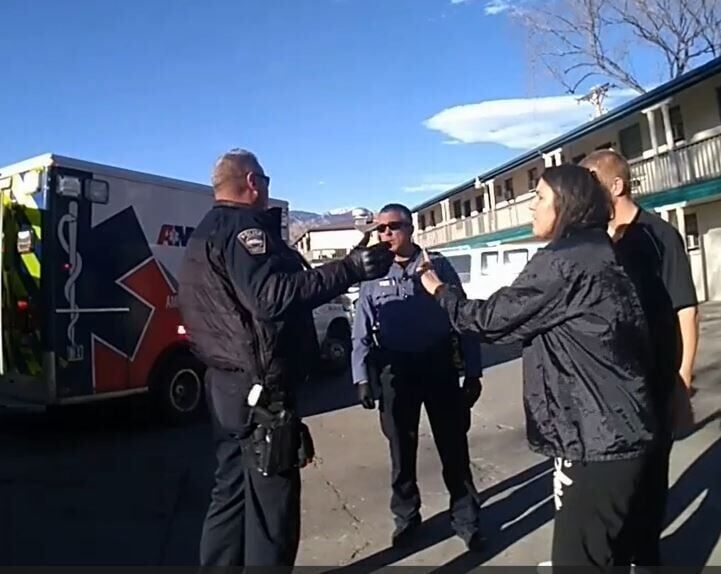
10th Circuit orders new unlawful arrest trial against Colorado Springs officers
Michael Karlik
michael.karlik@coloradopolitics.com
Updated 7 hours ago
The Denver-based federal appeals court concluded on Friday that a trial judge inappropriately allowed jurors to see several unflattering video clips of a plaintiff being belligerent toward police officers during a trial to determine whether police violated her constitutional rights....

Colorado redistricting limits measure heads to November ballot
Marissa Ventrelli
marissa.ventrelli@coloradopolitics.com
Updated 11 hours ago
A proposed constitutional amendment that would prohibit Colorado’s congressional maps from being redrawn outside of election cycles has qualified for the November ballot, according to the Secretary of State’s Office. Under Initiative No. 256, redistricting changes for the 2028 election...
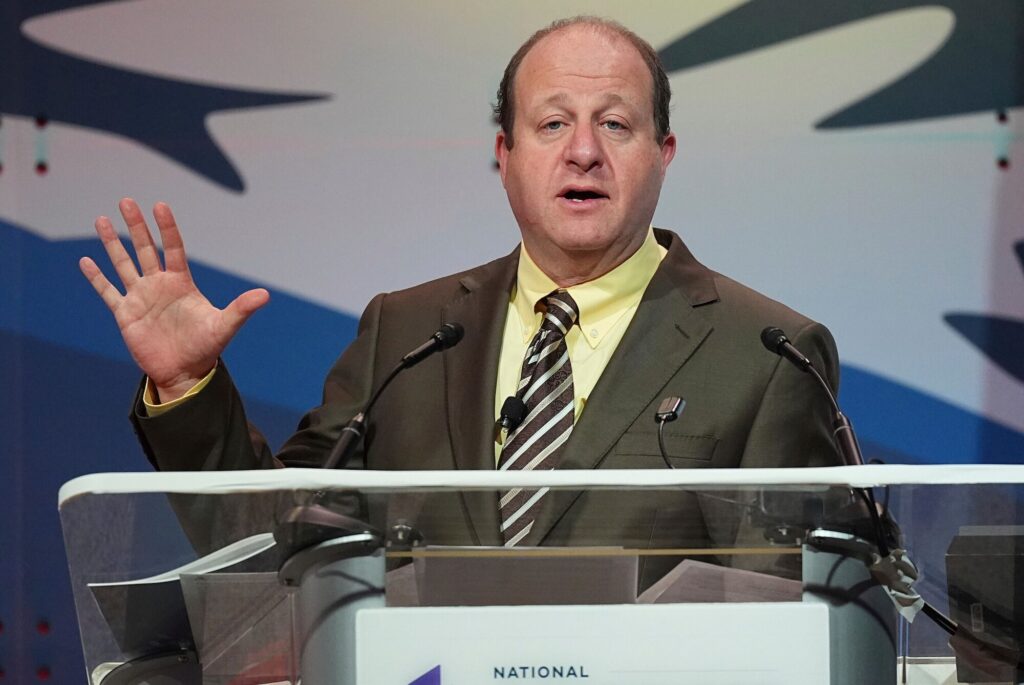
Polis announces ‘Governor for a Day’ contest for Colorado students
Marissa Ventrelli
marissa.ventrelli@coloradopolitics.com
Updated 13 hours ago
Colorado seventh and eighth graders have the chance to experience a day in the life of the governor through a new contest launched by Gov. Jared Polis. The “Governor for a Day” competition will give one student the chance to...
Federal judge to await SCOTUS decision before addressing Boulder County firearm ordinances
Michael Karlik
michael.karlik@coloradopolitics.com
Updated 7 hours ago
A federal judge agreed on Friday that she would await the U.S. Supreme Court’s decision in an upcoming Second Amendment case before she addresses the constitutionality of similar gun ordinances in multiple Boulder County jurisdictions. Rocky Mountain Gun Owners, the...
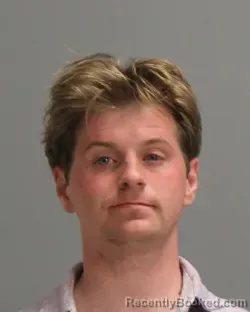
Colorado state House Democratic candidate arrested in Texas for public intoxication
Marianne Goodland
marianne.goodland@coloradopolitics.com
Updated 11 hours ago
A Democrat from Lone Tree who is running for a House seat was arrested in Texas in May on charges of public intoxication and resisting arrest. Christian Schilder, the Democrat, is challenging Rep. Brandi Bradley, the Republican incumbent, in the...
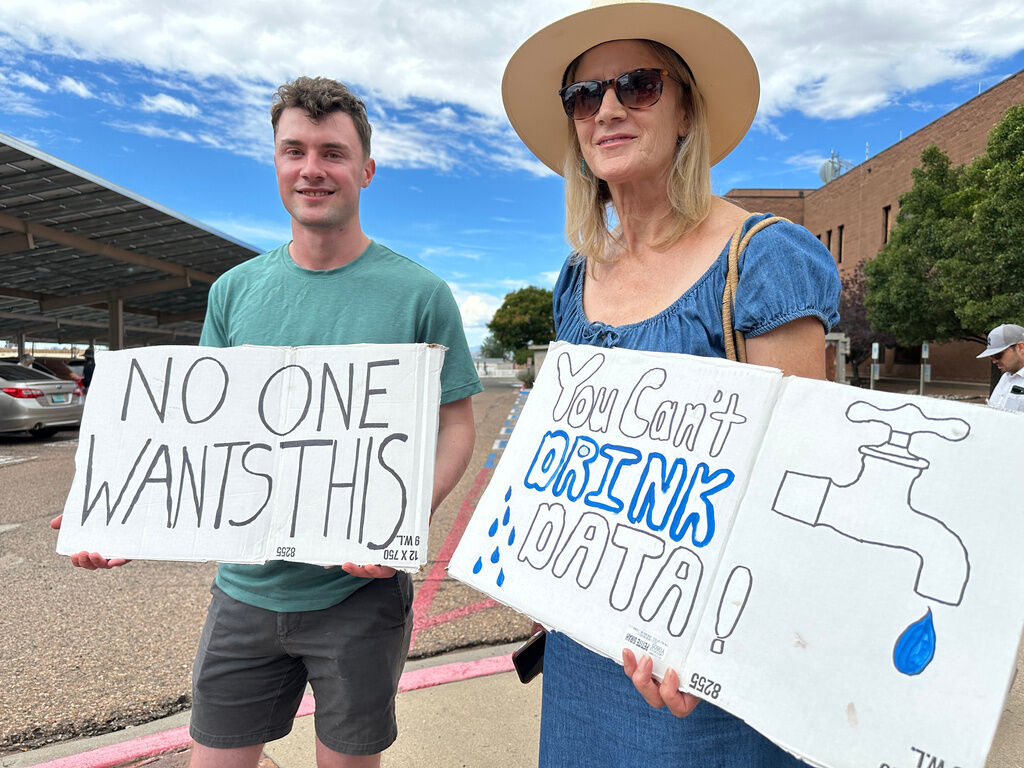
Trump says communities that don’t build data centers will be ‘backwards and poor’
Christian Datoc
christian-datoc@coloradopolitics.com
Updated 13 hours ago
President Donald Trump criticized the rising wave of anti-data center sentiment, clashing with his administration’s aggressive efforts to build out the domestic artificial intelligence sector. Trump has placed a concerted focus on making the U.S. the global leader in AI,...

What happens when robotaxis meet motorcades in DC? The mother of all traffic jams, says AI expert
Rob Crilly
rob.crilly@washingtonexaminer.com
Updated 11 hours ago
Waymo has Washington, D.C. on its list of targets for self-driving taxis. Just two problems: Can they cope with motorcades? And how would lawmakers feel if every time the vehicles grind to a halt in front of the flashing lights...
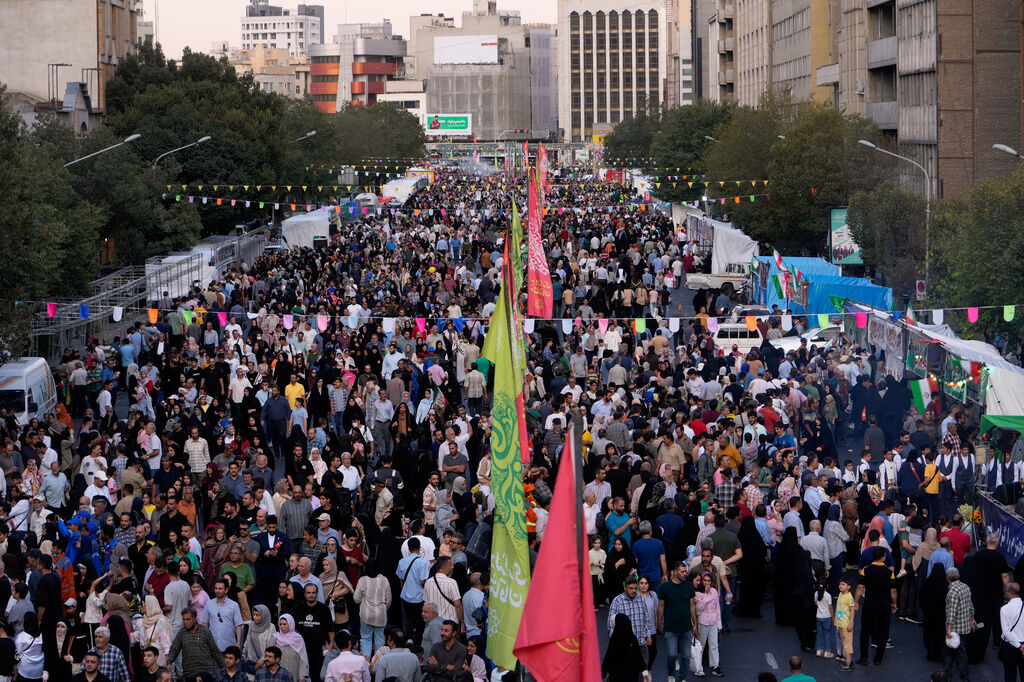
Trump promises retaliation for Iran attacks: ‘We’re going to hit them hard’
Rena Rowe
rena.rowe@washingtonexaminer.com
Updated 15 hours ago
President Donald Trump on Monday vowed to retaliate against Iran following the latest attack on a U.S. base in Jordan, marking a return to military action after weeks of relative calm. “We’re going to hit them hard. There will be...

State Supreme Court names next chief justice, 10th Circuit releases full-court decision | COURT CRAWL
Michael Karlik
michael.karlik@coloradopolitics.com
Updated 15 hours ago
Welcome to Court Crawl, Colorado Politics’ roundup of news from the third branch of government. The Colorado Supreme Court has named its next chief justice, and the Denver-based federal appeals court released a decision that overwhelmingly rejected one of its...

Initiative asks Colorado voters to approve 8th-grade reading standard for ballot measures
Marissa Ventrelli
marissa.ventrelli@coloradopolitics.com
Updated 11 hours ago
A ballot initiative that would require all ballot measures to be written at no higher than an eighth-grade reading level has qualified for the November ballot, according to the Colorado Secretary of State’s Office. The measure, backed by the group...