

Q&A with Jason Glass: Jeffco’s new schools chief on education reform, the transformation of teacher unions — and much more
The sign-off on his emails seems to say it all: “Jason E. Glass, Ed.D., Superintendent & Chief Learner, Jeffco Public Schools.” Chief learner? Indeed; Glass, the recently hired boss of Colorado’s second-largest school district, would have to be a veritable learning machine to have advanced as far and contributed as much as he has in the public education world in such a relatively short time. Fresh from a stint as schools sooper in Eagle County, he served before that as the director of education for the state of Iowa, where he is credited with ushering in groundbreaking reforms. He also has held several posts in Colorado’s Department of Education and, in 2016, was appointed to the National Board for Education Sciences by President Obama. He has a B.A. in political science as well as two master’s degrees, in education and political science. His doctorate is in education, too. Yes, he must love learning.
Politically savvy and media-minded – we made his acquaintance via Twitter – Glass isn’t shy about taking his views to the public. He even cranked out a regular newspaper column on education issues for the Vail Daily while at his previous post leading Eagle County Schools; that’s how he first came to our attention. He doesn’t hold back in today’s Q&A, offering his take on topics including teacher unions, school choice – and his willingness to step into the political cauldron of Jeffco’s schools.
Colorado Politics: Your parents were teachers, as were others in your extended family. Growing up, you saw firsthand that a teacher’s take-home pay is hardly a ticket to the high life. And yet, as you’ve observed in your career as a teacher and an administrator, teachers don’t all perform at the same level. How will we ever rectify the historically humble pay of the people charged with molding our kids’ minds – while compensating them in a way that reflects the value they add?
Jason Glass: I think we can take some lessons from global high-performing systems. In the course of my career, I’ve become a big-time believer in international benchmarking – or the practice of learning about what the best systems do and then working to implement their lessons in your context.
Global high-performers view teaching as a profession which not everyone can or should do. They recruit some of the best and brightest people in their society to become teachers. They have serious and challenging preservice programs which include content preparation, learning how to teach, and a hands-on residency under the direction of a master teacher. Professionals in these systems commit to a lifetime of professional learning – taking the years it takes to really master the art and science of teaching. And, these high-performing systems pay their educators a professional and livable wage.
In the United States, we’ve tended to focus on how to identify and root out the poor performers through Byzantine evaluation systems and firing people. No great workforce in any industry was ever been constructed using such an approach.
The best education systems focus on building a professional model where all of the teachers are of quality. The model on how to build a great system for educator quality is already out there and has been replicated in countries all over the globe, but it takes focused political commitment for years – even decades – to get there. There are no shortcuts to real quality.
CP: Speaking of your parents, was their career choice the inspiration for your decision to go into education?
JG: Absolutely. I grew up learning the reciprocal relationship between the community and its schools – and what a powerful force they could be when they supported one another. I also always had a strong interest in policy and politics. I love the work of being a superintendent because it allows me to professionally practice in all of these areas. I was born to do this job.
CP: While the state education director in Iowa several years back, you were credited with shepherding a sweeping education-reform agenda into law. Its provisions included expanded homeschooling options and steps toward a statewide teacher-evaluation system – but one that wouldn’t be tied to test scores. However far-reaching, and perhaps politically realistic for Iowa, such reforms don’t seem especially aggressive by Colorado standards. This state was a pioneer in the charter-school movement, and has set some ambitious accountability policies. Is Colorado a trend setter? How does it rate nationwide?
JG: Respectfully, I think you are applying too narrow of a standard and a Colorado- and U.S.-specific definition of “reform.” No other state in the country has accomplished anything similar to what Iowa has done in terms of genuine methods of raising educator quality.
The homeschool and evaluation components were actually legislative add-ons to create a politically sale-able bill that could get through a divided legislature. The signature elements of the bill included transformation of the teaching profession through incentives and supports to bring the best and brightest into teaching and at a scale that would make a difference. It also included a statewide teacher leadership structure which put around 20 percent of the state’s teachers into leadership roles, while keeping them connected to instruction and the classroom. It also raised compensation levels statewide to more professional levels. This is not the path Colorado and the rest of the country has followed, but I wouldn’t diminish the significance of the Iowa legislation.
Colorado’s approach to education reform has been focused on test-based accountability, evaluation using test scores to rank teachers, and expanding more school-choice options. I believe schools should always be in a state of reform and improvement, but there are more ways to go about accomplishing that than the policy drivers Colorado has chosen.
Colorado has been a trend setter in terms of test-based accountability, evaluation and expanded school choice, and all of these approaches have some merit. But I have yet to see a system which achieved greatness through pursuing them – Colorado included. I am skeptical of achieving system-wide greatness for our state through these approaches.
If you aren’t doing things which change the student learning experience, the capacity of the educator, and the expectations for learning – and doing these at scale – then you aren’t really changing anything.
CP: What role should charter schools play in the public education portfolio? Is the answer different for different kinds of school districts?
JG: Charter schools are an important part of the public school landscape in our state. We have over 115,000 students in these schools and we need to support them and help them be successful. For me, that’s not political – it’s about what’s in the best interest of the students. I want strong and successful charter schools because I want strong and successful students.
I do think we need to be judicious about the proliferation of charter schools as an end in itself, and I think Colorado has some work to do in that regard. We need to be opening more quality options – not just more options.
The next iteration of the school choice movement is the coming conversation on school vouchers and other privatization efforts. I’m not necessarily opposed to these and I’m happy to stack up our public schools against anyone. But, let’s really make sure the playing field is level and if you take public dollars, you welcome, accept, and serve all kids – and that you live up to the same standards our public schools do. Too often, advocates for privatization want the public money, and none of the commitments that come with it.
CP: You’ve taken the helm of a large school district – Colorado’s second-largest – with a collective-bargaining agreement in place. You’ve also worked in districts without collective bargaining. There is periodic data showing many traditional teacher unions are losing members. What is the future of teacher unions in public education?
JG: I think that our teachers’ associations are in an existential crisis where they are being forced to evolve from a labor union into more of a professional guild. This transformation has been underway for a while, but at no time more apparent than the present.
I’ve always worked well with associations and I think that comes from a commitment to treat my employees with respect and dignity, and to recognize the talent and passion they bring to this work. I want our associations to be successful so that I have a strong professional partner and a support system for our educators.
Declaring war on my teachers is just not in my playbook. I want them to be inspired and committed to the work and to growing as professionals – and I’ve always had success in working with teachers associations toward that goal. I believe that if I take care of my people, they will take care of our kids.
CP: Some would question your sanity for stepping into the political cauldron of Jeffco schools. You have shown early signs of wanting to play a conciliatory role between factions that have been at odds for years – and that have turned the last two district elections into melees. How will you ease the mistrust and help the district heal and get past the recriminations? Or, are the two sides irreconcilable due to fundamentally different philosophies?
JG: I came to Jeffco because of the contentious history here. It has (arguably) been the nation’s worst example of hyper-partisan politics in education. But I also believe Jeffco has the capacity to be the nation’s best example of a community that puts its kids and schools above partisan politics. I think there is something important here – something Jeffco needs, but also something our nation needs. An example of where we can disagree with our neighbors, but still respect and love them.
Perhaps that sounds unattainable or pie-in-the sky, but I don’t think so – and it’s Jeffco’s only shot if we want to build a great education system for this community. We will never realize our potential if we keep turning over the apple cart of the other side every couple of years.
I think we begin by modeling a willingness to take on tough issues and to treat each other respectfully – recognizing that there are opposing values that are positive on both sides. And also recognizing that, fundamentally, we all want similar outcomes for our children, regardless of our political stripes.
Not everyone is up for that challenge. I have partisans on both ends of the political spectrum who want nothing less than a total war and the complete annihilation of the other side. I don’t have time for that – we’re building our coalition out of the pragmatists who want to get something positive done.
CP: Given all the time any superintendent spends in the political hot seat – you simply can’t please all parents – what’s your idea of a good vacation?
JG: In my profession, “vacation” means “work from nice places!” As a superintendent, you never get to really disengage. You are constantly thinking about the kids, the schools, the board, the staff, the community, the next thing.
The work never ends, but I love it. There are some personal tolls, but you get to do so much good for so many.
But to more directly answer your question, I’ll take the beach with my wife and kids – I treasure those moments and experiences!


Trump lowers flags to half-staff for Dolly Parton: ‘The World loves you’
Naomi Lim
naomi-lim@coloradopolitics.com
Updated 18 hours ago
President Donald Trump is honoring the life of country music legend and philanthropist Dolly Parton by ordering federal buildings across the country to lower flags to half-staff for a week. “Very sad to report that Dolly Parton, one of the...
Ted Cruz suggests GOP realignment coming after Trump leaves office
Emily Hallas
emily-hallas@coloradopolitics.com
Updated 18 hours ago
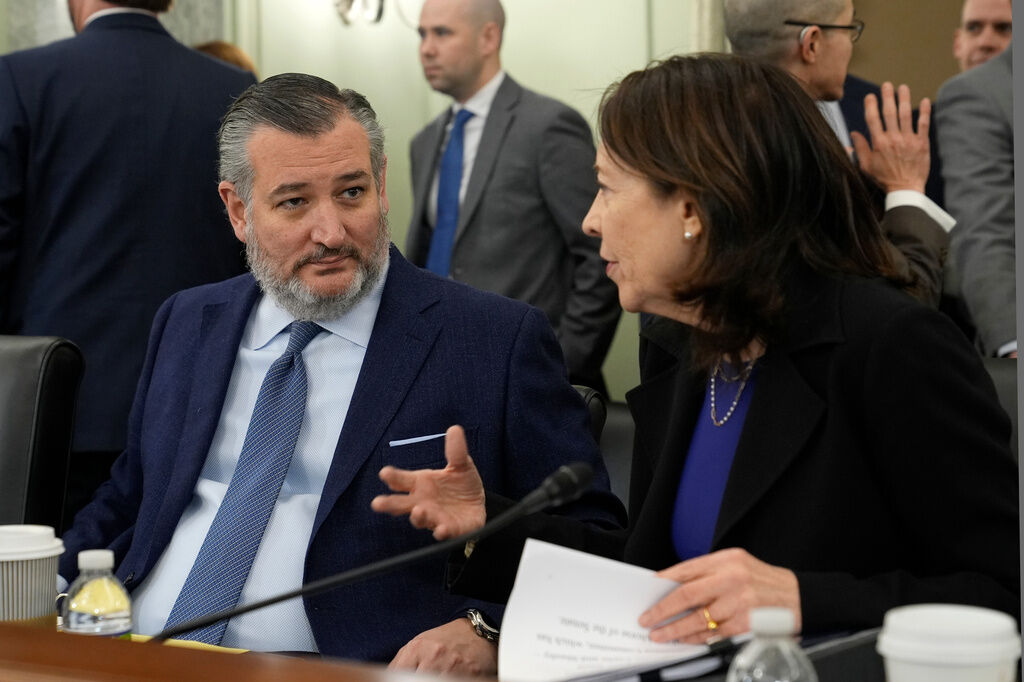
Sen. Ted Cruz (R-TX) on Monday suggested the Republican Party could embrace a directional shift after President Donald Trump leaves office, a transition that promises to leave a gaping hole in the GOP. Cruz is known as a critical ally...

2 Colorado State troopers shot near Woodland Park; suspect killed
DEBBIE KELLEY
debbie-kelley@coloradopolitics.com
Updated 17 hours ago
Two Colorado State Patrol troopers were hospitalized, and a suspect is dead after a shooting during a traffic stop Tuesday. The initial incident happened at about 7:15 a.m., when a resident reported suspicious activity in the area near milepost 286...
Aurora moves forward with data center regulations
Kyla Pearce
kyla.pearce@gazette.com
Updated 18 hours ago
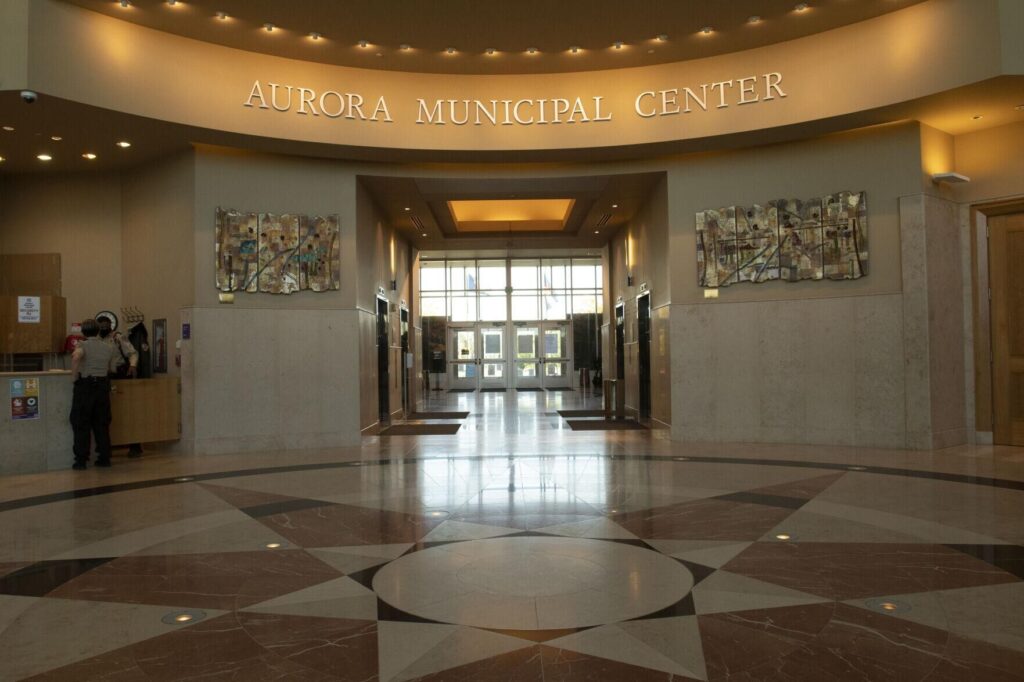
The Aurora City Council approved moving forward with two new regulations on data centers and directed staff to come back at the next study session with others. At a council meeting in early August, council members directed city management to...

Aurora City Council considers stricter food truck regulations
Kyla Pearce
kyla.pearce@gazette.com
Updated 18 hours ago
The Aurora City Council is considering passing laws to limit the number of food trucks on properties in the city and how and when they operate. Councilmember Angela Lawson, who sponsored the ordinance, said she understands the importance of food...
Denver murder conviction reversed for incomplete self-defense instruction
Michael Karlik
michael.karlik@coloradopolitics.com
Updated 16 hours ago
Colorado’s second-highest court reversed a defendant’s murder conviction last week because a Denver judge gave an incomplete instruction to the jury about the man’s right to self-defense. Donald R. Gonzales and Gary McLaughlin met up in a Capitol Hill parking...
Colorado lawmaker, House leaders named in workplace-retaliation lawsuit
Marianne Goodland
marianne.goodland@coloradopolitics.com
Updated 18 hours ago
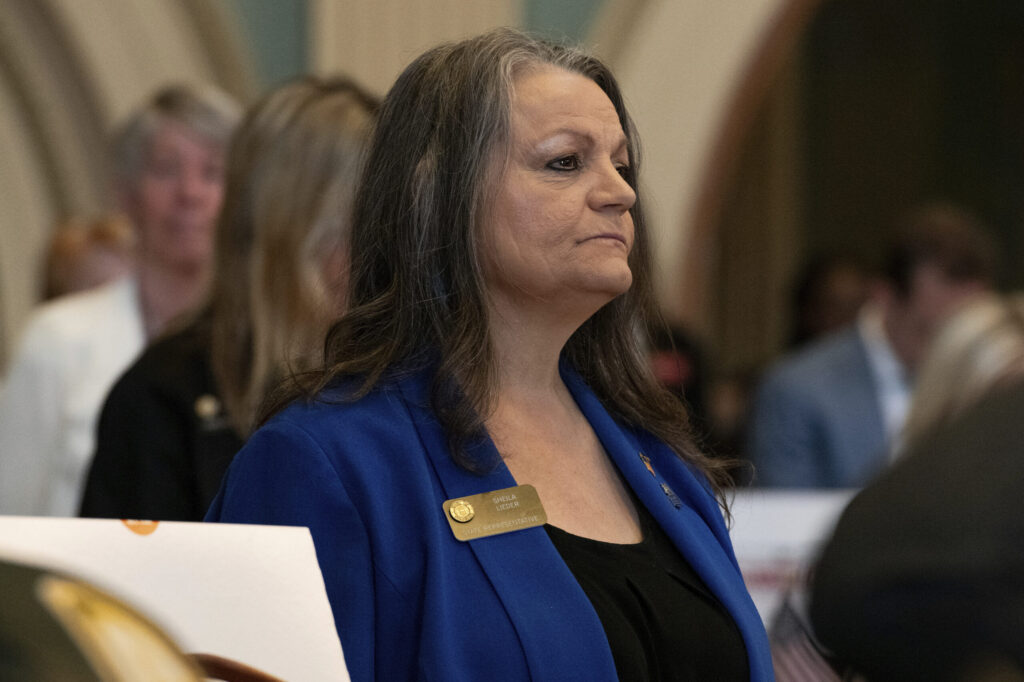
A former legislative aide has filed a lawsuit alleging she was mistreated, illegally directed to perform campaign work and harmed by a House leadership structure she charged was fragmented, politicized and ineffective at protecting employees. The lawsuit, filed by Jennifer...

Secret Service confirms awareness of Iranian state media video threatening Barron Trump’s life
The Associated Press
the-associated-press@coloradopolitics.com
Updated 23 hours ago
WASHINGTON (AP) — The U.S. Secret Service has confirmed it is aware that Iranian state media has aired a video that appears to threaten the life of Barron Trump, President Donald Trump’s youngest son. “The U.S. Secret Service is aware...

Federal judge hears arguments about Colorado’s 3-day gun purchase waiting period
Michael Karlik
michael.karlik@coloradopolitics.com
Updated 23 hours ago
A federal judge heard arguments on Monday about the constitutionality of a 2023 Colorado law that generally imposes a three-day waiting period on firearm purchases after the initiation of a background check. The test that the U.S. Supreme Court created...

Denver auditor finds oversight failures in $175.6M 16th Street project
Nico Brambila
nico.brambila@denvergazette.com
Updated 17 hours ago
Surprise historic sewer discovery delayed completion a year, cost $18M The Denver Auditor recently found significant oversight and contracting problems with the $175.6 million 16th Street Improvement Project, including an $18 million contract increase and a nearly one-year extension that...