

DIA CEO: Cooperation, federal funding key to airport security
Airport security nationwide can improve, if the major airports work cooperatively with private sector companies – and federal funding is made available – the CEO of Denver International Airport recently told U.S. Senate members.
Sen. Cory Gardner, R-Colo., introduced Kim Day at a Senate Commerce, Science, and Transportation subcommittee hearing to consider how to improve the Transportation Security Administration and airport passenger security.
“Like most airports, we were not built to house the current TSA security checkpoints,” Day said. “… Our configuration makes the location of our TSA security checkpoints a glaring vulnerability, as hundreds of passengers (line up) and TSA agents work in a pre-security area that is open and exposed from above.”
DIA numbers fuel need for changes
DIA, the sixth busiest airport in the U.S. and 19th busiest in the world, served a record-setting 54 million passengers in 2015. Officials expected to reach 58.3 million passengers last year, a nearly 8 percent increase, Day told the committee.
DIA is also the top economic engine in Colorado and the Rocky Mountain region, according to a study by the Colorado Department of Transportation. With more than $26 billion in annual economic benefits, DIA directly employs 35,000 workers with another 155,000 indirect jobs.
Day said DIA was in the final stages of negotiating a public-private partnership to reconfigure its main terminal.
“We have sought expertise from stakeholders and innovators. And we have reached out to TSA to work collaboratively on a new vision for our checkpoints,” she said. “But we need the federal government’s help as well. We don’t simply want to move the same, frankly antiquated, systems as we overhaul our main terminal. We are doing everything we can and are committed to this effort, but we also need federal funding.”
Day said airport security is a federal responsibility and DIA needed to be able to lean on TSA as a “real partner,” and the two entities signed a memorandum of understanding to work together on innovation. Since then, DIA and TSA officials had visited several international airports to see how recent innovations had made screening more efficient and secure.
Day said TSA had worked hard to increase enrollment in PreCheck, the agency’s expedited security screening program, and noted DIA had the highest number of applicants of any U.S. airport. But Day added there was much more that could be done.
“First, there’s really no need to have an agent greet you, check your ticket and identification,” she said. “That’s a huge bottleneck in the system, it uses up critical labor resources, and it’s more efficient and secure to automate that system without compromising security.”
Changes can include adding several spaces at the checkpoint where people can simultaneously empty their pockets and remove computers and shoes, she added, along with screening systems that divert bags and people needing secondary screening out of the line.
“With simple steps like these – already in practice at Amsterdam Schiphol and London Heathrow airports – we can take that pressure off travelers and allow TSA to focus on screening and not line management,” she noted.
Day said the committee should encourage TSA to continue its Innovation Task Force, which aims to foster “next-generation aviation security capabilities and flexible solutions” and includes the TSA, airport authorities, air carriers and industry.
“We see a future where we integrate existing technology, passenger segmentation and systems integration so that the screening process begins the moment you book your ticket,” Day testified. “Perhaps there are opportunities to integrate portions of the screening process into the check-in process itself.”
Two funding sources could help
Day stated there were two ways Congress can help fund airport security improvements.
“We would urge you to discontinue the practice of diverting TSA security fee revenues for non-security purposes, including deficit reduction,” she said. “This year, we understand that $1.28 billion in TSA security fee revenue will be diverted away from security for other purposes.”
Day said over 10 years, nearly $13 billion could be available to address many airport security challenges.
The passenger facility charge, a local airport user fee specifically for local projects, is another funding source.
“Airports operate under very strict FAA regulations that come with federal grants for capital projects,” Day stated. “(This fee) is slightly more flexible and is often a critical part of an airport’s security obligations. Yet the $4.50 cap has not been raised in over 16 years and it has not been indexed to inflation.”
Gardner promotes bill to address issues
Last July, Gardner’s SCREEN FAST Act was included with the FAA Extension, Safety and Security Act of 2016. The bill created two pilot programs to increase efficiency and security at airports and set up prototypes for new and innovative screening techniques.
During the hearing, Gardner said he would send a letter to the TSA, urging them to move quickly to carry out the security reforms in his legislation.
“I urge you to move forward in the establishment of these pilot programs through the Innovative Task Force to facilitate a collaborative process between the TSA and our nation’s large airports to develop innovative solutions for our security screening,” Gardner wrote in his letter to Huban Gowadia, acting TSA administrator.

Wyoming governor sues state board, asks court to enforce property tax cap | OUT WEST ROUNDUP
The Associated Press
the-associated-press@coloradopolitics.com
Updated 4 days ago
WYOMING Governor sues over property tax cap Gov. Mark Gordon filed a lawsuit on June 16 to force the State Board of Equalization to certify residential property tax values after the panel concluded it could not do so due to...
Democratic Colorado rural congressman threatens to caucus with GOP to preserve PILT | A LOOK BACK
Rachael Wright, Special to Colorado Politics
rachael.wright@coloradopolitics.com
Updated 3 days ago
Forty-Five Years Ago This Week: “It’s sometimes like talking to a brick wall,” said Colorado Congressional District 3 U.S. Rep. Ray Kogovsek. Kogovsek was frustrated at the lack of support from congressional representatives from the East Coast and the Midwest...

25 lessons and wishes to celebrate America’s 250th | SONDERMANN
By Eric Sondermann
by-eric-sondermann@coloradopolitics.com
Updated 4 days ago
The 250th celebration of America’s birth is upon us. There is undoubtedly much to salute. Despite plenty of strife and discontent at home, America remains a beacon to much of the world. The wisdom of our founders has largely withstood...

Colorado Politics Calendar July 6-12
Rachael Wright, Special to Colorado Politics
rachael.wright@coloradopolitics.com
Updated 4 days ago
CoPo’s weekly political calendar helps you find political and public policy events throughout Colorado. It includes candidate and issue campaign events, public policy meetings, court hearings, state and local party conventions, assemblies, debates, rallies, parades, speaking engagements, traveling dignitary appearances,...
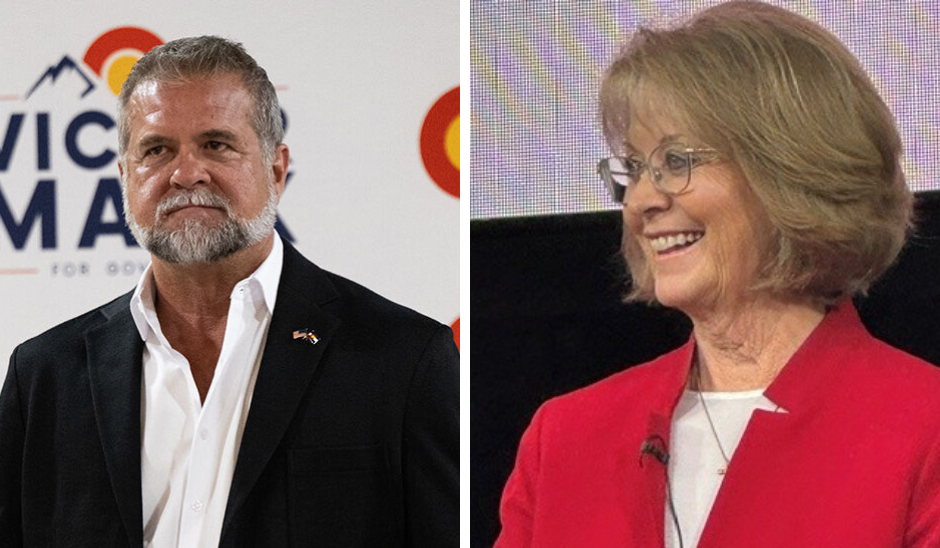
Victor Marx holds a steady lead over Barbara Kirkmeyer in Colorado Republican governor contest
Thelma Grimes
thelma.grimes@coloradopolitics.com
Updated 2 days ago
Victor Marx overtook state Sen. Barbara Kirkmeyer in the Republican primary for governor on Wednesday evening, seizing a narrow lead after trailing her since polls closed. Kirkmeyer, one of three candidates, opened the night with a clear advantage, at one...

Democrats confront shift as socialist-aligned candidates win races in Colorado
Thelma Grimes
thelma.grimes@coloradopolitics.com
Updated 1 day ago
Democratic socialists’ recent electoral gains — punctuated by Melat Kiros’ victory on Tuesday over U.S. Rep. Diana DeGette, the dean of Colorado’s congressional delegation — are the result of a movement that has been taking shape in metro Denver for...
Trump’s judicial nominee orders bond in wave of cases after 10th Circuit rejects government’s position
Michael Karlik
michael.karlik@coloradopolitics.com
Updated 3 days ago
Within 24 hours of the Denver-based federal appeals court rejecting the government’s expansive view of its immigration detention authority, the lone judge in Colorado to embrace that view ordered bond hearings for detainees in at least 20 cases. U.S. District...

Cherry Creek spent $65K on investigation, but invoices remain secret, records show
Nico Brambila
nico.brambila@denvergazette.com
Updated 3 days ago
After previously refusing to disclose the cost associated with the investigation into the former superintendent and his wife, the former human resources chief, Cherry Creek School District officials partially released records showing the cost to taxpayers: $65,054.85. The Denver Gazette...

Colorado governor fires clemency board members who opposed Tina Peters commutation
Marissa Ventrelli
marissa.ventrelli@coloradopolitics.com
Updated 3 days ago
Gov. Jared Polis has fired two members of his clemency board who opposed his commutation of Tina Peters’ sentence, according to Colorado Politics news partner 9News. In firing Azra Taslimi and Hannah Seigel Proff, Gov. Jared Polis said they had...

Democrats supercharge court fight after campaign finance ruling
James A. Downs
james.a..downs@washingtonexaminer.com
Updated 3 days ago
Democrats are hoping to dampen the GOP’s midterm cash advantage after Republicans scored a major win allowing unlimited coordination between political parties and candidates. Republican campaign arms say they can access discounted TV ad rates after the Supreme Court lifted...