

Transportation funding transfers tricky
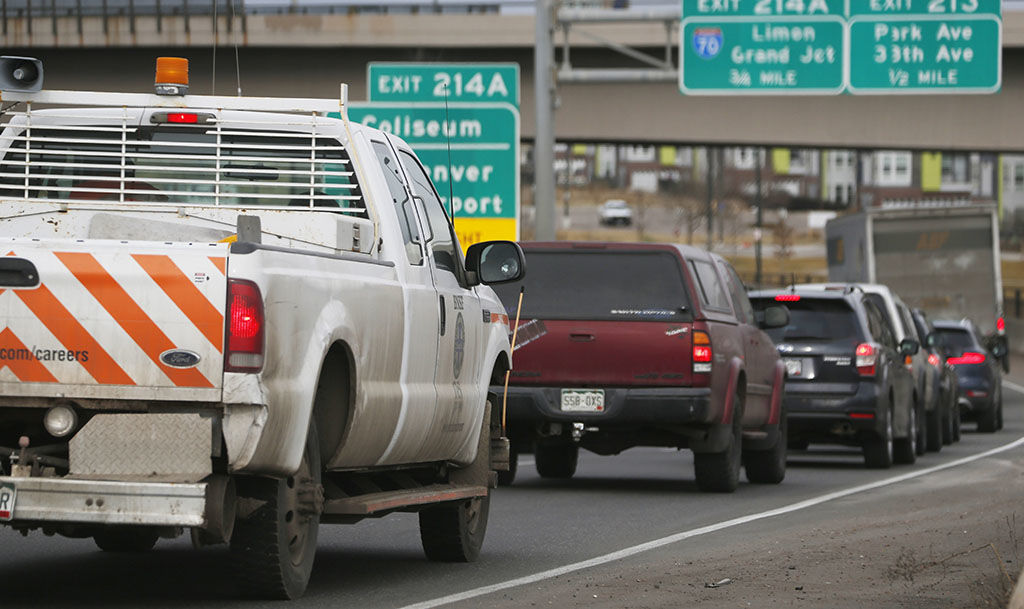
“A lot of moving parts” and a “very, very difficult budget to set” were among the descriptions given to the House Transportation & Energy and Senate Transportation committees regarding funding one of the key areas before the Colorado General Assembly.
At the Wednesday, Jan. 19, joint committee meeting, Joint Budget Committee members explained recent changes to Senate Bill 09-228, which established a five-year block of general fund transfers to the Highway Users Tax Fund for transportation projects.
The first transfer occurred this fiscal year and is to continue until the 2019-20 fiscal year. JBC member Bob Rankin, R-Carbondale, said the amounts were based on revenue growth and refunds under the Taxpayers Bill of Rights. If no refunds were required by TABOR, the full amount in 228 would be transferred. If the refunds were between 1 and 3 percent, half of the amount would transfer and above 3 percent would see no money transferred.
“But the two economic forecasts we get have different trigger amounts,” he explained.
Further complicating the process was House Bill 16-1416, which specified transfer amounts of $199.2 million this fiscal year and $158 million next fiscal year. The bill did not alter transfers for the remaining years. However, Rankin noted Gov. John Hickenlooper recently asked lawmakers to cut next year’s amount in half, to $79 million, to help balance the overall state budget as required in the state constitution.
“But we have these requests for more money in transportation, too,” Rankin added. “So there are a lot of moving parts.”
He said legislation would probably be introduced this session to try to stabilize the transfer amounts in 228 “to some level.”
House committee member Millie Hamner, D-Dillon, noted new economic forecasts are due in March, which will more than likely affect the transfer figures again.
JBC chairman Kent Lambert, R-Colorado Springs, said the issue isn’t really a budget one, but a finance and tax-related question.
“It’s a very, very difficult budget to set to the rules in 228 because it changes on a quarterly basis,” he stated. “And if they change after we appropriate the funds and we have to claw back the money in future quarters, that’s the worst thing you can do in transportation because you make contracts for projects but then have to have them stopped.”
Sen. Kevin Lundberg, R-Berthoud, had some words of caution for the committee members, “because we always do this.”
“In transportation and higher education, whenever things get tight,” he said, “we crank down and then when we look at things over the long haul and say ‘why are our roads so bad’ or ‘why is tuition going through the ceiling’.”
On the other hand, Lambert said there may be a bright side to the transportation funding issue, at least to some extent.
“If Congress and the new president do follow though and invest in infrastructure with either block grants or just transfer federal funds for transportation,” he noted. “But no one knows what that will look like or when it would happen.”
House committee chairwoman Diane Mitsch Busch, D-Steamboat Springs, noted the transportation department already received about 72 percent of its funding from the federal government, mostly in federal gas tax money.
“I do hope we can look forward to that federal funding optimistically,” she said.
Pot impaired driving request
The transportation department also requested to add $500,000 from the marijuana tax cash fund, reduce another $500,000 in the first-time drunk driving offenders line item, for a $1 million increase to continue a statewide marijuana impaired driving public education campaign.
Rankin said the committee was told the effectiveness of the program was hard to accurately measure. But phone surveys showed the issue exists.
JBC member Dominick Moreno, D-Westminster, told the committees that of 839 people surveyed, 139, or 15.4 percent, said they had driven within two hours of consuming marijuana. Moreno added 32 percent of those respondents said they thought they had driven safely.
“So this is still an issue in our state and that prompted the department’s request for more funds,” he said.
Lambert noted some driving under the influence citations for alcohol could also be issued for marijuana. But due to the lack of a state standard for impaired driving for marijuana, and the longer time it takes to get test results to confirm its presence in a driver’s bloodstream, no firm figures are known, he said.

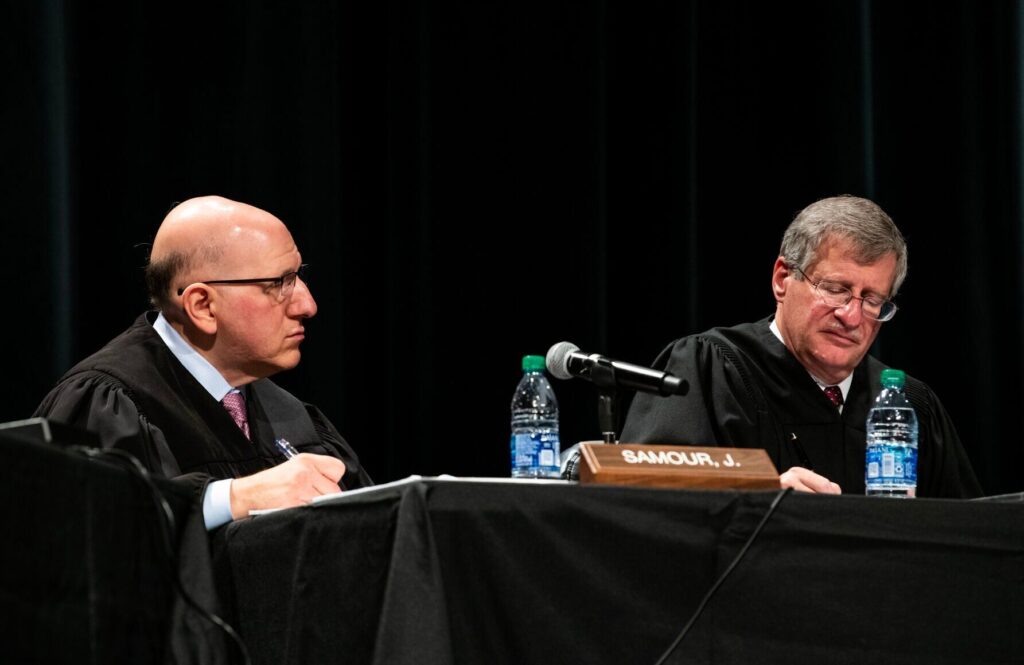
Colorado justices confirm leaving-the-scene prosecutions require no proof of driver’s knowledge
Michael Karlik
michael.karlik@coloradopolitics.com
Updated 1 hour ago
The Colorado Supreme Court confirmed on Tuesday that its 20-year-old decision involving drivers who leave the scene of an accident remains good law and prosecutors do not have to prove that such defendants knew they were involved in an accident....

Road-funding initiative in Colorado qualifies for November ballot
Marissa Ventrelli
marissa.ventrelli@coloradopolitics.com
Updated 27 minutes ago
A measure that would dedicate all transportation-related revenue to Colorado’s roads and bridges has officially qualified for the November ballot after it cleared the state’s signature threshold, according to election officials. Backed by the coalition Restore Our Roads, Initiative No....

Judge blocks Colorado’s proposed ban on using SNAP benefits for soda
Marissa Ventrelli
marissa.ventrelli@coloradopolitics.com
Updated 18 minutes ago
A federal judge has temporarily blocked Colorado and several other states from enforcing a proposed “Healthy Choice Waiver” that would have barred Supplemental Nutrition Assistance Program (SNAP) recipients from using their benefits to buy soda and other sugary drinks. Under...
Medicaid suspends agency behind ‘The Program,’ citing ‘credible’ fraud allegations
David Migoya
david.migoya@gazette.com
Updated 4 hours ago
The agency overseeing Colorado’s federal Medicaid program has suspended an Aurora home-health agency that’s the focus of an investigation into an enterprise that lured dozens of homeless people with promises of free housing and cash so it could siphon off...
Medicaid suspends agency behind ‘The Program,’ citing ‘credible’ fraud allegations
David Migoya
david.migoya@gazette.com
Updated 4 hours ago
The agency overseeing Colorado’s federal Medicaid program has suspended an Aurora home-health agency that is the focus of an investigation into an enterprise that lured dozens of homeless people with promises of free housing and cash and reaped tens of...
Medicaid suspends agency behind ‘The Program,’ citing ‘credible’ fraud allegations
David Migoya
david.migoya@gazette.com
Updated 4 hours ago
The agency overseeing Colorado’s federal Medicaid program has suspended an Aurora home-health agency that is the focus of an investigation into an enterprise that lured dozens of homeless people with promises of free housing and cash and reaped tens of...
Boulder police overreached in interrogating suspect, Colorado Supreme Court finds
Michael Karlik
michael.karlik@coloradopolitics.com
Updated 24 minutes ago
Two Boulder detectives violated a man’s constitutional rights by interrogating him at his home using a court order that solely authorized the collection of his DNA evidence, the Colorado Supreme Court concluded on Tuesday. The ruling curtailed the ability of...
Property owners may access evidence before eminent domain decisions, Colorado justices conclude
Michael Karlik
michael.karlik@coloradopolitics.com
Updated 22 minutes ago
The Colorado Supreme Court ruled on Tuesday that a Douglas County judge incorrectly believed he lacked the authority to allow a property owner to pursue evidence challenging a government entity’s legal right to take its property through eminent domain. In...
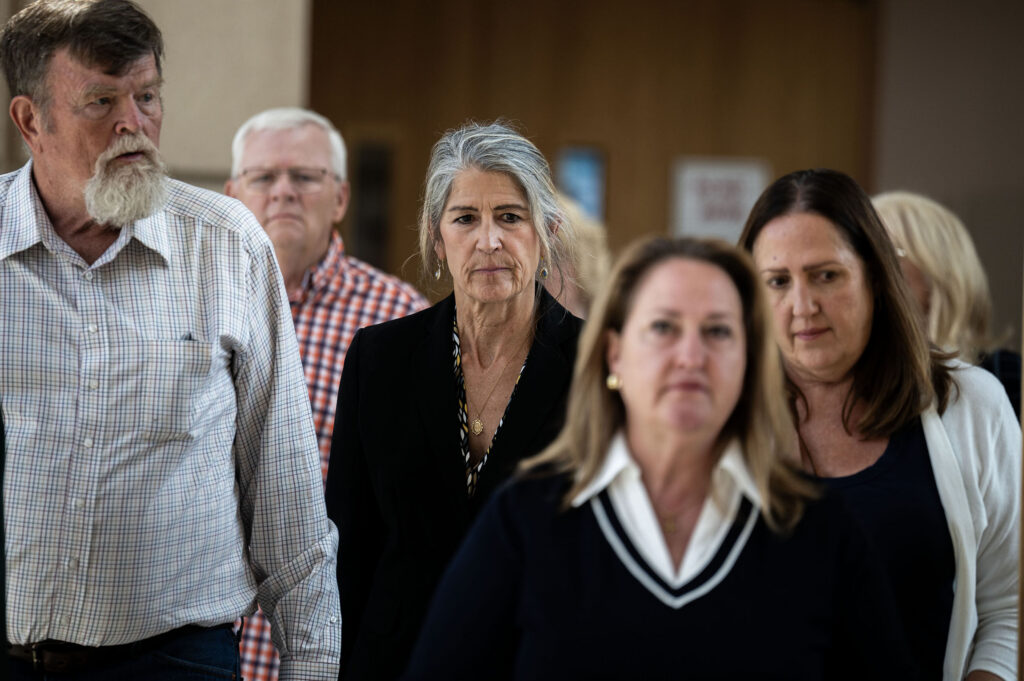
Missy Woods accepts plea deal, avoids trial on 102 felony counts
Jenny Deam
jenny.deam@gazette.com
Updated 1 hour ago
The former top Colorado Bureau of Investigation forensic scientist accused of altering and deleting DNA evidence in scores of criminal cases across the state for years pleaded guilty to four criminal counts Tuesday in Jefferson County. Yvonne “Missy” Woods, 65,...
ICE may deport illegal immigrants without judge approval, appeals court rules
Anna Giaritelli Washington Examiner
anna-giaritelli-washington-examiner@coloradopolitics.com
Updated 4 hours ago
A federal appeals court has ruled in favor of expanding a fast-track deportation process to let the Trump administration expeditiously remove illegal immigrants who are living inside the United States, not just at the southern border. On Tuesday, the U.S....