

Colorado legislature opens with calls for bipartisanship, but fault lines already visible
Party leaders on Wednesday kicked off the state legislative session with a bipartisan promise to enact construction defects reform, while drawing an ideological line in the sand over health care.
Amid the pomp and circumstance of the opening day ceremonies, lawmakers acknowledged they are under pressure to satisfy the demands of voters for funding transportation and other critical services.
This year could be their best chance, with the recent divisive national election out of the way and two years to go before the mid-term elections.
The kickoff offered a preface to Democratic Gov. John Hickenlooper’s State of the State address Thursday morning.
House Speaker Crisanta Duran of Denver – who became the first Latina speaker on Wednesday – said Democrats are focused on what can be accomplished by working across the aisle.
Curbing construction defects lawsuits in an effort to spur housing development could be the legislature’s best chance.
Republicans and Democrats see the issue differently. For Democrats, defects reform is about the expansion of “affordable housing.” For Republicans, it’s a debate over “attainable housing.”
But both parties would like to accomplish reform during the next four months.
The idea is that the fear of defects lawsuits is keeping builders from constructing affordable condominiums and townhouses. But many homeowner groups are passionate about protecting consumer rights, including being able to sue over shoddy construction.
The bill proposed by Duran would reform the insurance component of the tangle, allowing insurers to go to court to divide costs equitably among liability insurers who are required to defend a defect claim. The hope is that by addressing insurance, lawsuits would become less expensive and more condos would be built without compromising consumer rights.
Grantham also called attention to the issue during his opening day remarks.
“Coloradans agree we must fix this problem and put petty politics behind us to do it,” he said.
Still, partisan divides crept into celebrations on Wednesday.
Grantham unveiled a proposal to eliminate the state’s health insurance exchange, which was created in 2011 with bipartisan support in an effort to allow the state to chart its own course in the face of the Affordable Care Act. The bill at the time had Republican support in the House, but not in the Senate.
The proposal to eliminate the insurance exchange comes as Connect for Health Colorado faces unflattering audits, in which problems with dozens of payments and reimbursements were exposed.
Federal auditors say Colorado should repay nearly $9.7 million for grants used to set up the state’s health care exchange after concluding that the money was misspent or not properly accounted for.
Given concerns raised over the exchange, and facing a potential repeal of the Affordable Care Act under a Republican Donald Trump administration and Republican Congress, Colorado Senate Republicans believe now is the time to advance the conversation.
There’s also concerns over rising health care costs, especially along the Western Slope and in other rural parts of the state.
“It is time for us to shed some of the dead weight of failed government policy,” Grantham said. “This is long overdue.”
But Senate Democratic Leader Lucia Guzman of Denver responded, “We can’t take 140,000 or 150,000 people and just chunk them down the drain because somebody wants to dismantle something like that.”
Meanwhile, Connect for Health officials say the exchange is empowering Coloradans. This week Chief Executive Kevin Patterson pointed out that more than 158,000 Coloradans selected health care coverage for 2017 on the exchange through last Sunday, a rate 18 percent ahead of sign-ups one year ago.
Other clashes came as each side stood their partisan ground on issues they hold dear.
Republicans said they would continue to fight for religious liberty, parental choice, gun rights and regulatory reform for small businesses, while Democrats placed an emphasis on clean energy, protecting public lands and defending women and minorities.
“We will remain committed to reducing the regulatory and bureaucratic hurdles that inhibit business startups, expansions and relocations,” Grantham said.
Duran said of the Democratic focus, “I ask all of you in this room to join me in defending the ideal of an inclusive Colorado – of one that does not permit bullying of people because of their gender, race, religion, nationality, or sexual orientation. Inclusiveness … is a fundamental tenet of our state and of our nation.”
Meanwhile, Guzman will continue to push to restructure the Hospital Provider Fee as an enterprise fund, or government-owned business, which is another polarizing legislative issue. A similar proposal failed last year.
The fee is assessed on hospitals to force a match of larger federal health care dollars. The plan – which never made it to the floor for debate in the Senate last year and died over GOP objections – would have exempted the hospital fee from TABOR, thereby freeing money for spending.
House Democrats have largely abandoned the idea, noting that Senate Republicans have vowed to kill the measure again this year. But Senate Democrats say restructuring the fee is at the top of the priorities list.
Overall, however, a tone of bipartisanship filled the two legislative chambers, especially on the subject of transportation funding. Duran expects the legislature to refer a measure to voters in November to raise taxes – likely either sales or gas taxes – to fund major upgrades in overcrowded and neglected roads and potentially mass transit.
House Republican Leader Patrick Neville of Castle Rock said the state has more than a billion dollars more in its proposed budget this year than last. Transportation should be a priority with existing money, he said.
ColoradoPolitics.com’s Joey Bunch contributed to this report.

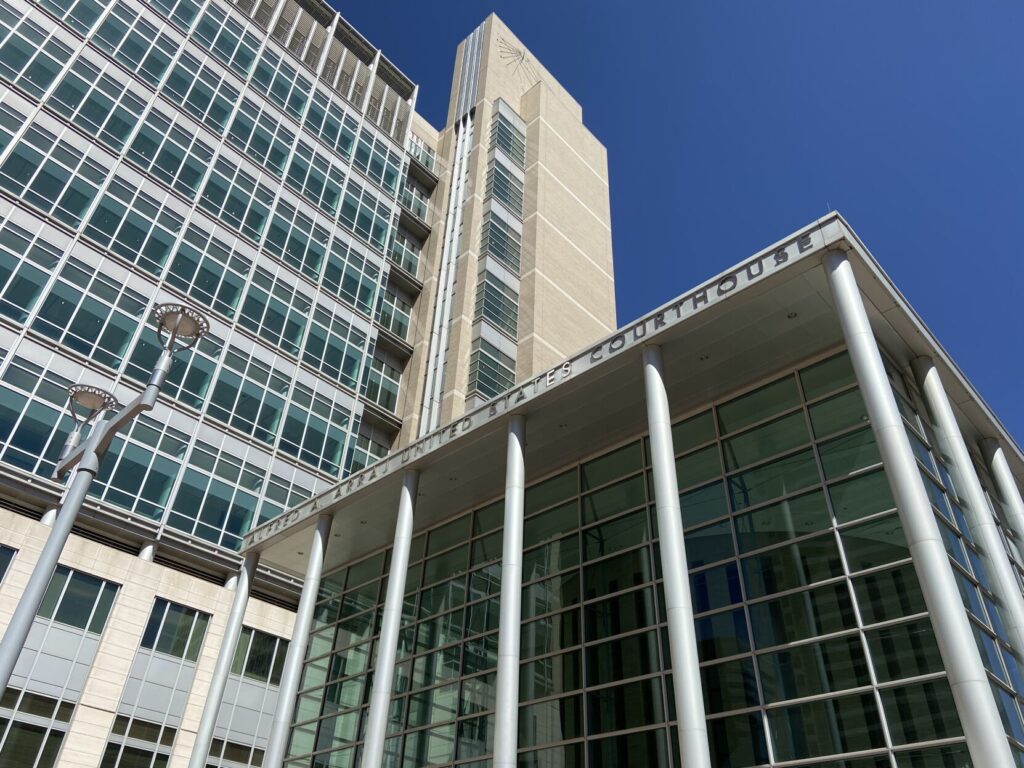
Federal judge declines to end Denver sheriff employee’s sex discrimination suit
Michael Karlik
michael.karlik@coloradopolitics.com
Updated 9 hours ago
A federal judge tentatively green-lit a former Denver Sheriff Department sergeant’s sex discrimination lawsuit for trial last month, based upon allegations that three female employees were promoted ahead of him despite his qualifications. U.S. District Court Judge Nina Y. Wang...

Selling dogs, cats in pet stores now banned in Colorado
Marissa Ventrelli
marissa.ventrelli@coloradopolitics.com
Updated 9 hours ago
Gov. Jared Polis signed a bill into law on Wednesday prohibiting pet stores from selling dogs and cats, which sponsors have nicknamed the “Pistol the Pomeranian Protection Act.” House Bill 1011, sponsored by House Majority Leader Monica Duran, D-Wheat Ridge,...

Colorado bill allowing THC beverages to be sold at grocery stores, restaurants pulled by sponsor
Marissa Ventrelli
marissa.ventrelli@coloradopolitics.com
Updated 10 hours ago
A Denver Democrat decided on Tuesday to pull a proposal that would have allowed beverages with tetrahydrocannabinol or THC to be sold at locations like grocery stores, restaurants, and entertainment venues. THC is the psychoactive substance in cannabis, the chemical...
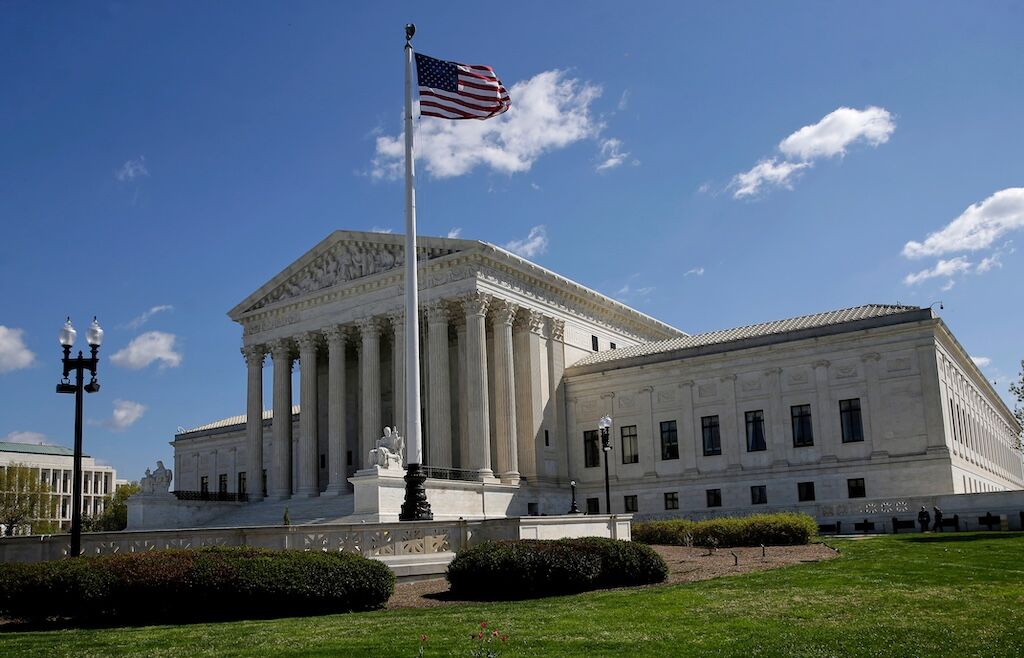
Democrats ready to fight after Supreme Court strikes down voting rights case
Lauren Green and Mabinty Quarshie, Washington Examiner
lauren.green.and.mabinty.quarshie.washington.examiner@gazetteedit.wpenginepowered.com
Updated 10 hours ago
The 2026 House map has been flipped upside down by a massive Supreme Court decision Wednesday to overturn the parts of the Voting Rights Act, as Democrats remain ready to fight. The Supreme Court dealt a blow to race-based redistricting,...

Blanche says Trump did not direct DOJ to indict Comey a second time
David Zimmermann Washington Examiner
davidzimmermannwashingtonexaminer@wpstage.coloradopolitics.com
Updated 10 hours ago
Acting Attorney General Todd Blanche on Wednesday denied that President Donald Trump directed the Justice Department to indict former FBI Director James Comey for a second time, saying the investigation has been ongoing for almost a year. The two-count indictment...
Corrections officials may be sued for employee’s alleged abuse of detainee, federal judge rules
Michael Karlik
michael.karlik@coloradopolitics.com
Updated 12 hours ago
High-level corrections officials may be sued for their own alleged failures to prevent or respond to an employee’s sexual misconduct toward a detainee, a federal judge decided last month. Rajae Bouhamidi was incarcerated at the Denver Women’s Correctional Facility. In...

Supreme Court justices to hear arguments on ending legal protections for Haitian, Syrian migrants
Associated Press
associated-press@coloradopolitics.com
Updated 13 hours ago
The Supreme Court will weigh arguments Wednesday over the Trump administration’s push to end legal protections for Haitians and Syrians as migrants fleeing war and natural disaster. Haitians and Syrians were among those from 17 countries with Temporary Protected Status, which allows migrants already...
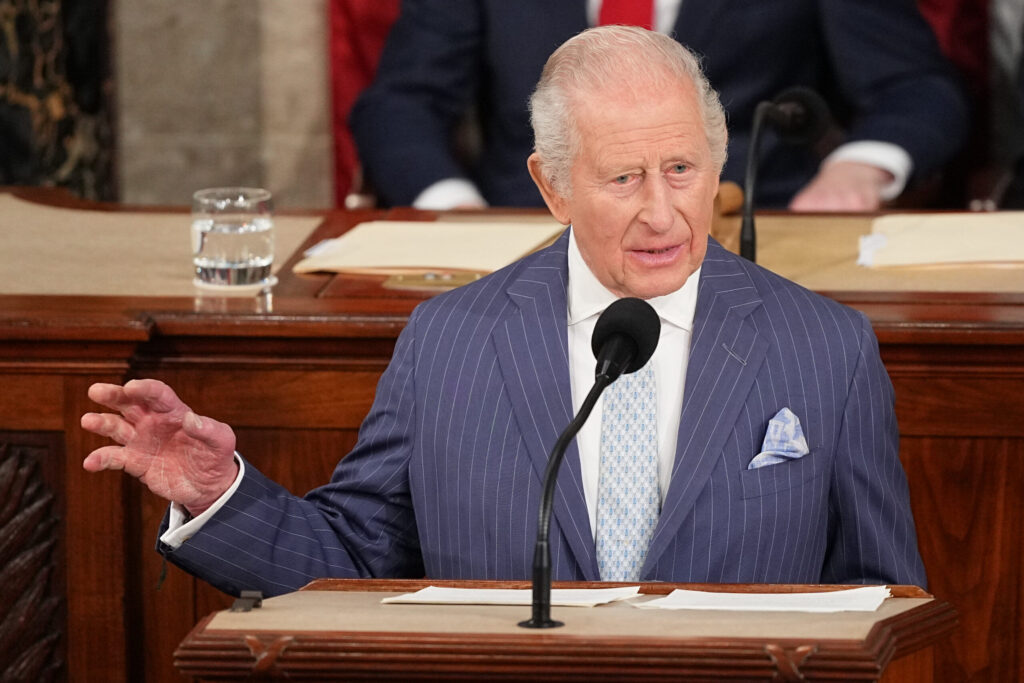
King Charles gifts Trump bell from British submarine namesake during state dinner
David Zimmermann Washington Examiner
davidzimmermannwashingtonexaminer@wpstage.coloradopolitics.com
Updated 10 hours ago
King Charles III bestowed a historical gift upon President Donald Trump during the White House state dinner on Tuesday night. The British royal gifted Trump a bell from a World War II British submarine named the HMS Trump. The vessel...

Proposal exempting some IT equipment from Colorado’s ‘right to repair’ law fails
Marissa Ventrelli
marissa.ventrelli@coloradopolitics.com
Updated 17 hours ago
A bill proposing an exemption to Colorado’s “right to repair” laws for “critical infrastructure” failed to pass its first committee in the House after clearing the Senate. Senate Bill 090 would have exempted information technology equipment considered “critical infrastructure” —...
Colorado GOP request to block unaffiliated voters from receiving Republican primary ballots denied by judge
Ernest Luning
ernest.luning@coloradopolitics.com
Updated 1 day ago
A federal judge on Tuesday denied the Colorado Republican Party’s request for an emergency injunction barring unaffiliated voters from participating in the state’s upcoming Republican primary election. U.S. District Court Judge Philip A. Brimmer said that preventing unaffiliated voters from...