

ColoradoCare runs into objections as Congress seeks Obamacare reform
The Obama administration recently gave an unintentional boost to opponents of government-subsidized health care, such as Colorado’s proposed amendment for universal health insurance that failed voters’ approval this week.
Affordable Care Act insurance premiums will rise an average of 22 percent in 2017, according to a White House announcement.
The act, also known as Obamacare, was supposed to lower the cost of health insurance when it was enacted in 2010.
“It is a total catastrophe for Colorado,” now President-elect Donald Trump said about Obamacare during an Oct. 29 campaign speech in Golden. Trump has included the repeal of Obamacare among his top agenda items for action within his first 100 days in office.
Supporters of Colorado’s proposed Amendment 69 sometimes cited Obamacare’s failures in saying ColoradoCare would be a better option.
ColoradoCare, which was listed as the Colorado State Health Care System Initiative on the ballot this week, was designed as a system of universal health care.
Had it passed, it would have been financed by a 10 percent payroll and income tax. Premiums would have been 3.33 percent for employees and 6.67 percent for employers.
The system would have required $38 billion a year to provide health care coverage for all Colorado residents, and they would have paid no deductibles. The funding would have come from the payroll taxes and federal subsidies.
Supporters say ColoradoCare would have extended healthcare to more people while cutting the state’s health bill.
A key concept behind the claim of lower costs was that by spreading the insurance payments over a greater number of people statewide, the expenses for any one person drop, similar to group insurance.
The White House’s recent announcement of a sharp increase in Obamacare premiums appears to have undercut supporters’ belief in cheaper universal healthcare.
Colorado Congressman Scott Tipton (R-Cortez) said in a statement, “Time and again the president said that his health care law would lower premiums for the average family by $2,500. This hasn’t happened. In fact, the administration just announced that the law is having the opposite effect. Next year, Obamacare premiums will skyrocket by 22 percent on average across the country. On top of Colorado’s 24 percent increase last year, next year’s 20 percent increase has our state set well on its way towards doubling individual insurance premiums in just five years.”
He prefers the Republicans’ proposed “Better Way” health care system. It would allow insurers to sell policies across state lines, provide tax deductions for family health insurance premiums and offer incentives for Health Savings Accounts.
Republicans like Tipton also want to repeal Obamacare.
Julie Perla, a Littleton-based volunteer regional organizer for Amendment 69, said Colorado’s proposed universal health care would have avoided the pitfalls of Obamacare.
It cuts out the profits that normally would be reaped by insurance companies and puts the money directly into primary and preventive care while eliminating the deductibles, Perla said.
She said about 20 percent of Colorado’s population is uninsured or underinsured. Many of the underinsured pay deductibles they cannot afford.
“They may have policies through Obamacare but because their deductibles are so high, they cannot afford to use their health care,” Perla said. ColoradoCare had “no deductibles and no copays for primary care and preventive care.”
Critics of ColoradoCare said it was merely another universal health care system directing the state into a slippery slope of higher taxes and rising medical costs.
Rep. Doug Lamborn (R-Colorado Springs) found the same faults with ColoradoCare that other Republicans find with Obamacare.
“This is a disastrous idea that would harm the quality of our health care and place the solvency and stability of the state budget in serious jeopardy,” he said prior to Election Day.
He said he dislikes health care systems that do not “encourage competition in the marketplace.” He also suggested allowing tax deductions for family health care costs, reforming medical malpractice laws and expanding access to health savings accounts.
“I support the Better Way initiatives to increase choice, lower costs and emphasize cutting-edge cures and treatments,” Lamborn told The Colorado Statesman.
Congresswoman Diana DeGette (D-Denver) stopped short of endorsing ColoradoCare by saying, “I have a policy of not taking positions on proposed state measures.”
However, she still holds out hope for Obamacare.
“On the national level, what the Republican congressional leadership ahead of this election has called a ‘Better Way’ is, in fact, seriously flawed,” she said. “If it were to actually become law, a lot more Americans would be without health insurance and uncontrolled market forces would rule the health needs of the rest. Several Republican colleagues have told me privately that they’re ready to work on fixes to the Affordable Care Act rather than continuing to support its outright repeal.”
The U.S. Department of Health and Human Services has been trying to rally support for Obamacare with recent statistics it says show advantages to the system.
But regardless of these talking points, the direction of Congress and the nation is likely headed toward a Republican concept of reform given the results of this week’s election.
Some economic groups, like the Tax Foundation, a Washington-based public policy foundation, say the similarities between Obamacare and ColoradoCare are close enough that they run the same kind of financial risks.
Amendment 69 would have imposed “an income and payroll tax of 10 percent atop the state’s existing 4.63 percent income tax, exposing Coloradans to a tax rate of 14.63 percent on the first dollar of taxable income,” said Jared Walczak, policy analyst for the Tax Foundation.
The Colorado tax would far surpass the current highest state income tax rate of 5.8 percent in Maine, he said.
“Rates that high would put small businesses in the state, many of which pay on the individual income tax schedule, at a competitive disadvantage and would make the state a costly place for people to live or work, especially for employees who continue to receive employer-sponsored health insurance.”
He warned about what he called a provision of ColoradoCare that would have given authority over tax rates to an independent board.
Voters would have been “required to ratify tax increases, but unusually,” the ColoradoCare board would have “run these elections and there is no explicit mechanism for ever pursuing a tax cut,” Walczak said.


10th Circuit grants immunity to officers for fatal Manitou Springs shooting
Michael Karlik
michael.karlik@coloradopolitics.com
Updated 4 hours ago
The Denver-based federal appeals court ruled on Wednesday that responding officers from Manitou Springs and El Paso County cannot be held constitutionally liable for shooting and killing a man after a 20-minute standoff. Wilford Deweese allegedly pulled out a gun...
10th Circuit rejects invitation for full-court review of tax-avoidance case
Michael Karlik
michael.karlik@coloradopolitics.com
Updated 2 hours ago
The Denver-based federal appeals court declined to reconsider the standards for holding entities liable for their tax-avoidance schemes, with a majority of judges voting against full-court review on Monday. In April, a three-judge panel of the U.S. Court of Appeals...
GOP gubernatorial candidate Victor Marx pushes aggressive water-storage expansion at Colorado Water Congress
Marianne Goodland
marianne.goodland@coloradopolitics.com
Updated 5 hours ago
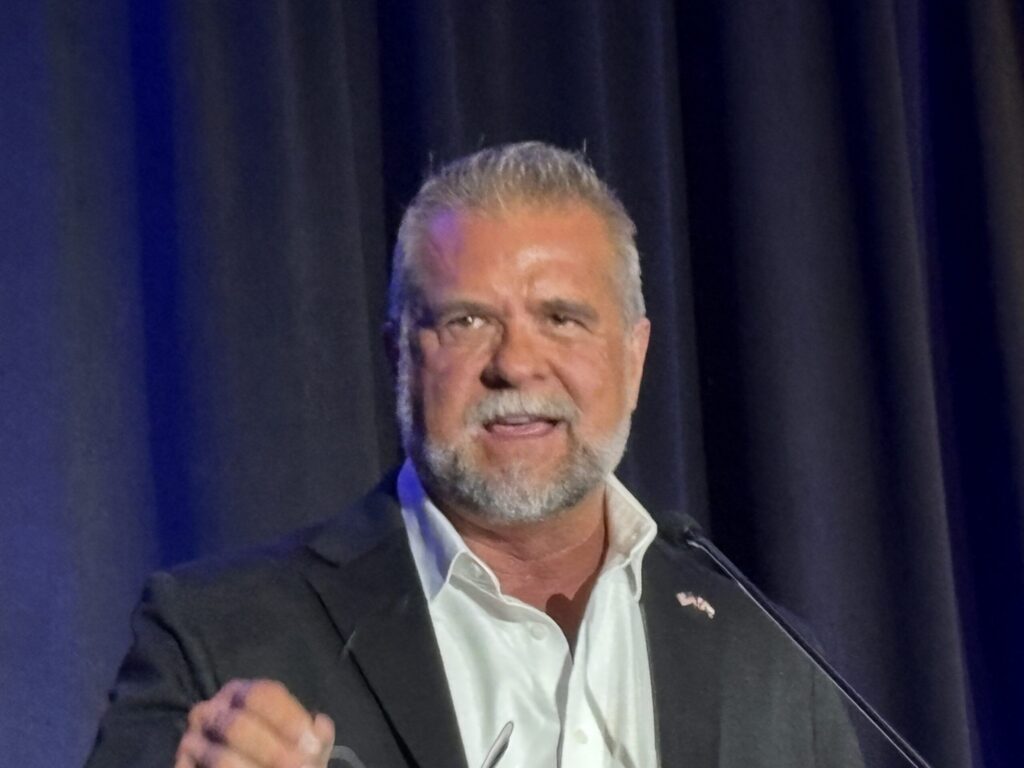
Victor Marx, the Republican nominee for governor, took the spotlight Wednesday during the opening day of the Colorado Water Congress, laying out how he says the state should approach its water future. Marx told the standing-room-only audience in Steamboat Springs...
Colorado AG sues GEO Group over noncompliance with tuberculosis investigation
Kyla Pearce
kyla.pearce@gazette.com
Updated 4 hours ago
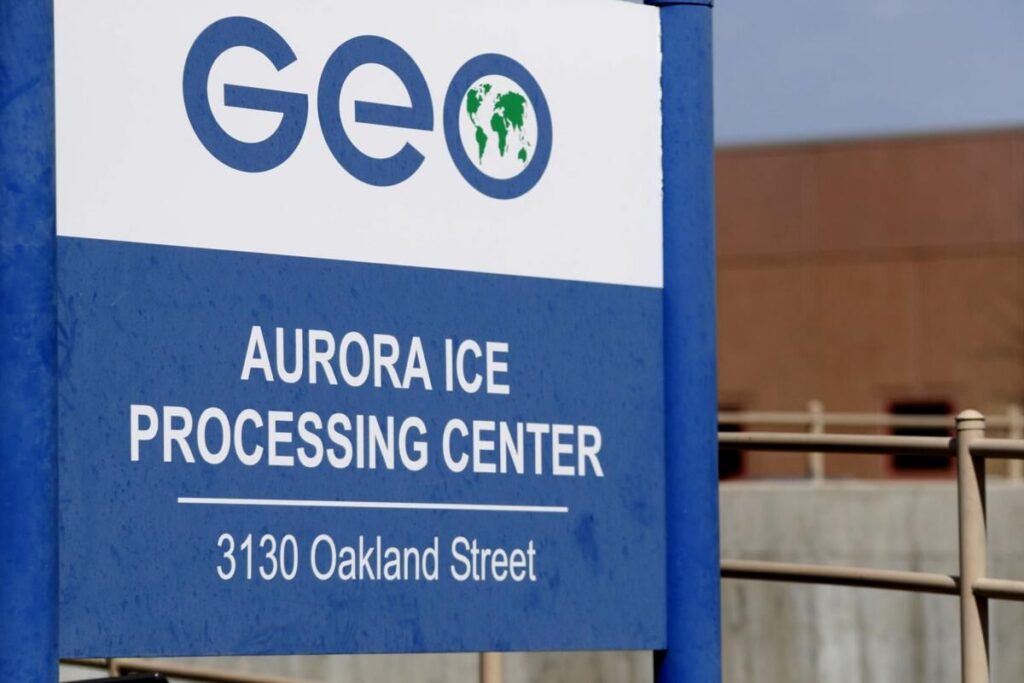
The Colorado Attorney General’s Office on Wednesday filed a lawsuit against GEO Group, which operates the Aurora ICE Processing Center, alleging the company failed to comply with a state tuberculosis investigation. Weiser’s lawsuit demands that GEO provide “critical information” needed...

U.S. Rep. Lauren Boebert stresses storage, forest health and Upper Basin rights at Colorado Water Congress
Marianne Goodland
marianne.goodland@coloradopolitics.com
Updated 5 hours ago
Republican U.S. Rep. Lauren Boebert used her brief Wednesday appearance at Colorado Water Congress to tout her record on delivering water projects for the state and her district. Boebert, who is running for her second term representing Colorado’s 4th Congressional...

Trump has a 96% endorsement success rate. Here are the Republicans he’s backed who have lost
Mabinty Quarshie
mabinty-quarshie@coloradopolitics.com
Updated 8 hours ago
President Donald Trump’s 2026 primary endorsement success rate remains staggeringly high, but the president has seen a growing number of losses stack up in recent weeks. According to Ballotpedia, Trump has endorsed in 313 U.S. Senate, U.S. House, and state...
Colorado judge blasts state forensics lab in dismissing child sex case
Jenny Deam
jenny.deam@gazette.com
Updated 2 hours ago
In a potentially widely consequential action, a Weld County district judge dismissed a child sexual assault case, citing the ongoing scandal at the Colorado Bureau of Investigation’s forensic lab that “has left a dark mark on the history of Colorado...

Colorado officials urge stronger water safety after 8 drownings and multiple Front Range rescues
Elizabeth Pond
elizabeth.pond@denvergazette.com
Updated 2 hours ago
At least eight people have drowned in Front Range waters since mid-March, including two at Eleven Mile Reservoir, three at Cherry Creek Reservoir, one at Rockbridge Lake and two at Lake Pueblo State Park. In the wake of these deaths,...

Vehicle registration crackdown across Front Range starts next week
Nick Smith
nick-smith@coloradopolitics.com
Updated 9 hours ago
Colorado drivers with expired tags or unregistered vehicles still have time to get registered before a scheduled enforcement crackdown starts next week. According to an announcement from the Colorado Springs Police Department, a multi-agency enforcement effort will happen across the...

Aurora grapples with affordable housing needs, deficits
Kyla Pearce
kyla.pearce@gazette.com
Updated 9 hours ago
Aurora is grappling with affordable housing needs as demand for project funding increases and the state cuts grant money. Currently, the city needs about 12,000 affordable housing units, Martin Petrov at Aurora Housing Authority told members of the Housing, Neighborhood...